Archive | Scars & Race, Ethnicity & Nationality RSS feed for this section

How Much Should A Candidate’s Minority Status Matter?

21 Feb

White House(Image by Tom Lohdan used under CC 2.0 via)
 

With the presidential primaries well underway in the United States, voters are faced with the possibility of making history by choosing either the first female president, the first Jewish president, or the first Latino president. As in 2008, when Democrats were split between Clinton and Obama, the political sphere is deluged with arguments over how much minority status should and will influence the results.

As an American woman, I’ve been called upon by former secretary of state Madeleine Albright and feminist giant Gloria Steinem to join my sisters in solidarity for Clinton. It is intriguing to observe this living as a woman in Germany, where Angela Merkel has been chancellor for over 10 years. Her policies aside, I consider her greatest success as a female politician to be the way in which so little attention is afforded her lifestyle and femininity. Few people know what her husband looks like because he shies away from politics. That she has never had children of her own is rarely mentioned let alone a headline. And she has had to endure hardly any national discussions of her fashion sense. (Indeed, it took the media 18 years to notice that she’s worn the same dress at gala events for nearly two decades.) It seems crucial to appreciate such an absence of time-wasting sexism when considering the way in which Julia Gillard had to face down accusations of her partner being gay, the way in which Margaret Thatcher had to pose with pots and pans to prove her housewife credentials, and the way in which Hillary Clinton has had to field questions about her last name, her scrunchies, and her sex life.

So what will it mean if the next U.S. president is a woman, Jewish or Latino? Seeing a member of any long-oppressed minority rise to power can be very moving. Only the fiercest of cynics could not find it heartening to see the United States seriously consider a female president nearly 100 years after so many fought to crush women’s suffrage. The same goes for seeing Sanders’ brother Larry tear up when he wishes that their parents—Jewish immigrants who lost relatives in the Holocaust—were around to see Bernie get this far. “They would be so proud,” he smiles.

When Barack Obama was elected, I could not suppress the lump in my throat upon seeing Virginia and North Carolina—two states that had banned families like the one he came from—swing in his favor. It was exhilarating to consider anyone who had fought to block the Civil Rights Act or the Voting Rights Act now having to take orders from a black commander-in-chief.

Similar smiles were exchanged here in Germany in 2009 when the government was run by a female chancellor, a disabled finance minister, an Asian technology minister, and an openly gay foreign minister. Of the latter a friend grinned, “I like the idea of the heads of state in Saudi Arabia and Russia having to shake his hand.”

Representation can have deep repercussions on a subconscious level. The phrase “You can be anything you want to be!” so often secretly strikes traditionally oppressed minorities as absurd, silently countered with a sigh of I’ll believe it when I see it. Representation offers proof of possibility.

And yet, as Barack Obama’s presidency has shown, one single person’s ascent to the most powerful position in the land is no guarantee of equality for all. Black Americans shot by police continue to be twice as likely to be unarmed than white Americans shot by police. The Southern Povery Law Center reports the number of hate groups in 2015 had risen from the previous year. The 114th Congress is the most racially diverse in U.S. history, albeit men and whites remain over-represented. And of course racist backlash to the very idea of our first black president is all but a Google search away.

This is perhaps unsurprising when a closer look at Obama’s electoral victories show that in both 2008 and 2012, the majority of white men did not support him. Opposition to Obama is of course not always racially motivated, but the numbers do not show as many segregationist minds being changed as all the fanfare about a post-racial America seemed to indicate.

Similarly, the Bundestag under Angela Merkel’s current government remains two-thirds male. The U.K.’s parliament is roughly the same, nearly four decades after Thatcher broke the glass ceiling. Benjamin Disraeli’s legacy as the U.K.’s first Jewish prime minister did not prevent the country from turning away Jewish refugees fleeing Nazi Germany. There is thus little reason to conclude that simply electing a female, Jewish, or Latino president will signify a permanent absence of sexism or racism among the people.

But what could signify true and lasting change? Proportional representation has been shown to be a far better indicator of equal opportunity for all than the odd representation by a particularly powerful politician. Sweden has not yet elected a female head of government, but just under half of the representatives in the Riksdag are female. This percentage has been generally maintained for the past 10 years. It is the result of a continuous push from the Swedish women’s movement in the second half of the last century, which brought the proportion to 20% in 1972, 30% in 1990, and on up to the current near-parity. The U.S. Congress has the same proportion of female members now as the Riksdag did in 1972, ranking it 75th in the world.

This is why Steinem has been urging American women to help each other out in every election since the women’s movement, not just this one. Solidarity is certainly one of the best paths toward justice. But her eight-year history of accusing all of Clinton’s opponents of opposing the idea of a female president is unfair and as simplistic as sexism itself.

After all, voting for a candidate only for the sake of having a female head of government immediately supports not only the candidacies of Clinton and Merkel and Thatcher, but also of Sarah Palin and Marine Le Pen. Barack Obama and Ben Carson could not be more different, nor could Bernie Sanders and his former fellow senator Joe Lieberman. Policies should always—er—trump identity in the voting booth.

But while it is unreasonable to vote for a candidate only because he or she belongs to a certain minority, it is also unreasonable to vote against a candidate only because he or she belongs to a certain minority. This is why the discussions of identity and institutionalized xenophobia surrounding this election are as valid as they are necessary.


Can We Understand Race In Terms of Medicine?

14 Feb

Take off your fucking mask(Image by Taylor Dave used under CC license 2.0 via)
 
Leaving you this Valentine’s Day with the urging to go read an excellent discussion at NPR titled “Is It Time to Stop Using Race in Medical Research?

Then go read Alva Noë’s essay, “Can You Tell Your Ethnic Identity from Your DNA?” He writes:

…even if, in the ideal case, we find meaningful clusters of similarity in the space of genetic variation, there is no reason to think that these will map onto ethnicity or other categories in terms of which we understand our own identity. Identity, after all, varies non-continuously. French and German villages may be separated by the smallest of geographic distances. Genetic variation, on the contrary, so far as we now know, varies continuously. DNA is just not going to carve up groups at their culturally significant “ethnic” joints.

This interests me personally because any sort of categorizing of humans ends up being far more complicated than our everyday discourse would have us believe. Race, gender, and disability are so often thought to be concretely definable through bodily indicators, yet our categories for these identities—black/white/Asian, male/female, healthy/disabled—often fail fantastically to represent a good portion of humanity. As I’ve shown before, dwarfism itself is a social construct. All identities are to some extent.


The Best Picture Books for Preventing Prejudice

13 Dec

Book sculpture (Image by Ellen Forsyth used under CC license via)

From the Archives, one of the blogs most popular articles:


Perhaps you are looking for gifts for little ones this holiday season. Or perhaps, like me, you simply know a staggering number of kids who will all have birthdays in the coming year. For either scenario, here is a sample of excellent—i.e., not boring or ugly—picture books that help raise diversity awareness through reading. All of these books have been featured in my workshops for pre-school teachers about helping minority children feel represented and teaching all students to see minority kids as their equals. They are divided into five categories based on objective.

***

Books That Know Not Every Family Is Upper/Middle Class with a White, Straight, Biological, Married Mom and Dad… The most delightful thing about pre-schoolers is that they have almost no idea what “normal” means. Of course they are surprised by the extraordinary, but they don’t place value judgments on it until someone older teaches it to them. Critically analyzing the media images and stories kids consume is crucial because the media not only educates them about the world beyond their doorstep, but it instills them with subconscious ideas about what kinds of people society believes deserve to appear in books, film, and television. Kids are of course individuals and some may be temperamentally predisposed toward narrow-mindedness, but a preemptive strike against prejudice never hurt anyone.


Tell Me Again About the Night I Was Born by Jamie Lee Curtis (available in German & Spanish) – A story of adoption as told from the point of view of the child. “Tell me again how the phone rang in the middle of the night and they told you I was born. Tell me again how you screamed. Tell me again how you called Grandma and Grandpa, but they didn’t hear the phone ’cause they sleep like logs…”


A Chair For My Mother by Vera B. Williams – A story that portrays poverty without uttering the word. The daughter of a single working mom tells of the day they lost everything they owned in a house fire. They’ve been saving up every spare cent they have to buy a big comfy armchair for their new home ever since. In the end, Mom finally has a place to lie back and rest her sore feet when she comes home from work at the diner, and her daughter can curl up to sleep in her lap.


Two Homes by Claire Masurel (available in French & German) – A boy proudly shows off his two homes. “I have two favorite chairs. A rocking chair at Daddy’s. A soft chair at Mommy’s.” The parents are portrayed as having nothing to do with each other, while always beaming at their son. “We love you wherever we are, and we love you wherever you are.”


The Snowy Day by Ezra Jack Keats (available in Spanish) – Ezra Jack Keats was one of the first American illustrators to feature everyday black children in his stories. All of his books portray kids growing up in inner city neighborhoods. This is a brilliantly illustrated, very simple story about a boy enjoying freshly fallen snow in every way possible.


Susan Laughs by Jeanne Willis – Written in verse, Susan swings, makes faces, sings songs, plays tricks, splashes in the water, rides on her dad’s shoulders, races in the back of a go-cart. Susan also happens to use a wheelchair.


What Makes A Baby by Cory Silverberg (available in German & Spanish) – A book about reproduction (sperm, egg, uterus) that leaves out gender (mom, dad, man, woman). No matter how many people want to ignore it, plenty of kids have been born via IVF, surrogacy, and to LGBTQ and intersex parents. This book allows those kids to have a conversation about where they came from, while emphasizing that your family is the people who were waiting for you to come into the world.

***

Books For Extraordinary Situations That Have To Be ExplainedThese stories get into the specifics of certain disabilities, conditions and diverse backgrounds, but there is no reason they should not be read to every child.


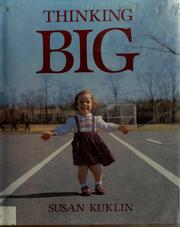
Thinking Big by Susan Kuklin – This book is out of print, but well worth the search, portraying a day in the life of an 8-year-old girl with achondroplastic dwarfism. She is great at painting, but needs stools to reach things at home and school. She has friends who hold her hand so she won’t get left behind on hikes, but she talks openly about the kindergartners who call her “baby.” She loves going to Little People of America meetings, but she loves being at home with her mom, dad and younger brother best of all. This book accompanied me from pre-school to 5th grade, read aloud by my new teacher to the class at the beginning of the school year in order to explain why I looked different from the others and to encourage my classmates to be upfront with their questions.


I Have A Sister My Sister Is Deaf by Jeanne Whitehouse Peterson– A day in the life of a hearing girl and her deaf sister. They play, argue, and help each other out, while explaining deafness as a mere difference in terms young kids can understand. The story has a gentle, poetic rhythm. On a deer hunt, the narrator explains, “I am the one who listens for small sounds. She is the one who watches for quick movements in the grass.”


The Black Book of Colors by Rosana Faría (available in French, German & Spanish) – Like the illustrations, everything is black for Thomas, so when it comes to colors, he smells, hears, and feels them. “Red is as sweet as a strawberry, as juicy as a watermelon, and it hurts when it seeps out of a cut on his knee.” The images are embossed for the reader to touch. The Braille alphabet is provided at the back of the book.


People by Peter Spier (available in French & German) – A superbly illustrated celebration of human beings and cultures all around the world. We have different skin colors, noses, hair styles, holidays, favorite foods, alphabets, hobbies, and homes, but we’re all people. It should be noted that this might be a bit of an information overload for children under 4.

***

Books About Moments When Diversity Is Considered Disruptive… These books empower kids who have been teased or interrogated for standing out. They can also be used to teach a bully or a clique how to understand and accept harmless differences. Some teachers rightly express concern over introducing the problems of sexism or racism to a child who has never seen a boy in a dress or a black girl before. Doing so could foster the notion that we should always associate minorities with controversy. Save them for when conflict does arise, or when the child is old enough to start learning about history and intolerance.


Amazing Grace by Mary Hoffman (available in Arabic, German, Panjabi, & Urdu) – Grace is a master at playing pretend. When her class decides to put on the play Peter Pan, she’s told by some know-it-all classmates that she can’t because she’s a girl and she’s black. She shows ’em all right.


And Tango Makes Three by Justin Richardson and Peter Parnell (available in German) – Penguins Silo and Roy live in a New York zoo and are utterly inseparable. The zookeepers encourage them to take an interest in the lady penguins so that they can soon have baby penguins, but to no avail. Silo and Roy build a nest together and end up adopting an egg. When Baby Tango is born, the three of them couldn’t be happier.


You Be Me – I’ll Be You by Pili Mandelbaum (available in French) – A biracial girl tells her white dad she wishes she looked like he does. Dad explains that he is milk and Mom is coffee, and she is café au lait. He says she is beautiful and sometimes he wishes he looked like her. Soon they’re dressing up in each other’s clothes, she’s braiding his hair, and he’s powdering her face. She wants to go into town and show Mom. On the way, they pass by a beauty shop and Dad points out how many white women are curling their hair and tanning their skin, while so many black women strive for the opposite.


“Sick of Pink” by Nathalie Hense (currently available only in German, French, Japanese, Norwegian & Portuguese) – The proud musings of a girl who likes witches, cranes, tractors, bugs, and barrettes with rhinestones in them. She knows boys who sew pretty clothes for their action figures and who paint daisies on their race cars. When grown-ups shake their heads and tell them, “That’s for girls!” or “That’s for boys!” she asks them why. “That’s just the way things are,” they tell her. “That’s not a real answer,” she deadpans.

***

Fairy Tales Beyond White Knights and Helpless Princesses… Even the most iconoclastic of people have their fantasies of love and heroism shaped by folklore. Yet the idea of revising Western fairy tales to make them less stereotypical has been met with a strong backlash. Whether or not you think it’s appropriate for kids to read Sleeping Beauty, Little Black Sambo or The Five Chinese Brothers, there is no harm in providing them with additional legends about love, valor and wisdom to make our cultural heritage more inclusive.


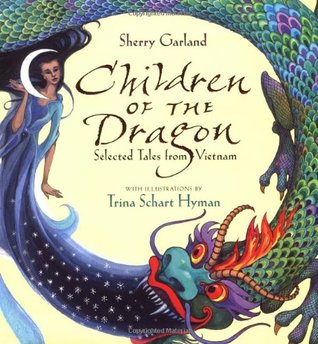
Children of the Dragon by Sherry Garland – Selected tales from Vietnam that rival any of the Grimm’s fairy tales in adventure, imagination and vibrancy. Many of the stories are supplemented by explanations of Vietnamese history that provide context.


Sense Pass King by Katrin Tchana – A girl in Cameroon outsmarts the king every time. Besides being one of the greatest illustrators of the 20th century, Trina Schart Hyman was a master of ethnic and socio-economic diversity in her many, many picture books.


Tam Lin by Jane Yolen – A Scottish ballad wherein a young maiden rescues her true love from the clutches of the evil faerie queen. In the end, she wins both his freedom and her clan’s great stone castle back. Not suitable for easily frightened children.


Liza Lou and the Yeller Belly Swamp by Mercer Mayer – A fearless girl triumphs over a ghost, a witch, a troll and a devil on her way to Grandma’s house in the bayous of Arkansas. Some of the best illustration there is. Think Little Red Riding Hood had she managed to outwit the wolf on her own.


The Talking Eggs by Robert D. San Souci – A Cinderella story of sorts set in the backwoods of the American South. An elderly wise woman uses magic to help a kind, obedient girl escape her cruel mother and spoiled sister. In the end, she rides off to the big city in a carriage. (With no prince involved, this one passes the Bechdel test.)


King and King by Linda de Haan (available in Czech, Dutch & German) – It’s time for the prince to hurry up and get married before he has to rule the kingdom, but every princess who comes to call bores him to tears. The very last one, however, brings her utterly gorgeous brother, and the king and king live happily ever after.


The Paperbag Princess by Robert Munsch – After outwitting the dragon, Princess Elizabeth rescues the prince only to be told that her scorched hair and lousy clothes are a major turn-off. She tells him he is a bum. “They didn’t get married after all.” She runs off into the sunset as happy as can be. I have yet to meet a child who does not love the humor in this story.

***

The Best Book on Diversity To Date…


Horton Hatches The Egg by Dr. Seuss – A bird is sick of sitting around on her egg all day, so she asks Horton if he would mind stepping in for just a minute. He is happy to help, but the bird jets off to Palm Beach the minute she is free. Horton continues to sit on the egg while awaiting her return. He withstands the wind, the rain, a terrible cold, and three hunters who insist on selling him and the egg off to the circus as a freak show. Throughout it all he reminds himself, “I meant what I said and I said what I meant. An elephant’s faithful, one hundred percent.” After he becomes a media sensation, the bird comes back to claim her prize.

Whenever I used this one in the classroom, I would ask the kids whom the egg belongs to. The 3-year-olds, with their preliminary grasp on logic, would always give the black-and-white answer: “The egg belongs to the bird because eggs go with birds.” The 4- to 5-year-olds would invariably go the other way, plunging into righteous indignation over the injustice of the bird’s demands: “The elephant! The egg belongs to the elephant because he worked so hard and he loved it so much and she just can’t come back and take it!” In the end, the egg cracks open and out flies a baby elephant bird, who wraps his wings around Horton. This is Seuss at his best, showing that loyalty makes a family.


No One’s Magical Object: Albinos, Dwarfs and Any Body You Can Think Of

6 Dec

Turning Green on Anatomy(Image by Wolfram Burner used under CC 2.0 via)


In his otherwise spectacular book, Far From the Tree, Andrew Solomon issues a false point I myself have issued in the past: that we dwarfs are the only minority on earth to be associated with magic and mythology. Perhaps it is easy to forget that blind people have been associated in the past with “seeing” into the future and disabled children of all sorts were believed to be cursed by if not the very spawn of the devil in the Medieval and Early Modern cultures of Europe. But we should not forget any of this when considering the current scandal surrounding the abuse of albino people in Tanzania.

A BBC investigation in 2008 revealed that some adherents of supernatural belief systems in East Africa today advocate severing and stealing the limbs of albino people to keep as good luck charms. A harrowing documentary, The Boy from Geita, airing this week profiles the victims of such a crime.

Tuvalo Manongi, the U.N. ambassador to Tanzania is fighting back, arguing that the film’s trailer unfairly portrays his country as a land of bloodthirsty heathens in need of Great White Western enlightenment. The documentary does accuse members of Tanzania’s legislature of secretly condoning the practice, implicating some of its members in the sales of the body parts. The Canadian director, Peter Ash, stands by his story and says Manongi isn’t one to talk: “[Manongi] probably doesn’t hang around people with albinism for 12 hours a day and weeks on end in [Tanzania] like I do.”  Ash himself has albinism.

Post-colonial social justice activists generally agree that the best way to expand human rights in other countries is to support the activists in said country, no matter how few their numbers. Ultimately such locals should lead the charge lest foreign aid organizations indeed act out of ignorance of the local history and culture. Tanzania Albino Centre and the Tanzania Albinism Society are two organizations dedicated to combating the problem.

As an outsider, I have little else to offer other than the demand that we as humans let go of any beliefs—supernatural or otherwise—that fetishize extraordinary bodies. I’ve been asked by Western Wiccans and Lord of the Rings fanatics if I as a dwarf feel a connection to my “magical” history. People with dwarfism, intersexing conditions, and many, many other rare diagnoses regularly have to endure and/or stave off fetishists when dating (as in “I’ve always wanted to f*** a little person!”) or simply going about their everyday lives.

The ability to see beauty and interpret art in the rainbow of human bodily diversity is one of the greatest feats of the human imagination. But objectification is never okay without consent. And openly voicing our fetishes regarding certain bodies drowns out the voices of those who have no choice about owning those bodies. We’ve got a lot of work to do before this becomes universally understood.


This Is How You React When Someone Finds Your Stupid Little Joke Offensive (And You Know They Might Be Right)

1 Nov

From the Archives


Really, With the Gay Jokes?” “The Rape-Joke Double Standard.” “Has The Onion Gotten Too Mean?” These are the headlines to just a few of the several articles appearing this week about comedians and conscience. All of them make excellent points, but the problem with trying to explain why a joke is offensive is that it instantly kills the mood. Culture critics aren’t professional comedians and thus they almost always end up being viewed as the more uptight of the two, even if their arguments are rock-solid.

And yet, the best comedians are pretty good culture critics, as Dara Ó Briain proved years ago at the Theatre Royal in London. Amidst his cracks about the idiots who ask you to remove your shoes in their home, the idiots who confuse astronomy and astrology, and the idiots who think the IRA had uniforms, he talked about a time when he was the idiot:

Last year I told a joke, and this is not a good joke, I have no excuses.  It is a terrible joke, but it was about the musical Billy Elliot. And “What was the composer’s inspiration for Billy Elliot? Elton John – do you think he saw a little of himself in Billy Elliot?”

I know. It was rubbish. I didn’t mean it as an attack on Elton John, or as an attack on the gay community. I meant it as another joke in the glorious tradition of jokes involving the word “in.” As in, “Do you have any Irish in ye? Would you like some?”

Okay, so he explained he didn’t intend to trash homosexuality. But he didn’t leave it at that. He went on to talk about the backlash from the LGBT rights alliance Outrage, who said the joke contributed to a culture of hatred against gay men in Britain. Ó Briain explained:

And the thing is, your initial reaction is when somebody does a complaint like that is to get all tough and say, “It’s only a joke, for Jesus’s sake, relax.” Swiftly followed by arguments about civil rights and comedy’s obligation to say the difficult thing and freedom of speech. Which is a fairly lofty point to bring in to back up something as bad as that joke about Billy Elliot. You wouldn’t go to Strasbourg to the European Court of Human Rights with that as your argument: “Oh, my lords and ladies of the court, Elton John? Do you think he saw a little of himself in Billy Elliot?”

He went on to clarify his political stance, emphasizing that “there is no pedophilia-homosexuality relationship at all,” showing he was brave enough to break character as a comedian despite the risk that always carries of losing the audience. He then addressed that risk as well:

And some people think it’s very politically correct of me, but then, I’m Irish. And if anyone’s benefited from a good dose of political correctness on this island, it’s the Irish. Remember the good old days with all those jokes about how stupid we were? And then a memo went around some time in the Eighties, when you [Brits] all said, “Oh, Jesus, we’re not doing jokes about the Irish anymore? Okay, fine.” And it just stopped. And thank you very much. A bit overdue, but thanks very much nonetheless.

He went on to tell a joke about a bunch of drunk Irishmen, reveling in the fact that he was allowed to tell it and the British weren’t. He then said, “But again with the whole Billy Elliot thing, the reason I backed down so fast on that was because I received one letter of support.” Removing the letter from his pocket, he proceeded to read the message sent by a group of conservatives in Northern Ireland who applauded him for taking a stand against the forces of sodomy. “If you ever use the phrase ‘forces of sodomy,’ it had better be a gay heavy metal band that you’re talkin’ about!”

It’s rare that comedians are brave enough to admit that their joke was a fail. But I’ve never heard a comedian own up to it so fiercely and admit the ways in which he’s personally benefited from the political correctness movement. By changing his target from the group he originally attacked to himself, Ó Briain proved not only the sincerity of his regret but the breadth of his comedic skill.

And I’ve said it once and I’ll say it again: Whenever comedians insist that any criticism of their work is an indictment of all comedy, it sets the bar for comedy so low that no comedian need ever try to be original. Ignoring the “PC police”—i.e., anyone who doesn’t live with the privileges they do—they can simply regenerate old stereotypes, mining the minstrel shows, the frat houses and the school yards, and if no one laughs at this, it’s simply because we’re all too uptight, right? Wrong. We don’t refrain from laughing because we feel we shouldn’t. We refrain because, unlike the repressed who giggle away in awe, we’ve heard it a thousand times before and we know it’s far from unique. And isn’t unique what every comedian, entertainer and artist strives to be?

Or, in the words of another Irish comic, Ed Byrne: “I see comedians making jokes about fat people being lazy, and I just think, well, they’re not as lazy as comedians who get easy laughs by picking on fat people.”


Originally posted May 12, 2013

Cultural Appropriation vs. Cultural Exchange

25 Oct

(Via)

From the Archives


As Halloween approaches along with all the stomach-turning caricatures of minorities and foreigners, I find myself repeating the same question over and over: When is it okay to wear or adopt something from a culture you don’t belong to?

Obviously, the most offensive appropriations rely on inane stereotypes most people I know would never go near. But this doesn’t mean that globe-trotting, multicultural enthusiasts—like myself—can do no wrong.  Since the 1960s, upper/middle class whites dabbling in other cultures has been celebrated under the banner of “Diversity!”  But from the point of view of certain cultures, Nigerian writer Jarune Uwujaren argues, it’s often just another chapter in the long tradition of Westerners “pressing their own culture onto others and taking what they want in return.”  American Indians do not appreciate headdresses used as fashion statements.  Hindus do not applaud non-Hindus flaunting bindis.  And Mexicans don’t enjoy seeing Day of the Dead re-appropriated as just another Halloween costume. 

Yet the Mexican Día de los Muertos is the result of Catholics adopting what was originally a pre-Columbian tradition.  Modern German children meanwhile have taken to celebrating Halloween, much to their parents’ chagrin.  There isn’t a holiday on earth that hasn’t been adapted from something else, leading atheist comedian Mitch Benn to observe, “If only practicing Christians can celebrate Christmas, then only Vikings can say, ‘Thursday.’ ” 

Indeed, intercultural contact always leads to intercultural mixing. Nowadays brides in China often wear two wedding dresses on their big day: a traditional Chinese red dress and a traditional Western white gown.  When a friend from Chengdu married her German husband in Berlin, she turned this trend on its head, wearing a Western designer dress that was red and then a cheongsam that was white.  Borders move and cultures blend constantly throughout history, often blurring the line between cultural appropriation and cultural exchange.

For this reason, it is important to remember that absorbing the fashions and customs of another culture is not always offensive.  But it is just as important to remember that it is not always open-minded, either.  After all, colonial history is rife with Westerners who filled their homes with foreign gear and lectured others about the noble savage.  Among the most ardent fans of Tibetan Buddhism, American Indian animism, and Norse mythology were the Nazis.  

We all love to show off what we’ve learned and delving into another culture can be enriching. But minorities tend not to like it when an outsider appoints herself an expert and lectures more than she listens.  Or thinks that listening to minorities is a heroic act, rather than common courtesy.  Visiting another country feels special when we’re the first of our friends and family to go, but there is no guarantee we’ll truly be acquainted with the culture.  Thanks to language barriers and the insular nature of expat bubbles and tourist tracks, it is fairly easy to study or even live in another culture for several years without getting to know a single person from that culture.  (Waiters and receptionists don’t count.)  

Whether venturing to the other side of the world or the other side of the tracks, it is always much easier to buy something, taste something, or get a bit of history from a book than to talk to someone from another culture.  Because books and merchandise can’t talk back.  They won’t call us out if we make false assumptions.  If we do actually strike up a conversation with someone from another ethnic group, whether Liverpudlian or Laotian, the temptation to flaunt the experience like a feat of greatness can be overwhelming. Jarune Uwujaren wrote about this pervasive temptation last month:

I remember that at my sister’s wedding, the groom – who happened to be white – changed midway through the ceremony along with my sister into modern, but fairly traditional, Nigerian clothes.

Even though some family members found it amusing, there was never any undertone of the clothes being treated as a costume or “experience” for a white person to enjoy for a little bit and discard later. He was invited – both as a new family member and a guest – to engage our culture in this way.

If he had been obnoxious about it – treated it as exotic or weird or pretended he now understood what it means to be Nigerian and refused to wear Western clothes ever again – the experience would have been more appropriative.

But instead, he wore them from a place of respect.

Appreciating the beauty in other cultures is always preferable to xenophobia.  Enjoying a trip abroad that happened to involve minimal interaction with the locals is perfectly fine.  But drawing attention to oneself for reveling in the mysteriousness of a culture is to revel in its supposed Otherness.  Whenever an entire culture is reduced to its exoticism, it becomes nothing more than an accessory or a toy – not a sign of cultural understanding.  

And while adopting a sacred custom “just because it looks cool” can be inconsiderate, imbuing our reasons for adopting a trinket with too much meaning can also make a native roll their eyes.  It’s one thing to buy a handbag on a trip to Tokyo simply because it’s beautiful.  A Japanese woman is buying it simply because it’s beautiful, after all.  But it’s another thing to flaunt it like a badge of enlightenment. 

The blog Hanzi Smatter documents and explains the snafus and utter nonsense that so often result when Westerners get tattoos of Chinese characters copied off the Internet.  Such incidents demonstrate that vanity is often mistaken for art.  We’re all a little vain, yet the difference between art and vanity is crucial because vanity is an indulgence, not a challenge or an attempt to communicate.  When Dita von Teese donned yellowface for a London performance titled “Opium Den,” fellow burlesque artist Shanghai Pearl wrote:

I am not saying artists should not tackle controversial or challenging subjects. However, if we choose to take on challenging material, we should be prepared to have challenging conversations. I absolutely believe that art will not suffer from sensitivity. Sensitivity should make us work harder, research more, and think more. Art can only benefit from that.

Indeed, nothing suffers from genuine sensitivity.  The lesson from colonialism is not to stop exploring the world and reading about it, but to always bear in mind that there can be no cultural understanding without dialogue.  When deciding whether to adopt a tradition or style from another culture, we should consider what several people from that culture have to say about it.  Because there are no cultures without people.


Originally posted November 3, 2013

Content Warnings and Microaggressions

20 Sep

Grunge Warning Sign - Do Not Read This Sign

(Image by Nicolas Raymond used under CC license via)


There’s a heated debate going over at The Atlantic over trigger warnings and microaggressions. For those less familiar with online minority rights debates, trigger warnings originated as labels for video or texts depicting graphic violence, often sexual, that could be triggering for survivors of assault suffering from PTSD. They have since evolved into “content warnings,” used to label any video or text containing arguments, comments, humor or images that marginalize minorities. I most recently ran into one preceding a beer ad in which two brewers tried to joke about never wanting to have to do anything so humiliating as dressing in drag in the red-light district in order to earn money.

Jonathan Haidt and Greg Lukianoff have argued that content warnings have led to “The Coddling of the American Mind,” a culture of silencing, wherein too many are afraid to initiate dialogue on these issues, lest they offend. They criticize restrictive speech codes and trigger warnings, and suggest universities offer students free training in cognitive behavioral therapy in order to “tone down the perpetual state of outrage that seems to engulf some colleges these days, allowing students’ minds to open more widely to new ideas and new people.”

“Microaggressions” is a term invented in 1970 by Harvard professor Charles M. Pierce to refer to comments or actions that are usually not intended as aggressive or demeaning but nevertheless do contribute to the marginalizing of minorities. Examples would be certain physicians being addressed as “Nurse” at the workplace. Or nurses, secretaries, cashiers, and storage room workers constantly hearing the widespread Western belief that low-skilled jobs deserve a low degree of respect. Or men still being expected to prove their worth through their career and never their emotional fulfillment. Or lesbians being asked if they’ve had “real sex.” Or anyone hearing from magazines, sitcoms or even loved ones that body types like theirs are something to avoid ending up with or hooking up with.

Microaggressions are the essence of insensitivity and they highlight the widespread nature of many prejudices about minorities. I analyze them all the time on this blog, without labeling them as such. Finding blogs that feature them in list-form can be done with little effort.

Citing a sociological study by professors Bradley Campbell and Jason Manning, Connor Friedersdorf has argued that calling out microaggressions on social media sites has led to a culture of victimhood, wherein the emotions of the offended always matter more than the perpetrator’s intentions. Victimhood culture is “characterized by concern with status and sensitivity to slight combined with a heavy reliance on third parties. People are intolerant of insults, even if unintentional, and react by bringing them to the attention of authorities or to the public at large.”

Cue the overemotion. Simba Runyowa rightly rebuts that many of Friedersdorf’s examples of hypersensitivity are cherrypicked, but then goes on to deny that anyone would ever want to be seen as a victim. (Not only do most petitioning groups—whether the majority or the minority—claim to be the victim of the other side’s moral failings and undeserved power, but it appears he has never tried to explain what it’s like to have a rare condition, only to be interrupted by the insistence, “I think I have that, too!”) On the other side, Haidt, Lukianoff and Friedersdorf have attracted plenty of support from those who are only too happy to believe that college campuses and the blogosphere today are ruled by the PC police, rendering such places far worse than Stalinist Russia.

I rarely issue content warnings on videos or quotations or any examples of bigotry I analyze on this blog. My primary reason is that a majority of the content we consume every day is arguably misogynistic or heteronormative or ableist or racist or classist or lookist. This does not at all mean that we should not address those problems, but demanding “warnings” on whatever has marginalized me leaves me open to criticism for not doing the same for all the other injustices I may not see.  As both a Beatles fan and a social justice blogger, I will always prefer to read or hear a comprehensive critique of John Lennon’s ableism than to see warnings on his biographies.

And I don’t label microaggressions as such because I agree with Friedersdorf that the word seems at odds with its definition. Insensitivity can be very hurtful. It can contribute to feelings of alienation by functioning as a reminder of how millions of people might think of you. But it is not aggressive. Highlighting, questioning and debating ubiquitous prejudices, stereotypes and traditions is crucial to human progress. Mistaking ignorance for hostility, however, is an obstacle to it.

Would it be accurate and productive to post something like this?

Microaggression: Having to hear yet another parent talk about how thrilled they are to have been able to give birth “naturally.”

(Avoiding C-section is never an option for women with achondroplasia like me.)  And would it be accurate and productive to something like post this?

Microaggression: Having to hear yet another childfree blogger brag about how great it is to have the time and energy to do things I’ll never be able to do like hiking or biking, let alone if I have kids.

Would it be more practical to tweet such complaints rather than pen an extensive article about the intricacies of the problem because few have time to read the particulars of considering parenthood with achondroplasia? Would posting them on a site featuring microaggressions serve as a much-needed wake-up call, convincing the perpetrators to see the issue from my perspective, or would it put them on the defensive? Would it spark dialogue or shut it down? Are the comments that marginalize my experience veritably aggressive? Feel free to share your thoughts in the comments.

But whether we think people on either side of the majority vs. minority debates are too sensitive or insensitive, we should be aiming for dialogue over exclamation points.


For Anyone Who Has Ever Been Asked “So What Do You Like to Be Called?”

2 Aug


Leaving you this summer day with some astute observations from comedian Hari Kondabolu about the power of social constructs, or rather, our strong attachment to them.


High Schools Fight to Keep Midgets As Mascots

12 Jul

(Via)


Calling someone what they wish to be called should be a no-brainer but is often met with resistance. Asking someone else to change their name in deference to someone else, however, sometimes seems harder than limb-lengthening.

Little People of America is holding its annual national conference this week in St. Louis and has voiced their offense at the name of a local high school sports team across the river in Freeburg, Illinois. The school is one of several across the United States whose sports teams are named the Midgets and LPA would like this to change. Freeburg school superintendent Andrew Lehman does not expect to see the mascot altered any time soon.  “That term can be very subjective. What’s offensive to one person or group of people is going to have a very different meaning to other people,” he states.

You can sign the Little People of America petition here, or you can add your name to the list of 3,446+ supporters arguing to keep it. Author of the latter petition Jared Fricke explains:

It is time in America to stand up and say words do not create evil and if we allow a few short minded people to dictate what is right and wrong then we will live in a world full of fear. Freeburg is not a place of hate, and as Americans we have the right to use the Midgets as a mascot because it is the foundation of what it meant to come from Freeburg. We are a small town, but that does not stop us from achieving great things.

In 1997, the board of education at a high school in Dickinson, North Dakota voted to the drop their Midget mascot, but was met with such a punitive backlash—costing three board members their jobs—that it was swiftly reinstated.

The Dickinson name was given to the team by a sportswriter in the 1920s. The Freeburg superintendent claims their mascot originated in the 1930s. Bestowing nicknames based on supposed physiological shortcomings as a form of ribbing was common in the U.S. in those days. Major League Baseball abounded with players named “Red,” “Pudge,” “Curly,” “Pinky,” “Shorty,” and “Lefty.” In Fried Green Tomatoes, set in 1930s Alabama, the protagonist starts calling her nephew “Stump” after he loses his arm in an accident. The seven dwarfs in Disney’s 1937 film—Happy, Sleepy, Sneezy, Grumpy, Dopey, Bashful and Doc—were the final names chosen out of a pool of suggestions that included Jumpy, Deafy, Dizzy, Hickey, Wheezy, Baldy, Gabby, Nifty, Sniffy, Swift, Lazy, Puffy, Stuffy, Tubby, Shorty and Burpy.

Caricaturing minorities in mascots and logos was also common on both sides of the Atlantic. Sam Greenspan at 11points has documented a handful of other jaw-dropping mascots that only recently underwent name changes, from the Frisco Coons to the Pekin Chinks. Those my age and older who grew up in the U.S. can easily recall the mammy origins of Aunt Jemima, while those who grew up in Finland are equally well acquainted with the first incarnation of Fazer black licorice. While some embarrassing examples endure, most of these corporate logos have been altered within my lifetime and with much greater ease than the sports mascots like the Washington Redskins, the Cleveland Indians, and the Freeburg Midgets. Why?

The corporate world is very invested in what other people think because their primary concern is the bottom line. The world of competitive team sports, however, both engenders and depends on a sense of community identity, the ultimate Us vs. Them mentality. Bowing to outside pressure is anathema to this, as one signatory of Fricke’s petition argues:

This group is not affected on a daily by our mastcot [sic] ever!!! They come to our area and are just looking for a reason to be in the news. It’s a source of pride in Freeburg and is something needs to stay as a part of our high school’s tradition. Midget Pride baby!

Let’s give the mascot’s supporters the benefit of the doubt for the moment and assume they only mean well by shouting “Midget Pride!” Let’s ignore the slur status of the M-word and consider whether Little People of America should not perhaps focus their indignation on more direct forms of de-humanization, like dwarf-tossing and rejection by family. What’s so bad about a small town thinking dwarfism is the perfect metaphor for their tiny-but-tough identity after all?

It’s an important question for high school students to ponder. I began this blog with a post about why I find the little-in-size-but-large-in-spirit slogan inherently demeaning. And small town students would only benefit from asking themselves, “Do we truly know what it’s like to be a real-life midget?” And from considering the issue of appropriation as it was summed up by a friend of mine: “If you actually wish you had a freak flag to wave, then you obviously don’t know what you’re talking about because you don’t know what it’s really like to be widely seen as a freak.”

Indeed, a very common phase in adolescence involves trying on different identities to figure out your own. Self-actualization relies on it. But after a certain age, stagnating in this phase becomes a sign of immaturity. I don’t fault teenagers who appropriate identities via shallow, melodramatic thinking—like mixing a love of the macabre with murder at Columbine, or thinking it’s touching instead of terrible to compete for Olympic gold to the tune of Schindler’s List—but I do fault any of their adult role models who do.

As a place of higher learning, I’d be most pleased to see the school resist the urge to stand united and firm against the PC police and instead encourage their student body to debate and reflect upon why those of us with dwarfism might not feel honored by their mascot. They should not agree with us right away. They should not mutter Whatever and begrudgingly bow to LPA’s request. But instead reflect on the many complex issues it brings up for us, in all seriousness and with sincerity.


No One Should Be Proud to Wave That Flag

21 Jun

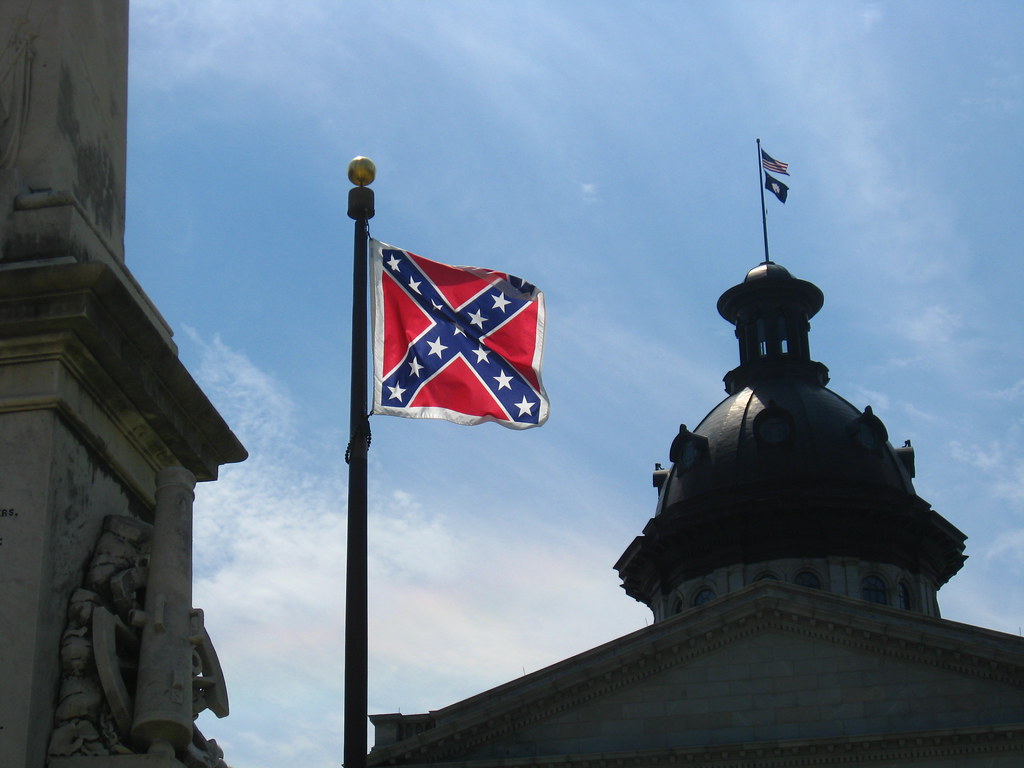
222 - Columbia, South Carolina(Image by Eyeliam used under CC license via)


Back at the beginning of the millennium, the news was a-twitter with a lukewarm debate about whether or not South Carolina should keep the Confederate flag flying over its capitol building. I was in high school at the time and assigned to argue the issue from the side of the flag-supporters in history class. I read about truck-driving good old boys who emblazoned the stars-and-bars across their bumpers because it’s not about hate, it’s about heritage. It’s about honoring our great-great-grandfathers who were sent off to fight and die in the bloodiest war in American history, they insisted, and most of our ancestors never owned slaves. The epic novel Cold Mountain was topping the bestsellers lists at the time and echoed this sentiment, portraying the war as a senseless tragedy and most Confederate soldiers as confused young boys who merely wanted to fight for local honor.

While these arguments did convince me that many flag-wavers of modern times do not share the racist agenda of others, I argued for the flag in the debate on a technicality. (There wasn’t enough support to remove the flag in the state legislature, and such a move could not bypass the legislature, etc., etc., etc.)

Years later, the issue arose again in a college class, where there was little sympathy for the flag-wavers.

“What about the point that it’s just about honoring the fallen soldiers and Southern heritage?” I asked.

The only black student in the class replied, “I’m from the South and black people are just as much part of Southern heritage as anyone else, and we are not represented by that flag. The Confederacy fought to keep blacks separate from whites and that flag certainly does that.”

Point taken.

Fast-forward a few years later to a birthday bash at my apartment here in Berlin. A friend of a friend is saying goodbye to me and the other hosts, and someone notices a button pinned to the jacket of the date she brought along.

“What’s that?” my friend asks, pointing.

The guy holds up the button and replies nonchalantly, “White power.”

We are all speechless as he turns and leaves.

One friend can’t stop glaring at the spot where the guy used to be. Neo-Nazism has been on the rise where he comes from – that is, the former East Germany – ever since mass unemployment followed the fall of the Wall.  That kid was simply one of many who grew up in shrinking towns with few prospects and who had decided to transform his frustration into racial pride.

What should we have said to him had we not been so paralyzed with shock?

That the button is not okay.

That bronze plaques just a few doors down from my apartment mark where Jewish people were dragged from their homes and shipped off to be murdered in Latvia.

That of course most young swastika-wavers didn’t ever set foot anywhere near a concentration camp.

That to them, in the words of one German friend’s grandmother, the Nazis were about “organizing nice get-togethers for the young people and the local community. Most of them weren’t killers!”

That another friend’s grandfather said, “I never had anything against the Jews. I always said hello to my Jewish neighbors!”

That you don’t have to watch Judgment At Nuremberg to know that the best way to allow genocide and ethnic cleansing and slavery and other human rights atrocities to happen is to encourage everyday people to shrug off arrests and killings as “unfortunate tragedy,” to encourage them to sit comfortably with their prejudices while insisting, “I wouldn’t personally harm anyone,“ and,  “We couldn’t do anything about it if we wanted to!”

Not one of my German friends would ever wear Nazi insignia to honor their country’s history or their grandfathers, many of whom were confused young boys hauled off to the battlefields, convinced they were simply fighting for their nation’s honor.

Those who do wear such paraphernalia are most often found in the modern Nationalist Party of Germany, which today lists “getting over the Holocaust” as one of its main political goals. We’ve apologized enough! they insist. All this complaining about Nazi Germany is overdone! White guilt is the real problem of our times.

Several of these goals are shared by the Council of Conservative Citizens, which years ago presented France’s National Front party with a Confederate flag from the South Carolina state capitol, which right-wing pundit Ann Coulter argues is “not a racist” organization, which Dylann Storm Roof cites in his manifesto as the first organization he referenced at the beginning of his militancy.

Moments after the kid and his white power button were gone, a German friend finally sighed, “That’s an embarrassment to my generation.”

And Dylann Storm Roof’s agenda is an embarrassment to mine.

I’m not directly responsible for his actions. But I’m an heir to the last Western country to abolish slavery on its soil. And I’m the beneficiary of loads of white privilege in the U.S. and around the world. And I belong to a generation whose ignorance about racism is perhaps the greatest facilitator of it.  As Gene Demby of Codeswitch notes:

Roof will read to many as some sort of fossilized outlier, a remnant of a vanishing tribe…

[But] it turns out that even as this generation is on the whole “cool” with interracial marriage and dating, there’s a lot of daylight between the way white millennials and those of color feel about a bunch of other questions about race… Young white people were nearly twice as likely to say that the government pays too much attention to the problems of racial minority groups. They were also nearly twice as likely to say that discrimination against white people has become as big a problem as discrimination against minorities…

In the Oxford journal Public Opinion Quarterly, researcher Vincent Hutching combed through public opinion surveys taken before and after several presidential elections and found that “younger cohorts of whites are no more racially liberal in 2008 than they were in 1988.”

And really, why would they be? America’s public schools are more segregated now than they were 40 years ago. Americans continue to live in very different worlds; a 2011 study showed that ethnic identity outranked income as a predictor of where people live…

There’s also good data suggesting that white millennials have a far rosier view on race relations than their contemporaries of color. This too makes sense when you think about the schools, the stark housing segregation, the fact that on average white people have hardly any friends of color, and, perhaps more importantly than we realize, the fact that they just don’t have much experience talking about this stuff. (In fact, it’s safe to assume that Roof has spent far more time discussing race than most people his age.) As Politico’s Sean McElwee put it, the data that’s out there “suggests that millennials aren’t racially tolerant, they’re racially apathetic: They simply ignore structural racism rather than try to fix it.” …

A big Pew study on multiracial Americans released in June found that most of the country’s multiracial adults are likely to identify with one race — usually a non-white one — often because of their own experiences with race-based discrimination.

Indeed, I grew up frequently believing racism was a thing of the past, unaware that my white privilege was what permitted me to do so. I winced but did not reflect when I heard classmates say, “I don’t get what black people’s problem is. I mean, what more do they want?”

Three weeks ago, North Carolina high school students on a trip to the Gettysburg battlefield took some selfies with the Confederate flag, titled them “South will rise,” and uploaded them to Instagram. After garnering racist remarks (“I just bought my first slave”) and then finally outrage, the poster issued a non-apology:

I’m sorry that my picture offended people and especially since my initial caption (that I changed once I realized people took it seriously), but I’m currently on the Civil War trip learning about the history of our country and this just so happens to be a pretty fucking important part of it. We were reenacting Pickett’s charge in which the South lost 85% of their soldiers. These aren’t the Confederate flags in fact, they’re the North Carolina regimental flags. I’m proud to be a part of my state and I’m sorry my photo was so offensive but I find it appropriate in that I’m honoring heroes that fought to protect their home and families.

We cannot take credit for our ancestors’ achievements if we refuse to learn from their failures.

The plaques near my apartment were hammered into the pavement of our street to say one thing to everyone who passes by: Never again. You don’t have to consider the differences between the Holocaust and the American slave trade to know that both count among the darkest episodes in human history.

You don’t have to consider the difference between casual racist remarks and full-blown hate crimes to know that they enable each other. Roof has proven himself to be a bloodthirsty killer. He is also a high-school dropout craving something to believe in, and ended up drawn to white supremacy. And there are many, many like him throughout the United States, here in Germany, and around the world. If we do not confront the insidious ideas they are willing to kill for, if we do not address the newly uncovered fact that blacks shot by police in the U.S. are more than twice as likely as whites to be unarmed, if we don’t get flag-wavers to listen to those they frighten, then we are doomed to witness this happen again and again.


Why Do Names for Minorities Keep Changing?

14 Jun

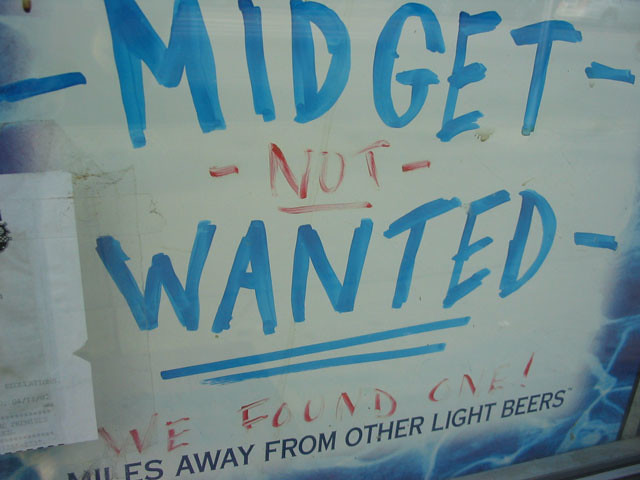
midget not wanted(Image by CN used under CC 2.0 via)

I’ve been writing about the word “midget” more than usual this month, thanks to an Irish public service announcement and then GoogleTranslate. The taboo nature of the word in the dwarf community is almost amusing when we consider that the world’s largest dwarf advocacy organization, Little People of America, was originally named Midgets of America. No lie. (You can read about why I feel that the change was hardly an improvement here and why others do as well here.)

Minority names have been changing a lot throughout the last century. This social pattern has been dubbed the Euphemism Treadmill by psychologist Stephen Pinker. Toni Morrison has pointed out that it’s all about power: “The definers want the power to name. And the defined are now taking that power away from them.” But as names for minorities keep changing, many laypeople keep complaining about the seemingly convoluted nature of of it all:  

“Can’t they just stick to a name and be done with it?”

“Why should I have to be careful if they’re going to be so capricious about it?”

“It seems like they’re just looking for us to slip up so they can call us out!”

It’s not hard to understand where this frustration comes from. No one likes being accused of insensitivity for using a word they had thought was in fact accurate and innocuous. But rarely does anyone ask why the names change.

In 2010, President Obama signed Rosa’s Law, classifying “intellectually disabled” as the official government term to describe what in my childhood was referred to as “mentally retarded.” “Mentally challenged” and “mentally impaired” were other terms suggested and used in PC circles in the 1990s. Already I can sense a good number of my readers wondering whether these changes were truly necessary. I can also sense, however, that few would wonder whether it was necessary to abandon the terms “idiots,” “morons,” and “imbeciles” to refer to such people.

“Idiot,” “moron,” “imbecile,”  and “dumb” were all medical terms before they were insults, used by doctors and psychologists across the Anglophone world. But gradually laypeople started using them to disparage any sort of person they disagreed with. And now this is their only purpose. Instead of getting all of us to stop using these words as insults, the medical minorities have stopped accepting them as official names.

The names for psychiatric disorders and developmental disabilities are particularly prone to being re-appropriated by the mainstream to describe behaviors and tendencies that barely resemble the diagnoses. “Sorry, I wasn’t listening,” I once heard a colleague apologize. “I have such ADD today.”

“I think you’re becoming pretty OCD,” quipped a friend upon perusing my books, which are strictly organized by size.

“That movie kept going back and forth. It had no point! It was so schizophrenic.”

For over 10 years now, psychiatric researchers and patients have been working to abandon this last one. Using “schizophrenic” to describe anything that oscillates between two opposing views or behaviors can easily lead to widespread ignorance about the intricacies of the condition. “Psychosis susceptibility syndrome” is one proposed replacement, but the ubiquity of “psychotic” in common parlance may prove to be equally problematic. “Salience syndrome” was the term most preferred by patients participating in a survey at the University of Montreal and was published in the most recent edition of the Diagnostic and Statistical Manual of Mental Disorders in 2013.

This is the choice we have about labels for minorities: We either stop using minority labels to insult people, or get used to minorities asking us to use different labels to refer to them.

But if only it were that simple. Getting people to abandon marginalizing terms for minorities without fighting about it is as difficult as the word “political correctness” itself. There are two reactions all too common in any given conversation about political correctness and they both invariably botch the conversation:

  • Libertarian Outrage: “You can’t tell me what to say!  I can call anyone what I wanna call ’em and it’s their own fault if they’re upset!”
  • Liberal Outrage: “I’ll humiliate you for using an old-fashioned term because PC is all about competition and it feels cool to point out others’ faults.”

Both reactions are based on a refusal to listen and a readiness to assume the worst of the other side. Plenty of anti-PC outrage is fueled by the belief that any discussion about names and language is hot-headed and humorless, and plenty of liberal bullying is fueled by the belief that honest-to-goodness naiveté is as morally objectionable as outright hostility.

Political correctness is not a competition, and if it were, it would be one that no one could win. A human rights activist may be an LP with SAD who is LGBTQIA and know exactly what all those letters mean, but they may not know that “Lapland” and “Fräulein” are now considered offensive by the people once associated with them. And they are less likely they know about the taboo term in German for the former Czechoslovakia.

And as someone who’s spent her life having to decide how she feels about “midget” and “dwarf” and “little person,” I can tell you that attitudes are far more important than labels. Because even if the word often matches the sentiment, this is not always the case. There’s a difference between the stranger who told my father when I was a kid, “She’s an adorable little midget!” and the coworker who told my cousin recently, “The best thing about Game of Thrones is getting to laugh at that midget!” 

I will always prefer to have an in-depth discussion with someone about the meaning of dwarfism than to call someone out for using a certain word.  I will always prefer to hear someone earnestly ask me how I feel about a certain word than witness them humiliating someone else for uttering it.

Too often these discussions are diluted down into simple lists that start to look like fashion do’s and don’ts, and this is perhaps the gravest insult to the noble intentions of those who kick-started the PC movement. As one progressive blogger pointed out years ago in The Guardian, her lesbian parents are firm supporters of trans rights and, up until recently, used the word “tranny” without any idea that it is widely known among trans people as a pejorative. Too much sympathy for the couple’s ignorance could be harmful. When the mainstream insists that no one should be expected to know about newly taboo terms for minorities, it implies that no one should be expected to be listening to the human rights conversations that are going on about these groups. But conversely, too little sympathy for sheer ignorance is equally unproductive.

Because bigotry is not ignorance. As a wise man said, bigotry is the refusal to question our prejudices.   

Baltimore Is Everyone’s Problem

3 May

Mural, Baltimore(Image by Eli Pousson used under CC 2.0 via)
 

I could write about the year I spent in downtown Baltimore, when I rode past the above mural every day, when the neighborhood I lived in was serving as the inspiration for the crime show Homicide: Life on the Street. But this is not the time for white people to talk about themselves.

This is the time to consider the undeniable disparities between white people and black people living in Baltimore, and elsewhere in the U.S. This is the time to acknowledge the privileges and freedoms black Americans still cannot enjoy today. And this is the time to listen to what we are being asked to do by those who have good reason to be upset about all this.

If we spend most of our time telling poor and disenfranchised people how they should behave rather than examine what we regularly take for granted, then we’re not interested in fixing the problem. We’re just interested in congratulating ourselves for being better than others.


Is It Wrong to Give Your Kid an Extraordinary Name?

26 Apr

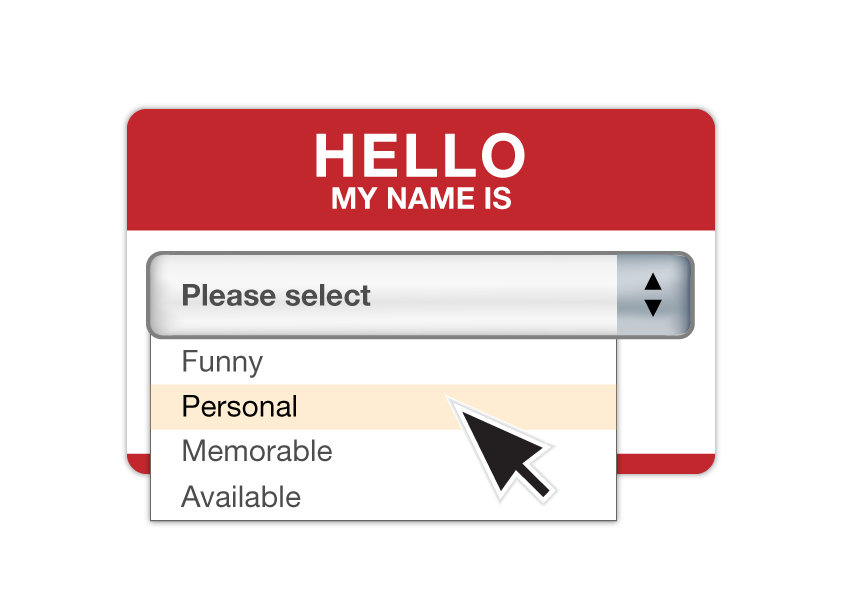
Hello My Name Is... (Image by Alan O’Rourke of workcompass.com used under CC 2.0 via)


Every coupled friend I have here in Germany is, as of this year, a parent. And looking upon the names bestowed upon the new generation, I must say I like them all. Or at least, I don’t hate any of them. This is impressive when considering that, if my partner and I ever want to get into a fight, we simply start discussing names we would hypothetically pick for a child. Just give us five minutes and soon we’ll be shouting, “Bo-ring!” “Flaky!” “Hideous!”

And then we run up against the unanswerable question: Is it harder to have a mundane (a.k.a. boring) name or an unusual (a.k.a. weird) name?

While I enjoy the sound of my own name—as many if not most people do—I haven’t enjoyed seeing Emily end up in the top ten of the most popular U.S. baby names for the past three decades. Emily was the first name a sociologist in Freakonomics came up with when asked to list “typical white girl names” in the U.S. One hot summer in Upstate New York, I worked in a room with five other Emilys, all my age. One friend had so many Emilys in his life that he added permanent descriptors to differentiate us. (I was “Home Emily.”) Matt Groening was definitely on to something when he listed meeting-another-kid-with-your-name as one of childhood’s greatest traumas.

This is why I see the appeal of extraordinary names. After all, the whole point of giving a child their own name—as opposed to, say, calling them Person or Daughter No. 1—is to distinguish them from others. To have them, and not four other people, look up when you call them. In my years as a school teacher, I had a much easier time remembering Xenia, Letitia and Suma than Tom, Jim and Kate. I’m also grateful to parents who opt to avoid the sound-combinations that happen to be trending, reducing the likelihood of my having to remember which student is Julie and which is Julia, or whether the boy in front of me is Leon, Leo, or Leonard. I regularly confuse Kristen Stewart and Kristin Scott Thomas, but I’ll never forget Quvenzhané Wallis till the day I die.

Black Americans are renowned for frequently giving their children names that sound vaguely African with modern flourishes, from Baratunde and Beyoncé to Kwame and Malia. I spent a good deal of my childhood on Long Island and in Baltimore where I had classmates and friends named Chiwanna, LaTaesha, Zeeyaré, and Teyonté. South African comedian Trevor Noah has poked fun at how very not African such names sound where he comes from, but the attempt to reconstruct cultural ties, however inaccurate, is perhaps most understandable in the context of those whose ancestors were violently removed from their culture:


Looking down on extraordinary names can have xenophobic undertones. After all, the pre-1960s model of blending into middle class America resulted in immigrants named Wei-Li and Helmut swiftly transforming into Winnie and Herbert. An insistence that it’s cruel to name your child something unusual suggests something wrong with diversity or being a minority.

“That kid is gonna get teased so bad!” is the usual response to an extraordinary name. But wouldn’t it be better to teach your child how to react to schoolyard teasing with self-confidence and empowerment rather than avoid anything that might make them remarkable? Studies show the Boy Named Sue Effect is real. That is, my friends Lucrezia, Baldur and Bronwyn are more likely to have strong and sturdy personalities than my friends Matt, Matt and Matt.

As one psychologist explained in The New York Times:

Researchers have studied men with cross-gender names like Leslie. They haven’t found anything negative — no psychological or social problems — or any correlations with either masculinity or effeminacy. But they have found one major positive factor: a better sense of self-control. It’s not that you fight more, but that you learn how to let stuff roll off your back.

Then again, some endeavors to be different do seem less defensible than others. As noted before, a study in 2010 showed that teachers here in Germany are more likely to give lower grades and presume unruly behavior of kids named Cindy, Mandy or Kevin because they are assumed to come from anti-intellectual, anti-social homes. These names are common among children born in the Eighties and Nineties in the former East Germany where Hollywood had a strong influence, Kevin having boomed right after the international success of Home Alone. Smashing stereotypes about the people from behind the Iron Curtain is admirable, but destigmatizing Macauley Culkin feels less necessary.

And what about the potential for sounding pretentious? German punk singer Nina Hagen named her daughter Cosma Shiva after having allegedly seen a UFO while pregnant. The most compelling argument against picking a name from a distant culture I’ve heard comes from a fellow Long Islander with an Indian first name and a Jewish surname given by her Jewish dad and mother whose parents hail from Chennai:

I don’t think it’s offensive when a white couple reaches around the world for a name. I think it’s tacky. If you want to name your kid something foreign and exotic, then get to know someone foreign and exotic, and marry them. Otherwise, stick to what you know well. You’re trying to sound deep and yet your relationship to the culture isn’t deep. It’s shallow.

Not to immediately insult Dhani Harrison, but she has a point.

Having no cultural context for a name can be very problematic. What if the foreign name you’ve picked “just because it sounds nice” is widely known abroad as the name of a brutal dictator, infamous celebrity, or literary villain? If a WASPy American couple stumbled upon “Mohammad” or “Fidel” for the first time and decided to give it to their son just for the sound of it, they would be looked upon with a good deal of suspicion. In Amy Tan’s The Kitchen God’s Wife, a man returning home to China after a trip to the U.S. tricks his rival into taking on the name Judas when dealing with Western businessmen, promising him that it is the name of very well-known, powerful historical figure.

And controversy aside, phonetics often don’t translate easily across cultures. Not only are my favorite English names often butchered by German accents, but most of the German names that sound loveliest to me and my American family elicit horrified looks from my contemporaries in Berlin. (Apparently “Hannelore” is one of the ugliest names anyone could ever think of in Germany today.)

This proves, however, that it is often nothing more than a matter of taste.  One person’s tacky is another person’s terrific, and there is little we can do to change that.


Political Correctness Makes You More Creative

21 Dec

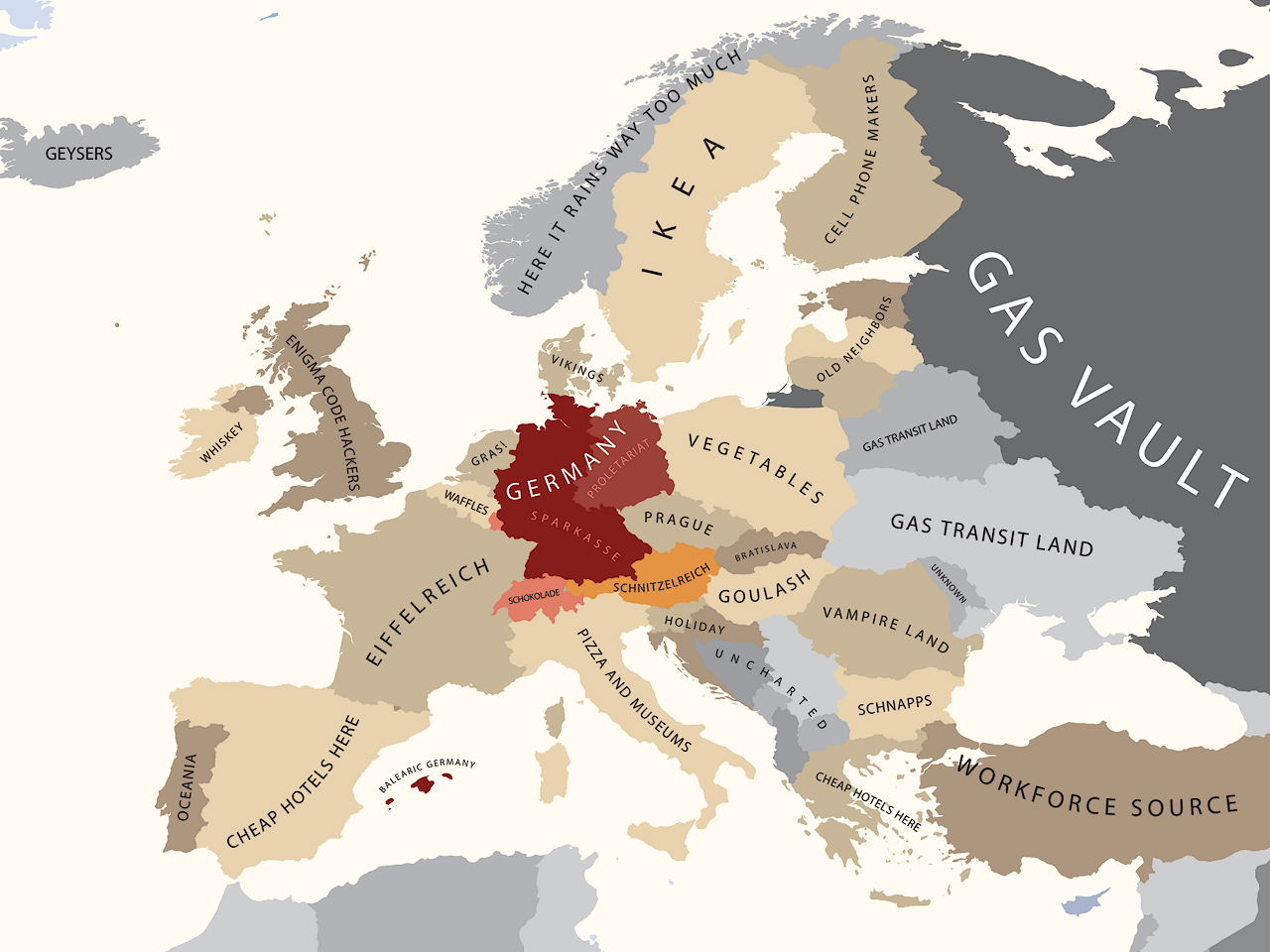
Europe According to Germany(“Europe According to Germany” by Yanko Tsvetkov used under CC 2.0 via)


Study On Avoiding Stereotypes Smashes Stereotype About Avoiding Stereotypes. Sounds like an Onion headline. The recent study at UC Berkeley reveals that encouraging workers to be politically correct—that is, to challenge and think beyond stereotypes—results in their producing more original and creative ideas. As Olga Kazhan points out at The Atlantic, this flies in the face of conventional wisdom, which asserts that political correctness stifles the truth for the sake of acquiescing to the hypersensitive. Yet the study shows that truth and knowledge are obscured when facts are simplified into stereotypes.

Take, for example, the belief widely held in the West that women talk more than men do. Unpacking this stereotype unleashes several revelations about modern Western culture. All in all, women do not use more words than men on average. Women do talk more than men in certain small groups, but men talk more than women at large social gatherings. Listeners, however, tend to become more easily annoyed by women talking in such settings, so they notice it more. Baby girls in the West do start talking earlier than baby boys do, leading pop culture to promulgate the idea that female loquaciousness must be inborn. Yet more than one study have found that girls’ advantage may very well be because mothers talk more to their infant daughters than to their sons. And what about the stereotype that women remember emotional experiences better than men do? There appears to be evidence for this, rooted in the fact that American adults tend to ask girls more questions about their feelings during their developmental years, while encouraging boys to instead focus on their actions and achievements.

So while the genders may behave differently in some respects, further scrutiny shows that we certainly treat the genders differently. Political correctness demands we alter this. And then see what happens.

But instead of being seen as a great generator of progress and innovation, political correctness is more often perceived as a silencing technique, if Google’s image search is any indication. There is some valid cause for this concern. One of the worst tactics taken up by some minority rights activists is the phrase You can’t say that. It often stems from the noble idea that no one should have to endure threats, harassment and direct insults in everyday life. But simply banning bad words can lead to the destructive assumption that simply using the right words makes everything okay.

After all, avoiding stereotypes is not about shutting up but embracing depth and nuance. Professor Mihaly Csikszentmihalyi researches happiness and creativity, and in his latest book, he finds that one of the best tools for innovation is not limiting our own selves to gender stereotypes:

Psychological androgyny… refer[s] to a person’s ability to be at the same time aggressive and nurturant, sensitive and rigid, dominant and submissive, regardless of gender. A psychologically androgynous person in effect doubles his or her repertoire of responses and can interact with the world in terms of a much richer and varied spectrum of opportunities. It is not surprising that creative individuals are more likely to have not only the strengths of their own gender but those of the other one, too.

While the studies cited here focus on gender stereotypes, it’s easy to see how political correctness can foster productivity when applied to all sorts of minorities. For example, one way to react to  urgings to avoid antiquated terms like “Bushmen” and “Hottentots” is to ask why. This will reveal that “Hottentot” was a name assigned by Dutch and German colonists meant to caricature the sound of the Khoekhoe language, and that “Bushmen” was a derogatory name for the San first assigned to them by the Khoekhoe. This uncovers the fact that the San have been the most exploited people of southwestern Africa, primarily because their society has no system of ownership. They have been stereotyped as primitive and therefore less intelligent, but like so many non-state societies surviving into the present day, they have done so by developing skills that help them live in isolation – i.e., in unforgiving environments where other peoples have perished.

Or you can react to the urging to avoid “Hottentots” and “Bushmen” by simply saying, “I’ll call them whatever I want to call them!”  As the saying goes, stereotypes are there to save us the trouble of learning.


The Best Picture Books for Preventing Prejudice

30 Nov

Book sculpture (Image by Ellen Forsyth used under CC 2.0 via)

Perhaps you are looking for gifts for little ones this holiday season. Or perhaps, like me, you simply know a staggering number of kids who will all have birthdays in the coming year. For either scenario, here is a sample of excellent—i.e., not boring or ugly—picture books that help raise diversity awareness through reading. All of these books have been featured in my workshops for pre-school teachers about helping minority children feel represented and teaching all students to see minority kids as their equals. They are divided into five categories based on objective.

***

Books That Know Not Every Family Is Upper/Middle Class with a White, Straight, Biological, Married Mom and Dad… The most delightful thing about pre-schoolers is that they have almost no idea what “normal” means. Of course they are surprised by the extraordinary, but they don’t place value judgments on it until someone older teaches it to them. Critically analyzing the media images and stories kids consume is crucial because the media not only educates them about the world beyond their doorstep, but it instills them with subconscious ideas about what kinds of people society believes deserve to appear in books, film, and television. Kids are of course individuals and some may be temperamentally predisposed toward narrow-mindedness, but a preemptive strike against prejudice never hurt anyone.


Tell Me Again About the Night I Was Born by Jamie Lee Curtis (available in German & Spanish) – A story of adoption as told from the point of view of the child. “Tell me again how the phone rang in the middle of the night and they told you I was born. Tell me again how you screamed. Tell me again how you called Grandma and Grandpa, but they didn’t hear the phone ’cause they sleep like logs…”


A Chair For My Mother by Vera B. Williams – A story that portrays poverty without uttering the word. The daughter of a single working mom tells of the day they lost everything they owned in a house fire. They’ve been saving up every spare cent they have to buy a big comfy armchair for their new home ever since. In the end, Mom finally has a place to lie back and rest her sore feet when she comes home from work at the diner, and her daughter can curl up to sleep in her lap.


Two Homes by Claire Masurel (available in French & German) – A boy proudly shows off his two homes. “I have two favorite chairs. A rocking chair at Daddy’s. A soft chair at Mommy’s.” The parents are portrayed as having nothing to do with each other, while always beaming at their son. “We love you wherever we are, and we love you wherever you are.”


The Snowy Day by Ezra Jack Keats (available in Spanish) – Ezra Jack Keats was one of the first American illustrators to feature everyday black children in his stories. All of his books portray kids growing up in inner city neighborhoods. This is a brilliantly illustrated, very simple story about a boy enjoying freshly fallen snow in every way possible.


Susan Laughs by Jeanne Willis – Written in verse, Susan swings, makes faces, sings songs, plays tricks, splashes in the water, rides on her dad’s shoulders, races in the back of a go-cart. Susan also happens to use a wheelchair.


What Makes A Baby by Cory Silverberg (available in German & Spanish) – A book about reproduction (sperm, egg, uterus) that leaves out gender (mom, dad, man, woman). No matter how many people want to ignore it, plenty of kids have been born via IVF, surrogacy, and to LGBTQ and intersex parents. This book allows those kids to have a conversation about where they came from, while emphasizing that your family is the people who were waiting for you to come into the world.

***

Books For Extraordinary Situations That Have To Be ExplainedThese stories get into the specifics of certain disabilities, conditions and diverse backgrounds, but there is no reason they should not be read to every child.


Thinking Big by Susan Kuklin – This book is out of print, but well worth the search, portraying a day in the life of an 8-year-old girl with achondroplastic dwarfism. She is great at painting, but needs stools to reach things at home and school. She has friends who hold her hand so she won’t get left behind on hikes, but she talks openly about the kindergartners who call her “baby.” She loves going to Little People of America meetings, but she loves being at home with her mom, dad and younger brother best of all. This book accompanied me from pre-school to fifth grade, read aloud by my new teacher to the class at the beginning of the school year in order to explain why I looked different from the others and to encourage my classmates to be upfront with their questions.


I Have A Sister My Sister Is Deaf by Jeanne Whitehouse Peterson– A day in the life of a hearing girl and her deaf sister. They play, argue, and help each other out, while explaining deafness as a mere difference in terms young kids can understand. The story has a gentle, poetic rhythm. On a deer hunt, the narrator explains, “I am the one who listens for small sounds. She is the one who watches for quick movements in the grass.”


The Black Book of Colors by Rosana Faría (available in French, German & Spanish) – Like the illustrations, everything is black for Thomas, so when it comes to colors, he smells, hears, and feels them. “Red is as sweet as a strawberry, as juicy as a watermelon, and it hurts when it seeps out of a cut on his knee.” The images are embossed for the reader to touch. The Braille alphabet is provided at the back of the book.


People by Peter Spier (available in French & German) – A superbly illustrated celebration of human beings and cultures all around the world. We have different skin colors, noses, hair styles, holidays, favorite foods, alphabets, hobbies, and homes, but we’re all people. It should be noted that this might be a bit of an information overload for children under 4.

***

Books About Moments When Diversity Is Considered Disruptive… These books empower kids who have been teased or interrogated for standing out. They can also be used to teach a bully or a clique how to understand and accept harmless differences. Some teachers rightly express concern over introducing the problems of sexism or racism to a child who has never seen a boy in a dress or a black girl before. Doing so could foster the notion that we should always associate minorities with controversy. Save them for when conflict does arise, or when the child is old enough to start learning about history and intolerance.


Amazing Grace by Mary Hoffman (available in Arabic, German, Panjabi, & Urdu) – Grace is a master at playing pretend. When her class decides to put on the play Peter Pan, she’s told by some know-it-all classmates that she can’t because she’s a girl and she’s black. She shows ’em all right.


And Tango Makes Three by Justin Richardson and Peter Parnell (available in German) – Penguins Silo and Roy live in a New York zoo and are utterly inseparable. The zookeepers encourage them to take an interest in the lady penguins so that they can soon have baby penguins, but to no avail. Silo and Roy build a nest together and end up adopting an egg. When Baby Tango is born, the three of them couldn’t be happier.


You Be Me – I’ll Be You by Pili Mandelbaum (available in French) – A biracial girl tells her white dad she wishes she looked like he does. Dad explains that he is milk and Mom is coffee, and she is café au lait. He says she is beautiful and sometimes he wishes he looked like her. Soon they’re dressing up in each other’s clothes, she’s braiding his hair, and he’s powdering her face. She wants to go into town and show Mom. On the way, they pass by a beauty shop and Dad points out how many white women are curling their hair and tanning their skin, while so many black women strive for the opposite.


“Sick of Pink” by Nathalie Hense (currently available only in German, French, Japanese, Norwegian & Portuguese) – The proud musings of a girl who likes witches, cranes, tractors, bugs, and barrettes with rhinestones in them. She knows boys who sew pretty clothes for their action figures and who paint daisies on their race cars. When grown-ups shake their heads and tell them, “That’s for girls!” or “That’s for boys!” she asks them why. “That’s just the way things are,” they tell her. “That’s not a real answer,” she deadpans.

***

Fairy Tales Beyond White Knights and Helpless Princesses… Even the most iconoclastic of people have their fantasies of love and heroism shaped by folklore. Yet the idea of revising Western fairy tales to make them less stereotypical has been met with a strong backlash. Whether or not you think it’s appropriate for kids to read Sleeping Beauty, Little Black Sambo or The Five Chinese Brothers, there is no harm in providing them with additional legends about love, valor and wisdom to make our cultural heritage more inclusive.


Children of the Dragon by Sherry Garland – Selected tales from Vietnam that rival any of the Grimm’s fairy tales in adventure, imagination and vibrancy. Many of the stories are supplemented by explanations of Vietnamese history that provide context.


Sense Pass King by Katrin Tchana – A girl in Cameroon outsmarts the king every time. Besides being one of the greatest illustrators of the 20th century, Trina Schart Hyman was a master of ethnic and socio-economic diversity in her many, many picture books.


Tam Lin by Jane Yolen – A Scottish ballad wherein a young maiden rescues her true love from the clutches of the evil faerie queen. In the end, she wins both his freedom and her clan’s great stone castle back. Not suitable for easily frightened children.


Liza Lou and the Yeller Belly Swamp by Mercer Mayer – A fearless girl triumphs over a ghost, a witch, a troll and a devil on her way to Grandma’s house in the bayous of Arkansas. Some of the best illustration there is. Think Little Red Riding Hood had she managed to outwit the wolf on her own.


The Talking Eggs by Robert D. San Souci – A Cinderella story of sorts set in the backwoods of the South. An elderly wise woman uses magic to help a kind, obedient girl escape her cruel mother and spoiled sister. In the end, she rides off to the big city in a carriage. (With no prince involved, this one passes the Bechdel test.)


King and King by Linda de Haan (available in Czech, Dutch & German) – It’s time for the prince to hurry up and get married before he has to rule the kingdom, but every princess who comes to call bores him to tears. The very last one, however, brings her utterly gorgeous brother, and the king and king live happily ever after.


The Paperbag Princess by Robert Munsch – After outwitting the dragon, Princess Elizabeth rescues the prince only to be told that her scorched hair and lousy clothes are a major turn-off. She tells him he is a bum. “They didn’t get married after all.” She runs off into the sunset as happy as can be. I have yet to meet a child who does not love the humor in this story.

***

The Best Book on Diversity To Date…


Horton Hatches The Egg by Dr. Seuss – A bird is sick of sitting around on her egg all day, so she asks Horton if he would mind stepping in for just a minute. He is happy to help, but the bird jets off to Palm Beach the minute she is free. Horton continues to sit on the egg while awaiting her return. He withstands the wind, the rain, a terrible cold, and three hunters who insist on selling him and the egg off to the circus as a freak show. Throughout it all he reminds himself, “I meant what I said and I said what I meant. An elephant’s faithful, one hundred percent.” After he becomes a media sensation, the bird comes back to claim her prize.

Whenever I used this one in the classroom, I would ask the kids whom the egg belongs to. The 3-year-olds, with their preliminary grasp on logic, would always give the black-and-white answer: “The egg belongs to the bird because eggs go with birds.” The 4- to 5-year-olds would invariably go the other way, plunging into righteous indignation over the injustice of the bird’s demands: “The elephant! The egg belongs to the elephant because he worked so hard and he loved it so much and she just can’t come back and take it!” In the end, the egg cracks open and out flies a baby elephant bird, who wraps his wings around Horton. This is Seuss at his best, showing that loyalty makes a family.

Are East Germans A Minority?

9 Nov

Ampelmännchen(Image by S. Freimark used under CC 2.0 via)


I needed only head out my front door and walk to the end of my block to get to the Light Border commemorating that 25th anniversary of the fall of the Berlin Wall tonight. The price to pay for this was the waves of tourists that have been washing through the street all weekend. Parents trying to explain to it to their children have been constantly underfoot. Which makes you pause and wonder, How do you explain it?

The fall of the Wall is my very first memory of watching the news a child. It was bizarre to see so many people rejoicing that It is finally over!, when I had only just discovered that it had ever been there in the first place. In later years, I of course learned more – specifically, the American version of the story that asserts that Ronald Reagan brought down the Wall and America won the Cold War. The fact that so many Berliners were chanting, “Gorbi! Gorbi!” amidst the celebrations 25 years ago is conveniently left out of this narrative.

I moved from New York to Berlin 10 years ago, when the shine of Reunification had well worn off.  The former East Germany was known as the land of unemployment and racism, and the former West Germany was known as the land where little had changed and nobody cared about the East. The terms Jammer-Ossi (“Whiny Easterner”) and Besser-Wessi (“Uppity Westerner”) were well known.  Some East Germans began talking about what they missed about the old country: a much lower crime rate, better kindergartens, consumer products low in quantity but built to last. And, above all, no unemployment.

One of my earliest jobs in Berlin put me in a room with five other coworkers. One of them hailed from Munich and, while reading the morning paper, regularly scoffed about East German nostalgia. “There’s nothing to be nostalgic about!” she huffed. “It was disgusting, just like the Third Reich!” My other coworkers remained silent, but after her umpteenth outburst, a young man finally sighed, “It wasn’t the Third Reich. Yes, there was no freedom of speech or travel, but it was not about eugenics or mass genocide!” The conversation quickly unraveled into uncomfortable silence.

One of the women who had remained silent all along later approached me at the water cooler. “What did you think of that?”

“I thought she was maybe being a bit rude,” I shrugged.

“So rude! I just didn’t want to get into it. I fled East Germany to the West in the Seventies.”

My eyes widened.

“That’s a long story and I don’t want to get into it. But I can’t take her pig-headed opinions about it. She’s always going off about the dumb East Germans, but she doesn’t understand what those people went through!”

Indeed, few of us truly can. For the former East Germany to not only experience unemployment for the first time but massive unemployment—up to 25% in some places—is like a town where no one has ever been sick suddenly overrun with the flu. In the early 1990s, the very idea of writing resumes and performing job interviews struck many East Germans as crass: “You mean I have to keep telling people how awesome I am till they hire me?  That’s prostitution!”     

I have friends from the East who still feel pressured to abandon all hope of working anywhere near where they grew up, moving out of state in search of better futures in Frankfurt or Hamburg or Cologne. Many of their parents were white collar professionals shocked to find themselves unemployed after the Wall came down and have never been fully employed since. I also have friends from the West who moved to the East after Reunification and were ostracized in the workplace. Tensions have eased a bit in the 10 years I’ve lived here, but Berlin is undoubtedly the place you’re most likely to see people who grew up on opposite sides of the Wall intermingling. The extent of prejudice between the two former nations became a legal issue last year when a woman sued a potential employer for discrimination. Interviewers at a company in southern Germany had scrawled on her job application “Drawback: East German.” The court ruled against the plaintiff on the grounds that East Germans do not qualify as an ethnic minority.

Legal arguments aside, those who grew up in East Germany certainly have a different history that has had considerable impact upon their culture. Girls and boys named “Mandy,” “Cindy,” “Jenny,” or “Kevin” are easily identifiable as coming from East Germany, where Hollywood movies in the 80s and 90s set a trend. A recent study revealed that such names invoke prejudice among school teachers who often assume such children will come from anti-intellectual home environments. East Germans over 30 pride themselves on being able to read Cyrillic, while their relationship to Russia is less affectionate. When the Soviet Forces occupied the East, they looked upon it as That Country That Invaded Us Twice In 20 Years. Russia lost more of its citizens to Nazi Germany—the conservative estimate is 20 million—than anyone else. East Germans in turn saw the Soviets as That Army That Raped Over 1.4 Million Of Us. The two countries never became true friends.

But would it help to spread diversity awareness and promote tolerance between East and West Germans if the former were recognized as a minority? Or should we stick to seeing the Cold War and the Fall of the Wall as a struggle not of nations but of ideas? After all, it was democracy, not nationalism, that was the driving force behind the peaceful revolution that brought down the Wall. Yet democracy is frequently given little thought beyond its associations with that nebulous word “freedom.” As one East German friend pointed out, too many portrayals of Reunification focus a lot more on the freedom to buy a Porsche and choose between 16 different brands of toothpaste than the freedom from government surveillance, knee-jerk patriotism, voter suppression, and execution by the state. One of the quotes of the East German uprising most well-known over here—but rarely heard in the U.S.—came from protester Steffi Spira: “I want my grandchildren to grow up in a country where they do not have to salute the flag!”

When the Nationalist Party and Neo-Nazi groups find substantial support in the East among the disaffected youth of today, their opponents frame it as a battle not against evil but for democracy. Because nothing undermines dictatorship better than the idea that Everybody matters. It is the essence of both democracy and minority rights. And no developed nation knows as well as Germany how fragile this idea is.


The Easiest Way to Avoid Saying “He” or “She”

2 Nov

Sexism abounds(Image used under CC 2.0 via)


A linguist will have a hard time if he tries to come up with the perfect gender neutral pronoun in English.

A linguist will have a hard time if he or she tries to come up with the perfect gender neutral pronoun in English.

A linguist will have a hard time if he/she tries to come up with the perfect gender neutral pronoun in English.

A linguist will have a hard time if s/he tries to come up with the perfect gender neutral pronoun in English.

A linguist will have a hard time if they try to come up with the perfect gender neutral pronoun in English.

A linguist will have a hard time if zhe tries to come up with the perfect gender neutral pronoun in English.

A linguist will have a hard time if zie tries to come up with the perfect gender neutral pronoun in English.

Depending upon your political leanings, you may find one or more of the sentences above ridiculous. Many people find the very idea of gender neutral pronouns preposterous to the point of sending death threats to those who have dared to formally enter them in style guides. In the middle of the last century, Strunk and White dismissed any linguistic adaptations motivated by gender equality because, they argued, the word “he” becomes gender neutral, not androcentric, when referring to everyman, mankind, etc. This argument has failed to hold up since the women’s movement, and most Western periodicals agree that such language is archaic with male chauvinist undertones, hence the plethora of proposed alternatives.

This can get harder in other languages. In German, everyone knows right away if your best friend is a girl or a guy because you have to call a female your “best friendess.” A troll gives away her gender in Russian or French the moment she types, “I’m smart/rich/European.” A Japanese speaker would give it away at the word “I.”

But wherever there are strict rules about gender, there is deep confusion about gender. A “girl” in German (“Mädchen,” from which we get “maiden”) is technically gender neutral because all words ending in –chen are. Thus, German kids grow up on stories like Snow White and Little Red Riding Hood containing lines such as, “The prince took the maiden home to his castle and married it.” English isn’t any more logical when considering that almost all of our modern caricatures of ducks—ducklings, rubber duckies, Donald, Daffy, and Duckula—are automatically associated with boyishness, yet the word “duck” is technically as female as the word “cow.”

Most people on earth speak a language that distinguishes between “he” and “she” because most of the languages of the former colonial powers do. But a study of several hundred of the 6,000+ languages on earth found most do not. Whether you’re speaking Finnish or Farsi, you can talk about your best friend, your teacher, your doctor or your least favorite coworker for hours without letting anyone know anything about the person’s gender identity. No “his” and “hers” bath towels, no needing to find out your baby’s sex for linguistic ease.

So while The New York Times Manual of Style and Usage now urges its writers to avoid gendered pronouns, it appears the best solution would be to avoid English altogether.


White Woman Sues Spermbank for Accidentally Giving Her Black Donor’s Sperm

5 Oct

Unity in Diversity(Image by Fady Habib used under CC 2.0 via)


Man, we can’t go two months without some couple making headlines over a baby they didn’t plan for. An Ohio woman named Jennifer Cramblett is suing a spermbank for impregnating her with the contents of a vial different from the one she selected. The mix-up resulted when a clerk misread Vial 330 as “380.” Her lawsuit reads:

On August 21, 2012, Jennifer gave birth to Payton, a beautiful, obviously mixed race, baby girl. Jennifer bonded with Payton easily, and she and [her partner] Amanda love her very much. Even so, Jennifer lives each day with fears, anxieties and uncertainty about her future and Payton’s future. Jennifer admits that she was raised around stereotypical attitudes about people other than those in her all-white environment. Family members, one uncle in particular, speaks openly and derisively about persons of color. She did not know African Americans until her college days at the University of Akron.

Because of this background and upbringing, Jennifer acknowledges her limited cultural competency relative to African Americans, and steep learning curve, particularly in small, homogeneous, Uniontown, which she regards as too racially intolerant.

As just one example, getting a young daughter’s hair cut is not particularly stressful for most mothers, but to Jennifer it is not a routine matter, because Payton has hair typical of an African American girl. To get a decent cut, Jennifer must travel to a black neighborhood, far from where she lives, where she is obviously different in appearance, and not overtly welcome.

One of Jennifer’s biggest fears is the life experiences Payton will undergo, not only in her all-white community, but in her all-white, and often unconsciously insensitive, family. Despite her family’s attempts to accept her homosexuality, they have not been capable of truly embracing Jennifer for who she is. They do not converse with her about her gender preference, and encourage her not to “look different,” signaling their disapproval of her lesbianism.

Though compelled to repress her individuality amongst family members, Payton’s differences are irrepressible, and Jennifer does not want Payton to feel stigmatized or unrecognized due simply to the circumstances of her birth. Jennifer’s stress and anxiety intensify when she envisions Payton entering an all-white school. Ironically, Jennifer and Amanda moved to Uniontown from racially diverse Akron, because the schools were better and to be closer to family. Jennifer is well aware of the child psychology research and literature correlating intolerance and racism with reduced academic and psychological well-being of biracial children.

Family planning is so endlessly complicated that any law-abiding individual seeking privacy deserves it. But Cramblett is going public with her pursuit of compensation for emotional distress and therein invites judgment. John Culhane writes at Slate that this sort of blunder is bound to happen in the free market of assisted reproductive technology. Julie Bindel at The Guardian warns of a creeping let’s-get-a-designer-baby approach to parenting among those using IVF. “Just remember,” she writes. “If the child you end up with does not exactly fit your ideal requirements, you can’t give it back – and nor should you even suggest that something bad has happened to you.”

Do parents have the right to be guaranteed certain kinds of children? Those pursuing parenthood via sperm donors, egg donors, or adoption have much more freedom to decide against certain kinds of children than those using nothing but their own biology. The application for becoming an egg donor in New York contains over one hundred invasive questions about family and medical history, as well as education, favorite sports, artistic talents and “additional characteristics” such as “cleft chin, full lips, big eyes, or high cheekbones.” Applicants are required to submit three photos “that shows [sic] your face and/or body type clearly.”

I understand why such questions are asked. Many if not most parents already know such things about those involved in producing their child, so why shouldn’t the IVF parents be allowed to know? If my partner and I were to join their ranks, what sort of donor profile would seem most appealing to us? Deciding upon something inherently entails deciding against something else. Nevertheless, it is hard not to see this tick-the-box approach to baby-making as eugenic. How many parents would accept my eggs, with their 50% chance of passing on achondroplasia? How many would sue if someone accidentally got them without asking for them?

Parents seeking to adopt children here in Germany are asked what kind of children they would and would not like to have before they look at profiles. For example, do you mind if your children look extremely different from you? What about physical disabilities? Mental disabilities? Drug addiction? In an interview with a family whose two children were adopted, I was told that the agencies encourage prospective parents to be utterly frank about their fears and prejudices – that an insistence along the lines of, “We can handle anything!” will sound suspiciously naïve.

Such brutal honesty strikes me as reassuringly well-informed, perhaps the result of infamously ideological parents like Josephine Baker or Jim Jones, who flaunted their rainbow families at the expense of the children’s individuality. Reading Cramblett’s descriptions of her relatives’ hurtful reactions to her sexuality, I can sympathize with the feeling that battling one kind of bigotry can be hard enough. Everyone deserves to live free from the unnecessary pain of bigotry. But if we’re going to be suing someone, wouldn’t it be more logical to file complaints against those who make her daughter feel stigmatized and unrecognized? Surely they’re the ones causing “emotional distress.”

While the spermbank does appear to have erred out of negligence and may be at fault, would awarding Cramblett for “emotional distress” not set a precedent and open the door for endless lawsuits over the births of minority children parents did not explicitly wish for? My parents had a 1 in 40,000 chance of producing a child with achondroplasia, as does anyone reading this. (That is, unless you already have achondroplasia.) Should doctors warn every prospective parent of those odds? Should they warn us of the chance for racial atavism? If homosexuality proves to be genetically determined, will parents have a right to sue doctors who fail to remind them of the risk? The very idea of being financially “compensated” for emotional distress is often silly to those of us who know from firsthand experience how vastly unreliable life can be.

Legal decisions aside, my primary hope is that Cramblett and her partner will explain the lawsuit to her daughter in a way that does not cause her to feel any more conflicted about her extraordinary appearance than her relatives’ racist views already do.


Would You Give Up A Disabled Baby, And If So, Why?

10 Aug

Youri(Image by Naoya Fujii used under CC 2.0 via)


Tonight 60 Minutes will feature the very first interview with the Australian couple that has attracted international scorn ever since the Thai woman they hired to be their surrogate mother publicly accused them of adopting one of the twins she gave birth to while refusing Baby Gammy, the one with Down Syndrome. Hiring a surrogate mother who lives abroad is both legal and unregulated in Australia, with none of the criminal background checks or counseling that are required for domestic surrogacy arrangements.

The Digital Age has seen the rise of prospective parents independently seeking out surrogate mothers online without any oversight, as well as a rise in “re-homing,” wherein adoptive parents join Facebook or Yahoo groups to seek out new parents for a child they’ve decided is harder to handle than they had thought. A disturbing Reuters report last fall profiled a couple who handed over a girl with medical problems they had adopted from Liberia to a new family they had found online, only to later discover that the new parents were known sex offenders.

Yet while black market adoption may be on the rise thanks to the Internet, the history of people rejecting only certain kinds of children is depressingly long. Only 2% of all babies born are disabled, yet half of the children up for adoption in the United States are disabled. Half of them are also black. Chad Goller-Sojourner told NPR this year that prior to his adoption by a white family, he was passed over by more than one black couple for being “too dark.”

I am deeply grateful that my parents did not put me up for adoption, like so many parents of dwarfs before them. Being rejected by your own parents simply for your body feels like a rejection of your very life. But I will not start chanting that parents should never ever make adoption plans for their children until we admit that not everyone is capable of being the sort of parent certain children need. The skills required for accepting your child’s skin color or body shape are not the same skills required for accepting a lifetime of waiver agreements about the deadly risks of invasive surgery. In the real world, some marriages do break down and some parents do become abusive and some parents do murder their half-grown children when they try and fail to cope with their child’s disability. I know a good number of people who are great at working independently but terrible at caregiving. In Far From the Tree, Andrew Solomon profiles a British woman who eventually relinquished custody of her severely disabled daughter to a foster mother, telling the NHS, “I’m not the right mother for this child.” Such honest humility requires some degree of bravery and, as Solomon points out, honors the skills of the foster mother and all parents who keep their commitments to disabled children.

Do some parents give up too easily? Absolutely. But are some children better off far away from their parents? Evidently. Because no two parents are alike, what is best for the child is best decided on a case-by-case basis. The Australian case sounds dreadful, but I’m withholding judgment until the parents have had their say. And as long as there is reproduction, there will always be parents who put their children up for adoption or terminate pregnancies, and society must thus ensure that the means for doing so are absolutely safe and heavily regulated.

But we cannot deny that too many parents end up failing to support certain kinds of children because the society they live in fails to support such kinds of people. Parents can usually see through the B.S. of those who urge them to stand by their kids no matter what and who also regularly make disparaging remarks about scars, fat, or dark skin, and openly wince at the idea of looking like a freak, a wimp, or a pussy. We won’t ever lower the disturbing number of prospective parents who would reject a child with an extra finger or toe until we as a society confront what would cause a parent to think that having an extra finger or toe is too horrific to endure.

During a discussion in college about the individual’s right to make their own medical decisions, I was shocked to hear a bunch of my friends insist that they would rather die than lose the ability to walk. Is it possible to attach such extreme shame to a hypothetical situation for yourself without attaching shame to the situation of others who live that way every day?

When I told one of my fiftysomething mentors about how upset I was by the incident, she smiled and said, “Well, that’s something young people are certainly more likely to say than anyone else.”

A fortysomething friend piped up, “Yeah, that is a very young person thing to say. I swore when I was young that I’d shoot myself if I ever went bald and yet here we are!”

Indeed, while the strains of physical pain and special accommodations and repeated doctor’s appointments are very real, perfection is not. And no matter how far technology advances, the belief that we can guarantee ourselves “normal” children is delusional. After all, unlike Baby Gammy and I, 85% of all disabled people were not born disabled. That’s something to bear in mind when heading to the obstetrician’s or the adoption agency.  


The Real Reason You Should Learn A Foreign Language

27 Apr

Language Scramble (Image by Eric Andresen used under Creative Commons license via)
 

“Emily Sanford speaking, how may I help you?”

“Yeah, hi, I just got put through to you by one of your coworkers, and that guy can barely speak a damn word of German! Why do you hire foreigners? Because they’re so cheap?”

“I’d be happy to help you if you could tell me why you are calling, sir.”

“I need to ask about where to distribute some flyers your company mailed me, but I really want to know first why on earth you hire foreigners? I mean, seriously? Is it to save money?”

I pressed him for the details about the flyers, suppressing the urge to blurt out something in German to the effect of, “I American. I no understanded what you say me in Deutschy language.”

Contempt for immigrants who can’t speak the local language at the C1 Level or higher seems to pervade every country. I’ve witnessed an initiative to make English the official language of my parents’ tiny village in Upstate New York after some white farmers heard two words of Spanish on the street, and I’ve been yelled at here in Germany by surly locals for speaking English in public. These complaints are usually steeped in the explicit or implicit stance that if you can’t speak the language, you shouldn’t be here.

Yet speaking a second language is unlike any other skill. Plenty of fiercely intelligent people are terrible at foreign languages and, unlike being terrible at arithmetic or project management, this weakness will render any of their other talents virtually invisible if the job market does not operate in their mother tongue. Speaking the local language flawlessly and eloquently is the best bet to integration in any society. And if it doesn’t happen to be a language you grew up speaking, it’s a lot of work.

I speak German, French, Russian, Spanish, Swedish, and Dutch, but “speak” is a relative term. I can hold basic conversations in Russian and Spanish, but they’re always peppered with errors. (Im probably the American equivalent of the intelligible but amusing foreigner who says things like, I vant you to come sit on de table.) A few years of self-teaching have led me to understand almost anything written in Dutch, but I can’t understand the nightly news and I can’t say anything not in the present tense. My in-laws in Stockholm sweetly praise whatever I dare to say in their language, but I miss most of the details of whatever they say among themselves. After starting a book called Swedish In Three Months seven years ago, I’m still on chapter four.

I’m fluent in German and French, but “fluent” is too simplistic a word for the complexity of what it denotes. My German feels about as good as my English was back when I was in middle school. That is, I can say almost anything I want to say, but I sound a lot less diplomatic and nuanced than I would like to. I still learn new words every day. (Added to my vocabulary this week were “chisel,” “epic,” and “sexual exploitation.”) Explaining an intricate issue like a budget report to a superior at work can still make me falter. I occasionally hear myself using the wrong gender or preposition, an instant giveaway that I’m foreign.  And because double-digit numbers in German are said in reverse order (e.g. “twoandthirty” instead of “thirty-two”), I hate taking down numbers. Always have and always will.

This is why it would be deceptive of me to simply say, “I speak seven languages.” To Brits and Americans, it sounds like bragging, and to Europeans, it sounds suspicious. After all, it’s an unspoken but well-known fact that Brits and Americans who fancy themselves cosmopolitan love to exaggerate whatever knowledge of a foreign language they have, especially when they’re in the company of those who can’t possible test them on it. As British-Canadian satirist Christian Lander writes at Stuff White People Like:

… two years of college Italian does not confer fluency.  For the most part, these classes will only teach a white person how to order food in a restaurant, ask for a train schedule, and over pronounce words when they are mixed into English. Amazingly this small amount of proficiency is more than enough to warrant inclusion on a resume under “spoken languages.”

… When you hear a white person say that they speak your native language, you will probably think it’s a good idea to start talking to them in said language.  WRONG! Instead you should say something like “you speak (insert language)?” to which they will reply “a little” in your native tongue.  If you just leave it here, the white person will feel fantastic for the rest of the day.  If you push it any further and speak quickly, the white person will just look at you with a blank stare.  Within a minute you will notice that blank stare has shifted from confusion to contempt.  You have shamed them and your chance for friendship is ruined forever.

Finally, though they won’t admit it, white people do not believe that learning English is difficult. This is because if it were true, then that would mean that their housekeeper, gardener, mother-in-law … are smarter than them.  Needless to say, this realization would destroy their entire universe.

Indeed, my linguistic repertoire doesn’t sound at all impressive to the 216 million people around the world who speak four languages or more. Most of these people live in Africa and, unlike me, their range always encompasses completely unrelated languages like French and Bangangte, or English and Wolof. 45% of my Facebook friends speak two or more languages well enough to say or describe whatever they want to say. For them, and half of the people on earth, speaking more than one language is like knowing how to drive or swim. Sure it requires dedication and practice, but it’s not something you flaunt once you learn how to do it. You just do it.

Conventional wisdom says it’s best to be complimented on your language skills by a native speaker.  But if that native speaker is monolingual, they will only notice what you can’t do.  It takes a polyglot to appreciate how far along you are because they know just how much work goes into what you’re trying to accomplish. Anyone who’s lived 24 hours a day in another language knows about the headaches, the falling into bed exhausted at 8 pm, the horrors of meeting someone who talks fast.

Tech reviews across the Interwebs have been abuzz this year about a new language program called DuoLingo. The online program claims to be revolutionizing the way Anglophones learn other languages via the addictive nature of video games. That DuoLingo inspires passion and dedication is wonderful, and after checking out the advanced German program, I’m impressed with how authentically modern the dialogue is. (None of that old school drivel still found in too many online programs: “I am charmed to make your acquaintance. Which way to the discotheque?”) But I’m skeptical of the company’s insistence that you can learn a language without ever speaking to people.

Does the game teach you how to develop an intelligible accent? Does it teach you how to dive into a dinner conversation with sentences shooting at you from every direction? And, perhaps most importantly, does the game warn you about the crucial cultural connotations of certain words? To cite just a few examples, in German a “Pamphlet” isn’t just a pamphlet, it’s a manifesto. The word “deportieren” means what it sounds like except it’s only used to describe someone being sent away to a concentration camp. And you will come off as crass if you ever call a German woman “Fräulein.” As with all my knowledge of German slang, I learned these lessons from German people, not dictionaries. Language is culture and there are no cultures without people.

And just like every culture on earth, every language is a moving target. What sounds hip and what sounds sophisticated and what sounds rude and what sounds stuffy differs from generation to generation, from place to place, and from person to person. It’s exhausting, but it’s also pretty cool. In an increasingly homogeneous world, the most resilient differences are linguistic. American tourists are often disappointed to discover that businessmen in London dress more like Bill Gates than Winston Churchill, or that women in Barcelona don’t walk around with roses clenched between their teeth. But no matter the visual monotony, their ears are guaranteed to be confronted with new music.

Yet, despite its shortcomings, I suspect that DuoLingo’s personless approach to foreign language learning is exactly what many bilingual wannabes yearn for. In my experience, the number one reason adults will avoid or give up learning a foreign language is not that they dislike grammar or are overwhelmed by accents – it’s that whenever you try to speak a new language, you are bound to be laughed at.

Unlike learning to dance or sew or build a shed, you can only master a language by repeatedly practicing in the company of experts—i.e., native speakers—who are not paid to have the patience of teachers. No matter how good you are, the moment you venture out of the classroom to talk to others, someone will smirk at you and someone will correct you and someone else will get frustrated with how long it takes you to say the simplest thing. Someone is bound to make fun of you. And adults do not like being made fun of.  

They don’t like being corrected mid-sentence or being told they sound “cute.” It reminds them of being back in school, and they’ll do anything to avoid it. This is why trying to learn a foreign language from a romantic partner often puts strain on the relationship. Sure it’s fun to proudly whisper “I love you, my sweetness” to your boyfriend in another language. But it’s exasperating to try to discuss a film you just watched together and see a smirk creep across his face as you say, “I think that part not so good, but other part a little, little okay, but it hard understand why the… the… the… what’s the word?”

Adult pride can be so sensitive that there are debates as to whether or not it’s rude to correct a grown person’s linguistic mistakes outside of the classroom. I’m of the camp that insists on gulping down our pride because, as my French hostess told me my third day in Provence, “Do you want to learn French or don’t you?!” Her commitment to this credo was proven when she shouted grammatical corrections to me from another room while I was talking on the phone.

But there are other conflicts where the rules for etiquette are not so clear. My partner and I recently told a Danish-German couple about our latest trip to Stockholm. We had had a few tiffs about my being left out of the Swedish conversations and his relatives being left out of the English conversations. 

Our friends nodded knowingly. “The answer to that problem,” the Dane said with a grin, “is that it’s incredibly rude of them to leave you out of a conversation by speaking a language that’s hard for you, and it’s also incredibly rude of you to insist that everyone switch to a language that’s hard for them just for your sake.”

Indeed, being excluded from anything is a nasty feeling and nothing excludes like a foreign language. Then again, once a couple is fluent in more than one common language, the ability to speak in code is a pretty sweet reward. (Ex: “Do you mind if we change the subject, honey? I don’t want to hear him get going on this again… ”)

Many adults insist that they would have become fluent in a foreign language if only their parents had paid for early lessons because kids pick up languages better. There is truth to this argument children living abroad for a year or more are indeed more likely to become fluent than their parents are, but few understand why. I do not believe the pop science assumption that kids have an easier time learning languages because they are neurologically predisposed. Studies at Cambridge University—and my own experience as an English teacher in Berlin pre-schools—show that kids above the age of three start off a new language with the same bad accent and tendency to make mistakes as adults do. The three advantages children do have over adults are all social.

First of all, while they don’t exactly enjoy being laughed at, kids are far less self-conscious about making mistakes than teenagers and adults are. Secondly, immigrant and expat kids can easily be immersed in the local language simply by being enrolled in school, as opposed to their parents, who must first land a job in the language and therein already demonstrate some proficiency. Thirdly, and perhaps most importantly, kids have a lot less to learn to achieve fluency in their age group than adults do. A first grader’s mastery of a language involves being able to talk about Disney films and their favorite flavor of ice cream and all that other stuff found at the intermediate level of any language course. Fluency for an adult means being able to engage in debates about the next election or to write business letters or to make witty jokes with a killer punch-line, all skills for which we each need 12 years of schooling just to master in our first language, never mind a second one.

Learning a foreign language takes a lot of patience and a sturdy ego. In return, it endows you with empathy for students of your own language. And with this empathy it is not rude to smile at a non-native speaker’s mistakes or to poke fun at languages and accents. It’s hilarious to hear someone with a thick German accent try to say “weather vane” (usually comes out as “fezzerwane”), and it’s just as hilarious to hear Americans try to say, “Geschlechtergleichberechtigung” (“gender equality”).

When I was staying in Tokyo two years ago, my friend Kazumi would call me to dinner. “Em-i-liiii!”

Hai!” I’d reply with exorbitant enthusiasm.

This always made her and her fiancé burst into giggles. “So cute how you say, ‘Hai!’ ” she would smile.

“So cute how you say my name,” I’d smile back.

This exchange would not be so innocuous if one of us were portraying the other’s accent as a sign of stupidity, or complacently refusing to ever leave our own linguistic comfort zone.

When Brits complain about the invasion of other languages and dialects, they ignore that millions throughout Asia, Africa, Oceania, the Americas and the Caribbean gave up their first language for the King’s English lest they face punishment. When Americans insist that they shouldnt have to learn another language because immigrants and foreigners should learn theirs, they ignore that more than three-quarters of us are descended from ancestors who had to learn English as a second language. Many Americans seem to believe they did it so that we wouldn’t have to. But if they want to fully comprehend what exactly their ancestors achieved and what exactly they’re asking of immigrants today, then they will have to try to do it themselves. If I had wanted to be truly fair to my caller so angry about my coworkers German, I would have switched into my own language and waited to see how well he fared. 

Learning a foreign language is not about picking up enough exotic words to be able to show off at dinner parties.  Its about understanding why foreigners make mistakes in our language by exposing ourselves to the mistakes we are bound to make in theirs.  It’s about both the guest and the host, the tourist and the immigrant, not giving anyone attitude for failing to speak flawlessly to them in their own language. Its about forging a path to greater empathy, until it expands into your own backyard and all around the world.