Archive | Scars & Physical Ability RSS feed for this section

Can We Understand What It Is Like To Hear Sound for the First Time?

17 Jan

listen(Image by Jay Morrison used under CC license via)
 
In the 1990s, Cristina Hartmann was one of the first of a few hundred deaf and hearing impaired children in the United States to undergo surgery for a cochlear implant. She has written extensively about the experience of hearing sound for the first time after the implant in her right ear was activated, most recently this month on Quora.com:

My mother was the one who told me, “Raise your hand when you hear something.” That statement left me baffled. What was I looking for? It was a bit like searching for Waldo when you didn’t know what he looked like.

In that tiny, windowless room deep in the large Manhattan hospital, the audiologist began tapping away at her keyboard. Everyone stared at me, even a woman standing in the doorway whom I had never seen before. I felt the heavy weight of expectations on my shoulders. I had to do something. I concentrated very hard, searching for the mysterious, indefinite Waldo. Whenever I felt anything, an itch or a breeze, I raised my hand slowly, searching everyone’s expressions for whether I had gotten it right or wrong. Nobody gave me any confirmation, so I went on guessing. Twenty-five years later, I realize the whole thing was a show that I performed. I knew this was a momentous event, and I didn’t want to disappoint….

As a congenitally deaf child (who was a bit long in the tooth at 6), I had never formed the neural pathways for my brain to even begin processing auditory stimulation. In the fashion of the ostrich, my brain ignored the strange stuff, and I remained as deaf as I had been an hour prior…

It took months and plenty of therapy for her brain to adapt. Thirteen years later, the activation of a second implant, this time in her left ear, proved a more harrowing experience than the first:

As the audiologist began the beep sequence, I burst into tears and involuntarily clenched the left side of my face. She looked up, puzzled. “Why are you crying? You’ve had this before!” she said. The pain was like sparklers going off on the left side of my head. The stimulation, as little as it was, completely overwhelmed me.

Even though I had already laid the neural pathways for auditory stimuli for my right ear, my brain was unprepared for the stimuli coming from the left side. Since my brain had already experienced this type of stimuli, it could process it, but it was still sensory overload. That stuff hurts. It took me months to acclimate myself to the new implant, but in the meantime, I cringed every time I turned it on. As I said, laying new neural pathways takes work.

Hartmann was later told by the mother of another patient, “Once they started with the beeps, [my daughter] screamed and cried.”

Such narratives exist in stark contrast to the YouTube videos of newly activated implant users laughing and smiling—and, in one case, crying for joy—that have been bouncing around the Internet with far greater frequency. While both narratives provide important information for those considering cochlear implants for themselves or their children, they are also an important contribution for the greater public in our understanding of what it means to be deaf.

It makes sense that crossing out of the world of silence into the world of sound is just as disorienting as its opposite. A hearing person with a middle ear infection strains to perceive the sound of speech, and a deaf person with a new cochlear implant strains to tune out noise pollution: the knocks of a radiator in another room, car doors slamming on the street, wind, footsteps, not to mention the countless background beeps and clicks of the Digital Age. After all, when a baby leaves the womb, she does not instantly adapt to her new home. She comes out crying. There’s too much light and not enough warmth. And, if she is not deaf, there is too much sound.

Speech is no less difficult to learn than Sign language, just as English is no less difficult than Chinese. The ease with which we learn one form of communication or the other depends entirely upon our personal experience and place in the world. For those of us who have grown up hearing speech, the viral videos communicate something very different than for those who grew up in Deaf culture.

While the experiences of utter delight portrayed in the videos are valid, their popularity contributes to an oversimplification of the issue. Watching a toddler smile upon finally hearing his mother’s voice for the first time sends a very strong subliminal message: Being deaf must be worse than not being deaf, and therefore anyone would want to join the world of the hearing. But the general public as an audience is already biased toward the hearing world’s standards of happiness. We are moved by the sound of loved ones uttering our names but not at the image of them signing our names because our culture does not rely on—and therefore does not highly value—Sign language.

This what inspired Lalit Marcus, the daughter of deaf parents and an active promoter of Deaf culture, to pen an article for The Wire titled, “Why You Shouldn’t Share Those Emotional ‘Deaf Person Hears for the First Time’ Videos”:

I want to make it clear that I don’t have a problem with people who choose to get cochlear implants. Medical decisions are painfully personal… I’m all for people making the health choices they think are best for them. What bothers me are the maudlin videos produced out of someone’s intense, private moment that are then taken out of context and broadcast around the world. What bothers me is how the viewer never learns how the individual came to the decision about their implant, which factors they took into account, whether their medical insurance covered it. Sometimes we don’t even learn their names.

This gives me pause. I consider the clip of me removing my casts to look at my newly lengthened legs, which featured 15 years ago in the HBO documentary Dwarfs: Not A Fairy Tale and last year on Berlin’s public station. The moment was simply joyous—as was the moment I stood up, let go of my friend’s hands and took my first steps—but the story behind it was abundantly complex. Which hopefully both documentaries portray.

I have endeavored to communicate that through this blog and all the media work I have done for the past 20 years.

Limb-lengthening and cochlear implant procedures are markedly different in several ways. Limb-lengthening, for example, does not threaten to endanger another language. But it does threaten to break ranks in the dwarf community through the controversy of altering versus accepting extraordinary bodies. Both procedures have proven to evoke vitriol among their proponents and detractors.

Hartmann reveals:

Most of my deaf friends were good about my CI. They didn’t mind it, except for the fact that my speech therapy cut into play time. That being said, people in the Deaf community felt free to make pointed and derisive comments about my CI. I still get these comments, even almost 24 years after my surgery. To some, I’ll always be a CI-wearer and a turncoat.

The CI advocates aren’t any better, if not worse.

I have very pleasant relationships with many parents of implanted children and CI users. I, however, have also been called a failure because I still use [American Sign Language] and don’t speak perfectly. I’ve also seen a mother run across a room to prevent her child from signing to another deaf child. I’ve been scolded for making gestures and looking too “deaf.”

The debate, of course, is ongoing.

But for those of us not faced with opting for or against a cochlear implant, we are faced with the challenge of overcoming our bias and remembering that Deaf culture is no less valid than the hearing culture we inhabit. Especially when those admittedly tantalizing videos wind up in our Facebook feeds.


The Best Picture Books for Preventing Prejudice

13 Dec

Book sculpture (Image by Ellen Forsyth used under CC license via)

From the Archives, one of the blogs most popular articles:


Perhaps you are looking for gifts for little ones this holiday season. Or perhaps, like me, you simply know a staggering number of kids who will all have birthdays in the coming year. For either scenario, here is a sample of excellent—i.e., not boring or ugly—picture books that help raise diversity awareness through reading. All of these books have been featured in my workshops for pre-school teachers about helping minority children feel represented and teaching all students to see minority kids as their equals. They are divided into five categories based on objective.

***

Books That Know Not Every Family Is Upper/Middle Class with a White, Straight, Biological, Married Mom and Dad… The most delightful thing about pre-schoolers is that they have almost no idea what “normal” means. Of course they are surprised by the extraordinary, but they don’t place value judgments on it until someone older teaches it to them. Critically analyzing the media images and stories kids consume is crucial because the media not only educates them about the world beyond their doorstep, but it instills them with subconscious ideas about what kinds of people society believes deserve to appear in books, film, and television. Kids are of course individuals and some may be temperamentally predisposed toward narrow-mindedness, but a preemptive strike against prejudice never hurt anyone.


Tell Me Again About the Night I Was Born by Jamie Lee Curtis (available in German & Spanish) – A story of adoption as told from the point of view of the child. “Tell me again how the phone rang in the middle of the night and they told you I was born. Tell me again how you screamed. Tell me again how you called Grandma and Grandpa, but they didn’t hear the phone ’cause they sleep like logs…”


A Chair For My Mother by Vera B. Williams – A story that portrays poverty without uttering the word. The daughter of a single working mom tells of the day they lost everything they owned in a house fire. They’ve been saving up every spare cent they have to buy a big comfy armchair for their new home ever since. In the end, Mom finally has a place to lie back and rest her sore feet when she comes home from work at the diner, and her daughter can curl up to sleep in her lap.


Two Homes by Claire Masurel (available in French & German) – A boy proudly shows off his two homes. “I have two favorite chairs. A rocking chair at Daddy’s. A soft chair at Mommy’s.” The parents are portrayed as having nothing to do with each other, while always beaming at their son. “We love you wherever we are, and we love you wherever you are.”


The Snowy Day by Ezra Jack Keats (available in Spanish) – Ezra Jack Keats was one of the first American illustrators to feature everyday black children in his stories. All of his books portray kids growing up in inner city neighborhoods. This is a brilliantly illustrated, very simple story about a boy enjoying freshly fallen snow in every way possible.


Susan Laughs by Jeanne Willis – Written in verse, Susan swings, makes faces, sings songs, plays tricks, splashes in the water, rides on her dad’s shoulders, races in the back of a go-cart. Susan also happens to use a wheelchair.


What Makes A Baby by Cory Silverberg (available in German & Spanish) – A book about reproduction (sperm, egg, uterus) that leaves out gender (mom, dad, man, woman). No matter how many people want to ignore it, plenty of kids have been born via IVF, surrogacy, and to LGBTQ and intersex parents. This book allows those kids to have a conversation about where they came from, while emphasizing that your family is the people who were waiting for you to come into the world.

***

Books For Extraordinary Situations That Have To Be ExplainedThese stories get into the specifics of certain disabilities, conditions and diverse backgrounds, but there is no reason they should not be read to every child.


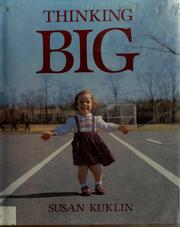
Thinking Big by Susan Kuklin – This book is out of print, but well worth the search, portraying a day in the life of an 8-year-old girl with achondroplastic dwarfism. She is great at painting, but needs stools to reach things at home and school. She has friends who hold her hand so she won’t get left behind on hikes, but she talks openly about the kindergartners who call her “baby.” She loves going to Little People of America meetings, but she loves being at home with her mom, dad and younger brother best of all. This book accompanied me from pre-school to 5th grade, read aloud by my new teacher to the class at the beginning of the school year in order to explain why I looked different from the others and to encourage my classmates to be upfront with their questions.


I Have A Sister My Sister Is Deaf by Jeanne Whitehouse Peterson– A day in the life of a hearing girl and her deaf sister. They play, argue, and help each other out, while explaining deafness as a mere difference in terms young kids can understand. The story has a gentle, poetic rhythm. On a deer hunt, the narrator explains, “I am the one who listens for small sounds. She is the one who watches for quick movements in the grass.”


The Black Book of Colors by Rosana Faría (available in French, German & Spanish) – Like the illustrations, everything is black for Thomas, so when it comes to colors, he smells, hears, and feels them. “Red is as sweet as a strawberry, as juicy as a watermelon, and it hurts when it seeps out of a cut on his knee.” The images are embossed for the reader to touch. The Braille alphabet is provided at the back of the book.


People by Peter Spier (available in French & German) – A superbly illustrated celebration of human beings and cultures all around the world. We have different skin colors, noses, hair styles, holidays, favorite foods, alphabets, hobbies, and homes, but we’re all people. It should be noted that this might be a bit of an information overload for children under 4.

***

Books About Moments When Diversity Is Considered Disruptive… These books empower kids who have been teased or interrogated for standing out. They can also be used to teach a bully or a clique how to understand and accept harmless differences. Some teachers rightly express concern over introducing the problems of sexism or racism to a child who has never seen a boy in a dress or a black girl before. Doing so could foster the notion that we should always associate minorities with controversy. Save them for when conflict does arise, or when the child is old enough to start learning about history and intolerance.


Amazing Grace by Mary Hoffman (available in Arabic, German, Panjabi, & Urdu) – Grace is a master at playing pretend. When her class decides to put on the play Peter Pan, she’s told by some know-it-all classmates that she can’t because she’s a girl and she’s black. She shows ’em all right.


And Tango Makes Three by Justin Richardson and Peter Parnell (available in German) – Penguins Silo and Roy live in a New York zoo and are utterly inseparable. The zookeepers encourage them to take an interest in the lady penguins so that they can soon have baby penguins, but to no avail. Silo and Roy build a nest together and end up adopting an egg. When Baby Tango is born, the three of them couldn’t be happier.


You Be Me – I’ll Be You by Pili Mandelbaum (available in French) – A biracial girl tells her white dad she wishes she looked like he does. Dad explains that he is milk and Mom is coffee, and she is café au lait. He says she is beautiful and sometimes he wishes he looked like her. Soon they’re dressing up in each other’s clothes, she’s braiding his hair, and he’s powdering her face. She wants to go into town and show Mom. On the way, they pass by a beauty shop and Dad points out how many white women are curling their hair and tanning their skin, while so many black women strive for the opposite.


“Sick of Pink” by Nathalie Hense (currently available only in German, French, Japanese, Norwegian & Portuguese) – The proud musings of a girl who likes witches, cranes, tractors, bugs, and barrettes with rhinestones in them. She knows boys who sew pretty clothes for their action figures and who paint daisies on their race cars. When grown-ups shake their heads and tell them, “That’s for girls!” or “That’s for boys!” she asks them why. “That’s just the way things are,” they tell her. “That’s not a real answer,” she deadpans.

***

Fairy Tales Beyond White Knights and Helpless Princesses… Even the most iconoclastic of people have their fantasies of love and heroism shaped by folklore. Yet the idea of revising Western fairy tales to make them less stereotypical has been met with a strong backlash. Whether or not you think it’s appropriate for kids to read Sleeping Beauty, Little Black Sambo or The Five Chinese Brothers, there is no harm in providing them with additional legends about love, valor and wisdom to make our cultural heritage more inclusive.


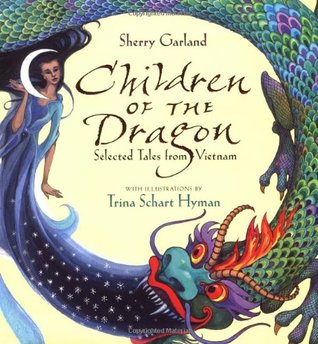
Children of the Dragon by Sherry Garland – Selected tales from Vietnam that rival any of the Grimm’s fairy tales in adventure, imagination and vibrancy. Many of the stories are supplemented by explanations of Vietnamese history that provide context.


Sense Pass King by Katrin Tchana – A girl in Cameroon outsmarts the king every time. Besides being one of the greatest illustrators of the 20th century, Trina Schart Hyman was a master of ethnic and socio-economic diversity in her many, many picture books.


Tam Lin by Jane Yolen – A Scottish ballad wherein a young maiden rescues her true love from the clutches of the evil faerie queen. In the end, she wins both his freedom and her clan’s great stone castle back. Not suitable for easily frightened children.


Liza Lou and the Yeller Belly Swamp by Mercer Mayer – A fearless girl triumphs over a ghost, a witch, a troll and a devil on her way to Grandma’s house in the bayous of Arkansas. Some of the best illustration there is. Think Little Red Riding Hood had she managed to outwit the wolf on her own.


The Talking Eggs by Robert D. San Souci – A Cinderella story of sorts set in the backwoods of the American South. An elderly wise woman uses magic to help a kind, obedient girl escape her cruel mother and spoiled sister. In the end, she rides off to the big city in a carriage. (With no prince involved, this one passes the Bechdel test.)


King and King by Linda de Haan (available in Czech, Dutch & German) – It’s time for the prince to hurry up and get married before he has to rule the kingdom, but every princess who comes to call bores him to tears. The very last one, however, brings her utterly gorgeous brother, and the king and king live happily ever after.


The Paperbag Princess by Robert Munsch – After outwitting the dragon, Princess Elizabeth rescues the prince only to be told that her scorched hair and lousy clothes are a major turn-off. She tells him he is a bum. “They didn’t get married after all.” She runs off into the sunset as happy as can be. I have yet to meet a child who does not love the humor in this story.

***

The Best Book on Diversity To Date…


Horton Hatches The Egg by Dr. Seuss – A bird is sick of sitting around on her egg all day, so she asks Horton if he would mind stepping in for just a minute. He is happy to help, but the bird jets off to Palm Beach the minute she is free. Horton continues to sit on the egg while awaiting her return. He withstands the wind, the rain, a terrible cold, and three hunters who insist on selling him and the egg off to the circus as a freak show. Throughout it all he reminds himself, “I meant what I said and I said what I meant. An elephant’s faithful, one hundred percent.” After he becomes a media sensation, the bird comes back to claim her prize.

Whenever I used this one in the classroom, I would ask the kids whom the egg belongs to. The 3-year-olds, with their preliminary grasp on logic, would always give the black-and-white answer: “The egg belongs to the bird because eggs go with birds.” The 4- to 5-year-olds would invariably go the other way, plunging into righteous indignation over the injustice of the bird’s demands: “The elephant! The egg belongs to the elephant because he worked so hard and he loved it so much and she just can’t come back and take it!” In the end, the egg cracks open and out flies a baby elephant bird, who wraps his wings around Horton. This is Seuss at his best, showing that loyalty makes a family.


What the Stubblefield Rape Case Means for Disability Rights

22 Nov

Words as skin(Image by Maurizio Abbate used under CC license via)


When people continue to believe in a method that has repeatedly been proven not to work, what harm can it do? Does it matter that an herbal supplement is ineffective if someone who uses it says it truly makes them feel better? Does it really matter whether or not primates can learn American Sign Language or parrots can learn to read English out loud if it makes animal lovers so happy to believe that they do?

Misinterpreting animal communication can of course be dangerous. In 2007, a Dutch woman who insisted she was bonding with an ape at her local zoo refused to believe the primatologists’ warnings that staring directly into a male gorilla’s eyes and showing one’s teeth—i.e., smiling—triggers aggression. She refused to believe this even after the gorilla broke out of his enclosure and attacked her.

But what if someone assumes a living person is communicating with them? What if they assume said person is confiding their wishes and life choices in them? What if they can do so because we don’t share a common language with the person they claim to be speaking for?

Facilitated Communication, a.k.a. “FC,” is a method developed in the late 20th century to help severely disabled people with little or no speech communicate with others. By supporting their patient’s hand or arm, a trained facilitator could theoretically help the patient type out sentences, thereby “unlocking” intelligence previously obscured. The method was considered a breakthrough for patients with diagnoses ranging from severe autism to severe cerebral palsy. It was touted as a miracle for their loved ones, who understandably wanted nothing more than to be able to hear their thoughts, wants and needs.

Anna Stubblefield is a philosophy professor and disability rights advocate who, until recently, taught seminars about FC at Rutgers University. What she did not teach her students is that FC has been condemned over the past three decades by the American Psychological Association, the American Association of Pediatrics, the American Association on Intellectual and Developmental Disabilities, the Federal Trade Commission, and the New York State Department of Health, among others. Double-blind testing generally reveals the facilitator to be subconsciously guiding their patient’s typing, rather than simply supporting it. This year Sweden banned FC in schools nationwide.

Professor Stubblefield adamantly rejects the classification of FC as a pseudoscience. Her mother was a pioneer of the technique. When one of her seminar students asked her in 2009 if it could perhaps help his severely disabled young adult brother—referred to in the press as “D.J.”—she agreed to treat him. A 20-page report in The New York Times Magazine chronicles Stubblefield’s increasingly intimate relationship with her patient, eventually culminating in her announcement in 2011 to his family that she and D.J. were in love. She planned to leave her husband and two children for him. As his legal guardians, D.J.’s family told her she had overstepped her boundaries and requested she leave him alone. When she did not, they eventually filed charges against her. They testified that gradually Stubblefield’s claims to D.J.’s interests and values—typed out in their FC sessions—had begun to sound suspiciously like things she would want him to say. Stubblefield was sentenced last month to 40 years in prison for sexual assault.

Another proponent of FC, Martina Susanne Schweiger, was convicted last year in Queensland, Australia for performing sex acts on a 21-year-old patient whom she believed had reciprocated his love for her via FC.

I’ve written before about widespread prejudices against disabled people and how often it denies us our sexuality. But disabled people also suffer sexual abuse at rates far higher than the general population. Most are taken advantage of by their family members and/or caregivers. Stubblefield and the remaining proponents of FC argue that their critics are ableist for denying D.J.’s capacity for intellect and intimacy. The prosecution argued that Stubblefield is ableist for assuming she knows what D.J. wants.

The desire to be the next Miracle Worker is understandable and so often noble. Who doesn’t want to help those in need? And the lure of the controversial in the pursuit of justice is not uncommon. From Jodie Foster and Liam Neeson in Nell to Sean Penn and Michelle Pfeiffer in I Am Sam to Adam Sandler and Don Cheadle in Reign Over Me, Hollywood is rife with love stories and courtroom dramas about a misunderstood outcast who has finally found the one open-minded hero who understands him, believes in him and then must fight the cold-hearted, close-minded authorities from keeping them apart.

Yet red flags should go up whenever there is a risk that a self-appointed advocate is putting words in someone’s mouth, no matter which side that advocate thinks they are on. Particularly when their patient or client belongs to a highly marginalized minority.

News of this case has elicited many head-shaking responses along the lines of, “Well, they all sound nuts.” One of the jurors told NJ.com, “I was like…‘You’re going to leave your husband and your kids for someone like this?’” Disability rights advocates rightly bristle at the infantilizing of D.J.—not to mention the salacious headlines that seem obsessed with his personal hygiene—while ultimately declaring the case incredibly sad. Yet we rarely use “nuts” or “sad” to describe male teachers convicted of seducing students unable to give consent. We describe them as predators or abusers.

Abusers of course rarely think of themselves as such. Child molesters are often convinced their victims were flirting with them. Few would consider themselves sadistic. Most are simply skilled at rationalizing their behavior to themselves. But regardless of what they believe their intentions are, abusers by definition deny others power in pursuit of their own.

The Stubblefield case and the Schweiger case highlight a very uncomfortable fact for disabled people everywhere: that some of the caregivers and activists working and sometimes fighting on our behalf are doing it to feed a savior complex. And anyone with a savior complex is not truly listening to those they claim to be helping.

Addressing this problem becomes increasingly difficult when we consider how very young the concept of disability rights is over the course of human history. Living in any other era, most of us would have been abandoned by our families in asylums or elsewhere. Ancient Spartans advised throwing us off cliffs after birth. Some modern philosophers, such as Prof. Peter Singer, still advocate infanticide for some. Awareness of all this often makes us feel compelled to be eternally grateful to anyone who offers us any sort of support or help, regardless of whether or not it is truly helpful or respectful of our boundaries.

That we do not yet have the means to access D.J.’s thoughts and desires is indeed tragic. But opposition to FC does not mean we damn severely disabled people to the realm of hopelessness. On the contrary, accepting criticism of FC can only help to improve upon the ways in which researchers develop better practices and technologies. Relying on discredited methods would not have gotten Stephen Hawking his voice. Annie Sullivan prevailed with Helen Keller because she not only relied on rigorously tested methods but also shed her status as Keller’s sole communicator by enrolling her in an interdisciplinary program at the Perkins School. The ability to kill your darlings is an ingredient of innovation.

And any true investment in disabled people and the methods that best assist them must be accompanied by the credo activists began using around the time D.J. was born: Nothing about us without us.


Curiosity Kills the Rat

19 Oct

From the Archives


“All the freaky people make the beauty of the world.”

— Michael Franti

Fourteen years ago, I made a trip to Hot Topic—that quintessential 90s chain store for all things goth—in search of some fishnet stockings for a friend.  It was my first visit to the store since I was back in a wheelchair for my third and final limb-lengthening procedure and the narrow aisles prevented me from venturing beyond the entrance.  My first time in a wheelchair, from ages 11 to 12, had been a completely humbling experience as I was forced to see how very inaccessible the world is for the non-ambulatory.  This time around I was battling the hot-cheeked self-consciousness that adolescence attaches to any signs of dependency. 

As I tried to look casual while flipping through black gloves, black stockings, and black dog collars, a guy approached me sporting crimson hair, eyebrow rings, an employee badge and a smile.  “This is store is easily adjustable,” he grinned, and with that he began shoving aside the display cases and clothes racks—which were, like me, on wheels—clearing a path for me right through to the back and taking little notice of the other shoppers, some of  whom took one to the shoulder.  It was one of those crushes that disappear as quickly as they develop but leave a lasting memory: my knight in shining jewelry.

Thanks to experiences like this, I have a special place in my heart for the acceptance of physical differences that can often be found in the subcultures of punks, hippies, and goths.  From the imagining of monsters to the examination of anything taboo, counter-culture is often unfazed by physical qualities that fall outside of mainstream beauty standards.  The first kid in my high school who chose not to stare at the external fixators on my arms but instead held the door for me had green and purple hair.  About a month after my trip to Hot Topic, I showed a death-metal-loving friend my right fixator (shown above) for the first time, with the six titanium pins protruding from open wounds in my thigh.  He grinned, “That is the ultimate piercing, man!”  He hardly could have come up with a more pleasing reaction.  That my wounds were cool instead of “icky” or “pitiful” was a refreshing attitude found almost exclusively outside mainstream culture.  This attitude more readily understands my belief that my scars are merit badges I earned, not deformities to erase. 

However, this tendency toward decency over discomfort is just one side of the alternative coin.  Every subculture has its strengths and its weaknesses, and for all the freaky heroes I’ve encountered, I’ve also met plenty whose celebration of difference devolves into a sick fascination with the grotesque.  “Weird for the sake of weird” is progressive when it asserts that weird is inescapable, that it is in fact as much a part of the natural order as any of our conventions, and when it serves as therapy for the marginalized.  But it is problematic when it involves self-proclaimed artists using others’ reality as their own personal toys.     
In a previous post, I referred to a friend of friend including me in an Internet discussion about limb-lengthening.  His comments were in reaction to a photo of a leg wearing an Ilizarov fixator that had been posted on a Tumblr page focused on the “wonders of the world.”  There are countless sites like it, where photos of conjoined twins, heterochromatic eyes, intersexual bodies, and medical procedures are posted alongside images of animals, vampires, robots, cosplay, self-harm, manga and bad poetry.  I get it.  The world is “crazy” and it’s all art.  But if that’s not a freak show, what is? 

Disabled people are no longer put behind glass or in the circus—at least not in the U.S., Canada or Western Europe—but many people still believe they reserve the right to stare, both in public and on the Internet.  Whether under the guise of promoting diversity or admiring triumph in the face of adversity, they suppress any realization they may have that no one likes being stared atUnless it’s on our terms.  

I see endless art in my medical experiences and it can be so therapeutic.  During my first limb-lengthening procedure I also had braces on my teeth, leading my dad to observe, “She’s now 95% metal.”  Kinda cool.  During my third procedure, I had Botox injected into my hips twice to paralyze my muscles lest they resist the lengthening.  At the time, when I along with most people had no idea what it was, it was described to me as “basically the most deadly poison known to man.”  Whoa, hardcore.  When I happened upon photos of my anterior tibialis tendon graft surgery, I was enthralled: “I’m so red inside!”  And when a fellow patient recently alerted me to the fact that a high-end jeweler designed a bracelet strongly resembling the Ilizarov frame, I laughed my head off.  Almost all of us like looking at our bodies, and perhaps this is especially so for those of us who have had real scares over our health.  It’s a matter of facing our fears and owning it.  But no one likes the idea of others owning it.  This subtle but severe preference, this desire for dignity determines the difference between human rights and property rights. 

Two years ago, NPR featured a piece by Ben Mattlin, who is non-ambulatory and who said he used to be uncomfortable with the idea of Halloween and its objectification of the grotesque.  From my very first costume as a mouse to my most recent stint as the Wicked Witch of the West, my love of Halloween has not so much as once flickered, but his point is worth discussing.  Costume play, Halloween and any celebration of “weird” that is primarily attention-seeking inherently assumes there is a “natural” basis to be disrupted.  (And all too often Halloween devolves into offensive imitations of all sorts of minority identities.) 

I have my own collection of artsy photos stolen off the Internet that I use as screensavers and montages for parties, but they do not include photos of bodies taken outside the context of consensual artistic expression.  Re-appropriating a photo in a medical journal for a site about all things bizarre is protected under freedom of speech, but it can feel like disregard for consent.  And in any case, such xenocentrism will always be just as superficial as the status quo it seeks to disrupt.

When conjoined twins Abigail and Brittany Hensel agreed to be interviewed once—and only once—for a documentary about their lives (which I highly recommend), they explained that they don’t mind answering strangers’ questions at all.  (Ben Mattlin has said the same, as do I.)  What they hate more than anything is being photographed or filmed without permission.  While attending a baseball game outside their hometown, a sports film crew quickly directed their attention to the girls.  Even though they were already being filmed by their own documentary team, the stranger camera’s invasive, presumptuous stare ruined the day for them. 

Sensitivity toward others’ experience with medicine and death should never kill the discussion.  These discussions are imperative and art is the most glorious way we relate to one another.  But just as there’s more to good manners than simply saying “Please,” there’s more to genuine learning and artistic expression than poking at anything we can get our hands on.  Nuance, deference and respect are prerequisites for anyone with artistic or scientific integrity not only because they are the building-blocks of common decency, but because history has shown that curiosity will more likely harm the rat than the cat.


Originally posted May 19, 2012

Content Warnings and Microaggressions

20 Sep

Grunge Warning Sign - Do Not Read This Sign

(Image by Nicolas Raymond used under CC license via)


There’s a heated debate going over at The Atlantic over trigger warnings and microaggressions. For those less familiar with online minority rights debates, trigger warnings originated as labels for video or texts depicting graphic violence, often sexual, that could be triggering for survivors of assault suffering from PTSD. They have since evolved into “content warnings,” used to label any video or text containing arguments, comments, humor or images that marginalize minorities. I most recently ran into one preceding a beer ad in which two brewers tried to joke about never wanting to have to do anything so humiliating as dressing in drag in the red-light district in order to earn money.

Jonathan Haidt and Greg Lukianoff have argued that content warnings have led to “The Coddling of the American Mind,” a culture of silencing, wherein too many are afraid to initiate dialogue on these issues, lest they offend. They criticize restrictive speech codes and trigger warnings, and suggest universities offer students free training in cognitive behavioral therapy in order to “tone down the perpetual state of outrage that seems to engulf some colleges these days, allowing students’ minds to open more widely to new ideas and new people.”

“Microaggressions” is a term invented in 1970 by Harvard professor Charles M. Pierce to refer to comments or actions that are usually not intended as aggressive or demeaning but nevertheless do contribute to the marginalizing of minorities. Examples would be certain physicians being addressed as “Nurse” at the workplace. Or nurses, secretaries, cashiers, and storage room workers constantly hearing the widespread Western belief that low-skilled jobs deserve a low degree of respect. Or men still being expected to prove their worth through their career and never their emotional fulfillment. Or lesbians being asked if they’ve had “real sex.” Or anyone hearing from magazines, sitcoms or even loved ones that body types like theirs are something to avoid ending up with or hooking up with.

Microaggressions are the essence of insensitivity and they highlight the widespread nature of many prejudices about minorities. I analyze them all the time on this blog, without labeling them as such. Finding blogs that feature them in list-form can be done with little effort.

Citing a sociological study by professors Bradley Campbell and Jason Manning, Connor Friedersdorf has argued that calling out microaggressions on social media sites has led to a culture of victimhood, wherein the emotions of the offended always matter more than the perpetrator’s intentions. Victimhood culture is “characterized by concern with status and sensitivity to slight combined with a heavy reliance on third parties. People are intolerant of insults, even if unintentional, and react by bringing them to the attention of authorities or to the public at large.”

Cue the overemotion. Simba Runyowa rightly rebuts that many of Friedersdorf’s examples of hypersensitivity are cherrypicked, but then goes on to deny that anyone would ever want to be seen as a victim. (Not only do most petitioning groups—whether the majority or the minority—claim to be the victim of the other side’s moral failings and undeserved power, but it appears he has never tried to explain what it’s like to have a rare condition, only to be interrupted by the insistence, “I think I have that, too!”) On the other side, Haidt, Lukianoff and Friedersdorf have attracted plenty of support from those who are only too happy to believe that college campuses and the blogosphere today are ruled by the PC police, rendering such places far worse than Stalinist Russia.

I rarely issue content warnings on videos or quotations or any examples of bigotry I analyze on this blog. My primary reason is that a majority of the content we consume every day is arguably misogynistic or heteronormative or ableist or racist or classist or lookist. This does not at all mean that we should not address those problems, but demanding “warnings” on whatever has marginalized me leaves me open to criticism for not doing the same for all the other injustices I may not see.  As both a Beatles fan and a social justice blogger, I will always prefer to read or hear a comprehensive critique of John Lennon’s ableism than to see warnings on his biographies.

And I don’t label microaggressions as such because I agree with Friedersdorf that the word seems at odds with its definition. Insensitivity can be very hurtful. It can contribute to feelings of alienation by functioning as a reminder of how millions of people might think of you. But it is not aggressive. Highlighting, questioning and debating ubiquitous prejudices, stereotypes and traditions is crucial to human progress. Mistaking ignorance for hostility, however, is an obstacle to it.

Would it be accurate and productive to post something like this?

Microaggression: Having to hear yet another parent talk about how thrilled they are to have been able to give birth “naturally.”

(Avoiding C-section is never an option for women with achondroplasia like me.)  And would it be accurate and productive to something like post this?

Microaggression: Having to hear yet another childfree blogger brag about how great it is to have the time and energy to do things I’ll never be able to do like hiking or biking, let alone if I have kids.

Would it be more practical to tweet such complaints rather than pen an extensive article about the intricacies of the problem because few have time to read the particulars of considering parenthood with achondroplasia? Would posting them on a site featuring microaggressions serve as a much-needed wake-up call, convincing the perpetrators to see the issue from my perspective, or would it put them on the defensive? Would it spark dialogue or shut it down? Are the comments that marginalize my experience veritably aggressive? Feel free to share your thoughts in the comments.

But whether we think people on either side of the majority vs. minority debates are too sensitive or insensitive, we should be aiming for dialogue over exclamation points.


We Gotta Watch Our Language When It Comes to End of Life Debates

13 Sep

Jerzy body

(Image by Ekaterina used under CC license via)


On Friday the British Parliament resoundingly struck down a bill that would guarantee its citizens the right to physician-assisted death. Yesterday California’s legislature voted to make it the sixth state in the U.S. to legalize it.

Robust, nuanced arguments have been made for and against physician-assisted death for terminally ill patients, and none of these arguments could be successfully summarized within a single article. This is why a conclusive stance on the issue will never appear on this blog. It is nothing but moving to hear the deeply emotional pleas from those in the right-to-die movement who have thought long and hard about the prospect of death, who feel empowered by having some choice when facing down a daunting fate, who don’t want to find out which of their loved ones may turn out to be unskilled at care-giving. And it is equally moving to hear the experiences of those working in hospice and palliative care who face the approach of death every day with the determination to make it as minimally painful and emotionally validating as possible for all involved.

However, despite the emotional validity of both sides, there are tactics the right-to-die movement should avoid if it does not wish to make our culture more ableist than it already is. Openness about end of life decisions can shed light on a subject previously cloistered away, but the more the right-to-die movement celebrates the idea of ending someone’s life before it transforms into a certain condition, the less willing the public may be to engage with and invest in those who live in that condition.

Which is why no one should call physician-assisted death “Death with Dignity,” as lawmakers in Washington, Oregon, and New York have done. The implication that anyone who opts out of assisted death might live an undignified life is reckless and arrogant. A patient declaring the prospect of invasive life-saving interventions “too much” is fair. A writer declaring the quality of life of those who opt for them “pathetic” is ostracizing. It insults not only those enduring late-life debilitation, but the everyday conditions of many, many disabled people of all ages around the world.

Even today, when so many movements push to integrate disabled people into the mainstream, the average person is generally isolated from the reality of severe deformity, high dependence, and chronic pain. This isolation feeds fear and is therein self-perpetuating. As opponents have pointed out, many right-to-die arguments quickly snowball, equating terminal illness with chronic illness and disability, and portraying all three as a fate worse than death. Hence the name of the New York-based disability rights group Not Dead Yet.

Vermont’s recent law, the Patient Choice and Control Act, bears a far less polemic name than the others currently on the books. That’s a start. Experts are divided as to whether the current openness about end of life decisions in the U.S. has led to more terminally ill Americans considering and opting for hospice and palliative care. Regardless, both sides should be encouraging well-informed discussions that honor a patient’s right to voice his beliefs based on personal experience, and a disabled person’s right to not be further marginalized by a culture that has historically feared her existence.


*Note: I use “physician-assisted death” and other terms in deference to World Suicide Prevention Day this past Thursday and the media guidelines from the Center for Disease Control, which discourage use of the word “suicide” in headlines to avoid contagion.


What Do You Think of When You See the Word “Healthy”?

6 Sep

Up close Star makeup mac, urban decay(Image by Courtney Rhodes used under CC 2.0 via)
 
In late 2013, journalist Katie Waldman examined the juicing trend, which was cropping up in the corners of Western society where there is a heavy focus on modern notions of “natural and organic” (think anywhere from Berlin’s Prenzlauer Berg to Burlington, Vermont and Berkeley, California) as well as in those where people competitively strive to follow the latest fashions in health and beauty (think the high-earning sectors of London, Manhattan or Los Angeles). Lifestyle writers have declared two years later that juicing has staying power, despite Waldman’s disturbing findings. Along with little to no evidence that cleansing the body with juice can be physically beneficial, she revealed that the language of most detox diets echoes the language used by those struggling with disordered eating – i.e., the idea that most of what the masses eat is on par with poison and you’re a bad person if you don’t purge it. She writes:

After days of googling, I still have no idea WTF a toxin is… Cleansing acolytes use the word toxin loosely, as a metaphor for our lapsed lifestyles…. The problem with this way of thinking is that food and weight are not matters of morality. Thin is not “good,” carbs are not “bad,” and in a world of actual pressing political and social ills, your dinner plate should not be the ground zero of your ethical renewal.

I’m neither a supporter nor an opponent of juicing in particular. Anyone should drink whatever they want to drink. But Waldman made a fantastic point about the way the upper and middle classes in the West so often believe one’s health to be a sign of one’s morality.

This idea is hardly new. The eugenics craze of the 19th and 20th centuries—that culminated with the Nazis exterminating “degenerates”—involved Fitter Families contests held at county fairs wherein judges handed out trophies to those deemed to have the best heritage, skin color, and tooth measurements. Professor Alan Levinovitz argues in Religion Dispatches that these attitudes have survived on into the present, altered only ever so slightly: “The sad thing is, it’s really easy to judge people on the basis of what they look like. We have this problem with race. In the same way, it’s really easy to look at someone who’s obese and say, ‘Oh look at that person, they’re not living as good a life as I am. They’re not as good on the inside because I can tell their outside isn’t good either.’ ”

Do we as a culture believe that being “healthy” is about appearance? Dieting often dictates that it’s about behaviors measurable through appearance. Psychologists agree to the extent that their notions of “healthy” are about behavior, but they also frequently intersect with notions of being “good.” But is being “healthy” about being brave, honest, generous and humble? Physicians would generally argue it’s about staving off death. Right-to-die advocates would argue it’s about quality of life over longevity. Is being healthy a matter of what scientists decide? Ed Cara found earlier this year that weight loss does not lead to happiness. Is happiness a measure of being healthy? Or are you only healthy if you suffer for it? Concepts of “healthy” vary vastly from person to person, and across cultures. Is that healthy?

In The Princess Bride—probably the Internet’s second-most quoted source after Wikipedia—the hero cautions, “Life is pain. Anyone who says differently is selling something.”

Yet the villain says, “Get some rest. If you haven’t got your health, you haven’t got anything.”

Whether you agree with any or none of the above, leave me your thoughts on the meaning of “healthy” either in the comments or via an e-mail to paintingonscars[at]gmail.com


The Problem of Dwarfs on Reality TV

30 Aug

voyeurism(Image by Natasha Mileshina used under CC license via)

The new television schedule has kicked off both in the U.S. and the U.K. with the usual plethora of reality TV shows and the usual high number of shows zeroing in on people living with dwarfism: The Little Couple; Seven Little Johnstons; Our Little Family; Little Women of L.A.; and the grandfather of them all, Little People, Big World. Besides the patronizing titles and taglines, the shows feature factoids about dwarfing conditions and lots of melodrama thrown in with some social critique lite.

Having handed my life story over to a journalist for the umpteenth time this past spring, my husband and I recently discussed how important it is to be able to trust that your storyteller will not exploit you for entertainment value. It takes a perceptive mind and an agile hand to elucidate dwarf-related topics like bio-ethics, self-image, political correctness, beauty standards, harassment, adoption, job discrimination, pain management, and reproductive freedom—all of which could and have filled scholarly journals and books—via mere sound bites. At one point in the conversation my husband paused and said, “Just to make sure we’re on the same page, honey – we’re never appearing on reality TV. Right?”

I laughed and nodded reassuringly.

He was not unwise to worry.

Reality TV offers their subjects fame at the expense of their dignity. Documentaries and news features also carry a risk for this, but one element that distinguishes reality TV from journalism is the rock-solid guarantee of fights, tears, and bad-mouthing. For some participants there may be gratification in the knowledge that millions of viewers are interested in you enough to want to watch how you live every waking minute of your life, but it comes with the unspoken fact that they’re also waiting for you to slip up so that they have a good story to hash out among their friends and in gossip columns.

We are all vulnerable to voyeuristic temptation and the media knows this. It’s why it offers us up-close shots of survivors’ tears as soon as possible, and it’s why we click on them, despite recent and compelling arguments that this is socially irresponsible. The message of reality TV seems to be that no one really ever moves beyond middle school jealousy and superficiality, so we might as well let it all hang out. The better angels of our nature be damned.

Years ago, Cathy Alter mused via a glib article in The Atlantic about her rather bizarre obsession with dwarf reality shows. The greatest revelation came from her therapist, who explained, “I think regular size people feel more secure as people when they can observe midgets… I think that contrast is validating because we tell ourselves that at least there are people who have it worse, because they are small… We need the midgets to feel normal.”

This confirms what I have always suspected and, admittedly, feared. That millions of people are watching under the guise of wanting to understand difference while ultimately enjoying getting to look at lots of juicy pictures of freaks.  This is why these sensationalist shows do so well, while earnest, in-depth documentaries like Little People: The Movie remain out of print. Before the birth of reality TV in the late 90s, dwarfs were most often featured on daytime talkshows, alongside episodes featuring people caught in affairs and people who believed they were the reincarnation of Elvis.

As often the only dwarf in a given person’s circle of acquaintances, I have been told by many how touching they find these shows. How wonderful it is to see that “dwarfs are just like everyone else!” I can accept that there will probably always be a market for shallow entertainment that twists tragedy into soap opera and reduces the complexities of life into easy-to-swallow sentimentality, no matter how far society progresses. Tabloids will continue to exist because millions of people—including kind, intelligent people I know—will continue to buy them. In this regard, the individual shows are not so much problematic as is the fact that they are where TV viewers are most likely to see people with dwarfism.

Actress Hollis Jane, who called out Miley Cyrus last year for exploiting performers with dwarfism as sideshow acts, explained this summer why she turned down a contract to appear on Little Women of L.A.:

Other than Peter Dinklage, Tony Cox (Bad Santa) and Danny Woodburn (who played Mickey Abbott on Seinfeld), it’s nearly impossible to name successful actors and actresses who also happen to be little people. People get upset about the Kardashians representing women in America but for every Kardashian there is a Meryl Streep, a Natalie Portman, or a Zoe Saldana. Little people don’t have that. I have wanted to be an actress since I was in first grade and I played the angel, Gabriel, in a nativity play. I held firm to this dream until sixth grade when a parasitic thought crawled into my head and told me that I would never be an actress because I was a little person. I realized that since there was no one on television who looked like me, it meant that there would never be… When Game of Thrones premiered, my world was rocked. Peter Dinklage was doing the impossible. He was being taken seriously as an actor without exploiting his height for shock value or a joke. The night he won his Emmy, I cried for an hour.

She adds, “I have nothing against the women on these reality shows. There is a part of me that thinks it’s great we have little people on TV in any capacity…but I also think we deserve more than that.”

If the general public truly believed this, if reality TV viewers truly saw their dwarf subjects as their equals rather than curiosities, then we would see a lot more dwarfs as newsreaders and game show hosts, starring in sitcoms and dramas, playing the lead detective and the lovely heroine and the hero facing impossible odds to save the day. Perhaps that day will come, but for now few people can name a single dwarf actress and many dwarfs get told that they look like “that guy on the show about the little people.” That’s our reality.

Happy Birthday, ADA!

26 Jul


This week marks the 25-year anniversary of the passing of the Americans with Disabilities Act. As others have noted, the law was ground-breaking not only because of its international ripple effect, but because it recognized disability not as an issue of health, but of human rights.

Author of the bill, Robert L. Burgdorf, Jr. writes in The Washington Post why this was so necessary:

People with disabilities were routinely denied rights that most members of our society take for granted, including the right to vote (sometimes by state law, other times by inaccessible polling places), to obtain a driver’s license, to enter the courts and to hold public office. Many states had laws prohibiting marriage by, and permitting or requiring involuntary sterilization of, persons with various mental or physical conditions, particularly intellectual disability, mental health conditions and epilepsy. A number of states restricted or denied the right of people with mental disabilities to enter into contracts. Several U.S. cities, including Chicago, Columbus and Omaha, had what became known as “ugly laws” that banned from streets and public places people whose physical condition or appearance rendered them unpleasant for other people to see. These laws were actually enforced as recently as 1974, when a police officer arrested a man for violating Omaha’s ordinance.

In some instances, discrimination threatened the very lives of individuals with disabilities: Lifesaving medical treatments that would routinely have been made available to other patients were denied to patients with disabilities; in 1974, the New York Times cited an estimate that unnecessary deaths of babies with disabilities in the U.S. resulting from withholding of medical treatment numbered in the thousands each year.

Things have improved substantially, which is cause for celebration. But not complacency. Which is why NPR’s article “Why Disability and Poverty Still Go Hand-In-Hand” is well worth your time, as is the above TED Talk by the late, great Stella Young, whose unexpected death last winter was a tremendous loss to the disability rights movement and to anyone who enjoys a good dose of sarcasm with their social critique.


Difference Diaries Wants to Hear from You

19 Jul

Copyright Difference Diaries


I have recently become the Director of Educational and Multimedia Outreach at the Difference Diaries, and today marks the launch of the Difference Diaries Blog. We want submissions and we want them now.

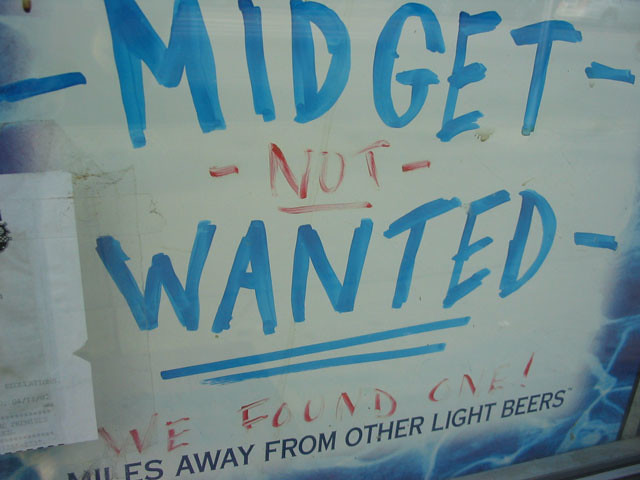
The Need. This week Freeburg High School in Illinois jubilantly voted down a petition by Little People of America to retire their school mascot, the Freeburg Midgets.

Such incidents are hardly isolated. Dwarfs rarely make the news, and when we do, we often wish we didn’t. Two summers ago Slate magazine, one of my favorite socio-political periodicals geared at young adults, kicked off a blog about Florida with an opening article called, “True Facts About the Weirdest, Wildest, Most Fascinating State.” Among the facts that apparently render the Sunshine State weird are the python-fighting alligators and “a town founded by a troupe of Russian circus midgets whose bus broke down.” On the day of its release, Slate ran the article as its headline and emblazoned “A Town Founded By Russian Circus Midgets” across its front page as a teaser.

Face-palm.

Here’s the thing about dealing with all this. You get used to it, but not forever and always. Sometimes it rolls off your back, sometimes it hits a nerve. This time, seeing a magazine as progressive as Slate brandish RUSSIAN CIRCUS MIDGETS on its front page while leaving disability rights out of its social justice discussion brought me right back to college, where friends of friends called me “Dwarf Emily” behind my back and someone else defended them to my face. Where classmates cackled about the film Even Dwarfs Started Off Small—“because it’s just so awesome to see the midgets going all ape-shit!”—but declined my offer to screen the documentary Dwarfs: Not A Fairy Tale. Where a professor was utterly outraged that her students didn’t seem to care about immigration rights or trans rights, but she never once mentioned disability rights. Where an acquaintance asked to borrow my copy of The Curious Lives of Human Cadavers, but awkwardly turned down my offer to lend her Surgically Shaping Children. Where roommates argued vociferously that they would rather be euthanized than lose the ability to walk. Where jokes about dwarf-tossing were printed in the student newspaper.

I won’t go into certain crude comments that involved me personally, but I will say that when a friend recently, carefully tried to tell me about how shocked he was to find a certain video of dwarfs in a grocery store, I cut him off and said, “Lemme guess, it was a dwarf woman porn video? That’s one of the top search terms that bring people to my blog.”

This is not to ignore all those I’ve met who, despite their lack of experience with disability, ask carefully constructed questions and consistently make me feel not like a curious object but like a friend who is free to speak her mind about any part of her life experience. And some young adults are doing awesome work for disability rights and awareness. But when a journalist and mother of a disabled twentysomething recently said to me, “No one wants to talk about disability rights – it’s not seen as sexy enough,” I knew exactly what she was talking about.

Maybe this is just a matter of my growing up, leaving the cocoon of childhood and finding out how uncaring the world can sometimes be. But ableism among young adults in the form of silence and/or sick fascination is a lot more prevalent than many would like to admit. And why does it have to be? Are physical differences truly not sexy enough? Is it because we associate disabilities, diseases and related issues—like caregiving—with older people and with dependence? Dependence is usually the last thing to be considered cool. But does it have to be?

The Means. As a non-profit organization, Difference Diaries aims to ignite ongoing conversation that will contribute to better lives for those living with defining difference as well as friends, families, and perfect strangers who “just never thought about it.” The young adults who share their stories offer real insights and an opportunity for viewers and readers to know a little more about “what it’s like.”

We focus on conditions as diverse as the individuals living with them including: cancer, hemophilia, dwarfism, sickle-cell anemia, albinism, facial deformity, blindness, HIV, amputee, hemangioma, vitiligo, diabetes, renal disease, Crohn’s disease, cystic fibrosis, cerebral palsy, OCD and more.

This is why we want to hear from you. We are seeking blog submissions about living with Difference as a young adult. Prospective bloggers should consider: What does Difference mean to you? What is your personal experience of being Different? What has to be explained most often at work, school, out in public? What would be the most helpful thing for people to know about your Difference? How would you like to see society improve in how it handles Difference?

Send us your submissions via e-mail to info[at]differencediaries.org


High Schools Fight to Keep Midgets As Mascots

12 Jul

(Via)


Calling someone what they wish to be called should be a no-brainer but is often met with resistance. Asking someone else to change their name in deference to someone else, however, sometimes seems harder than limb-lengthening.

Little People of America is holding its annual national conference this week in St. Louis and has voiced their offense at the name of a local high school sports team across the river in Freeburg, Illinois. The school is one of several across the United States whose sports teams are named the Midgets and LPA would like this to change. Freeburg school superintendent Andrew Lehman does not expect to see the mascot altered any time soon.  “That term can be very subjective. What’s offensive to one person or group of people is going to have a very different meaning to other people,” he states.

You can sign the Little People of America petition here, or you can add your name to the list of 3,446+ supporters arguing to keep it. Author of the latter petition Jared Fricke explains:

It is time in America to stand up and say words do not create evil and if we allow a few short minded people to dictate what is right and wrong then we will live in a world full of fear. Freeburg is not a place of hate, and as Americans we have the right to use the Midgets as a mascot because it is the foundation of what it meant to come from Freeburg. We are a small town, but that does not stop us from achieving great things.

In 1997, the board of education at a high school in Dickinson, North Dakota voted to the drop their Midget mascot, but was met with such a punitive backlash—costing three board members their jobs—that it was swiftly reinstated.

The Dickinson name was given to the team by a sportswriter in the 1920s. The Freeburg superintendent claims their mascot originated in the 1930s. Bestowing nicknames based on supposed physiological shortcomings as a form of ribbing was common in the U.S. in those days. Major League Baseball abounded with players named “Red,” “Pudge,” “Curly,” “Pinky,” “Shorty,” and “Lefty.” In Fried Green Tomatoes, set in 1930s Alabama, the protagonist starts calling her nephew “Stump” after he loses his arm in an accident. The seven dwarfs in Disney’s 1937 film—Happy, Sleepy, Sneezy, Grumpy, Dopey, Bashful and Doc—were the final names chosen out of a pool of suggestions that included Jumpy, Deafy, Dizzy, Hickey, Wheezy, Baldy, Gabby, Nifty, Sniffy, Swift, Lazy, Puffy, Stuffy, Tubby, Shorty and Burpy.

Caricaturing minorities in mascots and logos was also common on both sides of the Atlantic. Sam Greenspan at 11points has documented a handful of other jaw-dropping mascots that only recently underwent name changes, from the Frisco Coons to the Pekin Chinks. Those my age and older who grew up in the U.S. can easily recall the mammy origins of Aunt Jemima, while those who grew up in Finland are equally well acquainted with the first incarnation of Fazer black licorice. While some embarrassing examples endure, most of these corporate logos have been altered within my lifetime and with much greater ease than the sports mascots like the Washington Redskins, the Cleveland Indians, and the Freeburg Midgets. Why?

The corporate world is very invested in what other people think because their primary concern is the bottom line. The world of competitive team sports, however, both engenders and depends on a sense of community identity, the ultimate Us vs. Them mentality. Bowing to outside pressure is anathema to this, as one signatory of Fricke’s petition argues:

This group is not affected on a daily by our mastcot [sic] ever!!! They come to our area and are just looking for a reason to be in the news. It’s a source of pride in Freeburg and is something needs to stay as a part of our high school’s tradition. Midget Pride baby!

Let’s give the mascot’s supporters the benefit of the doubt for the moment and assume they only mean well by shouting “Midget Pride!” Let’s ignore the slur status of the M-word and consider whether Little People of America should not perhaps focus their indignation on more direct forms of de-humanization, like dwarf-tossing and rejection by family. What’s so bad about a small town thinking dwarfism is the perfect metaphor for their tiny-but-tough identity after all?

It’s an important question for high school students to ponder. I began this blog with a post about why I find the little-in-size-but-large-in-spirit slogan inherently demeaning. And small town students would only benefit from asking themselves, “Do we truly know what it’s like to be a real-life midget?” And from considering the issue of appropriation as it was summed up by a friend of mine: “If you actually wish you had a freak flag to wave, then you obviously don’t know what you’re talking about because you don’t know what it’s really like to be widely seen as a freak.”

Indeed, a very common phase in adolescence involves trying on different identities to figure out your own. Self-actualization relies on it. But after a certain age, stagnating in this phase becomes a sign of immaturity. I don’t fault teenagers who appropriate identities via shallow, melodramatic thinking—like mixing a love of the macabre with murder at Columbine, or thinking it’s touching instead of terrible to compete for Olympic gold to the tune of Schindler’s List—but I do fault any of their adult role models who do.

As a place of higher learning, I’d be most pleased to see the school resist the urge to stand united and firm against the PC police and instead encourage their student body to debate and reflect upon why those of us with dwarfism might not feel honored by their mascot. They should not agree with us right away. They should not mutter Whatever and begrudgingly bow to LPA’s request. But instead reflect on the many complex issues it brings up for us, in all seriousness and with sincerity.


Mother Petitions to End Germany’s Nationwide Youth Games

5 Jul

BXP135660(Image by Tableatny used under CC license via)
The Nationwide Youth Games (Bundesjugendspiele) are a 95-year-old annual tradition here in Germany wherein students ages 6 to 16 spend a day competing against each other in track and field, swimming, and gymnastics. The total scores are read off in a ceremony before the entire school, and those who accumulate a certain number of points are awarded either a “certificate of victory” or a “certificate of honor.” Since 1991, “certificates of participation” have been handed out to the rest of the students.

After her son came home sobbing at having received a mere certificate of participation two weeks ago, journalist Christine Finke started an online petition to put an end to the Games. She explains on her blog:

I’m doing this for all the children who feel sick to their stomach the night before the Nationwide Youth Games, for those who wish they could disappear into the ground during the Games, and for those who want to burst into tears during the awards ceremony… Sports should be fun and make you feel good about your body. But the Nationwide Youth Games are founded on grading: on the upgrading and degrading of some at the expense of others.

She dismisses the Games as a relic of the Nazi era, and while the original Reich Games preceded Hitler, founder Carl Diem did go on to be active member of the regime who instrumentalized the Games as propaganda for the Nazi obsession with bodily perfection. Finke points to the Nazi-like language of her critics on Twitter: “Our children shouldn’t be allowed to turn into sissies.”  Indeed, mottos such as Only the strong survive commonly found in sports culture in the U.S. and other countries are not taken lightly here in Germany, where sick and disabled citizens were murdered in mass numbers less than a century ago. 

As a semi-disabled kid, I had plenty of physical limitations, but, like most kids, I enjoyed the sports that I could play fairly well (baseball, tennis, jump rope) and I quickly got bored with those that put me at the bottom of the class (basketball, football, soccer).  Due to the vulnerability of the narrow achondroplastic spinal column, I wasn’t ever allowed to participate in gymnastics, and contact sports were forbidden after the age of 10 when my peers began to tower over me.  I countered the feelings of exclusion with feelings of pride for holding the pool record for staying underwater (1 minute 15 seconds), and for surpassing everyone in the joint flexibility tests. But what about the kids whose bodies ensure that they will never surpass anyone else in any competition? The best advice I ever got came from my primary school physical education teacher: “If you had fun, you won.” 

But then came adolescence, and with the onset of puberty, the body suddenly is no longer merely something that gets you from place to place. It becomes an object you are expected to sell to others in the brutal competition of dating and mating. It’s no wonder that an almost debilitating self-consciousness encompasses so many, whether in the form of sitting out of sports, refusing to ever dance or, in extreme cases, developing disordered eating habits.

I asked adult German friends how they felt about the Games. “It is the most humiliating memory I have from school!” one responded.

“It’s more likely to teach people to stay far, far away from sports for the rest of their lives, rather than inspire them to be more physically active,” argued one mother.

“Ach, it wasn’t humiliating,” insisted one man. “It was boring. It was all about skipping out to go smoke cigarettes while the super-athletes had their fun.”

“Exactly!” chimed another. “No one cared about it except the ones who won everything.”

I spent my high school years as the scorekeeper for the girls’ volleyball team at the urging of one of the two coaches, whom I both admired greatly. Throughout three years of volleyball games, I witnessed edifying examples of cooperation and self-confidence, and I witnessed a lot of childishness and borderline cruelty from overemotional adults as well as teens.

From that time on, I’ve generally viewed competitive sports the same way most people view rodeos or yodeling clubs – i.e., good for you if you derive joy from that sort of thing, but the competitions and the medals say nothing to me about whether or not you’re a lovely person. 

Of course athletic achievement can signify important life skills like self-discipline and team work, as a recent Michigan State University study has found. But sports are not necessary for developing those skills. Self-discipline can also be demonstrated by reading two books a week or vowing to learn a foreign language and actually doing it.  Tolerance, self-confidence and decisiveness has been shown to increase among students who study abroad.  Team work can be learned from playing in a band.  Or, as LeVar Burton taught us on Reading Rainbow, an aerobics-inspired dance troupe. 

In arguing to keep the Games, physical education teacher Günter Stibbe says, “Sports are brutal, of course.  But students have to learn how to deal with humiliation.”

Indeed, narcissism is characterized not just by excessive bragging but also by reacting badly to criticism or failure.  Performing poorly in sports—or in any field—can be an opportunity to learn to accept all the moments in life when you won’t be seen as special. But the idea that the body is only worth what it can do is deleterious. And too many educators fail to teach students the dangers of being too competitive and fearing weakness

The heavier burden may in fact fall on those who come out on top in high school and risk later panicking when they learn that the big wide world doesn’t really care about how many points they accrued in the discus throw back when they were 16.  Both the losers and the winners would benefit from learning that athletic competitions in youth are no more important than rodeos or yodeling competitions at any time in your life.  After all, points and medals are no indication of whether or not you’ll know how to pursue healthy relationships, be a responsible member of your family and community, or find a fulfilling career. Those who heavily brag on into adulthood about how hard they just worked out down at the gym—or how many books they read, or how much they earn—usually appear to be compensating.

This is perhaps why Stibbe criticizes the tradition of reading of the scores in front of the whole school as “pedagogically irresponsible.”

But in Der Spiegel’s online survey, there is no option for arguing for the Games on the grounds of sportsmanship and accepting one’s limitations. The two arguments to click on to support the tradition are “For God’s sake! It was the only thing I was ever good at in school!” and “What else would we do with our crumbling race tracks?” The majority of the 57,000+ respondents chose the latter.


And the Name of the Drug That Might End Dwarfism Is Vosoritide

28 Jun

Medicine 3(Image by Marosh used under CC license via)


Pharmaceuticals company BioMarin announced last week the first results of their clinical trials for the drug BMN-111, now named vosoritide by the World Health Organization. Researchers have been developing vosoritide in hopes of one day curing achondroplasia, the most common type of dwarfism. Vice-President Dr. Wolfgang Dummer reported:

In children receiving the highest dose of 15 micrograms per kilogram daily, we observed a 50% increase in mean annualized growth velocity compared to their own natural history control growth velocity. This increase in growth velocity, if maintained, could allow children with achondroplasia to resume a normalized growth rate. More importantly, vosoritide was well tolerated in all dose cohorts and we have observed no major safety concerns to date.

Whether or not vosoritide could reduce an achondroplastic person’s increased risk for chronic joint pain, bowed legs, spinal stenosis, sleep apnea, or hydrocephalus remains to be seen.

Since many of my readers are new to the blog, I’m re-posting my article “Will We Live to See the End of Dwarfism?” about how some of us with achondroplasia feel about all of this.

* * *

Medicine has been transforming the fate of human society since the first moment someone bandaged a wound. Bearing this in mind, along with the more recent advances in genetics, I have realized for the past decade or so that there is a future, however near or distant, that promises a world without dwarfism. But what if this world arrives as soon as the next generation?

Pharmaceuticals company BioMarin reported earlier this year the start of clinical trials for a drug called BMN-111. If it ends up doing what it promises, repeated injections could transform the bone and cartilage growth of children born with achondroplasia, essentially curing them of the condition. Could this mean that I might someday belong to the last of the dwarfs?

To be clear, BMN-111 could cure only achondroplasia, the most common type of dwarfism, not the other 200+ types. (So the attention-grabbing name of this article is a tad misleading.) Dwarfism caused by growth hormone deficiency—which affected circus performer General Tom Thumb and most of the actors playing the Munchkins in The Wizard of Oz—has already been cured by hormone injections invented at the end of the last century. But 70% of all dwarfs have achondroplasia. Without us, the small number of people identifiable as dwarfs would become much smaller.

Because I’m a fully grown adult, I can’t ever cure my achondroplasia. But would I have chosen to do so if I could? Were my doctor to offer me a pill that would transform my joints and my muscle tone, allowing me to walk and stand around for longer than an hour without my feet swelling with pain, I would take it in an instant. The same goes for a pill that would endow me with more normal fine motor strength, so that I could open jars and push down sticky buttons and do all those tasks that leave me swearing and/or asking someone else for help. I would gladly have taken a pill that would broaden my Eustachian tubes so that I would stop getting ear infections every year. And I would have embraced any sort of medicine that would have widened my spinal column so that I would never have had to have a laminectomy, and so that I could cook and clean my house without back pain. All of the discomfort and inconvenience I just listed are part and parcel of achondroplasia – parts that limb-lengthening could never alter.  

But when I consider a pill that, in ridding me of all that pain, would also rid me of every physical marker of achondroplasia, I suddenly hesitate. My wrists, my feet, my skull, my face would look significantly different from the one I have. The idea of never having had to learn how best to react to being the most physically remarkable person in school, of never having undergone limb-lengthening, of never having lived in an institution with children with all sorts of serious conditions, of never having had to explain my unique history to others – it makes me have a hard time imagining an Emily Sullivan Sanford that is anything like the one I know today. My dwarfism is only part of who I am, but it has been a significant part of who I am. This is why I understand the Little People of America members who balk at BMN-111, put their fingers in their ears and chant, “Go away, go away, go away!”

We must approach the future rationally because our emotional attachment to life as we know it can lead us to delude ourselves with an unrealistic sense of control. History after all demonstrates that future generations will never know all kinds of things we treasure today. Give or take a few centuries, people in our part of the world will most certainly not face the same illnesses, speak the same language, wear the same clothes, eat the same foods, or observe the same traditions we do. Whether we’re debating the politics of Hawaiian Pidgin or that punk’s not dead, we do not get the final say on what future generations will know and what will be lost to the ages.

Identity is a construct, but a construct that is as powerful as any other. As Andrew Solomon writes, “I don’t wish for anyone in particular to be gay, but the idea of no one’s being gay makes me miss myself already.”

Granted achondroplasia is not merely a difference like a dialect or homosexuality. It is a medical condition that causes very real physical pain and health risks. Like diabetes. I can write with certainty that the vast majority of people with diabetes, while rightfully proud of the obstacles they’ve overcome, would happily rid themselves of the disease. They would celebrate never having to check their blood sugar, inject themselves with insulin, or worry about developing dangerous complications. We can safely make the same assumption for people who have to deal with migraine headaches or deep-vein thrombosis.

But let’s consider a condition that, like achondroplasia, has as many social ramifications as medical ones. I bet most people who wear glasses would gladly take a pill that guaranteed perfect vision. No more headaches, no more pressure sores on the bridge of your nose, no more wondering where you set them down, no more worrying if they break, no more bills! But would they so easily let go of their bespectacled appearance? Although he no longer needs glasses since his laser surgery, comedian Drew Carey wears non-prescription glasses to maintain his look.

I surveyed a handful of friends in Europe and the U.S., and most answered that they would indeed take a pill guaranteed to improve their vision, and also that they would never wear anything but sunglasses again. If this scenario ever becomes reality, the movement of the past 100 years to broaden beauty standards to include the bespectacled will begin to fade. The 20% of my respondents that answered, “I would wear non-prescription glasses because it’s a part of my identity,” will belong to a shrinking minority left to fend for itself. They will likely start counting the minutes until they hear something marginalizing like: “Isn’t it great you won’t have to look like a nerd anymore?”    

Once again, people with achondroplasia must admit that our distinguishing condition involves far more innate physical complications than simply needing glasses or being gay. Activist Harry Wieder bemoaned the reticence among people with dwarfism to even admit that we are disabled, and he was right to be so critical. Downplaying the pain and surgical risks everyone with achondroplasia faces is a matter of denial. But such denial is often rooted in the worry that others will overemphasize our pain, distancing themselves from us in a way all too similar to the fear and pity that fuels ableism. Such distance imposed by other minorities can break solidarity and lead to hierarchical thinking along the lines of, “At least I’m not like that!

Anyone who reacts to the idea of BMN-111 ridding humanity of the achondroplastic appearance with a sigh of relief has a problem. It’s a problem we can never afford to ignore. The lessons of diversity awareness and inclusion are priceless. If dermatologists some day offer a cure for vitiligo, Winnie Harlow’s recent successes in the world of modeling will still have only been a good thing.

My attachment to my starfish hands, my achondroplastic nose, and my scars is not rational. But the human experience is never purely rational. And self-acceptance is an achievement like no other. Almost every person with achondroplasia has a jarring moment when they see themselves in photos or on film and are reminded that their hands are not at all slender, like most of the hands they see in photos or on film. Or that their hips sway when they walk. Or that their skulls are larger. Learning to live with the shock is a difficult but worthwhile experience. When a mother of a girl with achondroplasia wrote to me, asking about her four-year-old daughter’s future, my family awwwwwed at the photos she sent us. “I remember having an adorable little girl with a forehead like that!” my dad grinned.

I was not nearly so moved by the recently published images of celebrities photoshopped to “reimagine them with dwarfism” next to an image of Peter Dinklage photoshopped to “reimagine him without” because only their legs were modified.

The project itself is thought-provoking, but Daniel Radcliffe simply wouldn’t get into the achondroplasia club with those ridiculously long arms. And Peter Dinklage—whom GQ declared a “stud” in its 2011 Men of the Year list—would have a dramatically different forehead, cheekbones, jaw, and nose.

One of the respondents to my survey who said he would keep his glasses explained, “Not really for aesthetic reasons, exactly, though that’s part of it (and it is fun to buy glasses). But because they’re a part of my face! I’ve never considered contacts, either, come to think of it. They serve some other function, beyond utility and style, I guess.”

Similar feelings have been expressed by people who underwent surgery to remove the sixth finger on their right hand for convenience, while opting against the removal of the sixth finger on their left: “Why would I cut it off? It’s a part of me.”

Syndactyly runs in two sides of my family. One relative remarked about her child, “I was so happy when she was born to see she didn’t have those fused toes!”

To which another relative with fused toes later said, “Why? It hurts a bit more when you stub them, but otherwise, what’s the big deal?”

Replace the word “fused toes” with red hair or monolids or pale skin or dark skin or freckles or whatever intrinsic part of you might somewhere be considered unfashionable and you’ll know a little how dwarfs feel about BMN-111. As with limb-lengthening, BMN-111 threatens to out the uglier feelings some people have about our appearance. We must remember that it’s the feelings that are ugly, not the body.    

Talking out my endlessly complex thoughts about a world without dwarfism feels like moving through a labyrinth that is partly my own making. During one such recent talk, a close friend said to me, “If we could look at a version of you that never had achondroplasia, I understand that you would miss yourself and I would miss you, too.  But you would be awesome in a different way that would still be your own way, and it would be without all the pain and complications and danger.”

This is what people with achondroplasia need to hear from those who truly accept them.


Why Do Names for Minorities Keep Changing?

14 Jun

midget not wanted(Image by CN used under CC 2.0 via)

I’ve been writing about the word “midget” more than usual this month, thanks to an Irish public service announcement and then GoogleTranslate. The taboo nature of the word in the dwarf community is almost amusing when we consider that the world’s largest dwarf advocacy organization, Little People of America, was originally named Midgets of America. No lie. (You can read about why I feel that the change was hardly an improvement here and why others do as well here.)

Minority names have been changing a lot throughout the last century. This social pattern has been dubbed the Euphemism Treadmill by psychologist Stephen Pinker. Toni Morrison has pointed out that it’s all about power: “The definers want the power to name. And the defined are now taking that power away from them.” But as names for minorities keep changing, many laypeople keep complaining about the seemingly convoluted nature of of it all:  

“Can’t they just stick to a name and be done with it?”

“Why should I have to be careful if they’re going to be so capricious about it?”

“It seems like they’re just looking for us to slip up so they can call us out!”

It’s not hard to understand where this frustration comes from. No one likes being accused of insensitivity for using a word they had thought was in fact accurate and innocuous. But rarely does anyone ask why the names change.

In 2010, President Obama signed Rosa’s Law, classifying “intellectually disabled” as the official government term to describe what in my childhood was referred to as “mentally retarded.” “Mentally challenged” and “mentally impaired” were other terms suggested and used in PC circles in the 1990s. Already I can sense a good number of my readers wondering whether these changes were truly necessary. I can also sense, however, that few would wonder whether it was necessary to abandon the terms “idiots,” “morons,” and “imbeciles” to refer to such people.

“Idiot,” “moron,” “imbecile,”  and “dumb” were all medical terms before they were insults, used by doctors and psychologists across the Anglophone world. But gradually laypeople started using them to disparage any sort of person they disagreed with. And now this is their only purpose. Instead of getting all of us to stop using these words as insults, the medical minorities have stopped accepting them as official names.

The names for psychiatric disorders and developmental disabilities are particularly prone to being re-appropriated by the mainstream to describe behaviors and tendencies that barely resemble the diagnoses. “Sorry, I wasn’t listening,” I once heard a colleague apologize. “I have such ADD today.”

“I think you’re becoming pretty OCD,” quipped a friend upon perusing my books, which are strictly organized by size.

“That movie kept going back and forth. It had no point! It was so schizophrenic.”

For over 10 years now, psychiatric researchers and patients have been working to abandon this last one. Using “schizophrenic” to describe anything that oscillates between two opposing views or behaviors can easily lead to widespread ignorance about the intricacies of the condition. “Psychosis susceptibility syndrome” is one proposed replacement, but the ubiquity of “psychotic” in common parlance may prove to be equally problematic. “Salience syndrome” was the term most preferred by patients participating in a survey at the University of Montreal and was published in the most recent edition of the Diagnostic and Statistical Manual of Mental Disorders in 2013.

This is the choice we have about labels for minorities: We either stop using minority labels to insult people, or get used to minorities asking us to use different labels to refer to them.

But if only it were that simple. Getting people to abandon marginalizing terms for minorities without fighting about it is as difficult as the word “political correctness” itself. There are two reactions all too common in any given conversation about political correctness and they both invariably botch the conversation:

  • Libertarian Outrage: “You can’t tell me what to say!  I can call anyone what I wanna call ’em and it’s their own fault if they’re upset!”
  • Liberal Outrage: “I’ll humiliate you for using an old-fashioned term because PC is all about competition and it feels cool to point out others’ faults.”

Both reactions are based on a refusal to listen and a readiness to assume the worst of the other side. Plenty of anti-PC outrage is fueled by the belief that any discussion about names and language is hot-headed and humorless, and plenty of liberal bullying is fueled by the belief that honest-to-goodness naiveté is as morally objectionable as outright hostility.

Political correctness is not a competition, and if it were, it would be one that no one could win. A human rights activist may be an LP with SAD who is LGBTQIA and know exactly what all those letters mean, but they may not know that “Lapland” and “Fräulein” are now considered offensive by the people once associated with them. And they are less likely they know about the taboo term in German for the former Czechoslovakia.

And as someone who’s spent her life having to decide how she feels about “midget” and “dwarf” and “little person,” I can tell you that attitudes are far more important than labels. Because even if the word often matches the sentiment, this is not always the case. There’s a difference between the stranger who told my father when I was a kid, “She’s an adorable little midget!” and the coworker who told my cousin recently, “The best thing about Game of Thrones is getting to laugh at that midget!” 

I will always prefer to have an in-depth discussion with someone about the meaning of dwarfism than to call someone out for using a certain word.  I will always prefer to hear someone earnestly ask me how I feel about a certain word than witness them humiliating someone else for uttering it.

Too often these discussions are diluted down into simple lists that start to look like fashion do’s and don’ts, and this is perhaps the gravest insult to the noble intentions of those who kick-started the PC movement. As one progressive blogger pointed out years ago in The Guardian, her lesbian parents are firm supporters of trans rights and, up until recently, used the word “tranny” without any idea that it is widely known among trans people as a pejorative. Too much sympathy for the couple’s ignorance could be harmful. When the mainstream insists that no one should be expected to know about newly taboo terms for minorities, it implies that no one should be expected to be listening to the human rights conversations that are going on about these groups. But conversely, too little sympathy for sheer ignorance is equally unproductive.

Because bigotry is not ignorance. As a wise man said, bigotry is the refusal to question our prejudices.   

Interview on Berlin Television

6 Jun

©Ines Barwig(Image ©Ines Barwig)


Berlin’s public broadcasting station rbb has just aired a report on Painting On Scars, which you can read about and watch here.

For those of you not fluent in German, I advise you against using GoogleTranslate. As a professional translator, I’ve always considered the service a bit of a rival, but now we’re talking full-blown war. Because while any half-educated human Germanist could tell you that the rbb report translates into English as “Short-Statured – Getting Taller Through Operations,” Google says:


GoogleTranslate


What Makes A Story “Depressing”?

24 May

I recently read Good Kings Bad Kings by Susan Nussbaum, winner of the PEN Bellwether Prize for Socially Engaged Fiction and several other accolades. When describing it to friends as a story told from the perspectives of patients and staff at an institution for severely disabled minors, I got a common response: “Well, that sounds like a fun read!”

I will perhaps never fully grasp what distinguishes a depressing story that brings you down from a great drama that hooks you from the start. The bestselling books in the English language are about a boy who must face down his parents’ killer, a girl who spends hours in her lover’s Red Room of Pain, and a high schooler who can’t wait to have a monster baby with an emotionally disturbed vampire. Crime shows and novels continue to be wildly popular through the generations. If you turned on the closed captioning for most of the top-grossing films of the last 30 years, you would be reading, “[scary music],” every few minutes.

Why do we embrace all this while believing that a book that starts off with the rants of a teen in a wheelchair might be too heavy to handle?

Of course, realistic portrayals of suffering pack a far more visceral punch than contrived ones. Pirates of the Caribbean and Star Wars will widely be perceived as less distressing than The Piano and Love Is Strange because, despite their carnage, the adventure stories never get inside their victims’ heads. Touchy-feely tales embraced by mass audiences tend to have happy endings, or at least the satisfying downfall of an easily identifiable villain. This is why, as Salon’s book critic Laura Miller has pointed out, a story is schlocky and sentimental insofar as it lies to the audience.

And Good Kings Bad Kings does not lie to its audience. I embarrassingly ended up having to conceal tears streaming down my cheeks while sitting on a bus as I read about one particularly beguiling character who (SPOILER ALERT) dies after getting third-degree burns in the shower due to human error and then catching pneumonia after surgery. I can attest that such a tragic scene is representative of reality, not sheer melodrama. I lived in a pediatric hospital for five months when I was a pre-teen, and the next year I learned that one of my friends had died after his breathing apparatus failed due to human error, and another one had died from catching pneumonia after surgery.

Living at that hospital was far from easy. As I’ve written before, listening to others share their realities in group therapy was one of the most humbling experiences I’ve ever had. But while the human fear of death and suffering is rational and something I never lost, living alongside the patients did knock down many of my fears of illness and disability that were irrational.

Within a few weeks on the ward, I was no longer disconcerted at the sight of head injuries, tracheostomy tubes, stumps, or burned faces. At first I stared. Many of the owners stared back at me and my Ilizarov fixators. We all stared at anyone with a condition we hadn’t seen before. And sometimes we stared at each other’s wheelchairs out of envy. But the constant exposure soon rendered such features as mundane to us as glasses, braces, and freckles. We were used to it. What is the harm in allowing the rest of the world to get used to it, both through inclusion in society and representation in books and film?

As a study published in Science found, reading literary fiction makes you more emotionally intelligent. As The New York Times reported, “This was true even though, when asked, subjects said they did not enjoy literary fiction as much. Literary fiction readers also scored better than nonfiction readers — and popular fiction readers made as many mistakes as people who read nothing.” The results are unsurprising when literary fiction distinguishes itself from popular fiction by avoiding formulas and stereotypes. We’ve already seen that avoiding stereotypes fosters more creative, innovative thinking. Now it makes us better at understanding each other, too.

Indeed, literature provides characters who are realistic because they are just as complex as we all are. Realistic characters don’t make us the readers like them. They make us understand them, while simultaneously being a little bothered by them because we recognize their faults and selfish impulses in ourselves. In other words, a great literary feat doesn’t show you good people triumphing over the bad. It shows you how and why we hurt each other.

The harm in Good Kings Bad Kings is not wrought by cackling villains upon innocent angels. It comes from the fear, anger, and selfishness easily recognizable in everyday life. And it is visited upon disabled people who are not dying to escape their diagnoses but who are sick of the condition our society has left them in. As Susan Nussbaum writes in her afterword:

I used to wonder where all the writers who have used disabled characters so liberally in their work were doing their research. When I became a wheelchair-user in the late seventies, all I knew about being disabled I learned from reading books and watching movies, and that scared the shit out of me. Tiny Tim was long-suffering and angelic and was cured in the end. Quasimodo was a monster who loved in vain and was killed in the end, but it was for the best. Lenny [in Of Mice and Men] was a child who killed anything soft, and George had to shoot him. It was a mercy killing. Ahab [in Moby Dick] was a bitter amputee and didn’t care how many died in his mad pursuit to avenge himself on a whale. Laura Wingfield [in The Glass Menagerie] had a limp, so no man would ever love her…

None of the characters I write about are particularly courageous or angelic or suicidal, bitter for their fate, ashamed to be alive, apt to kill anyone because they have an intellectual or psychiatric disability, or dreaming of being cured or even vaguely concerned with being cured.

And that’s what makes realistic portrayals of disabled people so significant. Not for the sake of inspiration porn. Not to make us proud of how good we have it. But to welcome disabled people’s lives, stories, and perspectives into the arts and therein mainstream society.

The assumption that a story about severely disabled characters must be overwhelmingly upsetting is precisely the mentality that marginalizes severely disabled people. If we won’t read their stories because they’re too sad, we’re not very likely to know how to approach them in real life.

And for all its lines about the importance of realistic stories for the sake of galvanizing greater empathy, The New York Times never reviewed Nussbaum’s award-winning book.


Ireland Votes on Marriage Equality – While Snarking about Midgets

17 May


Ireland votes on same-sex marriage on Friday, and comedians Brian O’Carroll and Lenny Abrahamson from the sitcom Mrs. Brown’s Boys have teamed up to urge voters to support equality with the above video. If you can’t view it, here’s a summary:

***

Reading from a speech, a frumpy-looking senior citizen, Mrs. Brown [played by Brian O’Carroll], looks at the camera and says, “Hello. I’d like to talk to you today about midget equality.”

“Marriage, Mammy!” interrupts her son Rory, who is standing next to the cameraman.

“What, love?” she asks, confused.

“It says ‘marriage equality,’ ” he corrects.

“What you got against midgets?” she demands.

“Nothing, Mammy, I’ve got nothing against anybody! It’s just that this is about marriage equality.”

“What about it?” she shrugs. “Any two people who feel in love enough should be allowed to get married! What’s the feckin’ fuss?”

“Well, some people believe that if you allow gays and lesbians to get married, it might change the meaning of marriage and family,” he explains.

She laughs. “I’ve heard that one before! When I was a young girl, there was a big hoo-haa about mixed marriages – y’know, Catholics marrying Protestants and black people marrying white people. But you know what? They still went ahead and got married. And the world didn’t end. No. And we all grew up a little bit.”

She turns to the camera. “And you know, we all have to grow up a little bit now. Marriage isn’t easy. Changing the law isn’t easy. Changing attitudes is even harder. But we can do it. We’ve done it before. And the world didn’t end.”

“Oh, I know that some of you think it’s not right. Well, all I can tell you from my experience is that I can’t describe the joy I feel to see my son Rory having the same opportunity for happiness as everybody’s else’s son.”

“So go out and vote. That’s the important thing. Go out and vote.” She turns to Rory. “Do you know, Rory, there was a time when women weren’t allowed to vote?”

He smiles, rolls his eyes and nods knowingly.

They both start to laugh.

“You see, that’s the thing!” she says, looking at the camera again. “Every generation gets a chance to make a big change. And you’re going to get your chance on May the 22nd. So go out and do it. Go out and vote.” She giggles. “And keep in mind, support midgets!”

Rory rolls his eyes and shakes his head.

She thinks for a moment. “Oh, right. They asked me to make it funny.” She prepares to tell a joke. “These two queers were—” ”

“Mammy!” Rory scolds.

***

The video is touching in its call for equal rights for same-sex partners in the spirit of equality for so many minorities. And yet the attempt to inject some humor amid the pathos comes via a slur at the expense of another minority. After I showed the video to a close friend, his face shifted back and forth between a soft smile and a furrowed brow. “Most of it is pretty sweet, but – the midgets part? I mean, why was that necessary?”

As the mother of a boy with achondroplasia told The Irish Independent:

I know Brendan O’Carroll probably didn’t mean anything malicious in his use of the word, but it’s just to educate people that it’s not an acceptable term to use…

Brendan didn’t use the N-word to describe black people, as this is thankfully totally unacceptable in most of today’s society…

I didn’t see what people with short stature, call them ‘midgets’ as he called them, has got to do with marriage equality. I just saw it as a source of ridicule. It was a cheap shot. It was just a gag…

[When my son was born], the obstetrician tried to explain the condition to me by using the term, “Do you know a clown in a circus? He’d be one of those.” That’s the attitude that’s out there. It’s just comments that people think it’s okay to refer to these people in a derogatory fashion and it’s not okay.

She is hardly the first mother of a child with dwarfism to hear this. Parents of children with achondroplasia born in the 1950s recounted in the documentary Little People: The Movie how they were routinely told the same thing by obstetric nurses.

I personally do not find Carroll’s use of the word “midget” deeply offensive. I find it cheap, and unfortunately symbolic of the way dwarfs are predominantly marginalized by comedians and pop culture – the same way gays and lesbians up until only recently were predominantly marginalized by comedians and pop culture. As Bob Hope wise-cracked in 1970:

You know, a new movement – a new movement has appeared on the American scene. First women’s liberation demanded the rights of women. Then the hardhats demanded the rights of men. And now gay liberation is demanding the rights of – whatever they are.

Many in the dwarf community have tried to emphasize the offensiveness of the word “midget” by comparing it to the offensiveness of the N-word for the black community. This comparison is not entirely apt because a word’s power to offend relies greatly on the intentions of those who primarily use it. Most of the time that I hear the M-word, the utterer is displaying more blunt ignorance than outright malice. In that way, “midget” is perhaps more comparable to “Oriental” or “gypsy” or “Siamese twin.” Some people use these words pejoratively, many people take them as pejoratives, but most people use them because they are unaware of the human rights conversations about these groups that have been going on for the past several decades.

Indeed, my first reaction was that, obviously Mrs. Brown is played up as a caricature of batty, outspoken matriarchs whose speech is expected to be embarrassingly outdated. But she did not refer to black people as “coloreds.”  And surely, Mrs. Brown, you had Seinfeld in Ireland back in the day?


When It Comes To Health, Who Should Minorities Trust?

12 Apr

Medication diet squircle(Image by Barry used under CC.20 via)


At the beginning of this year, I underwent orthopedic surgery and rare complications immediately arose from it, causing me to take three months of sick leave. In that time, both my country of origin and my country of residence experienced outbreaks of measles that have set the Internet ablaze with raging arguments about medicine, personal choice and the greater good. While the critics of Big Pharma have plenty of good points, recent studies of Big Herba—which is unregulated in the U.S.—have debunked an array of flaws that can be deadly. Glossing over the vitriol, at the crux of the matter lies a very reasonable question: When it comes to health, who should you trust?

“Trust to your doctor” sounds simple enough until we consider the many instances throughout history when medical professionals have abused this trust, particularly in regard to minorities. Health organizations around the world classified gay people as mentally ill as late as 2001. A panelist on Larry Wilmore’s The Nightly Show last month cited the Tuskegee syphilis experiment, which treated African-American men like lab rates from 1932 to 1972, as the basis for his overarching distrust of government health organizations. Investigations recently revealed that the U.S. Public Health Service committed similar crimes against mental patients and inmates in Guatemala in the 1940s. The polio vaccine, which has saved millions of lives globally, was first tested on physically and mentally disabled children living in asylums and orphanages. Researchers advocated the forced sterilization of trans people and ethnic minorities as recently as 2012. And of course there were the Nazis and the many, many scientists before them who passionately promoted eugenics. ITV recently rebroadcast a documentary hosted by Warwick Davis detailing Dr. Mengele’s horrific experiments on dwarfs at Auschwitz.

In other words, minorities don’t have to dig too deep to come up with plenty of reasons to be wary of scientists and doctors. Regulation, transparency and a never-ending, highly public debate on bio-ethics and human rights are necessary to prevent such crimes from happening again.

But an ideological opposition to all doctors based on such abuses ignores the myriad successes. A Slate article appearing last fall, “Why Are You Not Dead Yet?” catalogs the thousands of reasons so many of us are living so much longer than our ancestors did—from appendectomies to EpiPens to everyday medications—which we so often overlook because we have come to take the enormous medical advances of the past 200 years for granted.

And yet, as so many scientists are only too ready to admit, science does not know everything. Almost no medical procedure can be guaranteed to be risk-free, and many people base their distrust of doctors on this fact. My current post-surgical complications were just cited to me by an acquaintance as reason enough for why I never should have had the operation at all and instead gone to a TCM healer.  

In my 33 years I have undergone 14 surgeries, physical therapy, hydrotherapy, occupational therapy, electro-muscular stimulation therapy, and the list of medications I’ve taken undoubtedly exceeds a hundred. I have also been treated with reiki, shiatsu, osteopathy, acupuncture, massage, prayer, and herbal remedies based on macrobiotic, homeopathic and detox theories. Some of these treatments I chose as an adult, and some of them were chosen for me by adults when I was a child and a teen. Some of the medical treatments worked, some didn’t, and some caused new problems. Some of the alternative treatments rid me of lingering pain, and some were a complete waste of time, money and energy as my condition worsened. I won’t ever advocate any specific treatment on this blog because my readership is undoubtedly diverse and the risk of making inaccurate generalizations is too great.

Indeed, a grave problem in the public debate on health is the frequent failure to acknowledge human diversity. Most health advice found online, in the media, at the gym or a healing center is geared not at minorities but physiotypical people, who are seeking the best way to lower their risk for heart disease, fit into their old jeans, to train for a marathon, or to simply feel better. They are not seeking the best way to be able to walk to the corner or have enough strength to shop for more than half an hour. Those in the health industry who endorse one-size-fits-all solutions—“We just need to jog/Start tai-chi/Eat beans, and all our troubles will go away!”—rarely address minority cases that prove to be the exception to their rule. But atypical bodies have just as much to teach us about our health as typical bodies, and leaving them out of the conversation benefits no one but those seeking to profit off easy answers.

When it comes to seeking treatment for my condition, I follow a simple rubric: I don’t want to be the smartest person in the room. I have no professional training in medicine or anatomy. As this physician explains so well, self-diagnosis is a very dangerous game. Yet I sometimes am the expert on my body thanks to the relative scarcity of people with achondroplasia—there are only 250,000 of us on earth, or 0.00004% of the world population—compounded with the scarcity of people with achondroplasia who have undergone limb-lengthening and sustained bilateral injuries to the anterior tibialis tendons. A visit to a healing center or a hospital often entails conversations like these:

Shiatsu Healer: You’re walking with a sway-back. Your wood energy is obviously misaligned because you are stressed.

Me: My hips sway when I walk because the ball-and-socket joint in the hip is shaped instead like an egg-and-socket in people with achondroplasia.

***

Physical Therapist: Your hips sway when you walk because one leg is obviously longer than the other.

Me: No, I have my orthopedist’s report documenting that my legs are precisely the same length. My hips sway when I walk because the ball-and-socket joint in the hip is shaped instead like an egg-and-socket in people with achondroplasia.

 ***

Nurse: Your temperature is pretty high. I’m a bit worried.

Me: These anesthesiology guidelines I got from the Federal Association for Short-Statured People say that hyperthermia is to be expected post-op in patients with achondroplasia.

Sometimes the information I offer goes unheeded. In both the U.S. and in Germany, I have found arrogance is equally common among doctors and healers. Some of them are delightfully approachable, and others are so socially off-putting that they make you want to throw your wheelchair at them. The same arrogance, however, can take different forms. I have documented before the particular brand of pomposity so endemic to doctors, and it is safe to say that holistic healers are less likely to treat their patients like products on an assembly line because, by definition, they are more likely to take psychological well-being into account. But they are also more likely to endorse a one-size-fits-all solution for health, which invariably marginalizes minorities like me.

Those of us with extremely rare conditions are far more likely to find specialists among those licensed in medicine than among alternative healers. Living Naturally, the only website on alternative treatments I could find that even mentions achondroplasia, emphasizes that none of the therapies they suggest for achondroplasia have ever been tested on patients who have it. To be fair, rare conditions by definition are not well-known to your average GP either. But physicians more often know how to work with the facts, embracing the medical literature on achondroplasia I hand to them. Some alternative healers also embrace such literature, while others dismiss anything written by anyone in a white coat.

Even when a visceral hatred of hospitals and their hosts is irrational, it is understandable. My most recent stay involved some of the kindest medical professionals I have ever encountered but nevertheless left me waiting for two and a half hours on a metal bench with no back support in a hallway glaring with fluorescent lights and echoing with the cries of patients in pain. I respect everyone’s right to opt against surgery, or any medical treatment, as long as their condition does not cause others harm. But no matter how much modern medicine has abused minorities’ trust, disabled people are the only minority that cannot afford to forgo it.

A worldwide study presented to Little People of America found that, at this point in history, dwarfs have a higher quality of life—i.e., access to effective health care, employment opportunities, acceptance in society—in Northern Europe than anywhere else on earth. Reductive arguments that demonize all of Western medicine because the Nazis! can be canceled out by reductive arguments that dismiss anything developed outside the West because Asia’s terrible disabled rights record!  

Broad generalizations like “Natural is better” can only be upheld by those ensconced in the privileges of a non-disabled body. In 2011, the parenting website Offbeat Families banned the term “natural birth”—urging writers to instead refer to “medicated” and “unmedicated” birth—because “natural” had so often been used to imply “healthier.” An unmedicated birth is wonderful for anyone who can and wants to experience it, but it is important to remember that it is a privilege. A privilege, like a disability, is neither your fault nor your achievement.      

“Healthy” is a relative idea. Our choices about our bodies will always be limited. This is a sometimes terrifying fact to face. But in the public debate, we must remember that it is a fact those among us with rare disabilities and conditions can never avoid. In failing to remember it, we fail to make decisions about human health that are truly informed.


Pasch and Passover

5 Apr

(xkcd comic used under CC 2.5 via)


Taking this holiday weekend off and leaving you with the philosophical musings of Duncan Hull.  Until next week!


Will We Live To See The End of Dwarfism?

29 Mar

Hands


Prologue: My three-month long hiatus from blogging was due to tendon surgery I underwent in January and rare complications that arose from it. I am now gradually returning to work from sick leave and thrilled to be back.

* * *

Medicine has been transforming the fate of human society since the first moment someone bandaged a wound. Bearing this in mind, along with the more recent advances in genetics, I have realized for the past decade or so that there is a future, however near or distant, that promises a world without dwarfism. But what if this world arrives as soon as the next generation?

Pharmaceuticals company BioMarin reported earlier this year the start of clinical trials for a drug called BMN-111. If it ends up doing what it promises, repeated injections could transform the bone and cartilage growth of children born with achondroplasia, essentially curing them of the condition. Could this mean that I might someday belong to the last of the dwarfs?

To be clear, BMN-111 could cure only achondroplasia, the most common type of dwarfism, not the other 200+ types. (So the attention-grabbing name of this article is a tad misleading.) Dwarfism caused by growth hormone deficiency—which affected circus performer General Tom Thumb and most of the actors playing the Munchkins in The Wizard of Oz—has already been cured by hormone injections invented at the end of the last century. But 70% of all dwarfs have achondroplasia. Without us, the small number of people identifiable as dwarfs would become much smaller.

Because I’m a fully grown adult, I can’t ever cure my achondroplasia. But would I have chosen to do so if I could? Were my doctor to offer me a pill that would transform my joints and my muscle tone, allowing me to walk and stand around for longer than an hour without my feet swelling with pain, I would take it in an instant. The same goes for a pill that would endow me with more normal fine motor strength, so that I could open jars and push down sticky buttons and do all those tasks that leave me swearing and/or asking someone else for help. I would gladly have taken a pill that would broaden my Eustachian tubes so that I would stop getting ear infections every year. And I would have embraced any sort of medicine that would have widened my spinal column so that I would never have had to have a laminectomy, and so that I could cook and clean my house without back pain. All of the discomfort and inconvenience I just listed are part and parcel of achondroplasia – parts that limb-lengthening could never alter.  

But when I consider a pill that, in ridding me of all that pain, would also rid me of every physical marker of achondroplasia, I suddenly hesitate. My wrists, my feet, my skull, my face would look significantly different from the one I have. The idea of never having had to learn how best to react to being the most physically remarkable person in school, of never having undergone limb-lengthening, of never having lived in an institution with children with all sorts of serious conditions, of never having had to explain my unique history to others – it makes me have a hard time imagining an Emily Sullivan Sanford that is anything like the one I know today. My dwarfism is only part of who I am, but it has been a significant part of who I am. This is why I understand the Little People of America members who balk at BMN-111, put their fingers in their ears and chant, “Go away, go away, go away!”

We must approach the future rationally because our emotional attachment to life as we know it can lead us to delude ourselves with an unrealistic sense of control. History after all demonstrates that future generations will never know all kinds of things we treasure today. Give or take a few centuries, people in our part of the world will most certainly not face the same illnesses, speak the same language, wear the same clothes, eat the same foods, or observe the same traditions we do. Whether we’re debating the politics of Hawaiian Pidgin or that punk’s not dead, we do not get the final say on what future generations will know and what will be lost to the ages.

Identity is a construct, but a construct that is as powerful as any other. As Andrew Solomon writes, “I don’t wish for anyone in particular to be gay, but the idea of no one’s being gay makes me miss myself already.”

Granted achondroplasia is not merely a difference like a dialect or homosexuality. It is a medical condition that causes very real physical pain and health risks. Like diabetes. I can write with certainty that the vast majority of people with diabetes, while rightfully proud of the obstacles they’ve overcome, would happily rid themselves of the disease. They would celebrate never having to check their blood sugar, inject themselves with insulin, or worry about developing dangerous complications. We can safely make the same assumption for people who have to deal with migraine headaches or deep-vein thrombosis.

But let’s consider a condition that, like achondroplasia, has as many social ramifications as medical ones. I bet most people who wear glasses would gladly take a pill that guaranteed perfect vision. No more headaches, no more pressure sores on the bridge of your nose, no more wondering where you set them down, no more worrying if they break, no more bills! But would they so easily let go of their bespectacled appearance? Although he no longer needs glasses since his laser surgery, comedian Drew Carey wears non-prescription glasses to maintain his look.

I surveyed a handful of friends in Europe and the U.S., and most answered that they would indeed take a pill guaranteed to improve their vision, and also that they would never wear anything but sunglasses again. If this scenario ever becomes reality, the movement of the past 100 years to broaden beauty standards to include the bespectacled will begin to fade. The 20% of my respondents that answered, “I would wear non-prescription glasses because it’s a part of my identity,” will belong to a shrinking minority left to fend for itself. They will likely start counting the minutes until they hear something marginalizing like: “Isn’t it great you won’t have to look like a nerd anymore?”    

Once again, people with achondroplasia must admit that our distinguishing condition involves far more innate physical complications than simply needing glasses or being gay. Activist Harry Wieder bemoaned the reticence among people with dwarfism to even admit that we are disabled, and he was right to be so critical. Downplaying the pain and surgical risks everyone with achondroplasia faces is a matter of denial. But such denial is often rooted in the worry that others will overemphasize our pain, distancing themselves from us in a way all too similar to the fear and pity that fuels ableism. Such distance imposed by other minorities can break solidarity and lead to hierarchical thinking along the lines of, “At least I’m not like that!

Anyone who reacts to the idea of BMN-111 ridding humanity of the achondroplastic appearance with a sigh of relief has a problem. It’s a problem we can never afford to ignore. The lessons of diversity awareness and inclusion are priceless. If dermatologists some day offer a cure for vitiligo, Winnie Harlow’s recent successes in the world of modeling will still have only been a good thing.

My attachment to my starfish hands, my achondroplastic nose, and my scars is not rational. But the human experience is never purely rational. And self-acceptance is an achievement like no other. Almost every person with achondroplasia has a jarring moment when they see themselves in photos or on film and are reminded that their hands are not at all slender, like most of the hands they see in photos or on film. Or that their hips sway when they walk. Or that their skulls are larger. Learning to live with the shock is a difficult but worthwhile experience. When a mother of a girl with achondroplasia wrote to me, asking about her four-year-old daughter’s future, my family awwwwwed at the photos she sent us. “I remember having an adorable little girl with a forehead like that!” my dad grinned.

I was not nearly so moved by the recently published images of celebrities photoshopped to “reimagine them with dwarfism” next to an image of Peter Dinklage photoshopped to “reimagine him without” because only their legs were modified.

The project itself is thought-provoking, but Daniel Radcliffe simply wouldn’t get into the achondroplasia club with those ridiculously long arms. And Peter Dinklage—whom GQ declared a “stud” in its 2011 Men of the Year list—would have a dramatically different forehead, cheekbones, jaw, and nose.

One of the respondents to my survey who said he would keep his glasses explained, “Not really for aesthetic reasons, exactly, though that’s part of it (and it is fun to buy glasses). But because they’re a part of my face! I’ve never considered contacts, either, come to think of it. They serve some other function, beyond utility and style, I guess.”

Similar feelings have been expressed by people who underwent surgery to remove the sixth finger on their right hand for convenience, while opting against the removal of the sixth finger on their left: “Why would I cut it off? It’s a part of me.”

Syndactyly runs in two sides of my family. One relative remarked about her child, “I was so happy when she was born to see she didn’t have those fused toes!”

To which another relative with fused toes later said, “Why? It hurts a bit more when you stub them, but otherwise, what’s the big deal?”

Replace the word “fused toes” with red hair or monolids or pale skin or dark skin or freckles or whatever intrinsic part of you might somewhere be considered unfashionable and you’ll know a little how dwarfs feel about BMN-111. As with limb-lengthening, BMN-111 threatens to out the uglier feelings some people have about our appearance. We must remember that it’s the feelings that are ugly, not the body.    

Talking out my endlessly complex thoughts about a world without dwarfism feels like moving through a labyrinth that is partly my own making. During one such recent talk, a close friend said to me, “If we could look at a version of you that never had achondroplasia, I understand that you would miss yourself and I would miss you, too.  But you would be awesome in a different way that would still be your own way, and it would be without all the pain and complications and danger.”

This is what people with achondroplasia need to hear from those who truly accept them.