The Bathroom Debate and the Pursuit of Personal Comfort

5 Jun

gender_neutral_toilets_gu(Public domain image via)


Cisgender people have been sharing bathrooms with transgender people throughout history, whether they have been aware of it or not. So when conservative groups across the United States mobilized this spring to draft bathroom bills, demanding all citizens use public facilities “according to the sex on their birth certificates,” most people I know responded with a head shake and a shrug, summed up best by this meme.

Comedian Stephen Colbert declared on his show, “To all those lawmakers out there who are so obsessed with who’s using what bathroom and what plumbing they’ve got downtown? Newsflash: You’re the weirdos.”

Here in Berlin, unisex bathrooms have been on the rise over the past three years in parts of the city and federal buildings. (As seen in the image above.) Some citizens have expressed their outrage to reporters. Most have shrugged.

But in the U.S., the issue has been taken to court. When North Carolina became the first state to pass a bathroom bill in March, the federal government sued the state for non-compliance with anti-discrimination laws, and the Department of Education issued guidelines to schools nationwide for compliance regarding bathrooms and locker rooms. Attorney General (and North Carolina native) Loretta Lynch argued:

This is not the first time that we have seen discriminatory responses to historic moments of progress for our nation. We saw it in the Jim Crow laws that followed the Emancipation Proclamation. We saw it in fierce and widespread resistance to Brown v. Board of Education. And we saw it in the proliferation of state bans on same-sex unions intended to stifle any hope that gay and lesbian Americans might one day be afforded the right to marry. That right, of course, is now recognized as a guarantee embedded in our Constitution, and in the wake of that historic triumph, we have seen bill after bill in state after state taking aim at the LGBT community. Some of these responses reflect a recognizably human fear of the unknown, and a discomfort with the uncertainty of change. But this is not a time to act out of fear…

Let me speak now to the people of the great state, the beautiful state, my state of North Carolina. You’ve been told that this law protects vulnerable populations from harm – but that just is not the case. Instead, what this law does is inflict further indignity on a population that has already suffered far more than its fair share. This law provides no benefit to society – all it does is harm innocent Americans.

Conservative groups have fired back. Eleven states are suing the federal government. Matt Sharp, the lawyer for a faith-based legal group Alliance Defending Freedom argued on National Public Radio:

And so we’ve got several families there that the Obama administration came in and forced the District 211 to allow a biological boy into the female’s restrooms. And so these girls are telling stories about how when they’re in their locker room changing for PE, they’re now uncomfortable knowing that a boy can walk in at any time under the school’s new policy. They talk about how one girl in particular does not change out of her gym clothes but rather wears them all day long, wears them after going to gym, after getting them dirty and nasty through PE class and then just puts her clothes on top of it because she’s so nervous about the possibility of having to change and shower and whatnot in front of this boy. And we hear stories like that across the country of these girls speaking out and saying, look, we don’t want this student to be bullied or harassed or anything, but we also want our privacy protected. And we just want to know that when we go into these lockers and shower rooms that we’re not going to be forced to share with someone of the opposite biological sex. That’s all these girls are asking for.

If we want to “protect” women in bathrooms and locker rooms from the presence of people who could be attracted to them, then we have to pretend lesbians do not exist. Or stamp out homosexuality altogether. We’ve tried both. Many times. It didn’t work. And countless people suffered.

If we want to assign people to bathrooms and locker rooms based on “the gender on their birth certificates,” then we have to pretend that intersex people don’t exist. Approximately 1 in every 2,000 people are born with sex characteristics that do not correspond with the traditional Western categories of male or female. Surgeries intended to “normalize” the appearance often cost the patient sensation and function. That few of us ever learn about the prevalence of such bodies in our biology classes at school—let alone anywhere else—is a testament to the Western World’s strong tradition of ignoring the evidence that questions the gender binary.

While conservatives argue on the shaky basis of common sense and personal comfort, our personal comfort is so often inculcated in us by our culture. Multiculturalism can increase conflict, but also open minds on both sides. In 2013, a devout Muslim student sued her school in central Germany over her right to be exempt from co-ed swim class on religious grounds. The court ruled that the right to religious freedom includes the right to adhere to a Muslim principle of modesty by wearing a burqini, but that it does not extend to being exempt from swim class and the knowledge of what boys look like in swimming trunks.

Here in the former East Germany, nudism is widely accepted at the beach. It’s not uncommon to see teens and senior citizens alike strip down for a quick dip in a lake at a park. While West Germans often find that a bit strange, they shrug at the fact that public saunas are unisex across the nation. Visitors from around the world, from Japan to the U.K., famously have a hard time accepting this.

Which is why I do not believe all of America will embrace such liberal values any time soon. And yet, 100 years ago mainstream American men and women alike were aghast at the idea of bare female ankles. And bathing suits looked much more like burqinis than anything the mainstream dons today.

After all, if you want to make a Northern European laugh, just tell them that mermaids in the U.S. are always depicted wearing seashells.

When society’s traditions clash with a person’s reality, one of the two will have to change. The moral question is: Who suffers more in the change? Demanding a trans woman use the men’s bathroom because she has an x and a y chromosome puts her at very real risk for harassment and assault. And any person, cis or trans, who is denied their gender identity is at risk for a wide range of horrific experiences. For society to change, we must learn to accept the unalterable fact of human gender diversity with a willingness to learn about it, so that our descendants may someday look upon it the same way we look upon exposed ankles. History implies we are capable of that.


On Using the “I Have A Friend/Sister/Coworker Who Is A…” Argument

29 May

light parade EXPLORED! (Image by Ashley Norquist used under CC 2.0 via)

It was one of those conversations where you bare all because you feel you have nothing to lose. A recent, unexpected statement about my dwarfism voiced to me by someone in a position of power had brought me to tears.  Three decades of being insulted both directly and behind my back by people I know, and indirectly by many of my heroes—from John Lennon to Stephen Colbert—had left me thinking that I had heard it all and was above it all. But this had left me shaken. My friend Dee, who does not have dwarfism, cracked open two beers and examined with me the best way to deal with the insidiousness of certain prejudices.

Those of us with achondroplastic dwarfism are roughly 1 in every 40,000 people, but Dee himself has heard demeaning comments about dwarfs with far greater frequency. When confronting such remarks, he argued:

I wouldn’t use the “I have a friend who is a dwarf” argument. Because it would sound like I only care about the issue because I have a friend who could be hurt by it. It doesn’t convince other people because it doesn’t force them to examine why the idea is cruel. It just makes them think, “Well, I’ll be sure not to say that around him anymore because he’s touchy about it because of his friend…” Instead I play dumb. I keep asking them, “Why? I don’t get what you’re saying.” And they can never explain why.

I had never considered this before. Many people use the “I have a friend who is…” argument in the hopes that this might illustrate to the ignorant that such people are everywhere – that they are our friends and siblings and partners, not just oddities we get to abstractly pick apart in headlines and on TV. Yet that’s not what others hear.

And members of a given group often do not appreciate exaggerated claims of expertise on the issue via association. Madonna and Bill de Blasio, both white parents of people of color, have been lambasted in the past year for publicly cracking black jokes that fell flat. NPR’s Karen Grigsby Bates explained it best when she wrote:

Even though you’re dearly loved by and even related to black people, you aren’t black. You are NBA — Negro By Association — and that gives you props for knowing the culture and lots of little intracultural folkways. But it doesn’t give you a get-out-of-jail card for using phrases like C.P. Time. Especially in mixed company, in public.

The Kinfolk Kollective has argued that white parents of adopted black children must always be ready and willing to understand a perspective they simply do not have and to stand corrected when necessary. When such a willingness is absent, the issue is not at all about opening minds but the desire for insider expertise.

And “I’ve dated someone who is…” is not a solid argument—neither in defending the minority in question nor one’s own character—because simply having dated someone is no guarantee of true understanding. Not only are exes the last kind of people we tend to regard fairly, but so many people of minority status must face the risk that their date sees them as little more than a fetish – as in “I’ve always wanted to f*** a little person!” 

And yet, in order stop rampant prejudice in its tracks, these issues must be talked about by those who are not experts. Journalists and writers like myself speak on behalf of all sorts of groups without belonging to them. The results are, of course, mixed.  

In the film, Stories We Tell, producer Harry Gulkin argues that the truth about any issue cannot be found by giving equal weight to the perspectives of everyone involved in any way. There are, he argues, three circles of knowledge: The first, innermost circle comprises the people who are the players involved in the issue, the second comprises those who are directly affected by the players and their actions, and the third comprises those who tangentially know about it because they have heard accounts from those in the first or second circle. This theory applies easily to the experience of someone considered Different by their society and the other lives affected by the attention society affords it. Using the example of disability:

First Circle: The person who is disabled

Second Circle: Their parents, siblings, partners, closest friends (who are not disabled)

Third Circle: Relatives, friends, coworkers (who are not disabled)

The people in the Third Circle are most at risk for spreading misinformation, regardless of intention. It is noble, for example, to fight the good fight in the bathroom debate because you know someone trans whom you really like. But it doesn’t mean you won’t misinterpret their thoughts and feelings, or give in to temptation and reduce some of their story to gossip.

The people in the Second Circle, as Madonna proved, are also at risk for such blunders. And too many partners, close friends and immediate family members err by letting their darkest fears and most selfish impulses lead them to say or do something terrible to the person in the First Circle. But on the flipside, much of the best work in minority rights has been produced by partners and parents of frequently marginalized people. And the experiences of the caregiver and their place in society is another kind of knowledge altogether.

Returning to Dee’s approach, the goal should not be about personal relationships and expertise, but about the most effective way to open minds and halt the spread of misinformation. 

Meanwhile, the More-Enlightened-Than-Thou game should be restricted to the smallest of circles. This was perhaps best elucidated to me by my friend Bill. Shortly after having come out, he mused to me, “I’ve decided you’re more open-minded than I am.” 

“Why?” I asked.

“Because you have lots of friends who are gay.  I only have one friend who’s a dwarf.” He took a sip of his Coke and smiled out of the corner of his eye. “And I’m thinking of dropping her.”


Muttertag

8 May

Mother and Son(Image by Andy415 used under CC 2.0 via)
 

A very happy Mother’s Day to all the wonderful mothers I have had the pleasure of knowing, not least of all my own.

And to those of you who have lost your mothers,

And to those of you who have lost a child,

And to those of you who had to take care of your mothers (and yourselves) much earlier than the rest of us had to,

And to those of you who have tried hard to become mothers despite what neighbors (or politicians) may have said,

And to those of you who have tried hard to become mothers despite what nature ultimately decided,

And to those of you who are not mothers but have raised a child as well as any mother could,

In gratitude and with the deepest respect.


On Teaching Kids (and Ourselves) Not To Assume

24 Apr

Televisión escolar(Image by Antonio Jose Fernandez used under CC 2.0 via)


I was about to help a 5-year-old remove her tricycle helmet when we were cut off by a man staggering slowly down the street. Unnerved by his sudden presence and unusual gait, she stepped back and did a double-take. She stared at him and then turned to me. “He walks strange.”

I smiled but waited a few more beats until he seemed to be out of earshot. In the meantime, I wondered what to say to her. The adult/cynic in me was responsible for my gut feeling that he must be struggling with drugs or alcohol.

But then I considered how useful gut feelings really are in such situations. Annette Funicello complained of being accused of drunkenness when she was struggling with the early stages of multiple sclerosis. I have had enough questions about my sway back and achondroplastic gait to the point where I can only guess how many people aren’t bothering to ask me and simply making their own silent assumptions.

And while some have claimed gossip can be beneficial, it is so often responsible for misinformation and arrogance – the bedrock of ableism.

“He might be sick,” I said to her. “But we don’t know. He hasn’t told us. Sometimes when you’re sick your legs don’t work right. Do you remember when I had a brace on my leg last year?”

She nodded, and then peered once more down the street at him. “I think it’s ‘cuz he’s old! He has a gray beard and lots of old people have gray beards…”

 “Some do!  Like Santa Claus, right?”

 She nodded.

 “And my dad has a gray beard and lots of people call him Santa Claus!”

 She laughed.

 “But [my husband] has little gray whiskers, too, and he’s not really old yet, is he?”

 “No… ”

 “Does your daddy have little gray whiskers, too?”

 “One or two… ”

 “Yeah. Do they scratch when he gives you a kiss?”

 “Yup!”

Neither she nor I will ever be fully liberated from the temptation to silently classify many of the strangers we encounter throughout our lives. But the idea that we can remind ourselves that we ultimately cannot know for sure, and that such conversations need not be engulfed in tones of complacency or pity is an idea worth considering. 


And If Someone Thinks You’re Plus-Size, Then What?

10 Apr

Untitled(Image by Daniela Goulart used under CC license 2.0 via)


The tiff between comedienne Amy Schumer and Glamour magazine this week has reached the media coverage level of Big Deal. In an issue featuring plus-size models on its cover, Glamour listed Schumer under “Inspiring Women We Admire” alongside Melissa McCarthy and Adele. Schumer took to Twitter to complain:

I think there’s nothing wrong with being plus size. Beautiful healthy women. Plus size is considered size 16 in America. I go between a size 6 and an 8. @glamourmag put me in their plus size only issue without asking or letting me know and it doesn’t feel right to me. Young girls seeing my body type thinking that is plus size? What are your thoughts? Mine are not cool glamour not glamourous.

The Glamour editors apologized for hurt feelings, while emphasizing their respect for Schumer and that they didn’t actually mean to suggest she is plus-size.

The public has divided in two, with Schumer’s supporters claiming she has helped to question not only the definition but the very idea of “plus-size.” After all, as the children’s book You Are (Not) Small shows, size is relative. “Plus size” is, to be sure, an utterly made-up idea, necessary to absolutely no one on earth.

The other faction has criticized Schumer’s seemingly contradictory praise for plus-size models in the same breath that she insists she doesn’t belong with them. While I am not interested coming to any conclusions about Amy Schumer’s true personality and values, her actions thusfar represent an all too common problem in the body positive movement. The problem leaves women who larger than a size 6 or 8 to fend for themselves not only against the hideousness of lookism in general, but against the implication that their smaller sisters are all quietly consoling themselves with the mantra, “At least I don’t look like that!

Spend decades working to pick apart body image and lookism, and you’ve heard this all before. A woman—usually a woman—is an out and proud feminist, ready to rar about restrictive beauty standards while cracking jokes about her curves, but she cannot and will not stand anything less than compliments on her looks from others. In some cases, she goes fishing for compliments as much if not more than your average beauty pageant queen:

“I’m not short!”

“He called me ‘Ma’am!’ I’m not old!”

“The test rated me as obese. I’m not obese! Obese is…”

Instead of questioning what’s wrong with being old, she rages against the implication that she is. Instead of questioning what exactly would be so wrong with strangers not liking her looks, she argues that they would in a just world.

The reason so many of us end up doing this is because we like to be thought of as confident, yet we behave based on fear. We fear being called ugly, we fear not having broad appeal, and we do nothing to confront those fears. We talk openly about them. And stop there. And in doing so, we spread them.

We don’t face up to the fact that “winning” the beauty pageant game by having fashionable looks is no guarantee of lasting love or happiness. Instead, we keep on envying the winners and ever so quietly echoing the Mean Girls we met in high school: It is very important that most people think you are attractive. Beauty contests matter. Hierarchies matter, at least a little. No one wants to be last. You need someone to look down on in order to build yourself up. That’s natural. It’s a mess of a message to women and men, young and old alike. And it helps no one.

Sometimes it helps to switch from the high school mindset to an even less mature one. Spend a lot of time around pre-school children, and you know you can’t control what they notice:

“I think you’re pregnant!”

“Your skin’s all wrinkly!”

“Why are you so short?”

“Why do you walk so funny?”

“This hair is gray!”

“What’s that stripe on your arm?”

“What are those dots on your face?”

“Twenty-two is old!”

Pre-school teachers will fail—let alone make it through their first week— if they let such comments get to them. The best response, of course, is to engage the child and together examine the bodily feature they want to understand. If you don’t have the energy for a teaching moment, however, you simply shrug it off. Or say, “I am short/scarred/disabled because that’s just how my body looks. I like it that way.”

And if you want them to believe that—or anyone to believe that—then it helps if you believe it, too.


What Should You Do When a U.K. Night Club Offers Guests a “Free Midget” for Its Easter Special?

3 Apr

las_meninas_01

(“Las Meninas” by Diego Velásquez via)


There are undoubtedly those who find the idea of a night club offering its VIP-members a “free midget” for the evening hilarious. (It’s just so novel, ain’t it?) And there are certainly those who find the idea offensive. (“That was offensive,” comedienne Joanna Hausmann points out, is the third most-uttered phrase in America.)

And then there are those of us who know that the idea is not original. Far from it. It is at least 2,000 years old. Records show people with dwarfism were purchased as slaves in Ancient Rome and China up through the Renaissance. In bondage for their entertainment value, they were made to dance like monkeys and sometimes kept in cages.

From the Early Modern Era on into the 18th century—and, in some parts of the world, the late 20th century—they remained ubiquitous as lifelong servants and entertainers to aristocrats and dictators. Whether such servitude constituted slavery is difficult to ascertain. There is no evidence to suggest dwarfs were relegated by law to slave status at birth like other minorities were, perhaps because dwarf entertainers and servants were a frivolity for monarchs rather than a source of cheap labor for major industries. Records predating the 20th century reveal a handful of people with dwarfism lived independent lives. But, like the freak shows of the circus, servitude was often dwarfs’ best hope for sustenance in a world where families often abandoned them as children.

Dwarf advocacy organizations have condemned the Manchester night club’s offer as “discriminatory.” But rather than entangle ourselves in another battle between the that’s-so-offensive crowd and the hey-lighten-up crowd, I would prefer to ask both sides if they are aware of the history of servitude and enslavement. And if, as I suspect, most are not aware of it, it is necessary to consider why.


Art That Explores Dwarfism with Uniforms & Anti-Selfies

20 Mar

Laura Swanson(Image ©Laura Swanson, used with permission)
 
Laura Swanson is a rising artist on the New York scene. Born with achondroplasia, her work zeroes in on bodily difference and human perception. Her latest show, “Resistance,” opened recently at the JCC in Manhattan. The first part of the exhibit features uniforms and cultural apparel—that of a beekeeper, a welder, a plague doctor—altered to her size.

“I started thinking about if you see a person of average adult height wearing a uniform they wouldn’t judge or question…,” she told DNAinfo.  “[However,] when something is made smaller in scale, does it change the meaning?”

The second part of the exhibit features what Swanson calls “anti-selfies”: portraits in which her face is obscured. Does this draw attention to her extraordinary body? Or would the average viewer’s attention already be distracted by it?

In an interview at the Center for Art and Thought, she explained:

Anti-Self-Portraits examines longing for agency and privacy. I wanted to depict a naïve, comic desperation: that this person is so tired of being looked at, she is grabbing whatever is close to camouflage her body, but not doing a very good job at it, kind of like an ostrich sticking its head in the sand. At the same time, I wanted the photos to have a paradoxical feel. With the frontal, theatrical staging of the body, I wanted to convey that this person might not be such a desperate person, but actually a knowing person who is in control of how she is seen. 

A previous show, titled “Display,” featured an average-sized coat next to one that would fit the body of someone with achondroplasia. Here again Swanson invited her viewers to consider what exactly they were staring at. And why. Is an average-sized coat utilitarian, but a dwarf’s coat something you would pay to look at? Freak show attendees certainly did—and continue to do—throughout time and around the world.

Another planned project would explore notions of privacy. She described it in an interview at Haverford College in 2013:

My acute awareness of this desire stems not only from personal experience, but also from the history of photography, which is riddled with images of the Other…

I am working on a multi-part project that deals with an issue that is becoming increasingly unavoidable – the experience of having unwanted photographs taken of me and other people with physical differences while we go about our lives in public. It is funny because there is a lot of coverage and creative projects being made about government surveillance due to the recent PRISM/NSA spying controversy, but my project is actually looking at the ways ‘citizens’ use their phones to document others (ranging from people with physical differences and disabilities to depictions of homelessness) and share those photos on social media to amuse their friends. One part of the project will be … to design and fabricate devices for those who want to avoid having their image taken in public without consent. So not only am I getting further away from the camera, I am trying to prevent its usage!

As a professional photographer and sculptor, Swanson is thrusting tough questions upon the art world – a community renowned for having both broad and narrow definitions of beauty. As a person with dwarfism in the public eye, she is elevating the social issues of disability and physical difference to a more contemplative plane. That these issues tend to come in packaging that is either simplistically cute-and-cuddly or outright freak-show voyeuristic makes Swanson’s approach all the more refreshing.


How Much Should A Candidate’s Minority Status Matter?

21 Feb

White House(Image by Tom Lohdan used under CC 2.0 via)


With the presidential primaries well underway in the United States, voters are faced with the possibility of making history by choosing either the first female president, the first Jewish president, or the first Latino president. As in 2008, when Democrats were split between Clinton and Obama, the political sphere is deluged with arguments over how much minority status should and will influence the results.

As an American woman, I’ve been called upon by former secretary of state Madeleine Albright and feminist giant Gloria Steinem to join my sisters in solidarity for Clinton. It is intriguing to observe this living as a woman in Germany, where Angela Merkel has been chancellor for over 10 years. Her policies aside, I consider her greatest success as a female politician to be the way in which so little attention is afforded her lifestyle and femininity. Few people know what her husband looks like because he shies away from politics. That she has never had children of her own is rarely mentioned let alone a headline. And she has had to endure hardly any national discussions of her fashion sense. (Indeed, it took the media 18 years to notice that she’s worn the same dress at gala events for nearly two decades.) It seems crucial to appreciate such an absence of time-wasting sexism when considering the way in which Julia Gillard had to face down accusations of her partner being gay, the way in which Margaret Thatcher had to pose with pots and pans to prove her housewife credentials, and the way in which Hillary Clinton has had to field questions about her last name, her scrunchies, and her sex life.

So what will it mean if the next U.S. president is a woman, Jewish or Latino? Seeing a member of any long-oppressed minority rise to power can be very moving. Only the fiercest of cynics could not find it heartening to see the United States seriously consider a female president nearly 100 years after so many fought to crush women’s suffrage. The same goes for seeing Sanders’ brother Larry tear up when he wishes that their parents—Jewish immigrants who lost relatives in the Holocaust—were around to see Bernie get this far. “They would be so proud,” he smiles.

When Barack Obama was elected, I could not suppress the lump in my throat upon seeing Virginia and North Carolina—two states that had banned families like the one he came from—swing in his favor. It was exhilarating to consider anyone who had fought to block the Civil Rights Act or the Voting Rights Act now having to take orders from a black commander-in-chief.

Similar smiles were exchanged here in Germany in 2009 when the government was run by a female chancellor, a disabled finance minister, an Asian technology minister, and an openly gay foreign minister. Of the latter a friend grinned, “I like the idea of the heads of state in Saudi Arabia and Russia having to shake his hand.”

Representation can have deep repercussions on a subconscious level. The phrase “You can be anything you want to be!” so often secretly strikes traditionally oppressed minorities as absurd, silently countered with a sigh of I’ll believe it when I see it. Representation offers proof of possibility.

And yet, as Barack Obama’s presidency has shown, one single person’s ascent to the most powerful position in the land is no guarantee of equality for all. Black Americans shot by police continue to be twice as likely to be unarmed than white Americans shot by police. The Southern Povery Law Center reports the number of hate groups in 2015 had risen from the previous year. The 114th Congress is the most racially diverse in U.S. history, albeit men and whites remain over-represented. And of course racist backlash to the very idea of our first black president is all but a Google search away.

This is perhaps unsurprising when a closer look at Obama’s electoral victories show that in both 2008 and 2012, the majority of white men did not support him. Opposition to Obama is of course not always racially motivated, but the numbers do not show as many segregationist minds being changed as all the fanfare about a post-racial America seemed to indicate.

Similarly, the Bundestag under Angela Merkel’s current government remains two-thirds male. The U.K.’s parliament is roughly the same, nearly four decades after Thatcher broke the glass ceiling. Benjamin Disraeli’s legacy as the U.K.’s first Jewish prime minister did not prevent the country from turning away Jewish refugees fleeing Nazi Germany. There is thus little reason to conclude that simply electing a female, Jewish, or Latino president will signify a permanent absence of sexism or racism among the people.

But what could signify true and lasting change? Proportional representation has been shown to be a far better indicator of equal opportunity for all than the odd representation by a particularly powerful politician. Sweden has not yet elected a female head of government, but just under half of the representatives in the Riksdag are female. This percentage has been generally maintained for the past 10 years. It is the result of a continuous push from the Swedish women’s movement in the second half of the last century, which brought the proportion to 20% in 1972, 30% in 1990, and on up to the current near-parity. The U.S. Congress has the same proportion of female members now as the Riksdag did in 1972, ranking it 75th in the world.

This is why Steinem has been urging American women to help each other out in every election since the women’s movement, not just this one. Solidarity is certainly one of the best paths toward justice. But her eight-year history of accusing all of Clinton’s opponents of opposing the idea of a female president is unfair and as simplistic as sexism itself.

After all, voting for a candidate only for the sake of having a female head of government immediately supports not only the candidacies of Clinton and Merkel and Thatcher, but also of Sarah Palin and Marine Le Pen. Barack Obama and Ben Carson could not be more different, nor could Bernie Sanders and his former fellow senator Joe Lieberman. Policies should always—er—trump identity in the voting booth.

But while it is unreasonable to vote for a candidate only because he or she belongs to a certain minority, it is also unreasonable to vote against a candidate only because he or she belongs to a certain minority. This is why the discussions of identity and institutionalized xenophobia surrounding this election are as valid as they are necessary.


Can We Understand Race In Terms of Medicine?

14 Feb

Take off your fucking mask(Image by Taylor Dave used under CC license 2.0 via)
 
Leaving you this Valentine’s Day with the urging to go read an excellent discussion at NPR titled “Is It Time to Stop Using Race in Medical Research?

Then go read Alva Noë’s essay, “Can You Tell Your Ethnic Identity from Your DNA?” He writes:

…even if, in the ideal case, we find meaningful clusters of similarity in the space of genetic variation, there is no reason to think that these will map onto ethnicity or other categories in terms of which we understand our own identity. Identity, after all, varies non-continuously. French and German villages may be separated by the smallest of geographic distances. Genetic variation, on the contrary, so far as we now know, varies continuously. DNA is just not going to carve up groups at their culturally significant “ethnic” joints.

This interests me personally because any sort of categorizing of humans ends up being far more complicated than our everyday discourse would have us believe. Race, gender, and disability are so often thought to be concretely definable through bodily indicators, yet our categories for these identities—black/white/Asian, male/female, healthy/disabled—often fail fantastically to represent a good portion of humanity. As I’ve shown before, dwarfism itself is a social construct. All identities are to some extent.


Should Jokes About Minorities Be Off Limits?

7 Feb

 
Ofcom, the communications regulator of the United Kingdom, has concluded that comedian Jimmy Carr was in breach of the code of conduct when he cracked the following joke on The One Show last November: “I tried to write the shortest joke possible, so I wrote a two-word joke which was ‘dwarf shortage.’ ” He then looked squarely into the camera and said, “And if you’re a dwarf and you’re offended by that, grow up.”

The scandal at face-value seems odd. Carr’s joke is fantastically boring to those of us with dwarfism. (A joke is indisputably boring if it’s easy to prove that anyone who might attract such a comment and who has graduated primary school has heard it a kajillion times before.) But not only is it far from the most distasteful thing Carr has ever said—his cracks about pedophilia come to mind—but it is far from the cruelest dwarf joke he’s ever made.

In 2009, in an episode of the BBC quiz comedy show QI, host Stephen Fry rattled off a list of 19th-century circus freaks on Coney Island. Trying to suppress a giggle, he said, “There was Bonita—I don’t know why this is funny—the Irish fat midget.”  

The audience exploded with laughter.

Carr immediately looked at Fry agape. “You don’t know why that’s funny?”

I share a love for QI with my partner so fierce that we had once joked about using the theme song for our wedding procession. I also am not skinny,  belong to a family named Sullivan, and have achondroplastic dwarfism, so it’s hard for me to imagine any sort of joke that I could take more personally without it being addressed to me specifically. What better way to be reminded that so many adults would secretly side with the playground bullies if they could than seeing the audience and creators of your favorite show crack up over your very existence?

QI was never reprimanded for it by Ofcom, however, because it is on much later in the evening in the U.K. than The One Show and does not require its guests to sign a form agreeing to comply with family-friendly standards of comportment. Ofcom reports that the BBC responded to its complaint about Carr on The One Show thusly:

The BBC said that “any humour alluding to disability has the potential to offend and, although the BBC received very few complaints on the issue, the One Show’s Editor… sincerely regrets any offence that has been caused by it”. The BBC recognised the “need for sensitivity and careful consideration in respect of the inclusion of material of this nature”. It added that “The One Show is heavily involved with the Rickshaw Challenge initiative that raises money for Children in Need, and in that capacity has worked closely with young people with disabilities including achondroplastic dwarfism. The production team is very well aware of, and sympathetic to, the sensitivities of those affected by disability to humour that alludes to it.”

The problem with imposing standards for offensiveness in humor is that we have all had our jaws drop in disgust, and we have all urged a disgusted person to lighten up. This is why the most current theory about humor is founded on the concept of benign violation. A joke makes you laugh when it strikes the perfect balance between fun and shock. It fails when it comes off as too soft or too harsh.

QI was reprimanded in 2011 for quips about a Japanese man who survived both the Hiroshima and Nagasaki atomic bombings. The show had until then featured many jokes about World War II, but none involving the crimes against humanity, or any specific victim of the war.

In 2013, the satire magazine The Onion for the first time in its history fired a staff member and issued a public apology for referring to 9-year-old Quvenzhené Wallis as “a c**t.” Critics pointed out that sex jokes can be funny, jokes about kids being annoying can be funny, but sex jokes about a specific child referred to by name are indefensible.  

Similarly, Ofcom argues that Carr’s second line (“And if you’re offended by that, grow up!”) is what placed him in breach of the code of conduct. They found unacceptable his “apparent suggestion that those with dwarfism would not be justified if they felt personally offended by his attempt to derive humour from their condition.”

It seems easy to argue why I hope for a day when non-dwarfs no longer double over at the mere mention of my existence, just as they no longer double over at the mere mention of other minorities. Yet it is enormously difficult to argue what to do to ensure that day will come. I began this blog by documenting all the different sorts of media—both the high-brow and the dreadful—that took cheap shots at dwarfs. In the four years since, I’ve never been at a loss for material.

For now I feel we should keep the rules simple. I propose a telecommunications ban on jokes about people with dwarfism except by people with dwarfism. If the public so desperately needs puns about height and size, then give Peter Dinklage and Warwick Davis and Leonard Sawisch and Meredith Eaton more screen time. And if Jimmy Carr thinks that’s unfair, he should grow up.

I know about a limb-lengthening procedure that could help him out.


Everyone’s Sexuality. Everyone’s.

31 Jan

mjaxmi1inge5ntm3ymu4ngnkytg5

From the Archives

Don’t read the comments. Don’t read the comments. Don’t read the comments.

That’s what raced through my mind as I read “The Challenges of Having Sex As A Little Person” at The Atlantic. Of course I read the comments anyway.

And I was only slightly startled to find nothing but solipsistic snickering and overdone puns. The Atlantic doesn’t win any points for ending the article on a pun, either. But praise is due for addressing the topic at all. Based on an extensive interview with Dr. Marylou Naccarato, who has Kniest dysplasia, the article takes a wonderfully sex-positive approach to the experiences of people with dwarfism and the physical obstacles they can face in bed.

As per nearly every feature on dwarfism in the mainstream media, there are some factual errors. For example, one dwarf couple is quoted claiming that people with achondroplasia require “no medication, surgeries, special needs, nothing.” (See here for a list of the many complications we are at risk for.) But Naccarato is doing great work that is revolutionary in light of the fact that Little People of America, and probably most disability advocate organizations, repeatedly shy away from the topic of sexuality.

A simple reason for their silence is that almost all disability organizations comprise just as many parents and relatives of disabled people as disabled people themselves. And who wants to debate the best way to masturbate with Mom or Dad sitting next you? A more sinister reason for the silence is one of the building blocks of modern prejudice against disabled people: that is, the presumption that they are innocent, and therefore asexual. Most positive portrayals of disabled people are cute and cuddly. Is it the only way society can accept us? Refusing to see a minority as anything but asexual is to deny them their full humanity, on par with slut-shaming, prude-shaming, queer bullying, and objectification.

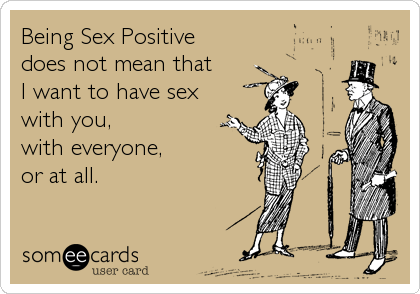
Before I go any further, let me say this: I do not want to talk publicly about what I do in the bedroom and I do not want to know what you do in the bedroom. My firm belief in sex-positive feminism and equality does not mean I think that you are sexy or exciting or impressive. Unless we’re close confidantes or I’ve indicated otherwise, please assume I don’t want any mental images of you and your naughty bits, no matter what they look like.

That said, I fully support anyone’s right to desire any sort of consensual sex imaginable. Without double-standards. Without the pressure of competition. Without the nuisance of others turning their personal preferences into rigid rules.

Take, for example, the way virginity is so frequently turned into not just a game but a high-stakes tournament. When and how did you lose it is an idea all of us are expected to base much of our identity on, even as adults. This is despite the fact that, according to medicine, virginity doesn’t exist. After all, what kind of sex does a guy have to engage in to officially “lose” it? And what about girls born without hymens? When exactly do lesbians lose their virginity?

Like race, virginity is a social construct and, in the words of a very wise person on Tumblr, what can be socially constructed can be socially changed. Last year the great Tracy Clark-Flory interviewed acquaintances about the sexual experience they considered to be their “first time.” The glorious thing about her inclusive project was that it revealed human sexuality to be just as diverse as everything else about us. Some defined their first time by their first orgasm, others by a particular first touch or experience of being touched. The problem with her stretching the definition of “losing your virginity” so broadly is that it robs competitive, insecure people of their ability to set standards with which they can gloat and put others down. Wait, no. That’s another glorious thing about it. There really is no problem with recognizing everyone’s experience as equally valid.

Failing to include everyone not only causes unnecessary humiliation, but it causes us to miss out on opportunities for true enlightenment. To quote the authors of You Can Tell Just By Looking: “Sexual minorities—people whose sexual desires, identities, and practices differ from the norm—do a better job talking about sex, precisely because they are constantly asked to explain and justify their love and their lust to a wider culture and, even, to themselves.” The more you examine harmful traditions, the less necessary they become.

This does not mean that minorities have better sex. Indeed, too many activists in the sexual revolution end up repulsing readers and listeners when they allow pride in their sexuality to devolve into arrogance, insisting their sex life is better than yours, rather than merely different. For a year, the BDSM club at my alma mater ran the slogan: “I do what you’re scared to fantasize about.” Not helpful. And kinda pathetic the more you think about it.

I will never judge someone for liking any particular kind of consensual sex, but I will judge anyone who tries to turn sex into a competition to calm their own self-doubts. Whether you’re a wise-cracking online commenter or a sex-positive pioneer, true sexual liberation is about moving beyond the middle school clique mentality, not indulging in it. It’s pretty much the least attractive thing there is.

Sometimes Beauty Is Easily Recognizable

24 Jan

Fashion Shoes...(Image by Thomas Leuthard used under CC 2.0 via)


Sometimes beauty is easily recognizable. Sometimes it’s not. Sometimes fashion is a statement. Sometimes it’s not. Sometimes street photography is a burden for those whose bodies are more likely to be photographed than others’.

Feel free to share your ideas about this, in or outside of the context of the above photograph by Thomas Leuthard.


Can We Understand What It Is Like To Hear Sound for the First Time?

17 Jan

listen(Image by Jay Morrison used under CC license via)
 
In the 1990s, Cristina Hartmann was one of the first of a few hundred deaf and hearing impaired children in the United States to undergo surgery for a cochlear implant. She has written extensively about the experience of hearing sound for the first time after the implant in her right ear was activated, most recently this month on Quora.com:

My mother was the one who told me, “Raise your hand when you hear something.” That statement left me baffled. What was I looking for? It was a bit like searching for Waldo when you didn’t know what he looked like.

In that tiny, windowless room deep in the large Manhattan hospital, the audiologist began tapping away at her keyboard. Everyone stared at me, even a woman standing in the doorway whom I had never seen before. I felt the heavy weight of expectations on my shoulders. I had to do something. I concentrated very hard, searching for the mysterious, indefinite Waldo. Whenever I felt anything, an itch or a breeze, I raised my hand slowly, searching everyone’s expressions for whether I had gotten it right or wrong. Nobody gave me any confirmation, so I went on guessing. Twenty-five years later, I realize the whole thing was a show that I performed. I knew this was a momentous event, and I didn’t want to disappoint….

As a congenitally deaf child (who was a bit long in the tooth at 6), I had never formed the neural pathways for my brain to even begin processing auditory stimulation. In the fashion of the ostrich, my brain ignored the strange stuff, and I remained as deaf as I had been an hour prior…

It took months and plenty of therapy for her brain to adapt. Thirteen years later, the activation of a second implant, this time in her left ear, proved a more harrowing experience than the first:

As the audiologist began the beep sequence, I burst into tears and involuntarily clenched the left side of my face. She looked up, puzzled. “Why are you crying? You’ve had this before!” she said. The pain was like sparklers going off on the left side of my head. The stimulation, as little as it was, completely overwhelmed me.

Even though I had already laid the neural pathways for auditory stimuli for my right ear, my brain was unprepared for the stimuli coming from the left side. Since my brain had already experienced this type of stimuli, it could process it, but it was still sensory overload. That stuff hurts. It took me months to acclimate myself to the new implant, but in the meantime, I cringed every time I turned it on. As I said, laying new neural pathways takes work.

Hartmann was later told by the mother of another patient, “Once they started with the beeps, [my daughter] screamed and cried.”

Such narratives exist in stark contrast to the YouTube videos of newly activated implant users laughing and smiling—and, in one case, crying for joy—that have been bouncing around the Internet with far greater frequency. While both narratives provide important information for those considering cochlear implants for themselves or their children, they are also an important contribution for the greater public in our understanding of what it means to be deaf.

It makes sense that crossing out of the world of silence into the world of sound is just as disorienting as its opposite. A hearing person with a middle ear infection strains to perceive the sound of speech, and a deaf person with a new cochlear implant strains to tune out noise pollution: the knocks of a radiator in another room, car doors slamming on the street, wind, footsteps, not to mention the countless background beeps and clicks of the Digital Age. After all, when a baby leaves the womb, she does not instantly adapt to her new home. She comes out crying. There’s too much light and not enough warmth. And, if she is not deaf, there is too much sound.

Speech is no less difficult to learn than Sign language, just as English is no less difficult than Chinese. The ease with which we learn one form of communication or the other depends entirely upon our personal experience and place in the world. For those of us who have grown up hearing speech, the viral videos communicate something very different than for those who grew up in Deaf culture.

While the experiences of utter delight portrayed in the videos are valid, their popularity contributes to an oversimplification of the issue. Watching a toddler smile upon finally hearing his mother’s voice for the first time sends a very strong subliminal message: Being deaf must be worse than not being deaf, and therefore anyone would want to join the world of the hearing. But the general public as an audience is already biased toward the hearing world’s standards of happiness. We are moved by the sound of loved ones uttering our names but not at the image of them signing our names because our culture does not rely on—and therefore does not highly value—Sign language.

This what inspired Lalit Marcus, the daughter of deaf parents and an active promoter of Deaf culture, to pen an article for The Wire titled, “Why You Shouldn’t Share Those Emotional ‘Deaf Person Hears for the First Time’ Videos”:

I want to make it clear that I don’t have a problem with people who choose to get cochlear implants. Medical decisions are painfully personal… I’m all for people making the health choices they think are best for them. What bothers me are the maudlin videos produced out of someone’s intense, private moment that are then taken out of context and broadcast around the world. What bothers me is how the viewer never learns how the individual came to the decision about their implant, which factors they took into account, whether their medical insurance covered it. Sometimes we don’t even learn their names.

This gives me pause. I consider the clip of me removing my casts to look at my newly lengthened legs, which featured 15 years ago in the HBO documentary Dwarfs: Not A Fairy Tale and last year on Berlin’s public station. The moment was simply joyous—as was the moment I stood up, let go of my friend’s hands and took my first steps—but the story behind it was abundantly complex. Which hopefully both documentaries portray.

I have endeavored to communicate that through this blog and all the media work I have done for the past 20 years.

Limb-lengthening and cochlear implant procedures are markedly different in several ways. Limb-lengthening, for example, does not threaten to endanger another language. But it does threaten to break ranks in the dwarf community through the controversy of altering versus accepting extraordinary bodies. Both procedures have proven to evoke vitriol among their proponents and detractors.

Hartmann reveals:

Most of my deaf friends were good about my CI. They didn’t mind it, except for the fact that my speech therapy cut into play time. That being said, people in the Deaf community felt free to make pointed and derisive comments about my CI. I still get these comments, even almost 24 years after my surgery. To some, I’ll always be a CI-wearer and a turncoat.

The CI advocates aren’t any better, if not worse.

I have very pleasant relationships with many parents of implanted children and CI users. I, however, have also been called a failure because I still use [American Sign Language] and don’t speak perfectly. I’ve also seen a mother run across a room to prevent her child from signing to another deaf child. I’ve been scolded for making gestures and looking too “deaf.”

The debate, of course, is ongoing.

But for those of us not faced with opting for or against a cochlear implant, we are faced with the challenge of overcoming our bias and remembering that Deaf culture is no less valid than the hearing culture we inhabit. Especially when those admittedly tantalizing videos wind up in our Facebook feeds.


The Best Picture Books for Preventing Prejudice

13 Dec

Book sculpture (Image by Ellen Forsyth used under CC license via)

From the Archives, one of the blogs most popular articles:


Perhaps you are looking for gifts for little ones this holiday season. Or perhaps, like me, you simply know a staggering number of kids who will all have birthdays in the coming year. For either scenario, here is a sample of excellent—i.e., not boring or ugly—picture books that help raise diversity awareness through reading. All of these books have been featured in my workshops for pre-school teachers about helping minority children feel represented and teaching all students to see minority kids as their equals. They are divided into five categories based on objective.

***

Books That Know Not Every Family Is Upper/Middle Class with a White, Straight, Biological, Married Mom and Dad… The most delightful thing about pre-schoolers is that they have almost no idea what “normal” means. Of course they are surprised by the extraordinary, but they don’t place value judgments on it until someone older teaches it to them. Critically analyzing the media images and stories kids consume is crucial because the media not only educates them about the world beyond their doorstep, but it instills them with subconscious ideas about what kinds of people society believes deserve to appear in books, film, and television. Kids are of course individuals and some may be temperamentally predisposed toward narrow-mindedness, but a preemptive strike against prejudice never hurt anyone.


Tell Me Again About the Night I Was Born by Jamie Lee Curtis (available in German & Spanish) – A story of adoption as told from the point of view of the child. “Tell me again how the phone rang in the middle of the night and they told you I was born. Tell me again how you screamed. Tell me again how you called Grandma and Grandpa, but they didn’t hear the phone ’cause they sleep like logs…”


A Chair For My Mother by Vera B. Williams – A story that portrays poverty without uttering the word. The daughter of a single working mom tells of the day they lost everything they owned in a house fire. They’ve been saving up every spare cent they have to buy a big comfy armchair for their new home ever since. In the end, Mom finally has a place to lie back and rest her sore feet when she comes home from work at the diner, and her daughter can curl up to sleep in her lap.


Two Homes by Claire Masurel (available in French & German) – A boy proudly shows off his two homes. “I have two favorite chairs. A rocking chair at Daddy’s. A soft chair at Mommy’s.” The parents are portrayed as having nothing to do with each other, while always beaming at their son. “We love you wherever we are, and we love you wherever you are.”


The Snowy Day by Ezra Jack Keats (available in Spanish) – Ezra Jack Keats was one of the first American illustrators to feature everyday black children in his stories. All of his books portray kids growing up in inner city neighborhoods. This is a brilliantly illustrated, very simple story about a boy enjoying freshly fallen snow in every way possible.


Susan Laughs by Jeanne Willis – Written in verse, Susan swings, makes faces, sings songs, plays tricks, splashes in the water, rides on her dad’s shoulders, races in the back of a go-cart. Susan also happens to use a wheelchair.


What Makes A Baby by Cory Silverberg (available in German & Spanish) – A book about reproduction (sperm, egg, uterus) that leaves out gender (mom, dad, man, woman). No matter how many people want to ignore it, plenty of kids have been born via IVF, surrogacy, and to LGBTQ and intersex parents. This book allows those kids to have a conversation about where they came from, while emphasizing that your family is the people who were waiting for you to come into the world.

***

Books For Extraordinary Situations That Have To Be ExplainedThese stories get into the specifics of certain disabilities, conditions and diverse backgrounds, but there is no reason they should not be read to every child.


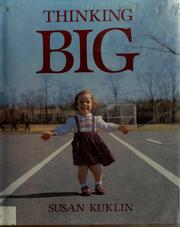
Thinking Big by Susan Kuklin – This book is out of print, but well worth the search, portraying a day in the life of an 8-year-old girl with achondroplastic dwarfism. She is great at painting, but needs stools to reach things at home and school. She has friends who hold her hand so she won’t get left behind on hikes, but she talks openly about the kindergartners who call her “baby.” She loves going to Little People of America meetings, but she loves being at home with her mom, dad and younger brother best of all. This book accompanied me from pre-school to 5th grade, read aloud by my new teacher to the class at the beginning of the school year in order to explain why I looked different from the others and to encourage my classmates to be upfront with their questions.


I Have A Sister My Sister Is Deaf by Jeanne Whitehouse Peterson– A day in the life of a hearing girl and her deaf sister. They play, argue, and help each other out, while explaining deafness as a mere difference in terms young kids can understand. The story has a gentle, poetic rhythm. On a deer hunt, the narrator explains, “I am the one who listens for small sounds. She is the one who watches for quick movements in the grass.”


The Black Book of Colors by Rosana Faría (available in French, German & Spanish) – Like the illustrations, everything is black for Thomas, so when it comes to colors, he smells, hears, and feels them. “Red is as sweet as a strawberry, as juicy as a watermelon, and it hurts when it seeps out of a cut on his knee.” The images are embossed for the reader to touch. The Braille alphabet is provided at the back of the book.


People by Peter Spier (available in French & German) – A superbly illustrated celebration of human beings and cultures all around the world. We have different skin colors, noses, hair styles, holidays, favorite foods, alphabets, hobbies, and homes, but we’re all people. It should be noted that this might be a bit of an information overload for children under 4.

***

Books About Moments When Diversity Is Considered Disruptive… These books empower kids who have been teased or interrogated for standing out. They can also be used to teach a bully or a clique how to understand and accept harmless differences. Some teachers rightly express concern over introducing the problems of sexism or racism to a child who has never seen a boy in a dress or a black girl before. Doing so could foster the notion that we should always associate minorities with controversy. Save them for when conflict does arise, or when the child is old enough to start learning about history and intolerance.


Amazing Grace by Mary Hoffman (available in Arabic, German, Panjabi, & Urdu) – Grace is a master at playing pretend. When her class decides to put on the play Peter Pan, she’s told by some know-it-all classmates that she can’t because she’s a girl and she’s black. She shows ’em all right.


And Tango Makes Three by Justin Richardson and Peter Parnell (available in German) – Penguins Silo and Roy live in a New York zoo and are utterly inseparable. The zookeepers encourage them to take an interest in the lady penguins so that they can soon have baby penguins, but to no avail. Silo and Roy build a nest together and end up adopting an egg. When Baby Tango is born, the three of them couldn’t be happier.


You Be Me – I’ll Be You by Pili Mandelbaum (available in French) – A biracial girl tells her white dad she wishes she looked like he does. Dad explains that he is milk and Mom is coffee, and she is café au lait. He says she is beautiful and sometimes he wishes he looked like her. Soon they’re dressing up in each other’s clothes, she’s braiding his hair, and he’s powdering her face. She wants to go into town and show Mom. On the way, they pass by a beauty shop and Dad points out how many white women are curling their hair and tanning their skin, while so many black women strive for the opposite.


“Sick of Pink” by Nathalie Hense (currently available only in German, French, Japanese, Norwegian & Portuguese) – The proud musings of a girl who likes witches, cranes, tractors, bugs, and barrettes with rhinestones in them. She knows boys who sew pretty clothes for their action figures and who paint daisies on their race cars. When grown-ups shake their heads and tell them, “That’s for girls!” or “That’s for boys!” she asks them why. “That’s just the way things are,” they tell her. “That’s not a real answer,” she deadpans.

***

Fairy Tales Beyond White Knights and Helpless Princesses… Even the most iconoclastic of people have their fantasies of love and heroism shaped by folklore. Yet the idea of revising Western fairy tales to make them less stereotypical has been met with a strong backlash. Whether or not you think it’s appropriate for kids to read Sleeping Beauty, Little Black Sambo or The Five Chinese Brothers, there is no harm in providing them with additional legends about love, valor and wisdom to make our cultural heritage more inclusive.


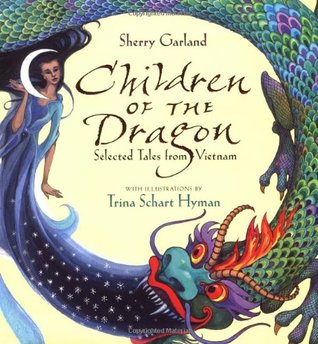
Children of the Dragon by Sherry Garland – Selected tales from Vietnam that rival any of the Grimm’s fairy tales in adventure, imagination and vibrancy. Many of the stories are supplemented by explanations of Vietnamese history that provide context.


Sense Pass King by Katrin Tchana – A girl in Cameroon outsmarts the king every time. Besides being one of the greatest illustrators of the 20th century, Trina Schart Hyman was a master of ethnic and socio-economic diversity in her many, many picture books.


Tam Lin by Jane Yolen – A Scottish ballad wherein a young maiden rescues her true love from the clutches of the evil faerie queen. In the end, she wins both his freedom and her clan’s great stone castle back. Not suitable for easily frightened children.


Liza Lou and the Yeller Belly Swamp by Mercer Mayer – A fearless girl triumphs over a ghost, a witch, a troll and a devil on her way to Grandma’s house in the bayous of Arkansas. Some of the best illustration there is. Think Little Red Riding Hood had she managed to outwit the wolf on her own.


The Talking Eggs by Robert D. San Souci – A Cinderella story of sorts set in the backwoods of the American South. An elderly wise woman uses magic to help a kind, obedient girl escape her cruel mother and spoiled sister. In the end, she rides off to the big city in a carriage. (With no prince involved, this one passes the Bechdel test.)


King and King by Linda de Haan (available in Czech, Dutch & German) – It’s time for the prince to hurry up and get married before he has to rule the kingdom, but every princess who comes to call bores him to tears. The very last one, however, brings her utterly gorgeous brother, and the king and king live happily ever after.


The Paperbag Princess by Robert Munsch – After outwitting the dragon, Princess Elizabeth rescues the prince only to be told that her scorched hair and lousy clothes are a major turn-off. She tells him he is a bum. “They didn’t get married after all.” She runs off into the sunset as happy as can be. I have yet to meet a child who does not love the humor in this story.

***

The Best Book on Diversity To Date…


Horton Hatches The Egg by Dr. Seuss – A bird is sick of sitting around on her egg all day, so she asks Horton if he would mind stepping in for just a minute. He is happy to help, but the bird jets off to Palm Beach the minute she is free. Horton continues to sit on the egg while awaiting her return. He withstands the wind, the rain, a terrible cold, and three hunters who insist on selling him and the egg off to the circus as a freak show. Throughout it all he reminds himself, “I meant what I said and I said what I meant. An elephant’s faithful, one hundred percent.” After he becomes a media sensation, the bird comes back to claim her prize.

Whenever I used this one in the classroom, I would ask the kids whom the egg belongs to. The 3-year-olds, with their preliminary grasp on logic, would always give the black-and-white answer: “The egg belongs to the bird because eggs go with birds.” The 4- to 5-year-olds would invariably go the other way, plunging into righteous indignation over the injustice of the bird’s demands: “The elephant! The egg belongs to the elephant because he worked so hard and he loved it so much and she just can’t come back and take it!” In the end, the egg cracks open and out flies a baby elephant bird, who wraps his wings around Horton. This is Seuss at his best, showing that loyalty makes a family.


No One’s Magical Object: Albinos, Dwarfs and Any Body You Can Think Of

6 Dec

Turning Green on Anatomy(Image by Wolfram Burner used under CC 2.0 via)


In his otherwise spectacular book, Far From the Tree, Andrew Solomon issues a false point I myself have issued in the past: that we dwarfs are the only minority on earth to be associated with magic and mythology. Perhaps it is easy to forget that blind people have been associated in the past with “seeing” into the future and disabled children of all sorts were believed to be cursed by if not the very spawn of the devil in the Medieval and Early Modern cultures of Europe. But we should not forget any of this when considering the current scandal surrounding the abuse of albino people in Tanzania.

A BBC investigation in 2008 revealed that some adherents of supernatural belief systems in East Africa today advocate severing and stealing the limbs of albino people to keep as good luck charms. A harrowing documentary, The Boy from Geita, airing this week profiles the victims of such a crime.

Tuvalo Manongi, the U.N. ambassador to Tanzania is fighting back, arguing that the film’s trailer unfairly portrays his country as a land of bloodthirsty heathens in need of Great White Western enlightenment. The documentary does accuse members of Tanzania’s legislature of secretly condoning the practice, implicating some of its members in the sales of the body parts. The Canadian director, Peter Ash, stands by his story and says Manongi isn’t one to talk: “[Manongi] probably doesn’t hang around people with albinism for 12 hours a day and weeks on end in [Tanzania] like I do.”  Ash himself has albinism.

Post-colonial social justice activists generally agree that the best way to expand human rights in other countries is to support the activists in said country, no matter how few their numbers. Ultimately such locals should lead the charge lest foreign aid organizations indeed act out of ignorance of the local history and culture. Tanzania Albino Centre and the Tanzania Albinism Society are two organizations dedicated to combating the problem.

As an outsider, I have little else to offer other than the demand that we as humans let go of any beliefs—supernatural or otherwise—that fetishize extraordinary bodies. I’ve been asked by Western Wiccans and Lord of the Rings fanatics if I as a dwarf feel a connection to my “magical” history. People with dwarfism, intersexing conditions, and many, many other rare diagnoses regularly have to endure and/or stave off fetishists when dating (as in “I’ve always wanted to f*** a little person!”) or simply going about their everyday lives.

The ability to see beauty and interpret art in the rainbow of human bodily diversity is one of the greatest feats of the human imagination. But objectification is never okay without consent. And openly voicing our fetishes regarding certain bodies drowns out the voices of those who have no choice about owning those bodies. We’ve got a lot of work to do before this becomes universally understood.


Body Dysmorphia & the Dangers of Operating Out of Insecurity

29 Nov

Reid reading(Image by Miguel Tejada-Flores used under CC 2.0 via)
 
At the beginning of Mean Girls, Lindsay Lohan’s character watches her new high school friends indulge in body-bashing in front of a bedroom mirror:

“God, my hips are huge!”

“Oh, please. I hate my calves!”

“At least you guys can wear halters. I’ve got man-shoulders.”

“My hairline is so weird.”

“My pores are huge!”

“I used to think there was just fat and skinny,” Lohan thinks to herself. “Apparently there’s a lot of things that can be wrong with your body,”

While most women in the Western world are well-acquainted with this mentality, such self-hatred also occurs in men, albeit more covertly. Body dysmorphic disorder affects between 1% to 2% of the population and is distributed equally among men and women. And if they have the means to pursue cosmetic surgery, they can become addicted to it.

In an article appearing at The Huffington Post last week, 27-year-old Reid Ewing (pictured above), who plays a run-of-the-mill hunk on Modern Family, revealed his seven-year struggle with body dysmorphic disorder and his subsequent addiction to cosmetic surgery. After describing in detail his self-hatred in front of the mirror and his misery after each of the several surgeries, he turns his lens to the doctors who were only too ready to put him under the knife:

Of the four doctors who worked on me, not one had mental health screenings in place for their patients, except for asking if I had a history of depression, which I said I did, and that was that. My history with eating disorders and the cases of obsessive compulsive disorder in my family never came up. None of the doctors suggested I consult a psychologist for what was clearly a psychological issue rather than a cosmetic one or warn me about the potential for addiction.

People with body dysmorphic disorder often become addicted to cosmetic surgery. Gambling with your looks, paired with all the pain meds doctors load you up on, make it a highly addictive experience. It’s a problem that is rarely taken seriously because of the public shaming of those who have had work done. The secrecy that surrounds cosmetic surgery keeps the unethical work practiced by many of these doctors from ever coming to light. I think people often choose cosmetic surgery in order to be accepted, but it usually leaves them feeling even more like an outsider. We don’t hear enough stories about cosmetic surgery from this perspective.

Not long after I had decided to stop getting surgeries, I saw the first doctor I met with on a talk show and then in a magazine article, giving tips on getting cosmetic surgery. Well, this is written to counter his influence. Before seeking to change your face, you should question whether it is your mind that needs fixing.

Plastic surgery is not always a bad thing. It often helps people who actually need it for serious cases, but it’s a horrible hobby, and it will eat away at you until you have lost all self-esteem and joy. I wish I could go back and undo all the surgeries. Now I can see that I was fine to begin with and didn’t need the surgeries after all.

I have written extensively about my decision to undergo six years of limb-lengthening. In the many, many conversations I have had with people in person, on panels and in print about this decision, I have emphasized that it was not for cosmetic purposes and that anyone who would do it to counteract feelings of bodily inferiority should refrain. Ewing’s stories of screaming at his scars and feeling anything but satisfied with himself are precisely why.

And for the majority of people who are not at risk for such all-encompassing self-destruction, it is still worth asking ourselves as a culture if the aforementioned tradition of bonding through body-bashing brings us any self-esteem or joy.


What the Stubblefield Rape Case Means for Disability Rights

22 Nov

Words as skin(Image by Maurizio Abbate used under CC license via)


When people continue to believe in a method that has repeatedly been proven not to work, what harm can it do? Does it matter that an herbal supplement is ineffective if someone who uses it says it truly makes them feel better? Does it really matter whether or not primates can learn American Sign Language or parrots can learn to read English out loud if it makes animal lovers so happy to believe that they do?

Misinterpreting animal communication can of course be dangerous. In 2007, a Dutch woman who insisted she was bonding with an ape at her local zoo refused to believe the primatologists’ warnings that staring directly into a male gorilla’s eyes and showing one’s teeth—i.e., smiling—triggers aggression. She refused to believe this even after the gorilla broke out of his enclosure and attacked her.

But what if someone assumes a living person is communicating with them? What if they assume said person is confiding their wishes and life choices in them? What if they can do so because we don’t share a common language with the person they claim to be speaking for?

Facilitated Communication, a.k.a. “FC,” is a method developed in the late 20th century to help severely disabled people with little or no speech communicate with others. By supporting their patient’s hand or arm, a trained facilitator could theoretically help the patient type out sentences, thereby “unlocking” intelligence previously obscured. The method was considered a breakthrough for patients with diagnoses ranging from severe autism to severe cerebral palsy. It was touted as a miracle for their loved ones, who understandably wanted nothing more than to be able to hear their thoughts, wants and needs.

Anna Stubblefield is a philosophy professor and disability rights advocate who, until recently, taught seminars about FC at Rutgers University. What she did not teach her students is that FC has been condemned over the past three decades by the American Psychological Association, the American Association of Pediatrics, the American Association on Intellectual and Developmental Disabilities, the Federal Trade Commission, and the New York State Department of Health, among others. Double-blind testing generally reveals the facilitator to be subconsciously guiding their patient’s typing, rather than simply supporting it. This year Sweden banned FC in schools nationwide.

Professor Stubblefield adamantly rejects the classification of FC as a pseudoscience. Her mother was a pioneer of the technique. When one of her seminar students asked her in 2009 if it could perhaps help his severely disabled young adult brother—referred to in the press as “D.J.”—she agreed to treat him. A 20-page report in The New York Times Magazine chronicles Stubblefield’s increasingly intimate relationship with her patient, eventually culminating in her announcement in 2011 to his family that she and D.J. were in love. She planned to leave her husband and two children for him. As his legal guardians, D.J.’s family told her she had overstepped her boundaries and requested she leave him alone. When she did not, they eventually filed charges against her. They testified that gradually Stubblefield’s claims to D.J.’s interests and values—typed out in their FC sessions—had begun to sound suspiciously like things she would want him to say. Stubblefield was sentenced last month to 40 years in prison for sexual assault.

Another proponent of FC, Martina Susanne Schweiger, was convicted last year in Queensland, Australia for performing sex acts on a 21-year-old patient whom she believed had reciprocated his love for her via FC.

I’ve written before about widespread prejudices against disabled people and how often it denies us our sexuality. But disabled people also suffer sexual abuse at rates far higher than the general population. Most are taken advantage of by their family members and/or caregivers. Stubblefield and the remaining proponents of FC argue that their critics are ableist for denying D.J.’s capacity for intellect and intimacy. The prosecution argued that Stubblefield is ableist for assuming she knows what D.J. wants.

The desire to be the next Miracle Worker is understandable and so often noble. Who doesn’t want to help those in need? And the lure of the controversial in the pursuit of justice is not uncommon. From Jodie Foster and Liam Neeson in Nell to Sean Penn and Michelle Pfeiffer in I Am Sam to Adam Sandler and Don Cheadle in Reign Over Me, Hollywood is rife with love stories and courtroom dramas about a misunderstood outcast who has finally found the one open-minded hero who understands him, believes in him and then must fight the cold-hearted, close-minded authorities from keeping them apart.

Yet red flags should go up whenever there is a risk that a self-appointed advocate is putting words in someone’s mouth, no matter which side that advocate thinks they are on. Particularly when their patient or client belongs to a highly marginalized minority.

News of this case has elicited many head-shaking responses along the lines of, “Well, they all sound nuts.” One of the jurors told NJ.com, “I was like…‘You’re going to leave your husband and your kids for someone like this?’” Disability rights advocates rightly bristle at the infantilizing of D.J.—not to mention the salacious headlines that seem obsessed with his personal hygiene—while ultimately declaring the case incredibly sad. Yet we rarely use “nuts” or “sad” to describe male teachers convicted of seducing students unable to give consent. We describe them as predators or abusers.

Abusers of course rarely think of themselves as such. Child molesters are often convinced their victims were flirting with them. Few would consider themselves sadistic. Most are simply skilled at rationalizing their behavior to themselves. But regardless of what they believe their intentions are, abusers by definition deny others power in pursuit of their own.

The Stubblefield case and the Schweiger case highlight a very uncomfortable fact for disabled people everywhere: that some of the caregivers and activists working and sometimes fighting on our behalf are doing it to feed a savior complex. And anyone with a savior complex is not truly listening to those they claim to be helping.

Addressing this problem becomes increasingly difficult when we consider how very young the concept of disability rights is over the course of human history. Living in any other era, most of us would have been abandoned by our families in asylums or elsewhere. Ancient Spartans advised throwing us off cliffs after birth. Some modern philosophers, such as Prof. Peter Singer, still advocate infanticide for some. Awareness of all this often makes us feel compelled to be eternally grateful to anyone who offers us any sort of support or help, regardless of whether or not it is truly helpful or respectful of our boundaries.

That we do not yet have the means to access D.J.’s thoughts and desires is indeed tragic. But opposition to FC does not mean we damn severely disabled people to the realm of hopelessness. On the contrary, accepting criticism of FC can only help to improve upon the ways in which researchers develop better practices and technologies. Relying on discredited methods would not have gotten Stephen Hawking his voice. Annie Sullivan prevailed with Helen Keller because she not only relied on rigorously tested methods but also shed her status as Keller’s sole communicator by enrolling her in an interdisciplinary program at the Perkins School. The ability to kill your darlings is an ingredient of innovation.

And any true investment in disabled people and the methods that best assist them must be accompanied by the credo activists began using around the time D.J. was born: Nothing about us without us.


This Is How You React When Someone Finds Your Stupid Little Joke Offensive (And You Know They Might Be Right)

1 Nov

From the Archives


Really, With the Gay Jokes?” “The Rape-Joke Double Standard.” “Has The Onion Gotten Too Mean?” These are the headlines to just a few of the several articles appearing this week about comedians and conscience. All of them make excellent points, but the problem with trying to explain why a joke is offensive is that it instantly kills the mood. Culture critics aren’t professional comedians and thus they almost always end up being viewed as the more uptight of the two, even if their arguments are rock-solid.

And yet, the best comedians are pretty good culture critics, as Dara Ó Briain proved years ago at the Theatre Royal in London. Amidst his cracks about the idiots who ask you to remove your shoes in their home, the idiots who confuse astronomy and astrology, and the idiots who think the IRA had uniforms, he talked about a time when he was the idiot:

Last year I told a joke, and this is not a good joke, I have no excuses.  It is a terrible joke, but it was about the musical Billy Elliot. And “What was the composer’s inspiration for Billy Elliot? Elton John – do you think he saw a little of himself in Billy Elliot?”

I know. It was rubbish. I didn’t mean it as an attack on Elton John, or as an attack on the gay community. I meant it as another joke in the glorious tradition of jokes involving the word “in.” As in, “Do you have any Irish in ye? Would you like some?”

Okay, so he explained he didn’t intend to trash homosexuality. But he didn’t leave it at that. He went on to talk about the backlash from the LGBT rights alliance Outrage, who said the joke contributed to a culture of hatred against gay men in Britain. Ó Briain explained:
And the thing is, your initial reaction is when somebody does a complaint like that is to get all tough and say, “It’s only a joke, for Jesus’s sake, relax.” Swiftly followed by arguments about civil rights and comedy’s obligation to say the difficult thing and freedom of speech. Which is a fairly lofty point to bring in to back up something as bad as that joke about Billy Elliot. You wouldn’t go to Strasbourg to the European Court of Human Rights with that as your argument: “Oh, my lords and ladies of the court, Elton John? Do you think he saw a little of himself in Billy Elliot?”

He went on to clarify his political stance, emphasizing that “there is no pedophilia-homosexuality relationship at all,” showing he was brave enough to break character as a comedian despite the risk that always carries of losing the audience. He then addressed that risk as well:

And some people think it’s very politically correct of me, but then, I’m Irish. And if anyone’s benefited from a good dose of political correctness on this island, it’s the Irish. Remember the good old days with all those jokes about how stupid we were? And then a memo went around some time in the Eighties, when you [Brits] all said, “Oh, Jesus, we’re not doing jokes about the Irish anymore? Okay, fine.” And it just stopped. And thank you very much. A bit overdue, but thanks very much nonetheless.

He went on to tell a joke about a bunch of drunk Irishmen, reveling in the fact that he was allowed to tell it and the British weren’t. He then said, “But again with the whole Billy Elliot thing, the reason I backed down so fast on that was because I received one letter of support.” Removing the letter from his pocket, he proceeded to read the message sent by a group of conservatives in Northern Ireland who applauded him for taking a stand against the forces of sodomy. “If you ever use the phrase ‘forces of sodomy,’ it had better be a gay heavy metal band that you’re talkin’ about!”

It’s rare that comedians are brave enough to admit that their joke was a fail. But I’ve never heard a comedian own up to it so fiercely and admit the ways in which he’s personally benefited from the political correctness movement. By changing his target from the group he originally attacked to himself, Ó Briain proved not only the sincerity of his regret but the breadth of his comedic skill.

And I’ve said it once and I’ll say it again: Whenever comedians insist that any criticism of their work is an indictment of all comedy, it sets the bar for comedy so low that no comedian need ever try to be original. Ignoring the “PC police”—i.e., anyone who doesn’t live with the privileges they do—they can simply regenerate old stereotypes, mining the minstrel shows, the frat houses and the school yards, and if no one laughs at this, it’s simply because we’re all too uptight, right? Wrong. We don’t refrain from laughing because we feel we shouldn’t. We refrain because, unlike the repressed who giggle away in awe, we’ve heard it a thousand times before and we know it’s far from unique. And isn’t unique what every comedian, entertainer and artist strives to be?

Or, in the words of another Irish comic, Ed Byrne: “I see comedians making jokes about fat people being lazy, and I just think, well, they’re not as lazy as comedians who get easy laughs by picking on fat people.”


Originally posted May 12, 2013

Cultural Appropriation vs. Cultural Exchange

25 Oct

(Via)

From the Archives


As Halloween approaches along with all the stomach-turning caricatures of minorities and foreigners, I find myself repeating the same question over and over: When is it okay to wear or adopt something from a culture you don’t belong to?

Obviously, the most offensive appropriations rely on inane stereotypes most people I know would never go near. But this doesn’t mean that globe-trotting, multicultural enthusiasts—like myself—can do no wrong.  Since the 1960s, upper/middle class whites dabbling in other cultures has been celebrated under the banner of “Diversity!”  But from the point of view of certain cultures, Nigerian writer Jarune Uwujaren argues, it’s often just another chapter in the long tradition of Westerners “pressing their own culture onto others and taking what they want in return.”  American Indians do not appreciate headdresses used as fashion statements.  Hindus do not applaud non-Hindus flaunting bindis.  And Mexicans don’t enjoy seeing Day of the Dead re-appropriated as just another Halloween costume. 

Yet the Mexican Día de los Muertos is the result of Catholics adopting what was originally a pre-Columbian tradition.  Modern German children meanwhile have taken to celebrating Halloween, much to their parents’ chagrin.  There isn’t a holiday on earth that hasn’t been adapted from something else, leading atheist comedian Mitch Benn to observe, “If only practicing Christians can celebrate Christmas, then only Vikings can say, ‘Thursday.’ ” 

Indeed, intercultural contact always leads to intercultural mixing. Nowadays brides in China often wear two wedding dresses on their big day: a traditional Chinese red dress and a traditional Western white gown.  When a friend from Chengdu married her German husband in Berlin, she turned this trend on its head, wearing a Western designer dress that was red and then a cheongsam that was white.  Borders move and cultures blend constantly throughout history, often blurring the line between cultural appropriation and cultural exchange.

For this reason, it is important to remember that absorbing the fashions and customs of another culture is not always offensive.  But it is just as important to remember that it is not always open-minded, either.  After all, colonial history is rife with Westerners who filled their homes with foreign gear and lectured others about the noble savage.  Among the most ardent fans of Tibetan Buddhism, American Indian animism, and Norse mythology were the Nazis.  

We all love to show off what we’ve learned and delving into another culture can be enriching. But minorities tend not to like it when an outsider appoints herself an expert and lectures more than she listens.  Or thinks that listening to minorities is a heroic act, rather than common courtesy.  Visiting another country feels special when we’re the first of our friends and family to go, but there is no guarantee we’ll truly be acquainted with the culture.  Thanks to language barriers and the insular nature of expat bubbles and tourist tracks, it is fairly easy to study or even live in another culture for several years without getting to know a single person from that culture.  (Waiters and receptionists don’t count.)  

Whether venturing to the other side of the world or the other side of the tracks, it is always much easier to buy something, taste something, or get a bit of history from a book than to talk to someone from another culture.  Because books and merchandise can’t talk back.  They won’t call us out if we make false assumptions.  If we do actually strike up a conversation with someone from another ethnic group, whether Liverpudlian or Laotian, the temptation to flaunt the experience like a feat of greatness can be overwhelming. Jarune Uwujaren wrote about this pervasive temptation last month:

I remember that at my sister’s wedding, the groom – who happened to be white – changed midway through the ceremony along with my sister into modern, but fairly traditional, Nigerian clothes.

Even though some family members found it amusing, there was never any undertone of the clothes being treated as a costume or “experience” for a white person to enjoy for a little bit and discard later. He was invited – both as a new family member and a guest – to engage our culture in this way.

If he had been obnoxious about it – treated it as exotic or weird or pretended he now understood what it means to be Nigerian and refused to wear Western clothes ever again – the experience would have been more appropriative.

But instead, he wore them from a place of respect.

Appreciating the beauty in other cultures is always preferable to xenophobia.  Enjoying a trip abroad that happened to involve minimal interaction with the locals is perfectly fine.  But drawing attention to oneself for reveling in the mysteriousness of a culture is to revel in its supposed Otherness.  Whenever an entire culture is reduced to its exoticism, it becomes nothing more than an accessory or a toy – not a sign of cultural understanding.  

And while adopting a sacred custom “just because it looks cool” can be inconsiderate, imbuing our reasons for adopting a trinket with too much meaning can also make a native roll their eyes.  It’s one thing to buy a handbag on a trip to Tokyo simply because it’s beautiful.  A Japanese woman is buying it simply because it’s beautiful, after all.  But it’s another thing to flaunt it like a badge of enlightenment. 

The blog Hanzi Smatter documents and explains the snafus and utter nonsense that so often result when Westerners get tattoos of Chinese characters copied off the Internet.  Such incidents demonstrate that vanity is often mistaken for art.  We’re all a little vain, yet the difference between art and vanity is crucial because vanity is an indulgence, not a challenge or an attempt to communicate.  When Dita von Teese donned yellowface for a London performance titled “Opium Den,” fellow burlesque artist Shanghai Pearl wrote:

I am not saying artists should not tackle controversial or challenging subjects. However, if we choose to take on challenging material, we should be prepared to have challenging conversations. I absolutely believe that art will not suffer from sensitivity. Sensitivity should make us work harder, research more, and think more. Art can only benefit from that.

Indeed, nothing suffers from genuine sensitivity.  The lesson from colonialism is not to stop exploring the world and reading about it, but to always bear in mind that there can be no cultural understanding without dialogue.  When deciding whether to adopt a tradition or style from another culture, we should consider what several people from that culture have to say about it.  Because there are no cultures without people.


Originally posted November 3, 2013

Curiosity Kills the Rat

19 Oct

From the Archives


“All the freaky people make the beauty of the world.”

— Michael Franti

Fourteen years ago, I made a trip to Hot Topic—that quintessential 90s chain store for all things goth—in search of some fishnet stockings for a friend.  It was my first visit to the store since I was back in a wheelchair for my third and final limb-lengthening procedure and the narrow aisles prevented me from venturing beyond the entrance.  My first time in a wheelchair, from ages 11 to 12, had been a completely humbling experience as I was forced to see how very inaccessible the world is for the non-ambulatory.  This time around I was battling the hot-cheeked self-consciousness that adolescence attaches to any signs of dependency. 

As I tried to look casual while flipping through black gloves, black stockings, and black dog collars, a guy approached me sporting crimson hair, eyebrow rings, an employee badge and a smile.  “This is store is easily adjustable,” he grinned, and with that he began shoving aside the display cases and clothes racks—which were, like me, on wheels—clearing a path for me right through to the back and taking little notice of the other shoppers, some of  whom took one to the shoulder.  It was one of those crushes that disappear as quickly as they develop but leave a lasting memory: my knight in shining jewelry.

Thanks to experiences like this, I have a special place in my heart for the acceptance of physical differences that can often be found in the subcultures of punks, hippies, and goths.  From the imagining of monsters to the examination of anything taboo, counter-culture is often unfazed by physical qualities that fall outside of mainstream beauty standards.  The first kid in my high school who chose not to stare at the external fixators on my arms but instead held the door for me had green and purple hair.  About a month after my trip to Hot Topic, I showed a death-metal-loving friend my right fixator (shown above) for the first time, with the six titanium pins protruding from open wounds in my thigh.  He grinned, “That is the ultimate piercing, man!”  He hardly could have come up with a more pleasing reaction.  That my wounds were cool instead of “icky” or “pitiful” was a refreshing attitude found almost exclusively outside mainstream culture.  This attitude more readily understands my belief that my scars are merit badges I earned, not deformities to erase. 

However, this tendency toward decency over discomfort is just one side of the alternative coin.  Every subculture has its strengths and its weaknesses, and for all the freaky heroes I’ve encountered, I’ve also met plenty whose celebration of difference devolves into a sick fascination with the grotesque.  “Weird for the sake of weird” is progressive when it asserts that weird is inescapable, that it is in fact as much a part of the natural order as any of our conventions, and when it serves as therapy for the marginalized.  But it is problematic when it involves self-proclaimed artists using others’ reality as their own personal toys.     

In a previous post, I referred to a friend of friend including me in an Internet discussion about limb-lengthening.  His comments were in reaction to a photo of a leg wearing an Ilizarov fixator that had been posted on a Tumblr page focused on the “wonders of the world.”  There are countless sites like it, where photos of conjoined twins, heterochromatic eyes, intersexual bodies, and medical procedures are posted alongside images of animals, vampires, robots, cosplay, self-harm, manga and bad poetry.  I get it.  The world is “crazy” and it’s all art.  But if that’s not a freak show, what is? 

Disabled people are no longer put behind glass or in the circus—at least not in the U.S., Canada or Western Europe—but many people still believe they reserve the right to stare, both in public and on the Internet.  Whether under the guise of promoting diversity or admiring triumph in the face of adversity, they suppress any realization they may have that no one likes being stared atUnless it’s on our terms.  

I see endless art in my medical experiences and it can be so therapeutic.  During my first limb-lengthening procedure I also had braces on my teeth, leading my dad to observe, “She’s now 95% metal.”  Kinda cool.  During my third procedure, I had Botox injected into my hips twice to paralyze my muscles lest they resist the lengthening.  At the time, when I along with most people had no idea what it was, it was described to me as “basically the most deadly poison known to man.”  Whoa, hardcore.  When I happened upon photos of my anterior tibialis tendon graft surgery, I was enthralled: “I’m so red inside!”  And when a fellow patient recently alerted me to the fact that a high-end jeweler designed a bracelet strongly resembling the Ilizarov frame, I laughed my head off.  Almost all of us like looking at our bodies, and perhaps this is especially so for those of us who have had real scares over our health.  It’s a matter of facing our fears and owning it.  But no one likes the idea of others owning it.  This subtle but severe preference, this desire for dignity determines the difference between human rights and property rights. 

Two years ago, NPR featured a piece by Ben Mattlin, who is non-ambulatory and who said he used to be uncomfortable with the idea of Halloween and its objectification of the grotesque.  From my very first costume as a mouse to my most recent stint as the Wicked Witch of the West, my love of Halloween has not so much as once flickered, but his point is worth discussing.  Costume play, Halloween and any celebration of “weird” that is primarily attention-seeking inherently assumes there is a “natural” basis to be disrupted.  (And all too often Halloween devolves into offensive imitations of all sorts of minority identities.) 

I have my own collection of artsy photos stolen off the Internet that I use as screensavers and montages for parties, but they do not include photos of bodies taken outside the context of consensual artistic expression.  Re-appropriating a photo in a medical journal for a site about all things bizarre is protected under freedom of speech, but it can feel like disregard for consent.  And in any case, such xenocentrism will always be just as superficial as the status quo it seeks to disrupt.

When conjoined twins Abigail and Brittany Hensel agreed to be interviewed once—and only once—for a documentary about their lives (which I highly recommend), they explained that they don’t mind answering strangers’ questions at all.  (Ben Mattlin has said the same, as do I.)  What they hate more than anything is being photographed or filmed without permission.  While attending a baseball game outside their hometown, a sports film crew quickly directed their attention to the girls.  Even though they were already being filmed by their own documentary team, the stranger camera’s invasive, presumptuous stare ruined the day for them. 

Sensitivity toward others’ experience with medicine and death should never kill the discussion.  These discussions are imperative and art is the most glorious way we relate to one another.  But just as there’s more to good manners than simply saying “Please,” there’s more to genuine learning and artistic expression than poking at anything we can get our hands on.  Nuance, deference and respect are prerequisites for anyone with artistic or scientific integrity not only because they are the building-blocks of common decency, but because history has shown that curiosity will more likely harm the rat than the cat.


Originally posted May 19, 2012