Archive | October, 2014

Could FDR Be Elected Today?

26 Oct

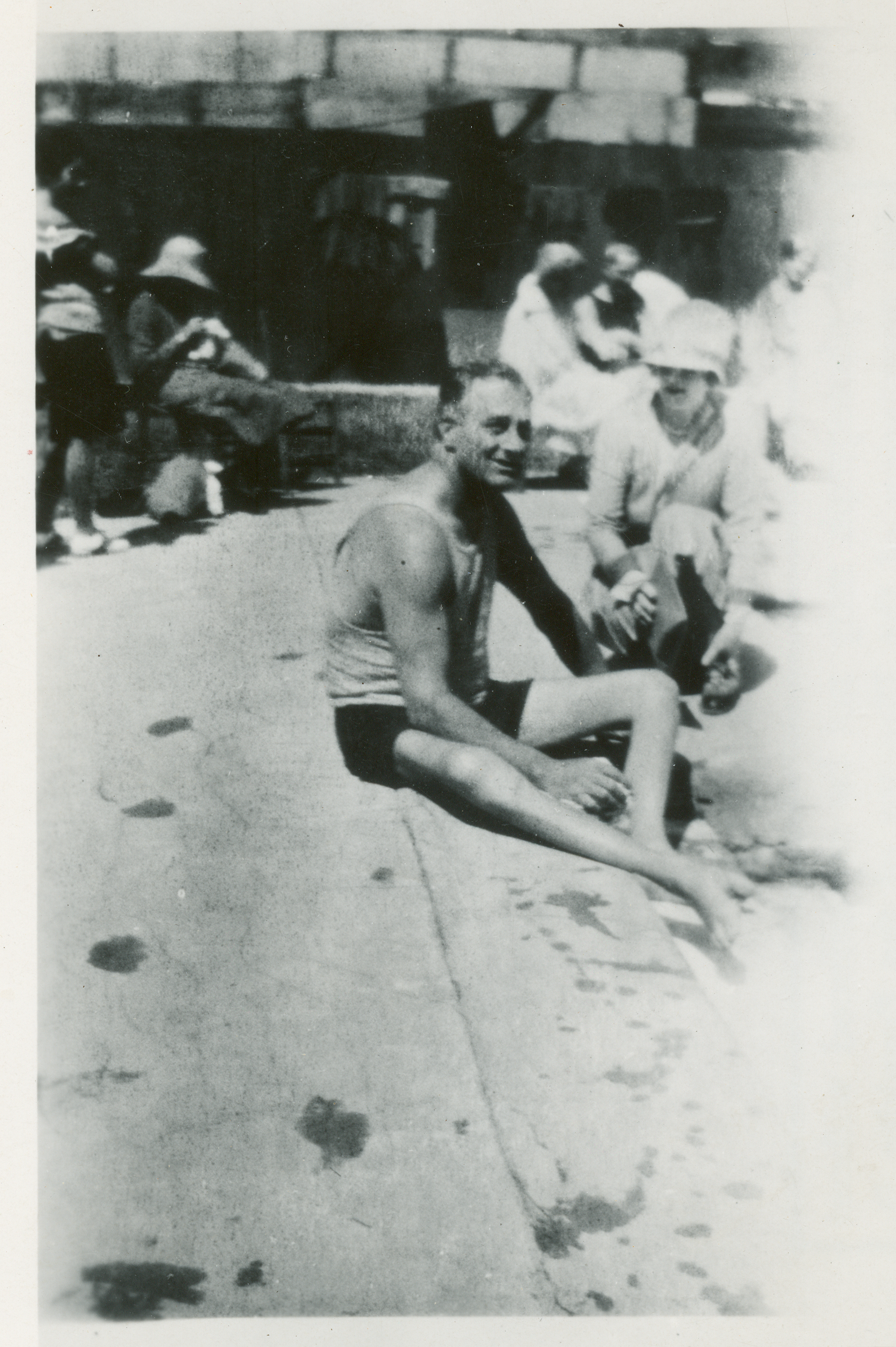
47-96 2331(Public domain image used under CC 2.0 via)


If you’ve happened to set aside 14 hours in the last month for Ken Burns’ The Roosevelts: An Intimate History, which aired on public television in the U.S., you know it affords considerable attention to FDR’s disability. Most touching is a 10-minute feature about Warm Springs, the Georgia health spa and rehabilitation center for polio patients, which Roosevelt founded and which soon became his primary vacation destination throughout his political career. Former employees and patients tell of him shaking the hands and asking the names of every patient, swimming alongside them and dunking whoever got within arm’s reach.

His biographer Geoffrey C. Ward explains:

It allowed him to be unself-conscious about polio… I don’t care how magnetic or self-confident you are, or you think you are… At Warm Springs, he could: not wear his braces, and go to the swimming pool, and have everybody see how small his legs were and it didn’t bother him at all because there were people there with worse problems…

He loved being one of them and the number one of them at the same time… To see someone so famous, who suffered from exactly the same problems that you suffered from, meant an enormous amount to all of the people who went there. Most of the people who went there went there mostly out of despair, at least at first. There wasn’t any other place to go. And here was this laughing giant who would kid them, and who would make the kind of awful sick jokes about being handicapped that other handicapped people love, but that you can’t share with anybody else. He loved doing that.

FDR told the staff that all at Warm Springs were equals, and many interviewees point to this as the beginning of his dedication to humanitarian, egalitarian projects. “It is tempting and probably true to say that polio gave FDR the gift of empathy,” says George F. Will. “There was no suffering that he could not in some sense relate to. And also, just as soon as the iron [brace]s were clapped onto his legs, the steel entered his soul. By having to fight through the constant pain of therapy that was unforgiving in its demands and not very fulfilling in its success.”

FDR had intended to market Warm Springs as both a vacation resort and a health spa, hoping the profits from the hotel would fund the rehabilitation center. The hotel ultimately failed, according to Burns’s documentary, “because prospective guests were scared off by the presence of polio patients.” Outside Warm Springs, attitudes toward disabled people were hardly tolerant. When voters elected a disabled president in 1932, 1936, 1940 and 1944, they did so in spite of his disability, not in acceptance of it.

Doctors attested to his physical and mental fitness in newspaper articles that asked, “Is he healthy enough to be president?” When Teddy Roosevelt’s family publicly opposed FDR’s candidacy, his daughter Alice took an ableist tack. Her famously hyperactive father had had the strength and will power to overcome his affliction, she argued, referring to TR’s childhood bout with asthma, while FDR’s paralysis from polio was a sign of his weakness and the reason why he embraced such wimpy social policies.

And here I thought Ann Coulter was a modern phenomenon.

Both Ken Burns and Geoffrey C. Ward contend that FDR could not be elected today. Ableism was pervasive in the 1930s and 40s, and it was well understood that publishing photographic evidence of his disability—his braces hidden by the podium, his difficulty getting in and out of cars, his regular falls—would be too detrimental to his image. But the press obliged. Photos like this one remained out of the public eye. Today neither the media nor bystanders with cell phone cameras afford anyone such privacy.

Appearance is as important as ever to politicians, if not more so since images in film, in print, on television, and online are countless times more prevalent now than they were in FDR’s time. This ubiquity is both the cause and the result of our expecting to see celebrities up close and from every angle. While Germany distanced itself from the idea of demanding charm and showmanship from their political leaders in the post-war era, America became ever more preoccupied with it, giving more credence to the photogenic Kennedys than any other presidential family.

The power of representation cannot be underestimated. We all like to be able to identify with famous and successful people because it imbues us with optimism about our own chances for success. We watch documentaries about celebrities’ lives in the hopes of discovering that they are the kind of person we would like, and who therefore would like us, if they ever had the chance to get to know us. Such idol worship, whether severe or mild, is of course ultimately irrational. But it satisfies the emotional need for recognition. If we cannot go on to be president for whatever reason, we can enjoy living vicariously through someone who does.

Ward is right when he speaks of how meaningful it was for ordinary patients with polio to see a sitting president with polio. But it is discouraging to consider that only those who could make the trek to Warm Springs were able to have the experience. And it is discouraging to consider Ward and Burns’ contention with its implication that disabled people today cannot have the experience of seeing a visibly disabled president because the American people will not elect one. Are they right?

In our age of a million media images, we commonly see senators, singers, elite athletes and film stars visiting disabled and ill children to boost their morale. But none of these celebrities are simultaneously as enormously powerful and as visibly disabled as Franklin Roosevelt was. Indeed, no one since his time ever has been.
Ghost + Dwarf = Double The Horror

12 Oct

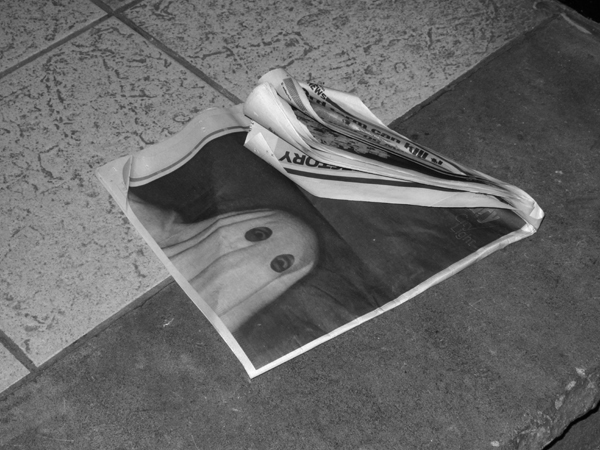
ghost(Image by Jon Feinstein used under Creative Commons license via)


If ghosts are scary, and dwarfs are creepy, then ghost dwarfs must be an even better bet for thrill-seekers.

This seems to be the logic behind the DREAMLAND haunted house in Cambodia, where customers pay to be terrified by extraordinary-looking people like 30 year-old Horm Sivon, whose photo is gaining international attention. She is one of 10 dwarfs employed at the house alongside other disabled people.

The owner, Hien Rensei, defends his business as one of the few opportunities disabled people in Cambodia have for employment. “Some people may consider it immoral, especially in western countries. But in Cambodia we have the situation that people with disabilities just don’t get hired,” he told The Phnom Penh Post. He spoke of his own experience with discrimination as a Cambodian living and traveling in Japan, the U.K. and Germany. “For two years I couldn’t find a job because I didn’t speak the language and at airports my passport was checked much longer than the ones of my Japanese friends.”

Emilie Arfeuil, the photographer who captured Horm, denounces this industry as “a terrible step backwards in terms of human rights, a degrading exploitation of people’s disabilities.” She has entered the photo in National Geographic’s Photo of the Year contest.

If she wins, will the proceeds go toward furthering employment opportunities for disabled people in Asia?


White Woman Sues Spermbank for Accidentally Giving Her Black Donor’s Sperm

5 Oct

Unity in Diversity(Image by Fady Habib used under CC 2.0 via)


Man, we can’t go two months without some couple making headlines over a baby they didn’t plan for. An Ohio woman named Jennifer Cramblett is suing a spermbank for impregnating her with the contents of a vial different from the one she selected. The mix-up resulted when a clerk misread Vial 330 as “380.” Her lawsuit reads:

On August 21, 2012, Jennifer gave birth to Payton, a beautiful, obviously mixed race, baby girl. Jennifer bonded with Payton easily, and she and [her partner] Amanda love her very much. Even so, Jennifer lives each day with fears, anxieties and uncertainty about her future and Payton’s future. Jennifer admits that she was raised around stereotypical attitudes about people other than those in her all-white environment. Family members, one uncle in particular, speaks openly and derisively about persons of color. She did not know African Americans until her college days at the University of Akron.

Because of this background and upbringing, Jennifer acknowledges her limited cultural competency relative to African Americans, and steep learning curve, particularly in small, homogeneous, Uniontown, which she regards as too racially intolerant.

As just one example, getting a young daughter’s hair cut is not particularly stressful for most mothers, but to Jennifer it is not a routine matter, because Payton has hair typical of an African American girl. To get a decent cut, Jennifer must travel to a black neighborhood, far from where she lives, where she is obviously different in appearance, and not overtly welcome.

One of Jennifer’s biggest fears is the life experiences Payton will undergo, not only in her all-white community, but in her all-white, and often unconsciously insensitive, family. Despite her family’s attempts to accept her homosexuality, they have not been capable of truly embracing Jennifer for who she is. They do not converse with her about her gender preference, and encourage her not to “look different,” signaling their disapproval of her lesbianism.

Though compelled to repress her individuality amongst family members, Payton’s differences are irrepressible, and Jennifer does not want Payton to feel stigmatized or unrecognized due simply to the circumstances of her birth. Jennifer’s stress and anxiety intensify when she envisions Payton entering an all-white school. Ironically, Jennifer and Amanda moved to Uniontown from racially diverse Akron, because the schools were better and to be closer to family. Jennifer is well aware of the child psychology research and literature correlating intolerance and racism with reduced academic and psychological well-being of biracial children.

Family planning is so endlessly complicated that any law-abiding individual seeking privacy deserves it. But Cramblett is going public with her pursuit of compensation for emotional distress and therein invites judgment. John Culhane writes at Slate that this sort of blunder is bound to happen in the free market of assisted reproductive technology. Julie Bindel at The Guardian warns of a creeping let’s-get-a-designer-baby approach to parenting among those using IVF. “Just remember,” she writes. “If the child you end up with does not exactly fit your ideal requirements, you can’t give it back – and nor should you even suggest that something bad has happened to you.”

Do parents have the right to be guaranteed certain kinds of children? Those pursuing parenthood via sperm donors, egg donors, or adoption have much more freedom to decide against certain kinds of children than those using nothing but their own biology. The application for becoming an egg donor in New York contains over one hundred invasive questions about family and medical history, as well as education, favorite sports, artistic talents and “additional characteristics” such as “cleft chin, full lips, big eyes, or high cheekbones.” Applicants are required to submit three photos “that shows [sic] your face and/or body type clearly.”

I understand why such questions are asked. Many if not most parents already know such things about those involved in producing their child, so why shouldn’t the IVF parents be allowed to know? If my partner and I were to join their ranks, what sort of donor profile would seem most appealing to us? Deciding upon something inherently entails deciding against something else. Nevertheless, it is hard not to see this tick-the-box approach to baby-making as eugenic. How many parents would accept my eggs, with their 50% chance of passing on achondroplasia? How many would sue if someone accidentally got them without asking for them?

Parents seeking to adopt children here in Germany are asked what kind of children they would and would not like to have before they look at profiles. For example, do you mind if your children look extremely different from you? What about physical disabilities? Mental disabilities? Drug addiction? In an interview with a family whose two children were adopted, I was told that the agencies encourage prospective parents to be utterly frank about their fears and prejudices – that an insistence along the lines of, “We can handle anything!” will sound suspiciously naïve.

Such brutal honesty strikes me as reassuringly well-informed, perhaps the result of infamously ideological parents like Josephine Baker or Jim Jones, who flaunted their rainbow families at the expense of the children’s individuality. Reading Cramblett’s descriptions of her relatives’ hurtful reactions to her sexuality, I can sympathize with the feeling that battling one kind of bigotry can be hard enough. Everyone deserves to live free from the unnecessary pain of bigotry. But if we’re going to be suing someone, wouldn’t it be more logical to file complaints against those who make her daughter feel stigmatized and unrecognized? Surely they’re the ones causing “emotional distress.”

While the spermbank does appear to have erred out of negligence and may be at fault, would awarding Cramblett for “emotional distress” not set a precedent and open the door for endless lawsuits over the births of minority children parents did not explicitly wish for? My parents had a 1 in 40,000 chance of producing a child with achondroplasia, as does anyone reading this. (That is, unless you already have achondroplasia.) Should doctors warn every prospective parent of those odds? Should they warn us of the chance for racial atavism? If homosexuality proves to be genetically determined, will parents have a right to sue doctors who fail to remind them of the risk? The very idea of being financially “compensated” for emotional distress is often silly to those of us who know from firsthand experience how vastly unreliable life can be.

Legal decisions aside, my primary hope is that Cramblett and her partner will explain the lawsuit to her daughter in a way that does not cause her to feel any more conflicted about her extraordinary appearance than her relatives’ racist views already do.