
 (Via)
(Via)
Central Europe lost an hour last night in accordance with the most unpopular transnational tradition of the Modern Age. I’m taking the day off and leaving you with links to excellent articles here, here and here. Till next week!
 (Via)
(Via)
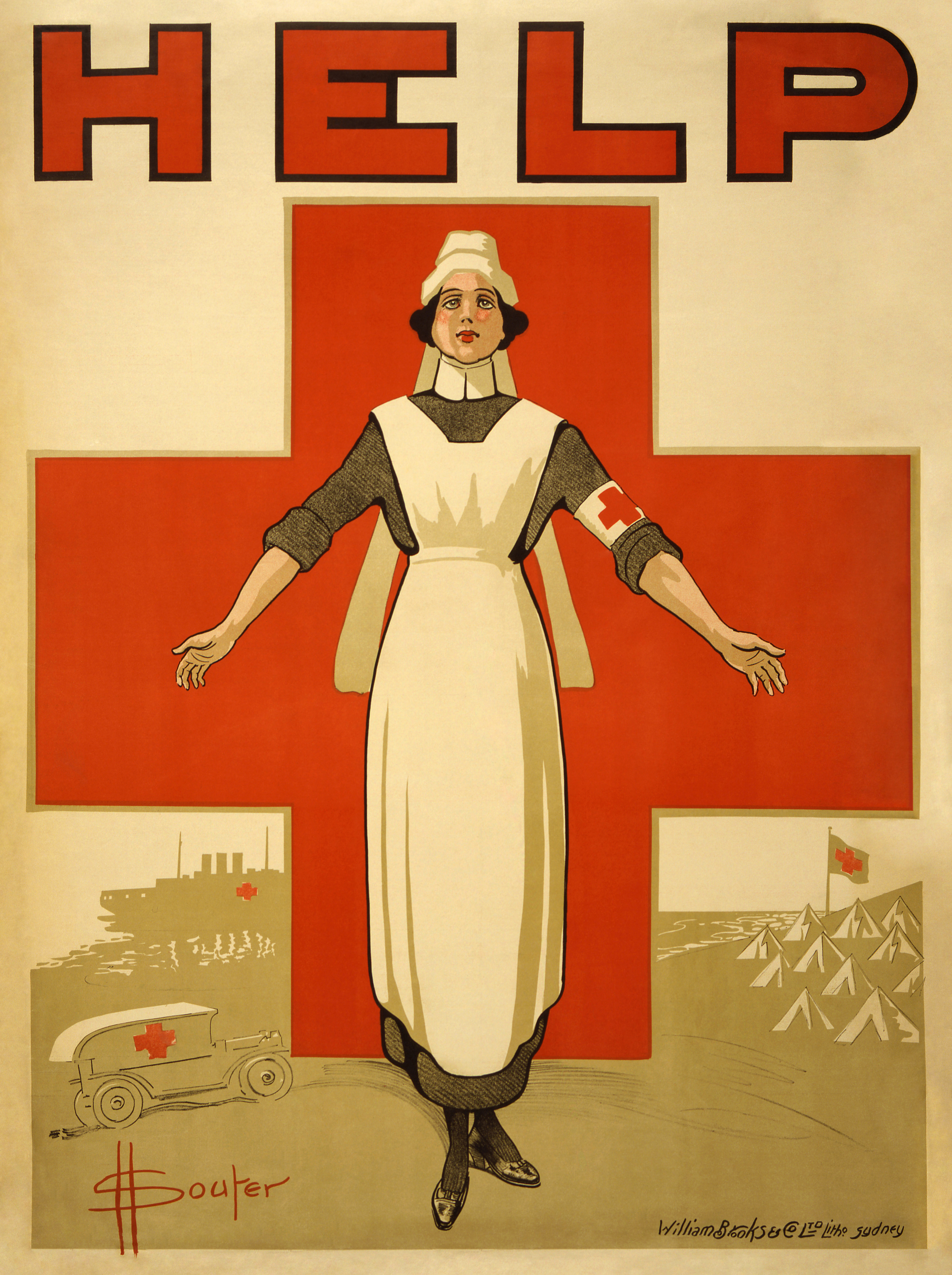
If you’ve ever had to undergo strings of medical tests or lengthy procedures, you know that there are plenty of doctors, nurses and technicians out there who could do with a few lessons in etiquette and bedside manner. I could spend years on this blog documenting every moment I was snapped at, interrupted, or made to feel like a nuisance while I was fretting about test results or mounting pain. It would take me a decade to do justice to all the horror stories I’ve heard from friends and fellow patients.
But the poor manners of all those (probably overworked) professionals who made a tough situation worse render the kindness of others all the more dazzling. (I love you, Nurse Wilson!) And it’s crucial to bear in mind that the patient’s version of things is only one side of the story. Medical professionals rarely get to see people at their best – their job is to witness and inflict pain all day. They must remain objective while navigating a sea of misery and fear, where not everyone claiming to be severely sick really is.
In order for doctor and patient to have the best possible experience, both have to be aware of what the other requires. Which is why I’m handing over the mic to Dr. Leana Wen, who’s penned an excellent article called “The 10 Types of ER Patients” this week. Her pieces of sound advice include:
No. 3: The Googler. The Internet can be a powerful tool for empowering patients, but please use it responsibly. Looking up your symptoms yourself might turn up that you have a brain tumor when you have food poisoning or that you are pregnant when you have belly pain (and you’re a man). Use the Internet to help you understand your diagnosis and treatment and to come up with questions—not to diagnose yourself.
No. 4: The “Pain All Over” Patient. We call it the “positive review of systems” when you say yes to everything we ask. Headache? Chest pain? Shortness of breath? Fatigue? Muscle aches? Yes, yes, of course, yes. Some illnesses really affect many parts of the your body, but more often than not, patients will say yes to convince us they are ill. We know you aren’t well, so tell us the truth. (If you don’t, you run the risk of undergoing unnecessary testing.) If everything hurts, try to tell us your story. When did you last feel normal and well? What happened then? And please don’t exaggerate. If you say that your pain is 15 out of 10, but you’re eating lunch and texting on your iPhone, it’s hard for us to calibrate your symptoms.
Head over to Slate to read the whole thing.
 (Image by Folke Lehr)
Along with millions of other Americans, I used to boast a bit every March 17th: “You know, I really am Irish.” It’s a common American pastime to cite one’s known heritage, either as demonyms (“I’m English and Irish and… ”) or percentages (“I’m a quarter Irish, one eighth Polish…” ). I still believe in self-determination, but having lived in Europe for nearly a decade, I have ceased to rattle off these titles. Not only is the latter a vain attempt at exactitude with no chance of ever being exact—we’re not even really sure if my great-grandmother was Polish or Belarusian—but it resembles the sort of puzzle-piecing that only pseudo-scientists of suspicious political convictions find relevant. And it makes Europeans laugh. And then correct me. “No, you’re not Irish. Your ancestors were Irish.” Which is true.
While Americans sometimes refer to their ancestors’ nation as their “homeland,” they usually can’t construct a sentence in the country’s official language and certainly cannot name the country’s current head of government, the second largest city, or any of its history that isn’t directly related to U.S. history. At best they know a handful of expressions, a recipe or two, maybe the region where their parents’ parents’ parents lived. For this reason, their claims to nationality usually strike the natives as silly.
But the melting pot concept is often admirably used to celebrate diversity. It bungles any sense of loyalty and prevents jingoism. I can’t really argue that the English are “naturally” evil for what they did to my Irish ancestors when my last name is Sanford. My known ethnic heritage is a split between some of Europe’s most notorious conquerors (English, German) and their victims (Irish, Polish). To claim only one or two of them as “my people” feels ridiculous. If I ever have children, their great-grandfathers will have fought on opposite sides of World War II.
Then again, not everyone’s heritage is such a hodge-podge, and plenty of conservative genealogists try to prove why the blending of certain cultures is “better” than the blending of others. That the perpetrators of segregation, Nazism, apartheid, aristocracy, and the internment camps are the most famous fans of genealogy causes me to cringe whenever anyone claims pride in having Irish or Italian or Icelandic “blood.”
Such pride is much more understandable when coming from minorities who have been made to feel that they don’t belong in the country they were born in. My grandfather, Michael Sullivan, was the grandson of Irish immigrants to America. He was the oldest of 9 children, my mother has 43 cousins, and I’ve never tried to count how many of us there are in my generation. He often began sentences with the word “ ’Twas,” and liked to sing folk songs that seemed to have come from Ireland, but may very well have originated in immigrant settlements in the States. This is the extent of my experience with his Irishness, but his was far more profound. He grew up in a time when he could easily find signs reading, “Irish need not apply,” and “mick” was a word he hated in the way that only people who have been called a slur do. When he married Barbara Tupper and her grandmother found out he was Catholic, she crossed my grandmother out of the family Bible. All this made John F. Kennedy’s election in his lifetime radical. It is my grandfather’s story and it is important. But it’s not my story.
An attempt to make it my story would feel intellectually dishonest and pretty flaky to boot. As Andrew O’Heir writes this week at Salon: “Irishness [in America today] is a nonspecific global brand of pseudo-old pubs, watered-down Guinness, ‘Celtic’ tattoos and vague New Age spirituality, designed to make white people feel faintly cool without doing any of the hard work of actually learning anything.” Indeed, my middle name endows me with no expertise when it comes to picking out Celtic music or Irish books and films. I can’t tell what most Irish people actually enjoy and what’s just on display for tourists any more than I can tell what Finnish people actually enjoy and what’s just on display for tourists.
As said before, taking an interest in other cultures is always preferable to xenophobia. But it often comes with the temptation to flaunt minimal efforts like feats of greatness. Claiming credentials based on ancestry feels not entirely wrong, but not entirely right either.
The boundaries of countries and ethnicities are as blurry as our sense of self. Heritage is often seen as the recipe that resulted in an individual, yet there are so many more ingredients to the recipe. Yes, I wouldn’t be here today if the branches of my family tree were arranged any differently, but I also wouldn’t be here today if my parents had slept together in April 1981 instead of March. And placing too much importance on genetics insults any families who cannot or choose not to have children using only their own reproductive cells. Family is what you make of it.
This is not to say that everyone should always downplay their roots. Children with at least one parent who emigrated from another country often have undeniable ties to their ancestral culture – in any case, ties that are far more likely to be based on fact than fictitious romanticizing. Most of what constitutes our inexplicable sense of culture comes from traditions and foods and pastimes we experienced growing up, and great writers like Amy Tan, Gary Shteyngart, and Sandra Cisneros show that growing up with two cultures affords you special insights into both. If my German partner and I ever have children, we plan to raise them bilingually (English and German) and bi-culturally (Thanksgiving and St. Martin’s Day), teaching them anything there is to teach about where their mother grew up and where their father grew up. Whether or not to add some Swedish into the mix—my mother-in-law came from Stockholm—is a point of endless debate between us.
If we ever have grandchildren, it will be interesting to see how they approach their American heritage. If they’re at all ashamed or excessively proud, I’m determined to discuss it, but if they’re merely disinterested, so what? I predict that my great-grandchildren will not feel any strong connection to their American heritage, nor should they. As my partner points out, maybe they will be half-Czech or married to a Burkinabé and have their hands full raising their own children bilingually. Cultures and people move and morph constantly throughout time and space.
When I finally traveled to Ireland two years ago, there were traces of culture that seemed somehow familiar. And that was moving. But most of the charm—“The Irish Sea really is that green! They really do sing in the pubs!”—came from recognizing things I’d grown up seeing in movies, not in my grandfather’s house. And I also found traces of culture the following year in Amsterdam that were faintly familiar to me because, although I have no known Dutch forebearers, I grew up on Long Island.
My most impressive sense of belonging in Ireland came from the fact that I was not the palest person around. Not by a long shot. (Hence my captioning the above photo taken on the cliffs of Howth in an e-mail sent to friends: “If there’s anything Sullivan about me, it’s my complexion.”) Lookism can be a very powerful force. But it does not have to be. In Dublin, we were never once served by someone who didn’t have a Slavic accent. If the current flood of Eastern European immigrants end up staying in Ireland, their children will have much more of a claim to the place than I do.
They’ll at least be able to remember the name of the prime minister, after all.
 (Image by Day Donaldson used under Creative Commons license via)
Barbie turns 55 today and her birthday risks being overshadowed by a rival. Designer Nickolay Lamm has kicked off a very successful crowdsourcing campaign to fund the production of Lammily, a doll whose body is modeled after the mean proportions (taken from the Centers for Disease Control) for an American 19 year-old because, as her slogan goes, “average is beautiful.” The center photo above shows Lammily at her earliest design stage in contrast to Barbie. The left and right photos show her updated, final form.
Despite that her name sounds like the way most toddlers mangle mine, Lammily does seem quite lovely. But mostly because the problems with her competitor are countless. Barbie represents—and was very much intended to represent—an idea born in the middle of the last century that little girls should play not just with baby dolls or girl dolls, but with a woman doll, a post-pubescent beauty they should aspire to. The very first Barbie was inspired by the German Lilli, a character featured in tabloid comics who worked as a secretary by day and an escort by night. While it’s disputed whether or not the Lilli doll was in fact a sex toy, the longer you look at Barbie, the more that explanation makes sense.
Barbie is all fantasy: too thin to menstruate, with breasts so big she’d have to crawl on all fours to get around. (Sporty Lammily could knock her to the floor with a light kick.) Fantasies about beauty are fine as long as they remain a niche, not a standard. If her fame and influence were not so unparalleled, Barbie wouldn’t be a cause of much trouble. But she is the most famous doll in the world, and while she often changes jobs and outfits to bend to society’s trends, her body type never budges from the sex toy standard.
My mother swore I would never own a Barbie—how could it be healthy for a girl with dwarfism to idolize a lady who’s all legs?—but a neighbor bought me one for Christmas, and within the next 10 years I owned 12: Tropical Barbie, Superstar Barbie, Ice Capades Barbie, Gymnast Barbie, Fun-to-Dress Barbie, Loving You Barbie, Hollywood Hair Barbie, Cool Times Barbie, Dreamtime Barbie, Dream Glow Barbie, Dream Date Barbie, and my mother’s own, dragged-out-of-the-attic Barbie from the 1960s, whose earrings had turned her cheeks green. The funny thing is that every one of these Barbies had a slightly different face and slightly different blond hair with varying lengths and textures. But, just like the Disney Princesses, the bodies were all exactly the same. Barbie’s oh-so-80s Rocker friends Diva (brunette), DeeDee (black), and Dana (possibly Asian?) represented a broader range of hair and skin, but their bodies were all replicas of Barbie’s. This is what makes Lammily so radical.
But I don’t want an answer to Barbie. I want many answers to Barbie. Lammily correctly demonstrates that an average girl in the Western world is not blond. But blondes shouldn’t be any more excluded or celebrated than anyone else. Declaring “average” bodies and physical features a beauty standard continues to marginalize girls who deviate from the average. Another word for average is “normal” and it’s never fun for a young girl to hear that her body is “not normal.” Both Barbie and Disney have dared to dabble in the beauty of different ethnicities, but they haven’t been brave enough to try different body types – short, curvy, bony, disabled, with freckles or scars or glasses or birthmarks in the shape of Mexico.
In the words of artist Glenn Marla, there is no wrong way to have a body. If Mattel can invent over 50 varieties of blond hair for their preeminent princess, surely doll manufacturers can find a way to profit from providing a rainbow of body types. Maybe they will be brave enough by the next time International Women’s Day rolls around. That’s my fantasy, anyway.
 (Image by Mariana Rojas used under CC license via)
Miley Cyrus loves diversity. Just not, you know, discussing diversity and the complex history behind it. Since her performance at the Video Music Awards last September, she has drawn tremendous criticism for her treatment of the black backup dancers in her shows – cartoonishly imitating their dance moves, spanking them, simulating sex with them. Some, including Cyrus, have argued the portrayal is affectionate or even celebratory, while others perceive it as exploitative and reductive. Articles at Vulture and The Guardian likened it to a minstrel show.
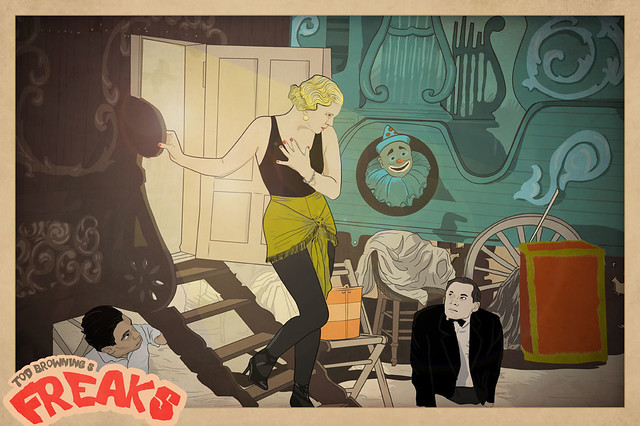
Cyrus also uses dwarf dancers in a similar way. One of these dancers, Hollis Jane, has come forward to voice her regret:
Most of the time, getting a job purely because you’re a little person (in my opinion) is not a good thing. It is further fulfilling society’s idea that we are something to laugh at; that our value is simply to shock. We can all agree that right now all Miley Cyrus wants to do is make society’s jaw drop. So what’s more “weird” or “freaky” than having little people parading around in your show?
As someone who is trying to make it as a serious actress in this industry, not just trying to “be famous” or make money, there is nothing more frustrating than this stigma. The longer little people agree to be used as shock value, the longer it is going to take for us to be taken seriously.
I was a bear in Miley Cyrus’s VMA performance and it was my first time doing anything like that…anything where I was being used because of my height, not because of my talent. And I will be the first one to tell you that standing on that stage, in that costume was one of the most degrading things I felt like I could ever do. I realize not everyone shares my opinion and I might just be young and naive, but I feel like the acceptance of this kind of treatment has got to stop.
In an interview on Ronan Farrow Daily this week, Jane admirably pointed out that the problem lies in the broader culture, not just Miley Cyrus’s individual decisions. Powerful stars, aspiring dwarf actors, the media, and media consumers all bear a responsibility to quell the demand for dwarfs in freak shows.
To which Cyrus said in her W interview with Farrow:
I don’t give a shit. I’m not Disney, where they have, like, an Asian girl, a black girl, and a white girl, to be politically correct, and, like, everyone has bright-colored T-shirts. You know, it’s like, I’m not making any kind of statement. Anyone that hates on you is always below you, because they’re just jealous of what you have.
To which I say, we really don’t need another Amanda Palmer out there, another millionaire whose ego is so very fragile we can’t ever expect her to buck up the courage to engage with people “below” her, or to admit when she’s been wrong. Every entertainer accused of perpetuating stupid stereotypes has the opportunity to prove whether they are a respectable artist or a pathetic narcissist. An artist is trying to communicate something, and therefore cares first and foremost about what they are communicating. A narcissist defaults to seeing themselves as the victim in every conflict.
Hopefully those who love Cyrus’s music don’t love the way she deals with minorities.

 Painting On Scars


