
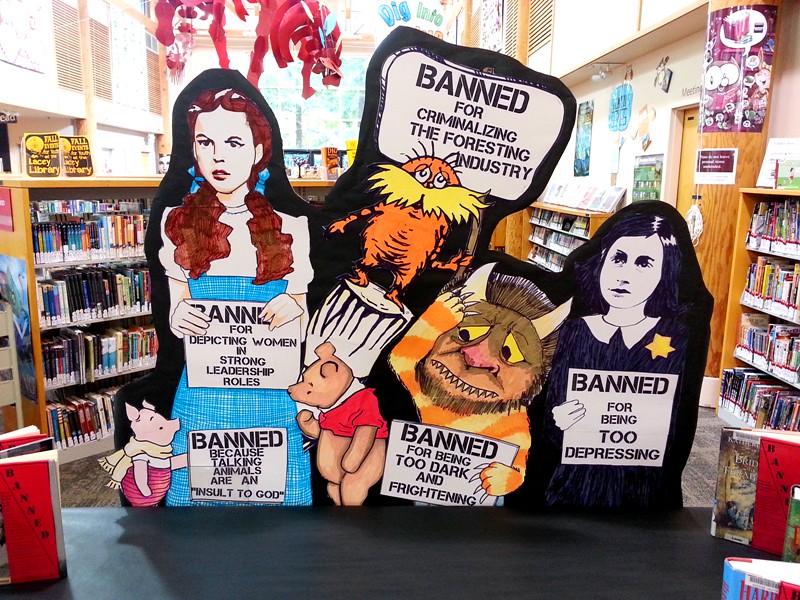
 (Image by the Timberland Regional Library used under CC via)
Eeeny, meeny, miny, moe, catch a tiger by the toe. If he hollers let him go… That’s the version I learned. My British friends caught a fishy by the toe. My mother’s generation caught a n***** by the toe. Were they wrong to alter it for us?
Last week I applauded The Observer’s decision to remove a childish, poorly argued opinion piece from its website on the grounds that it did not meet their standards for style, while others hollered, “Censorship!” This week, the German media is abuzz with its own debate over publishing standards as Thienemann Verlag has announced its decision to replace racist terms—such as “die Neger-Prinzessin”—in certain classic children’s books. To which some are saying, Finally, while others are saying, Censorship! And some are saying, The N-word isn’t racist!
This debate is older than the civil rights movement. Pull up reviews of The Five Chinese Brothers on GoodReads and you’ll find nostalgic fans shouting, “Book burners!” at anyone who criticizes the illustrations. The problem with this debate is that it usually attracts extreme narrow-mindedness on both sides.
Some progressive activists do mistake witch hunting for spreading diversity awareness. A few years ago feminist author Chris Lynch drew angry reactions from some women’s rights groups who demanded he change the name of his young adult series The He-Man Women-Haters Club. But the books pick apart the machismo boys learn from pop culture and their fathers. The mentality adopted by Lynch’s critics was so blunt that they couldn’t tell an opponent from an ally. If the equality debate ends at what words are okay and which aren’t, regardless of context, it has failed. Miserably.
But too many activists opposed to censorship demonstrate none of the openness and subtlety that are the building blocks of free thought and artistic integrity, which they purport to defend. After reading Fahrenheit 451, an unparalleled tribute to the majesty of books, I got snagged in the inanity of Ray Bradbury’s hysterical afterword. He begins by citing an editor who asked if he could put more female characters in The Martian Chronicles:
A few years before that I got a certain amount of mail concerning the same Martian book complaining the blacks in the book were Uncle Toms and why didn’t I ‘do them over’? … How did I react to all of the above? … By ticketing the assembly of idiots to the far reaches of hell. The point is obvious. There is more than one way to burn a book. Every minority… feels it has the will, the reason, the right to douse the kerosene, light the fuse… For it is a mad world and it will get madder if we allow the minorities, be they dwarf or giant, orangutan or dolphin, nuclear-head or water conversationalist, pro-computerologist or Neo-Luddite, simpleton or sage to interfere with aesthetics. The real world is the playing ground for each and every group to make or unmake laws. But the tip of the nose of my book or stories or poems is where their rights end and my territorial imperatives begin, run and rule. If Mormons do not like my play, let them write their own. If the Irish hate my Dublin stories, let them rent typewriters.
That he dared them to back off and write their own books was a productive challenge, but his arrogance in damning them all to hell did not suggest he ever intended to read what they wrote. (If he truly believed all art should be borne out of one person’s imagination alone, unscathed by anyone’s suggestions for improvement along the way, then he was probably the only writer in human history who never once accepted advice.) This is not dialogue. This is not open debate. This is accusing your opponents of oppression in order to silence them. This is failing to discern between book-burning and social critique.
Censorship is a serious issue. Berlin’s memorial to the Nazi book-burning of 1933 is a window into an empty library. It bears a plaque that reads, “Those who are capable of burning books are capable of burning people.” No one should ever call for legally prohibiting the publication, sale, or existence of any sort of text if speech is to remain truly free. Libraries should offer the public all they can eat and more. But every publisher of children’s books should also be free to reject or revise what they release based on their own educational theories. No one on earth believes any child of any age should read absolutely anything. Releasing less hurtful editions of a story—while maintaining the right to publish the original—is not always censorship. Indeed, automatically assuming it is betrays the sort of narrow-mindedness typical of censors.
The leave-greatness-untouched argument ignores how many well-known stories have been severely distorted over time. In the unadulterated Cinderella, the ugly stepsisters chop off pieces of their own feet to force them into the glass slipper. The prince is fooled until he notices the slipper overflowing with blood. Snow White forces the Evil Queen to dance in a pair of hot-iron shoes at her wedding until she drops dead. As for Sleeping Beauty, do you think the medieval prince only kissed her as she slept? It makes old-fashioned Disney look like a flaming liberal. These violent versions are still around, but a lack of demand has nudged them out of the spotlight. I wish the same fate upon racist versions of old children’s books.
Of course, context is everything, and certain words can have many meanings. Mark Twain used the N-word in Huckleberry Finn to portray a complex, admirable character who discredits racism and slavery. But the N-word as it is used by Otfried Preußler—and Astrid Lindgren, and so many other white storytellers of the early and mid-20th century—evokes the colonialist stereotype of the savage who is either happy-go-lucky or bloodthirsty. (In the words of Cracked.com, “Lesson Learned: What’s the deal with Africans? If they’re not trying to eat it or throw a spear at it, they’re worshiping it as some sort of tribal deity, am I right?”) Of course it’s absurd to think that every kid will automatically turn racist from reading this, but it’s also naïve to think such caricatures have no influence. If childhood stories had no bearing on readers’ perceptions of minorities, then no one would ever promote children’s books that celebrate diversity.
While I don’t object to students seeing racism or sexism or ableism in books, I strongly object to their being subjected to it before they’ve had any other exposure to more realistic depictions of the people these ideas dehumanize. Psychologist Hartmut Kasten argues in the left-leaning newspaper Die Zeit that children ages four and up can read and should “learn that there are people with different skin colors, learn what we used to call them, what we call them today, and that there is such a thing as prejudice.” But is it necessary when first introducing a child to someone who looks different to immediately hand them all the historical baggage of racism, too? Doesn’t that suggest to them that people with different skin colors are always controversial? Prejudice can spring from seeing a minority constantly portrayed either as a stereotype or as a victim of stereotyping.
Prof. Kasten argues that expunging orientalism and other exotic tropes from children’s literature “destroys the imagination.” But must the exotic always be colonialist just because that’s our tradition? It is traditional in the Netherlands for St. Nicholas to be accompanied by a mischievous African man named Black Pete. Some say he is supposed to be St. Nicholas’s servant, others say he is his slave. For decades, white performers have donned blackface to portray him. In recent years, some have replaced the blackface with multi-colored face paints, renaming the character “Rainbow Pete.” This approach has long been popular in Suriname, a former Dutch colony with predominantly black citizenry. Many are appalled to see an old tradition changed, but the St. Nicholas/Santa Claus/Kris Kringle/Father Christmas/Father Frost myth has been constantly evolving over time, forever an amalgam of various cultural influences. Our nostalgia does not like us to admit this, but as said before, nostalgia is rarely honest, often revisionist. And could Prof. Kasten argue that rainbow people are less imaginative than black slaves?
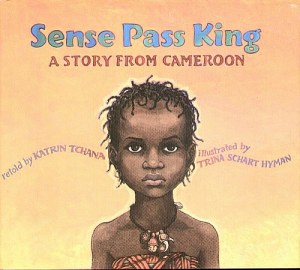
And if children’s creativity is nurtured by stories from long ago in far off lands, why not make more of an effort to offer tales originating from those lands? Indeed, in my workshops about teaching diversity awareness in pre-school, I promote translated folk tales and fairy tales such as Sense Pass King and Children of the Dragon to be read alongside Cinderella and Snow White.
The best way to combat uncreative stereotypes is to flood children’s libraries with beautiful stories that go deeper. My hero Judy Blume agrees. She is the most challenged author of all time in the United States. Her brilliant books question everything from racism to religion to budding sexuality. Most of her loudest critics usually argue that children under the age of 18 should never read about masturbation or wet dreams, despite how many 10-year-olds are already wise to it. Blume wants parents who object to her stories to engage their children in discussions about them, which is a stance I support. Passionately. But is any child of any age old enough for such discussions? Was it censorial of me to be stunned when I found Zehn kleine Negerlein lying around in a Berlin pre-school in 2010?

Die Zeit insists that if we revise anything that is in any way offensive, then we must revise everything. (Which will lead to a ban on any disagreeable characters who are female or black or gay or disabled… ) This could be true if we were talking about bringing the law into it, but we’re not. As far as the law is concerned, anyone is free to adapt any artwork once granted permission by the copyright holder. Otfried Preußler’s publisher began replacing the N-word from his texts after receiving approval from the author’s daughter. As hard as it may be for artists to swallow, artwork in the public domain is free to be toyed with as anyone sees fit. Almost every generation releases the classics with new illustrations, whether it’s The Jungle Book or a children’s Bible.
But to be fair, the modern illustrations bear the name of the modern illustrator, while a redacted version of an author’s text bears his. Which feels somewhat mendacious. Posthumous revisions would best be noted in an afterword discussing the original language and why the publisher does not wish to replicate it. Alternatively, the cover could indicate that the story is a retelling. Like so many of my friends, I grew up on abridged versions of Victorian classics such as Peter Pan, The Wizard of Oz, and Alice in Wonderland. Only a handful of us went on to read the original texts when we were older. Just as we went on to discover the original versions of “Eeeny, Meeny, Miny, Moe,” “Turkey in the Straw,” and the stanzas in the German national anthem that no one sings anymore.
We should never seek to erase our xenophobic heritage – on the contrary, it is something we must own up to and learn from. But it is no more appropriate for a young child to learn about Little Black Sambo than it is for them to learn about the rape version of Sleeping Beauty. (Or the most graphic Mother Goose rhymes. Or old television cartoons like these.) She will be ready to hear it at some point. Unfortunately, pinpointing the right point, the right moment, the right age will always be a problem. Because racism is a problem.


 Painting On Scars