Tag Archives: Disability

When You Gonna Start Makin’ Babies?

22 Jul

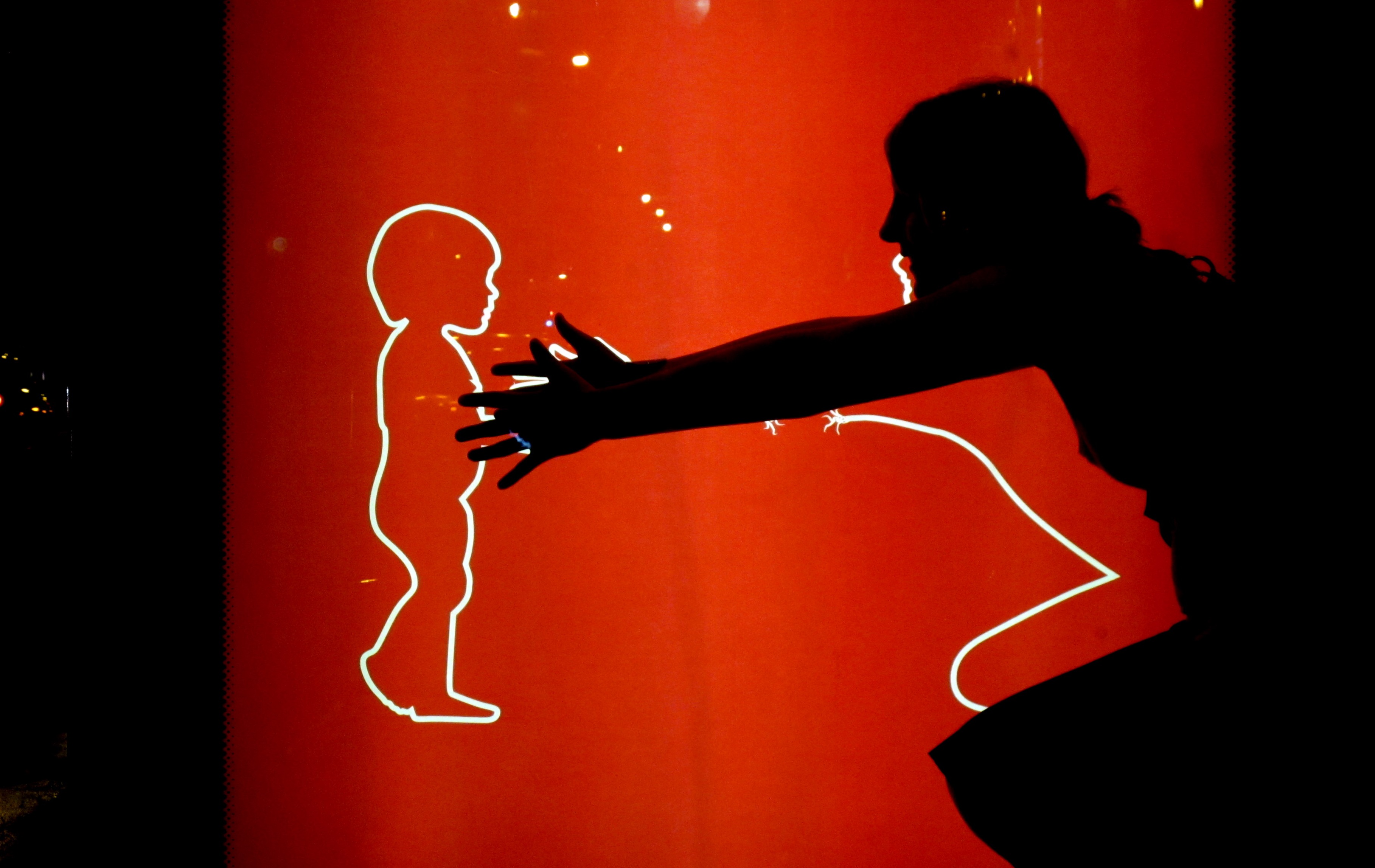
Gotcha by Clint McMahon(Image by Clint McMahon used under CC license via)


A while back, tucked inside one of my longer posts was a link to a conversation Rosie O’Donnell had in February with comedienne Chelsea Handler on her show in which she discussed her phobia of dwarfs.  Driven by Handler’s insistence that sex with a dwarf would be “child abuse,” the conversation devolved into musing about how dwarf women give birth:

O’Donnell: When a little person has a normal-sized person, I don’t understand how that happens.

Handler: That I don’t understand!

O’Donnell: I don’t get it.  How come the little person isn’t dead when the normal-sized baby comes out?

Handler: Sometimes two smalls make a tall.

O’Donnell: But how does it come out?

Handler: I don’t know.  I think anything can come out of that.

For your information, Chelsea, when it comes to achondroplasia—the most common type of dwarfism—“two smalls” have the exact same chance of having a “tall” (25%) as they do of having a child with two achondroplastic, homozygous genes, which is always fatal.  (The baby is usually stillborn or dies within the first few weeks after birth.)

O’Donnell has since apologized for talking about her phobia of dwarfs, though Little People of America have rightly said she missed the point.  Many have said that as an openly gay woman, she should know better when discussing prejudice, but I was more surprised by her callousness in light of her being an adoptive parent.  And I notice my (hyper-)sensitivity to that issue seems to grow every time I encounter it.

And of course I seem to be encountering it everywhere nowadays.  “When ya gonna start makin’ babies?”  Almost all of us in our late twenties and thirties are used to being asked this regularly.  I’ve been told I should take it as a compliment, since it’s rarely asked of couples who would make terrible parents.  Yet I’ve been amazed at how intrusive the questions and comments can be, how often something as personal as parenthood is treated like small talk.  It’s understandable as more of my peers become parents; the prospect of making humans is daunting and people need to vent about it.  Those who don’t want children while living in a baby-obsessed world feel the need to vent back.  All this venting results both in community-building and in tactless comments that knock those outside of the community. 

One of my friends who miscarried was told by a stranger, “Well, it wasn’t a real baby.”  A friend who adopted a girl from South Korea was told by a fellow church member, “Her eyes aren’t that bad.”  A friend who had a C-section was told she must not feel as close to her child as women who give birth “naturally.”  Childfree friends have been told that their lives will be never be “complete” until they’ve had children.  A biology professor who had two foster daughters was asked if he was worried they would inherit their imprisoned father’s criminal tendencies because “that stuff’s in the genes, y’know.”  I’ve been told it’s selfish to want a child with achondroplasia, it’s selfish to want a child without achondroplasia, it’s selfish to allow my child to inherit my achondroplasia, it’s selfish to play God with genetics, it’s selfish to want to biologically reproduce what with the world population exploding, and it’s selfish to worry about any of this because it’s not like I’m infertile.  All of these comments were well-intentioned. 

Usually people are simply thinking out loud when they say such things.  It is important to remember that no one can be expected to know exactly what to say in unusual circumstances, lest I end up lecturing as if I’ve never inadvertently offended anyone.  Almost all of us have good intentions, but many are unaware of how quickly we redirect conversations back to our own experiences, how easily we forget to prioritize listening over interrogating, empathy over curiosity, respect over Thank-God-that’s-not-me! complacency.   

Hereditary conditions, finances, disabilities, infertility, relationships and emotions ensure that having children is not a universal experience.  There is no right way for everyone and any opinion that can in any way be construed as a judgment can cut someone deep because babies and bodies are entangled in supremely visceral feelings.  It’s no coincidence that Roe v. Wade was argued based on the right to privacy: Something as sensitive, as complicated and as profoundly emotional as your reproductive choices should be volunteered at your discretion. 

That said, parenthood is all about making decisions that will inexorably affect someone else’s life, not just your own, and this is why it is such a hot-button issue.  Our reproductive decisions, more than any other decisions, are the intersection of personal freedoms and social responsibility.  As the daughter of a social worker who worked for Child Protective Services, I have firm beliefs about right and wrong when it comes to parenting.  As someone whose genes make the prospect of parenthood unusually complicated, I’ve begun to see how judgmental those beliefs can come off when the presentation is sloppy. 

As an avid reader of Offbeat Families, I know that sharing knowledge and experiences can help others in so many ways.  But as someone who feels very ambivalent about offering up my not-yet-existent children’s potential situation as conversation fodder, I’ve become less trustful of many of my most well-meaning friends and family members.  Questions about my situation so quickly transform into lectures about their situation.  (I’ve also noticed that the more nervous someone is, the more they lecture.)  Besides making me more guarded about my personal experience, it has also taught me to stop myself from making snap judgments about others’ reproductive choices.  When dealing with anyone else’s family planning, I have been humbly learning to: 

 1)      Fight the urge and try not to ask others about their reproductive choices, especially in the context of small talk.  Let them volunteer it.  Go ahead and volunteer your own stories, but don’t press the other person if they do not respond in kind.  We can never assume what’s lurking under there. 

 2)      Beware of talking about the decisions you made in a way that inadvertently hurts those who must make different decisions.  This is also very tricky, but if you are convinced water birth is the only way you can imagine doing it or you are proudly childfree or you know exactly how to make sure it’s a girl, be aware that people in different financial or medical situations may not have these options at all.    

 3)      When someone does want to share something you have little experience with (e.g. adoption, stillbirth, staying childfree, etc.), prioritize listening and learning over immediately finding something to compare it to.  Relativizing struggles can be helpful and I’ve gotten some great feedback from friends, but my guard goes up when someone without achondroplasia tells me right away they know what I should do because they know someone whose baby has diabetes, they took a college class on bio-ethics, or they heard something like it on the news.

4)      Only offer your ethical opinion if the person makes it perfectly clear they want to hear it.  Every society bears the responsibility of taking a legal stance on complex reproductive issues: prenatal testing, genetic counseling, birth control, abortion, sterilization, drug testing, assisted reproductive technology, the life of the mother vs. the life of the fetus, custody, adoption, foster care, etc.  We are all compelled as citizens to be aware of the laws concerning these issues.  And we all have our own opinions about them.  But anyone directly affected by them is likely to have heard it before and to have been thinking about it longer than we have.  I’ve been thinking about the effects my dwarfism may have on my kids since I was fourteen.

5)      Don’t gossip about others’ decisions behind their backs.  It makes your listeners aware how they will be talked about when it’s their turn to decide about having children.  There is a fine but crucial line between trying to understand situations that are new to you and using someone’s situation to tell an interesting story.

6)      Do try to actively listen when invited to, saying truly supportive things, as one or two particularly fantastic friends of mine have, such as: “I can only begin to imagine what I’d do in that situation.”  “Let me know if you don’t want to answer this question…”  “On a much smaller level, it sounds a tiny bit like what I felt when…”   “No matter what you decide, I know you’ll be great at it because…”  “I’m always here to listen if you ever need to spill, as long as it helps.”

Of course, in listing here what I have learned not to do, I can only hope that my own past SNAFUs have been minimal.  Insensitivity, by definition, is the disconnect between intention and effect.  Embarrassed apologies to anyone whose toes I stepped on while stomping through my own bigfooted opinions.


Cross-posted on August 27, 2012 at Offbeatfamilies.com

Body Image Part II: The Rules for Snark

10 Jun

(Image by Stephen Alcorn © 2003 http://www.alcorngallery.com)


Last week I went after talking about others’ bodies for the sake of analyzing what you can’t be attracted to.  Today I’m going after talking about others’ bodies for the sake of musing, or amusement…

Anyone who insists they never make fun of others behind their back is lying.  We all do it, and to the extent that snark is now rivaling porn as the Internet’s raison d’être.  Every bit of our outward appearance—our fashion choices, our speaking styles, our assertiveness or timidity—it’s all out there for others’ scrutiny and all of us pick targets when we’re in the mood, sometimes at random, sometimes with a purpose.  Just take the example of weddings.  I bet there’s at least one wedding you’ve seen that looked ridiculous to you.  Alternative brides think, Wear an expensive dress if that’s what you’ve always wanted, but it’s still vulgar materialism.  And the mainstream brides think, Dont wear a white dress if you don’t want it, but you just want attention for being anti-everything.  While others simply think, Purple.  Yuck.  Or something to that effect. 

In wedding planning as in our everyday fashion, what we choose is a comment on what we don’t.  No one’s choice is in isolation of everyone else’s.  To dress like a punk or to dress like a cowboy, to speak a local dialect or to speak like a newsreader, to try to fit in or to try to stand out are all decisions we make that usually reflect both our tastes and our beliefs.  We give others’ decisions either the thumbs up or thumbs down accordingly.  As I’ve said before, it’s fair game when beliefs are targeted, because we should all take responsibility for our beliefs.  But too many of us make no distinction between the elements of someone’s appearance that reflect their beliefs, and the elements that reflect their biology.  

Many of my friends and family, along with most commenters on TV or online, see little difference between making assumptions about others’ clothes and making assumptions about the bodies they cover.  Just as they’ll assume the slick suit must belong to a businessman and the lady in shorts and sneakers is American, they’ll assume the particularly skinny woman must be anorexic, that the man whose hands shake must be an alcoholic, that the young woman who collapsed must be either diabetic or pregnant, that the large child over there getting his breast milk is obviously too old for that, that chubby guy over there is certainly overweight and should lose a few pounds, that the poor kid with acne isn’t using the right medicine.  Sometimes these flimsy diagnoses are voiced as expressions of sympathy or intellectual exercises à la Sherlock Holmes, sometimes they are dripping with self-aggrandizing pity or snarky complacency.  They are always unjust because, unlike quips about clothes or tattoos or cell phone ringtones, comments about another’s body have little to do with choices anyone has made. 

As someone who’s undergone limb-lengthening, I can of course attest that there are a few choices we make about our appearance.  But while I chose to try to add as many inches as possible to my height, I didn’t have much of a choice about how many inches I could go for.  (I gave all I could in physical therapy, but in the end, my ticked-off muscles stiffened and decided the limit for me.)  Nor did I have much of a choice about my anterior tibialis tendons severing on both legs, which now makes me stumble on average every few weeks and makes dismounting from a bicycle dangerous.  (After two surgeries to repair the tendons and three years of physical therapy, they remain weak.)  Nor have I ever had any choice about my hips swaying when I walk because the ball-and-socket hip joint in achondroplastic people is shaped like an egg-and-socket.  Skinny friends with hypoglycemia, heavy friends with slow metabolism, and friends with diastrophic dwarfism—whose growth plates do not respond to limb-lengthening—can also attest that any choices we make about our bodies are always limited.  Discussing these choices is important, but strangers assumptions about them are usually way, way off.

It is because I know so many kind, loving people who analyze strangers bodies that I wasn’t at all surprised by the nasty ruminations over her “puffy” appearance that Ashley Judd so awesomely bucked in Newsweek earlier this year.  And I’m only half-surprised by the website Too Big For Stroller, where people post street photos of children who appear to have outgrown the transport and smirk about what idiotic parents they must have.  In his essay, “Broken Phantoms,” Robert Rummel-Hudson writes beautifully, harrowingly about the unfair judgment strangers often heap on individuals with rare disabilities whose symptoms are less visible.  He went after the Too Big For Stroller crowd and summarized their defense arguments thusly: 

However many kids with invisible disabilities might be made fun of or hurt by that site, they are acceptable collateral damage, because some of them are probably lazy kids with weak parents, and they must be judged.

“Acceptable collateral damage” is the word I’ve been searching for my whole life.  It’s how Jason Webley downplayed the rights of “the few conjoined twins in the world” in light of his Evelyn Evelyn project.  It’s how so many minorities are dismissed as annoyances in our majority-rules society by the vacuous, relativist claim, “Everyone’s going to be offended by something.”  Which is another way of saying, “We can’t consider everyone’s rights.” 

All of us make automatic, silent assumptions about others’ bodies, often trying to figure out how we ourselves measure up, because we are all insecure about our bodies to some degree.  But the ubiquity of these thought patterns and the rate at which they are voiced is the problem, not the excuse.  There’s probably a list of catty things I’ve said the length of a toilet roll, but I try to stop myself from diagnosing strangers’ bodies, if anything out of awareness of my own vulnerability to inaccurate assumptions.  A few years spent in and out of hospitals also taught me what the hell do I know about where they’re coming from, and we all think enough unproductive thoughts about others’ physical appearance as it is.  In an essay about me and my scars, Arthur W. Frank writes that when we see someone who looks either unattractive or pitiful to us, our first thought is, “I’m glad that’s not me.”  And our second thought is, “But if it were me, I’d get that fixed.”

This is, of course, more than anything ahope.  We hope we would be different in the same situation.  But we’re afraid we may not be, and this fear causes us to quickly deflect the problem onto someone else.  Why not the person who just upset our delusions of normalcy?  So we and our supposedly meritocratic society nurture this idea—“I wouldn’t be like that”—as a justification for being judgmental.  Whether or not we voice these assumptions is indeed a choice we make, and whether or not we add any hint of judgment is yet another.   Whether or not this is fair is often debated on a case-by-case basis, but anytime anyone insults someone else’s body, it is a demonstration of their own insecurities.  Period.   

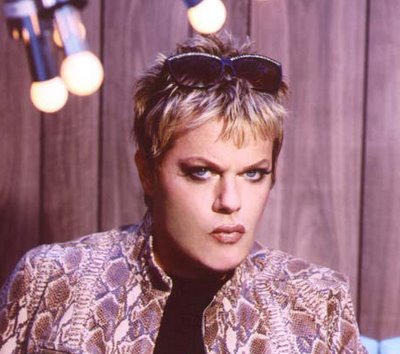
We’re all constantly judging one another and judging ourselves in comparison to one another.  This can be fair game when we stick to focusing on the mundane decisions we all make.  There is a world of a difference between quipping about fashion choices with head-shaking amusement—Sorry, Eddie Izzard, but sometimes you do not know how to put on makeup—and allowing our personal insecurities to fuel pity or disdain for others’ apparent physical imperfections.  There is no fair way to trash someone else’s body because, for the most part, your own biology is neither your fault nor your achievement.


In Comedy, It’s All About Deciding Who’s Us & Who’s Them

28 Apr

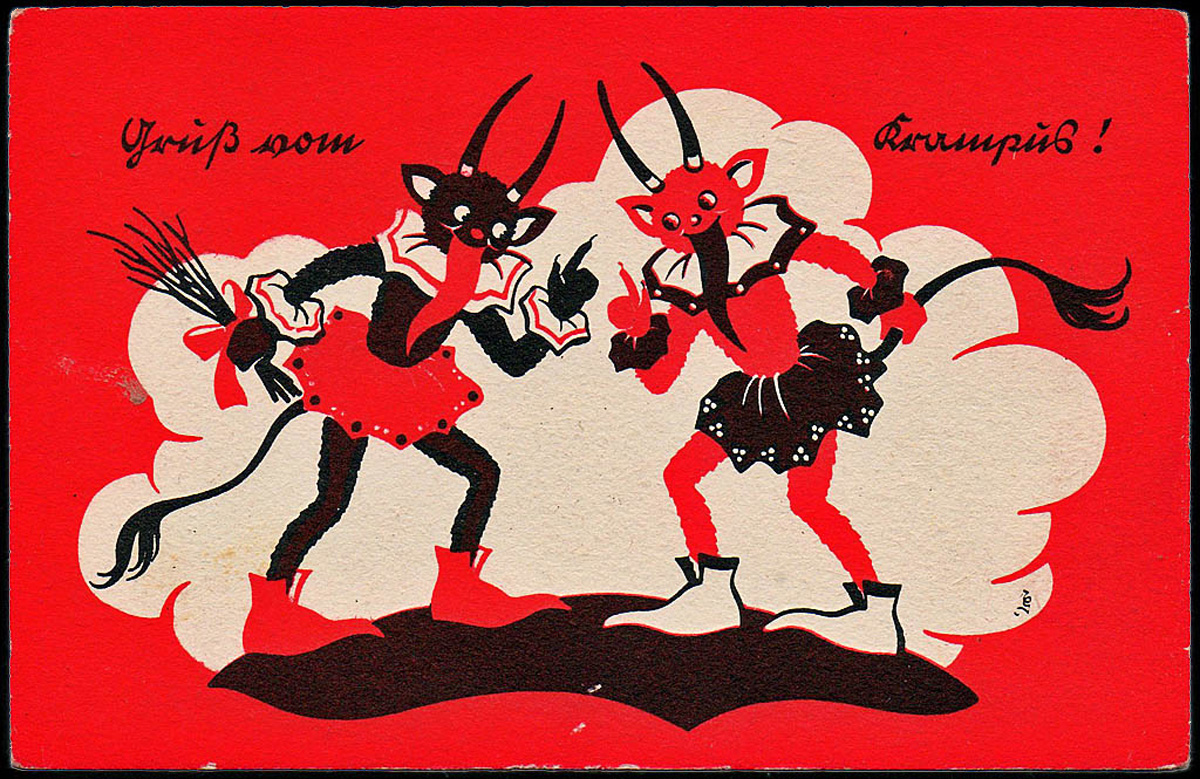
Krampus twins(Via)


The Guardian’s stylebook contains the greatest commentary on style I’ve ever seen in print:

political correctness: a term to be avoided on the grounds that it is, in Polly Toynbee’s words, “an empty right-wing smear designed only to elevate its user.”

Around the same time, while researching the back stories of Life’s Too Short for my review, I came upon the controversy over the word “mong” in which Ricky Gervais found himself embroiled this past fall.  Apparently “mong” is a British English insult derived from “Mongoloid,” the very antiquated and now unacceptable term once used to describe people with Down’s Syndrome.  Both Americans and Brits have probably heard “retard” used the same way.  Gervais eventually apologized to those who objected—including the mother of a child with Down’s Syndrome who has frequently endured the insult—but not without first dragging his heels screaming at what he called “the humorless PC brigade.” 

I will never get over how many comedians insist that any criticism of their work is an indictment of all comedy; as if there’s no such thing as an unfunny comedian, only stupid audiences.  This logic sets the bar for comedy so low that no comedian need ever try to be original.  Ignoring the “PC brigade” (i.e., anyone who doesn’t live with the privileges they do), they can simply regenerate old stereotypes, mining the minstrel shows, the frat houses and the school yards, and if no one laughs at this, it’s simply because we’re all too uptight, right?  Wrong.  We don’t refrain from laughing because we feel we shouldn’t.  We refrain because, unlike the repressed who giggle away in awe, we’ve heard it a thousand times before and we know it’s far from unique.  And isn’t unique what every comedian, entertainer and artist strives to be?   

Like politics, comedy can be divided into two categories: that which confronts our problems with our own selves, and that which confronts our problems with others.  Xenophobia literally means the (irrational*) fear of strangers and the second type of comedy relies upon this fear.  There has to be a “them” for “us” to laugh at.  So Republicans laugh at Democrats.  Hippies laugh at yuppies.  Academics laugh at hippies.  Progressives laugh at bigots.  It’s fair game when beliefs are targeted because we must always take responsibility for our beliefs.  However, when the joke defines “them” as those who have had no choice whatsoever about their distinguishing quality—ethnicity, gender identity, sexuality, physical traits, mental or physical capabilities, or class background—and who continue to be disenfranchised by society’s delusions of normalcy, the joke had better target those delusions to be in any way original.  Otherwise, why pay for cable or tickets to hear someone lazily reiterate the guffaws of playground bullies? 

Every good comedian, from Stephen Colbert to Eddie Izzard to Christian Lander to the writers at The Onion, knows that the best jokes mock people’s hang-ups and clumsy reactions to minority issues, not the mere existence of minorities. My beloved Flight of the Conchords frequently flip gender roles and ethnic stereotypes, exposing the absurdity of racism and misogyny.  As the following video demonstrates, 1970s machismo has been begging to be made fun of.  However, when it comes to physical Otherness, it is the body—not fearful attitudes toward it—that they choose to snicker over, 54 seconds into the video:


Hermaphrodite?  Really?  An intersex kid’s medical reality is your toy?  C’mon, Conchords.  You’ve proven you’re great at making fun of white Kiwis tripping over Maori culture.  (“Jemaine, you’re part Maori…  Please be the Maori!  If you don’t do it, we’re gonna have to get Mexicans!”)  Surely you could come up with some good bit about hipster comedians clinging to lookist and ableist jokes like teddy bears and throwing temper tantrums when they’re taken away.  Or take a tip from Mitchell & Webb and take a jab at the way the ableism of reality TV masquerades as sensitivity:


Of course comedians have the right to make jokes objectifying minorities.  But I’m more interested in why they feel the need to, why they choose to objectify some people and not others.  Being gay, disabled, trans, intersex or non-white is not inherently hilarious to anyone who doesn’t live their lives sheltered from anyone unlike them.  The American freak shows of P.T. Barnum and the racist British sitcoms of the 1970s signify not just how profoundly disenfranchised minorities were in these countries, but how absurdly provincial audiences must have been in order to be so easily titillated.  Many comedians who reiterate chauvinist jokes argue that in doing so they are pushing the boundaries, expanding freedom of thought in defiance of PC oppression, when in fact they are merely retreating to well-trod ground, relying on ideas that challenge nothing but the very young idea that minorities deserve to be included in the dialogue as speakers, not objects.  As Bill Bryson has pointed out, the backlash against “political correctness” took place the moment the idea was introduced and has always been far more hysterical than what it protests.   

Toni Morrison has said, “What I really think the political correctness debate is really about is the power to be able to define.  The definers want the power to name.  And the defined are taking that power away from them.”  Revealing that it is all about power explains why emotions run so high whenever minorities get upset by certain jokes and comedians get upset about their being upset.  But this redistribution of power can be productive.  Taking old slurs and xenophobic tropes away from today’s politicians and comedians challenges them to think beyond their own experience and to wean themselves off society’s long-held fears, to redefine “them” as those enslaved by the limits of their imagination; in essence, to really push the boundaries.  Yet too often they default to the tired claim that this challenge infringes on their right to free speech. 

Some progressive critics do bring on the censorship accusation by using the ineffective phrase “You can’t say that!” and sometimes this is indeed an open attempt at censorship because most media outlets self-censor.  For example, Little People of America has called for the Federal Communications Commission to add “midget” to its list of words you can’t say on television.  I understand the temptation to insist upon the same treatment afforded other minorities: If certain ethnic and gender slurs are banned by newspapers and TV networks, why not others?  But this tactic too easily insults those other minorities—are you claiming black people have it easier than you?—and creates the concept of a forbidden fruit that will only tantalize right-wing politicians and shock jock comedians.  Simplifying the issue into Good Words/Bad Words can be a waste of an opportunity.  Instead of limiting itself to which words are always unacceptable regardless of context or nuance, the dialogue should always aim to reveal which minority jokes truly blow people’s minds and which lazily replicate institutionalized chauvinism. 

Instead of splitting hairs over the modern meaning of the word “mong,” I’d love it if a comedian went at the fact that Dr. Down came up with the term “Mongoloid” because he thought patients with the diagnosis resembled East Asians.  Because really.  Who’s asking to be made fun of here?


* “Phobia” always indicates an irrational fear, hence arachnophobia, agoraphobia, claustrophobia, homophobia, etc.  Fears that are well-founded are not phobias.

Dwarf-Tossing: Something I Really Don’t Like Thinking About

18 Feb


I was recently invited to write a guest post for Feministing.com. I’ve written about dwarf tossing and it appears in today/yesterday’s edition of the blog here(I apologize should this news seem late in coming – I’m writing to you from Tokyo where the time difference is working against me.)


Welcome to Painting On Scars

4 Feb


So you’ve heard that “Kids can be so cruel”?  What a cop-out.  Adults are cruel.  Kids are constantly blunt and sometimes mean-spirited, but they have the chance to grow up.  Turning 30 this year, I realize that I’ve encountered more ableism over the past 10 years than any other time in my life – online, at dinner parties, and during my four years as an undergrad at Bard College when it was consistently rated in one of the Top Ten Most Liberal Schools by The Princeton Review.  If I ever have children biologically, they will each have a 50% chance of inheriting achondroplasia from me.  Whether or not they have achondroplasia, I’m much more concerned about the adults they will encounter in their lives than the kids.

Today ableism – a.k.a. disability discrimination – ranges from the yuk-yuk objectification of freaks, to the sick fascination with medical realities, to personal phobias of looking weak or unattractive, to well-intentioned charity that is truly patronizing That this so often comes from those whose own experiences of marginalization would logically render them better candidates for empathy has inspired me to start this blog. 

There also aren’t enough blogs about dwarfism.  There are hardly any blogs about dwarfism beyond childhood.  The community of dwarfs who have undergone limb-lengthening is non-existent, as if we want to pretend we were never dwarfs in the first place.  And feminist blogs for and about dwarfs who have undergone limb-lengthening continue to elude my Google efforts.

While my own experience invariably influences my perspective, I refuse to argue only about issues directly related to dwarfism and limb-lengthening.  Without knowing the word for it, I was raised to believe that if you’re going to support the rights of one minority, you’ve got to support them all.  In the end, they’re all related.

So consider this blog a continued reflection on the issues I addressed in this book.  Or The Most Inclusive, Progressive Forum Ever!  Or just another reminder that whether you’re discussing a sex issue or scar tissue, the personal is inescapably the political.


It’s Not One or the Other with Evelyn Evelyn

6 Nov

Evelyn EvelynSo Jason Webley and Amanda Palmer have formed a band called Evelyn Evelyn for which the two dress up as conjoined twin sisters.  I wasn’t going to comment on the scandal that has erupted over the launch of their new album because it seemed too many people were screaming at the top of their lungs and the ones who weren’t had stuck their fingers in their ears.  But I’m both a big Jason Webley fan and an advocate for more visibility on the issues of ableism in political discourse.  And this is an excellent example of a common occurrence in the counter-culture that rarely gets talked about.  Here are a few of my points, some of which have already been made by others, some of which haven’t.

One can love Jason and/or Amanda as artists and also believe that they’ve done something wrong.  One can be in awe of Mick Jagger’s talent, and still gristle at his womanizing and the lyrics he sings advocating it.  The adolescent idol-worship of these two singers that’s been revealed in the defense arguments is quite disturbing.

Even though I fiercely believe in intersectionality (i.e., if you’re gonna support the rights of one minority, you’ve got to support them all), being insensitive toward one group of people does not make you insensitive to all.  Amanda Palmer is a fierce feminist and LGBT advocate, and both she and Jason like to sing about, as he put it, the experiences of those on the margin.  This project does not nullify their previous good works and transform  them both into misanthropic bigots.

As intersectionality often proves, a liberal identity does not make progressives like Jason and Amanda incapable of prejudice or sheer jack-ass behavior.  I met student after student at Bard who would glare at anything remotely racist or sexist or homophobic, but who insisted that dwarf-tossing is fucking hilarious and cringed at individuals with facial deformities.

I admit that I didn’t consider the offensive implications the first time I heard of the project.  When I read the bio on Evelyn Evelyn’s MySpace page, I did start to feel the thing reverberate with circus-freak retro-chic.  More than anything, I didn’t see why the twins had to be conjoined.  They have the same name and sing back and forth to each other; there isn’t anything about their record requiring them to be conjoined except to add a little freak-show flavor, realized by the sight-gag of the two singers performing onstage on a single accordion.  If Evelyn Evelyn were merely identical twins, no one would have given it a moment’s pause and only the freak-show flavor would be lost.  I happen to think “Have You Seen My Sister Evelyn?” is a great ragtime song.  I also enjoyed Jason’s solo rendition of “Elephant Elephant” using the audience for call-backs far more than his version with Amanda as his twin. 

Bearing all this in mind, it is my opinion that both Jason and Amanda have handled this quite badly. 

Jason’s apology on his blog is much less defensive than Amanda’s, his shock at the reaction seems genuine, but he nevertheless manages to keep stumbling.  “I had some fear that the few conjoined twins living in the world might find the project offensive.”  Ouch.  Respect and human rights do not directly correlate to a minority’s numbers.  Someone pointed out that conjoined twins are so few because their infant mortality rate is so high.  Ouch.    

As for Amanda, I don’t know why she tweets or posts so frequently only to be shocked about the fire she draws from her hastily typed statements regarding her often controversial projects.  Let’s not kid ourselves – she obviously likes being an iconoclast, which is fine and in fact admirable, but she so far lacks the poise to handle the inevitable backlash each time she comes roaring onto the scene with another boisterous project.  And, Amanda, you don’t need to let us know you’re PMSing.  If you’d used the word “midget” on me and included that in your apology/excuse, it would not help to redeem you. 

I originally wasn’t going to attend the Berlin show because it’s rather expensive, but now I’m considering proposing a boycott over this issue.  Not because I hate these two for it (I don’t), but because the friends who were reluctant to go over the price would likely tell me to loosen up if ableist politics were my sole reason.  And that could be a good opportunity to confront the prejudices lurking under the liberal badges we love to wear.


UPDATE: Any credibility Amanda’s apology had was swiftly obliterated by her performance on this Australian talk show.  She may very well be a feminist and a radical and an activist, but first and foremost, Amanda Palmer is a narcissist.  Possibly the least radical thing you can be in show business.


Note: This post originally appeared on February 21, 2010 at klompen.livejournal.com