Tag Archives: Disability

Will Dove’s New “Selfie” Film Redefine Beauty?

26 Jan


In another installment of its positive body image campaign, Dove has released an 8-minute documentary called Selfie that premiered last week as the Sundance Film Festival.  For those of you who can’t watch it, the film can be summed up thusly:

***

Mothers with their teenage daughters talk about their insecurities about their own bodies.  One girl reveals that her mother’s urging her to wear cosmetics makes her uneasy. 

Cut to a high school gym, where a professional photographer addresses female students, telling them, “I’m here to talk to you about beauty.  You have the power to change and redefine what beauty is!  … The power is at our fingertips.  We can take selfies.”

Cut to her workshop about self-portraiture. “I’m going to ask you to take a risk that could change the way that people define beauty.  What if we find a way when you guys are taking your selfies to actually incorporate the things about us that we don’t like?” The girls list what they hate about themselves: braces, glasses, round faces, rosy cheeks. 

The photographer points out that mothers often pass on their own insecurities to their daughters, to which one girl vociferously agrees.  The girls then are given an assignment to teach their mothers how to take selfies, because “Your mom can redefine beauty just like you can.”

A touching montage of mothers and daughters learning to embrace their least favorite features plays, culminating in an exhibit of the selfies, where visitors leave Post-Its complimenting the girls on their looks.  The girls then smile at how good the compliments made them feel.  The mothers declare that social media is redefining beauty by putting the creativity in the girls’ hands.    

***

I absolutely love the way the film takes mothers to task, especially in light of this week’s report that parents are googling “Is my daughter ugly?” three times more often than they are posing the question about their sons.  We cannot teach our young women that they should not obsess over their looks if we don’t believe it ourselves.

I also like Dove’s idea of promoting the anti-duckface selfie, the least-favorite-traits selfie.  This film will do some good.  But does it truly redefine beauty for everyone?  Does it include everyone?

What about a girl with muscle spatisticity?  What about a girl with the physical markers of Down Syndrome?  What about a girl with scars, burns or chronic skin discoloration?  And, perhaps most importantly, what about that girl who is silently—obsessively—counting and comparing the compliments on her selfie to the compliments on others’ selfies?  Hierarchies survive through feelings of competitiveness.  What about the girl who ends up with the fewest or the least glowing compliments?  Does the project teach these girls how to deal with that, or does it leave them to their own devices?

This is not criticism for the sake of cynicism, but for the sake of empiricism.  The Love Your Body movement has been around for over 30 years, yet eating disorders are on the rise and our mainstream standards of “beauty” have not deviated from tradition at all.  (Go ahead and google “beauty” right now in an image search and see how diverse the results are.) 

As with so many Love Your Body projects, the girls in the video are not beautiful under the sociological definition of “super-normal” (strange and considered exotic), but they are far from the sociological definition of “abnormal” (strange and considered repulsive).  Everything they hate about their bodies—cheeks, glasses, eyebrows, braces—still falls smack in the middle of healthy human appearance.  It’s the equivalent of adults in the middle-middle class and lower-middle class discussing how “poor” they feel for not having made it into the top 1%.  Such insecurities are valid, but repeatedly restricting the discussion to those who only just barely challenge society’s definitions of “success” or “beauty” is safe to the point of almost seeming scared of rocking the boat too hard.

This is not to say that girls with more abnormal looks deserve more sympathy than those closer to average.  On the contrary, in my experience low self-esteem does not correlate to appearance.  I know many women who, being a few pounds overweight, are far less happy with themselves than other women with severe and rare deformities.  Perhaps parents are more dedicated to boosting self-esteem when their daughters more noticeably deviate from the norm. 

Or perhaps being excluded from the game from the get-go helps a girl to see how dumb the rules are to begin with.  Returning to the analogy of class, researchers have found that wealthier parents often have a harder time handling severely disabled children because they upset their need to be in control (“He breaks things!”), whereas parents living below the poverty line are more accepting of life’s unreliability (“Eh, there’s nothing in this house that wasn’t broken long ago!”)  Similarly, girls and the parents of girls whose looks could possibly near the standard of super-normal beauty may be more likely to spend time, money and anxiety trying to reach it than those who give up trying to wow the crowds and instead laugh at the delusional nature of it all.

Either way, I don’t think the Selfie project would be hurt one bit by a truly diverse sample of beauty.  (Let’s get some felfies in there, while we’re at it.)  Rather than monologuing about our own individual fears and demanding strangers allay them with compliments, we need a dialogue between the girl on the far end of the spectrum who’s been trashed for her looks and whoever it was who gave in to the temptation to trash her.  We need a dialogue between those who want to meet an elite standard of beauty and the type of people who support that standard.  We need a dialogue between the ugliest person you can imagine and your reasons for deciding they’re ugly.

That would redefine a lot.


If you enjoy this blog and want to support it, please like the Painting On Scars Facebook page.

The Best Book of 2013 (and the 21st Century)

30 Dec


“Though many of us take pride in how different we are from our parents, we are endlessly sad at how different our children are from us.”

So begins Andrew Solomon’s Far From the Tree: Parents, Children and the Search for Identity, a book that profiles families with children who are profoundly different from their parents – deaf, gay, autistic, short-statured, schizophrenic, transgender, intellectually disabled (Down Syndrome), multiply disabled, born out of rape, prodigious, and criminal. With every story, Solomon ends up returning to the same question: What is family? And in asking this, he demands, again and again, What is love?

He conjectures that true love is 30% knowledge of who someone is, 30% percent acceptance of who they are, and 30% projection of who they are. Projection is as indispensable as the other elements, but it is by far the most problematic. Love is threatened when it relies more on projection than anything else. When driven by a fear of being alone, projection can dangerously blind us to others’ faults: “You like the same bands I do?! You must be so deep!” When driven by a fear of being burdened, it can dangerously fuel our least empathic feelings: “I can’t handle taking care of a freak!” It would seem that our best hope for filling our lives with true love is to be better informed. If so, Solomon’s book is an ideal source of information.

He writes poignantly of his own mother’s difficulty accepting his homosexuality. In the West today, we are just as quick to judge parents who seem to hurt their children as we are to judge children who seem to hurt their parents. But in examining his mother, Solomon wisely observes that “she did, like most parents, genuinely believe that her way of being happy was the best way of being happy.” Who among us does not tend toward such self-righteousness?

I’ve never met anyone who doesn’t pride themselves on something they believe they do better than their parents did, an improvement they would like to pass on. Even my friends who take little interest in children tend to talk about their hypothetical progeny as projects: e.g. “My kids will never/always… ” And with projects come projection. The children in Solomon’s book, himself included, are dynamite to that projection.

While he is determined to understand his mother’s feelings that caused him so much pain, he is unwavering in his assertion that homophobia, ableism and all other irrational fears have no place in the future of a healthy society. He calls the forces that inspire current legislation limiting the rights of minorities a “crisis in empathy.” And he practices what he preaches – his determination to empathize with the United States’ most marginalized families is utterly humbling. He does it not only for the sake of compassion, but for the sake of practicality. We’ve already tried condemning and isolating the kinds of people who make us uneasy. On a grand scale, it hasn’t gotten us anywhere.

When I described the book to friends – many themselves minorities – several winced at the idea of rape victims and schizophrenic people. “Sounds like a fun book!” they sighed. Such reactions are hardly unknown to Solomon, who notes, “One’s own identity, replete with problems though it may be, usually looks more tenable than someone else’s identity.” Indeed, my own gut reaction is to glare at anyone who dares to compare the experience of having a child with dwarfism to the experience of having a child who grows up to murder students at Columbine High School. But gut reactions tend to be more hurtful than helpful. “At the mention of dwarfs,” Solomon writes, “[some of my] friends burst into laughter.” Fear always conquers by dividing us, and for this reason I adore  Solomon’s ferocious intersectionality. It is rare but contagious.

He profiles several different families in each chapter, which is admirable because it is comprehensive. However, at times it can feel like overkill. I might have preferred three families per chapter rather than seven or eight. The medium isn’t conducive to such a large cast because it’s difficult to keep the characters from blending together if you can’t physically see their faces or hear their voices. I thus found his videos series a source of clarification, not mere supplement.

But Solomon is an exquisite writer. Plenty of ink has already been spilled on the disabilities and social issues he examines, but it’s too often bogged down in language that comes off as dry or downright dreary. It’s not easy to push through 770 pages of the most marginalized lives imaginable, but Solomon’s writing is as poetic as it is sensitive. He is never too meek make assertions and yet, unlike countless journalists, he manages to do so without ever ignoring the agency of those he describes. True empathy never condescends because it transcends fear.

I am, of course, a biased critic. It was 32 years ago this month that my parents got the news that I had dwarfism. And they did everything right – the best any two human beings could when faced with a rare diagnosis that traditionally brought on social isolation. (As Solomon documents, mothers of dwarfs in olden days were often thought to have caused the condition by being lecherous.)

What my parents did perhaps best of all is something all the great parents of the world do – to make me feel so unconditionally loved that I always felt free to discuss with them what might have been done better. Sometimes my critiques are correct and sometimes they’re flat-out wrong. But the freedom to examine what you need to change about yourself in order to be a tolerable person and what you have the right to protect about yourself in order to be a happy person should be a freedom granted to every member of every family. On both sides of the parent/child relationship, or any relationship, “love is made more acute when it requires exertion.”

In a just world, no one should have to be any more grateful to their parents for accepting them than anyone else should have to be. As I’ve written before, caregiving is freakin’ hard, and our gratitude to those who raised us deepens when we consider that, as a whole, they have been more accommodating and respectful of their children than any of their historical predecessors. Solomon points out, “A hundred years ago, children were effectively property, and you could do almost anything to them short of killing them.”  But despite how far we have come since then, we have yet to reach an acceptable rate of justice for all. 

Solomon points out that 1 in 4 participants in a recent survey said they would choose abortion if their pregnancy tested positive for dwarfism.  At least half the children up for adoption in the United States have disabilities of some kind.  Crisis in empathy indeed.

Individuals who cannot parent a child profoundly different from themselves should not be forced to. Likewise, society’s hang-ups about difference should not encourage parents to flee from it.  Considering the current statistics, Solomon’s book is as necessary as it is beautiful.


“Fashionista Has Leg Amputated So She Can Wear High Heels”

2 Dec

L0066938 Illustration showing treatment of a clubfoot Credit: Wellcome Library, London. Wellcome Images images@wellcome.ac.uk http://wellcomeimages.org Illustration showing treatment of a clubfoot 1806 Memoria chirurgica sui piedi torti congeniti dei fanciulli, e sulla maniera di correggere questa deformità / Antonio Scarpa Published: 1806. Copyrighted work available under Creative Commons Attribution only licence CC BY 4.0 http://creativecommons.org/licenses/by/4.0/

(Image from Wellcome Images used & altered under CC)


Or so The New York Post would have you think.

21 year-old Mariah Serrano was born with a club foot.  By the time she was a teenager, she faced increasing chronic pain and her doctors strongly advocated amputating and replacing her leg with a prosthetic one. Now an assistant designer for American Rag and author of the blog Confessions of a One-Legged Fashionista, she recently shared her story with the Post:

Serrano struggled to look like the other girls in her high school who often called her “gimpy.”

“I felt silly in pictures, I was the only one in these shitty little ballet flats,” she recalled.

“I had to wear all sorts of braces. It was uncomfortable and frustrating because they weren’t solving the problem and I often felt embarrassed.”

The glamour girl wore patterned knee highs and flashy tights to mask her deformity. She even dyed her hair pink to distract people from staring at her leg. She eventually stopped going to classes and was home-schooled.

“Kids are mean,” she said. “It made things very hard.”

“A lot of times I felt left out because I loved to dance and go out.”

But even more mortifying for the teenage girl, was being forced to wear sneakers to prom.  “I was really devastated in the mall,” she recalled, after shopping for four hours to find a chic shoe.

The article never mentions any medical purpose for the amputation. Serrano is only quoted as hating the limited number of footwear options that had been available to her prior to the operation. The story ran four days ago and was quickly picked up the British tabloids.  And Serrano is not pleased.  She explains on her blog:    

I did not choose to cut my leg off so I can wear high heels, I had my leg amputated because I was very sick and the quality of my health and life were suffering. Doctors do not welcome the idea that you are unhappy with your footwear choices, so you should remove body parts.

This event was a real decision that I took very seriously. It was a decision my family and I made together, so that I would be able to live my dreams, and not mind you, dreams of footwear, but dreams of waking up and going about my life not in chronic pain.

I think it’s safe to say that The New York Post is not a feminist crusader on the issues of body image and beauty standards.  So why then would they decide to warp Serrano’s words to feed the image of the fashionista lifestyle as a vile instigator of self-mutilation?  The story of a young girl simply but bravely electing to trade chronic pain for a prosthesis is severely lacking in vitriol. This means there is no surefire guarantee that it will unleash a deluge of jaw-dropping, eye-rolling, and catty comments from readers about the girl in question.  That guarantee is essential to the business the Post is in.

Serrano is hardly the first individual to be misrepresented by the tabloids.  But who’s keeping the tabloids going by hungering after such headlines?  It’s this hunger that drives journalists across the spectrum to emphasize the most soap opera-like elements of a person’s life story.  I’ve seen the most loving, supportive families with disabled children portrayed as walking tragedies based on a few of their more emotional quotes taken out of context.  This approach knows that readers and viewers will consequently feel sorry for the pathetically confused freaks, and good about themselves.  Not unlike the mean classmates Serrano cites from her high school days.

So if anyone is interested in ending the tabloids’ tradition of tearing people’s personal lives to shreds, we can curb their sales by curbing our desire to use bits of information about people we don’t know as an easy way to prop ourselves up. Of course this is asking a lot, and so, once again, we must decide which is harder – altering the way we think or altering our bodies?


Is Dwarfism A Disability?

27 Oct

(Image by Ron Riccio used under Creative Commons license via)


A more sober ending to Dwarfism Awareness Month

I remember being around 10 years-old when I began taking care to never refer to my dwarfism as an “illness” or a “disease.” An illness is something that tries to destroy you. It demands you go into battle. Even if you end up grateful for its having made you stronger, you’re glad when it’s gone. My dwarfism has always been around and I’ve never tried to conquer it. It’s a condition, a word as neutral as it is fitting. But is it a disability?

Many in the dwarf community insist that it is not. The thinking goes that being extraordinarily short is no more serious than being left-handed. We don’t think of left-handedness as a disability. It’s merely a difference, one of many physical features that can shape someone’s identity, like hazel eyes or an outie belly button. Being left-handed is only an inconvenience insofar as the world is built for those who are right-handed, and populated by some who still cultivate fear and hatred of those who don’t conform to the majority. Needing left-handed scissors and mouse buttons is not really thought to be an issue of disabled access – it’s more akin to needing glasses or extra-moisturizing shampoo. Diversity awareness over the last 50 years has led the vast majority of Westerners to shrug at the idea of left-handedness.

And such a neutral shrug is what dwarf activists seem to be coveting when they insist that dwarfism is not a disability. In the words of Andrew Solomon, “Neutrality, which appears to lie halfway between shame and rejoicing, is in fact the endgame, reached only when activism becomes unnecessary.” But is dwarfism only an inconvenience insofar as the world is built for those who are taller? It’s a compelling thought experiment, but it ignores all the medical complications I’ve had to deal with. And it raises the question: What is dwarfism?

The official definition, which lumps hundreds of skeletal dysplasias and growth hormone deficiencies into one category, is in fact only concerned with height. Little People of America defines a dwarf as anyone who stands fully grown below 4’10” (1.47 m). But height is relative. Women in Indonesia and Guatemala are 4’10” on average, which means that the LPA definition is based on a certain culture, and cultures are always changing as we move through time and around the world. As a pre-teen, I always got a kick out of seeing my towering parents become the minority at LPA meetings, while as an adult, I got a kick out of seeing my German-Swedish partner tower over my parents.

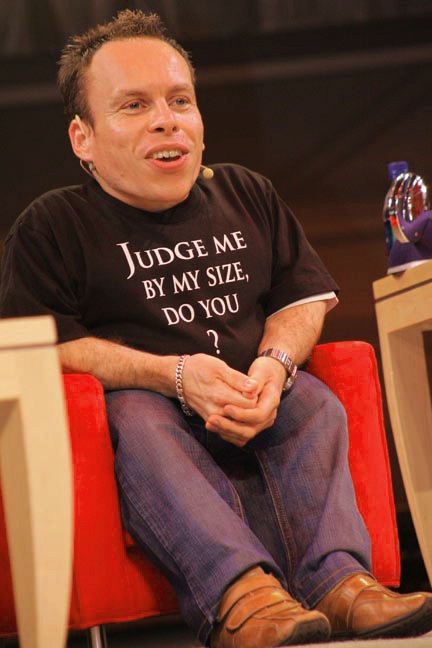
Physically, Warwick Davis and Peter Dinklage have no more in common than a black-haired Korean does with a black-haired Irishman. But they share many experiences rooted in society’s reaction to their short stature. They were both cast as dwarfs in the second Chronicles of Narnia film because the fantasy tradition cares first and foremost about looks, making up its convoluted ideas about heritage and separate races as it goes along. Most forms of dwarfism are caused by genetic mutations, but others result from chromosomal abnormalities, malnutrition, or even child abuse. Thus, because it encompasses all sorts of conditions with a tremendous variety of causes and complications, dwarfism is a social construct. Can a social construct be a disability? What is a disability?

This blog recognizes disability as a medical condition that causes you to experience more pain and/or limitations than the average person in your peer group, and therein attracts inordinate attention from society. And the attention has traditionally been negative. Disabled people carry a burden most other minorities do not in that we must argue that our lives and identities are no less valuable than anyone else’s, while at the same time admitting that we will always experience a good deal of pain no matter how accepting or accommodating society is. (Poor people are the only other minority that shares this burden.) This idea of inherent pain is what causes many activists in the autistic community and the transgender community to buck the disabled classification.

But when pain is indisputably inherent to a condition, it is frequently relativized in the hopes that this will reduce ableist attitudes. When I was born, the doctor pointed out to my parents that “everyone has something different about their bodies. One person has bad knees, another has a chronic skin rash. Emily’s difference is just a lot more noticeable than other people’s.” But does this mean that bad knees and skin rashes and seasonal allergies are all disabilities? There’s more to it than that.

If a medical condition is only minimally limiting and can be treated with standard procedures, we don’t really consider it a disability and rightfully so. While there is value in relativizing everyone’s struggles in order to calm our fears of the Other, it carries the risk of our failing to recognize differences that have much to teach us. The regular migraines I inherited from my mother don’t make me disabled. The pain can be intense and it’s infuriatingly inconvenient to feel one coming on at a dinner party while also feeling the hollow echo of an empty pill box in my bag. But the migraines are treatable—and not exorbitantly expensive to treat—and easily understood by others because plenty of people get them. Having to explain to people what my back and joints can and cannot endure is a more complex task.  Alleviating or avoiding the pain is even harder.

I interviewed friends and acquaintances with achondroplasia about the physical difficulties they regularly face. Some described always needing to lie down for at least half an hour whenever they vacuum for 10 minutes or more, and needing to get up earlier than everyone else on weekdays in order to afford themselves more time for walking to work or class. Everyone has trouble finding comfortable shoes that fit—women’s business shoes and sandals pose the biggest challenge—and many need to wear orthotics. Camilla, a college student who has not undergone limb-lengthening, told me:

I definitely believe I feel fatigue more easily than people my age. I went out dancing with friends last night and I had to stop and just stand for a while because my legs were starting to hurt. Also, when I walk places with my average height friends, my joints start to hurt while they feel almost no effects of fatigue at all… I would say that the hardest physical aspect of having dwarfism would not be the height difference but the extreme muscle and joint pain that seems to be more and more easily triggered as I get older.

And by “older” she means approaching her mid-twenties. These physical limitations would sound less surprising coming from senior citizens, which is why, as an advisor explained to me, your eligibility for disability status decreases as you age and aching joints become more common to your peer group.

A friend who had limb-lengthening at the same time I did told me, “I know if I’ve been on my feet all day, my ankles get really stiff and I’m limping around at home at the end of the night… as compared to my friends who work all day and still manage to hit yoga class, the gym, or cycling class afterwards.” Those of us who have undergone limb-lengthening can test whether achondroplasia is a disability because we control for the socially-constructed advantages of height. Yet in my interviews, I noticed that many who have had limb-lengthening are often reticent to talk about their current physical hardships lest someone conclude that all that time spent breaking and healing and growing bones was for naught.

Indeed, pride complicates our perceptions of pain. While hypochondriacs rejoice when they qualify as “disabled,” those who have regularly been reminded by peers and institutions of the supposedly pitiful nature of their condition are often less willing to revel in it. Those who reject the idea of calling dwarfism a disability are often motivated by the desire to de-stigmatize dwarfism. I of course understand this desire, but I don’t see how we can make the argument without stigmatizing disability. And I am suspicious of any mindset that supports a hierarchy by essentially saying, “At least I’m not like them.”

Like people of color, people with dwarfism are united only by society’s reaction to them, not by any medical traits. This is why I do not believe dwarfism itself is a disability. However, most types of dwarfism are. The way in which the physical pain brought on by achondroplasia intersects with social limitations is explained very well by Spoon Theory, an idea invented by Christine Miserandino, who has lupus. It bears repeating that I can only begin to imagine what living with lupus is like.  In the presence of someone needing to vent about the pain, I hope to be as wonderfully deferential as so many non-disabled friends have been to me. But the fact that lupus is an illness while achondroplasia is a not is no reason to ignore the fact that Spoon Theory perfectly illustrates the broader concept of chronic pain and fatigue experienced by people with all kinds of disabilities. Emily Brand described it eloquently in The Guardian last year:

The basic idea is that you have a limited number of spoons available for the day and each action will cost a given number of them – the more demanding the task, the more spoons would be required. The phrase “running low on spoons” can be a useful way of communicating the need for rest to fellow “spoonies” who also use this system and to friends and family who are in the know. Reading up on this is one of the best things anyone could do to help with providing day-to-day support to someone with a chronic health condition, as it’s a powerful analogy that can help people to empathise with how much of an impact even an invisible symptom like chronic pain can make.

I love the idea of “running low on spoons.” I used it just last week in explaining to a friend that I couldn’t peer with her into a store window because my swollen feet were begging me to keep off the cobblestones. But at the risk of sounding, well, confused, I’m not entirely comfortable calling myself a “spoonie” because experiences in college have left me averse to glamorizing conditions with labels that sound like club memberships. And between dwarf and has dwarfism and midget and little person and LP and short-statured and disabled and physically challenged and differently-abled, I’ve got enough labels to sort through.


Simple Language & Democracy

22 Sep

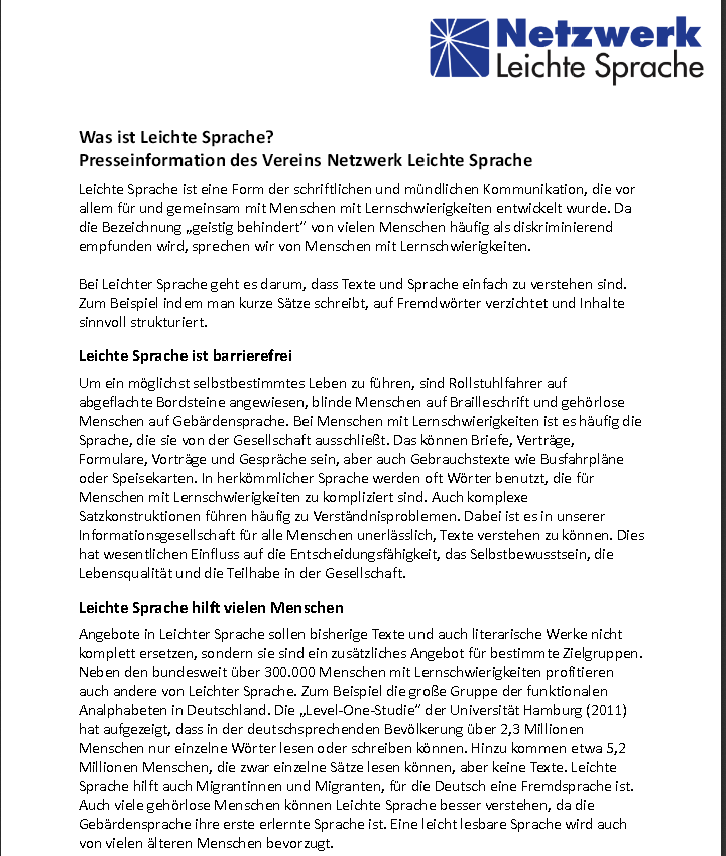
My country of residence votes today in what my partner has called “possibly the most boring German election in recent memory.”  Sure the new Euro-skeptic party may be prove to be a rising star while the Pirate Party sinks (no pun intended), but with voter non-participation at an all-time high, conventional wisdom anticipates pretty much more of the same.  There is, however, one new feature of this campaign season distinguishing it from years past – all of the major parties offer translations of their platform and websites in Leichte Sprache

Leichte Sprache (“Simple Language”) is a variant of German developed by professionals who work closely with citizens with intellectual disabilities.  It avoids long sentences, abbreviations and acronyms, jargon, foreign words, and Roman numerals.  The text is often accompanied by images that convey meaning.  Commonly used words supplant those used to signify sophistication; e.g. “allow” is preferred to “authorize.”  Instead of “public transportation,” Leichte Sprache translators use “buses and trains.”  Repeating the same word (“You should take these pills because these pills are the best”) is preferable to using synonyms (“You should take these pills because this medicine is the best”).  Adverbs signifying time (“Maybe tomorrow it will rain”) are used in lieu of verb tenses (“Tomorrow it could rain”), because complex verb tenses should be avoided altogether.  Figurative descriptions (“Rabeneltern” = “raven parents”) are replaced with literal ones (“bad parents”).  The German custom of smashing compound words together without dashes or spaces (as in “Eheunbedenklichkeitsbescheinigung”) is also discouraged.     

The closest English equivalent to Leichte Sprache is Simple English, which thusfar has only really gained traction on Wikipedia.  While the Leichte Sprache Netzwerk focuses on the needs of citizens with intellectual disabilities, most advocates of Simple English in the U.S. list immigrants and other non-native English speakers as their primary target group.  This is also a revolutionary idea.  If you think the contractual agreement at iTunes is hard to wade through, imagine trying to read it in whatever foreign language you studied in high school. 

Indeed, most expats I know who have only a basic knowledge of German tend to simply hand their contracts, tax forms, and newspapers over to a German friend for an explanation.  For such people, Leichte Sprache versions would be a much more surmountable hurdle. 

And anyone about to scoff at the idea of lazy immigrants trying to take the easy way out should try the following exercise.  If you’ve studied little to no German, see how long it takes you to understand the Leichte Sprache version of this text:
 

Leichte Sprache


Need a dictionary?  Now compare reading that to reading the original version:


Schwere Sprache


Which one would encourage you to at least give it a try?  Naturally plenty of immigrants and expats strive and pride themselves on reaching the level of language used in the second text.  But for those scientists and doctors and painters and cooks and economists who admit that foreign languages were never their strong point, something is far better than nothing.

Some have voiced concerns that this is a slippery slope toward an anti-intellectual populace; that all the poetry, intricacy, and subtlety of refined language will be thrown out with the bathwater if Leichte Sprache has its way.  As a writer, I’ll be the first one at the barricades whenever anyone proposes that all public discourse accommodate the lowest common denominator.  I’m the type to shudder at someone saying, “We’ve come 360 degrees” when they mean 180 degrees; at reporters saying “he’s a graceful person” when they mean “gracious”; at friends mistaking “literally” for “extremely.”  Because when our language becomes shallow and meaningless, our ideas become shallow and meaningless. 

But Leichte Sprache is no cause for worry because it is intended as an option, like Braille, not an imposed standard, like the Newspeak in Ninety-Eighty-Four.  Far from stigmatizing intellectuals, it is a means of empowering groups of people that are all too often excluded from the discussion.  And, perhaps most importantly, Leichte Sprache is a conscientious effort, a carefully constructed means of expression with many, many rules, whereas any shift toward linguistic parochialism among those of us without cognitive disabilities usually comes from an unwillingness to give much care or thought to what we say.

Indeed, it bears repeating that Leichte Sprache is not a matter of merely dumbing down the way we speak to certain people, with no concern for how patronizing we might sound.  For anyone who thinks people with intellectual disabilities don’t notice when we’re talking down to them, there’s this:


The role of Leichte Sprache in today’s election may not be big enough to produce any surprises, but its implementation does recognize the rights of several minorities to participate in the political process.  It also signifies Germany’s commitment to the U.N. Convention on the Rights of People with Disabilities. However, according to Leichte Sprache translator Andrea Tischner, the two parties currently in power are not doing all they could.  Chancellor Angela Merkel’s center-right Christian Democrats, and their Bavarian sister party the Christian Social Union, have failed to translate much of their platform into Leichte Sprache, while the libertarian Free Democrats use too many big words in their translations.  Interestingly, theirs has been the most diverse administration in the history of Germany—and possibly the world— with a female chancellor, a foreign-born vice-chancellor and an openly gay secretary of state.  But according to Tischner, the best translations are offered by three of the four major parties on the left: the Social Democrats, the Greens, and the Pirates.  She didn’t offer any assessment of how the anti-immigrant, Nazi-apologist Nationalists are handling things, but I think we can guess.


Equal Treatment Means Special Treatment, Right?

1 Sep

(Via)


Recently overheard in a library: “They just hired some incompetent disabled person. Equality is a nice idea and all, but I can’t turn my whole world upside down in order to always be thinking about what some other person needs. I have to think about my needs.”

To which this disabled person shrugs, “Ditto.”


The Parents and the Childfree Are Ignoring A Very Important Group

11 Aug

Hay que reorganizar los cuidados

(Image by gaelx used under Creative Commons license via)


“Now I’m going to ask you something that you officially don’t have to answer, but I’m going to ask you anyway…”

I was in the middle of a job interview, and the résumé splayed out on the table betrayed my age. I knew exactly what was coming.

“Do you have kids?” the interviewer asked.

“No,” I smiled, remembering that German law protected me from having to tell him if and when I ever planned to.

“Good,” he smiled back, glancing to the side as if afraid of being overheard. “Because I hate to say it, but employees with kids will not be able to do this job.”

It was clear to me he wasn’t being sexist or anti-family – just honest. The job in question involved shifts at all hours of the day that would change from week to week. There wasn’t any room for developing a schedule of any regularity, or for excusing oneself repeatedly during flu season. And it wasn’t the only profession I’d heard of that demanded flexibility while offering none back. This year has seen study after study reveal that childless women are heavily favored in academia and the corporate world, while men in any field face miserable stigma if they dare prioritize paternal commitments over professional ones. Parents have it so hard.

But then again, so do childless employees. Yet another study out this year revealed that middle class childless women in the public service sector face stigma and sometimes even harassment in the work place for defying traditional gender expectations. In these jobs, working moms are sometimes accommodated more readily than single ladies, leading Amanda Marcotte to complain at Slate of “women missing dates, exercise classes, and social outings in order to cover for the mothers they work with.” In New York magazine, feminist Ann Friedman argued:

Many corporations now strive for a veneer of family friendliness, so it’s not likely a woman will get the stink-eye for leaving early to catch her kid’s soccer game. Which is a feminist victory. But if a childless employee cops to the fact that she’s ducking out for a yoga class? It’s seen as downright indulgent and may even show up on a performance review.

If you’ve ever waded into the debate between childfree adults and parents, online or off, you know they tend to be rather resentful of one another. I usually find myself playing devil’s advocate to both. At this time last year I wrote about the depths of the pain self-righteous parents can inflict on others. But for every supercilious mother I’ve witnessed flaunting her offspring like Olympic gold medals, I’ve also seen huffy child-freers rolling their eyes the moment a toddler enters their field of vision, having no qualms with letting everyone know that the mere existence of a child in their presence is an assault on their personal freedom. Which brings new meaning to the word “childish.”

It’s a shame because the childfree movement has many excellent points to make about society and gender bias. Summing it all up to the inherent undesirability of children is the worst possible political tactic because no one who believes in human rights can write off an entire group of people who have no choice about belonging to that group. Would we tolerate anyone saying, “I can’t stand the elderly”? Or “There is no way I am ever going to learn to like mentally disabled people”?  And anyone who trashes someone else’s reproductive decisions in order to justify their own will never, ever convince the skeptics they need on their side. They’ll just come off as intolerant and judgmental.

And while mothers hit a wall if they insist that theirs is the hardest job in the world, I don’t think we’re going to get very far arguing that employees should have just as much right to leave work early to make it to yoga class as they do to make it to their kid’s soccer game. In the choice between work versus yoga, nothing but my own happiness is riding on the decision. Because it’s me-time. In the choice between work versus my nephew’s soccer game, someone else’s happiness is also at stake. Because it’s caregiving.

This is not to say that single people have less important lives than those with children. Nor do I intend to suggest that parenting is the hardest job in the world. (As mother and feminist Jessica Valenti pointed out in Why Have Kids?, can anyone say with a straight face that being a parent is harder than being a firefighter or an oncologist?) But those who dedicate a large chunk of their time to others in need of care should always be accommodated more readily than those who don’t. Because helping others in need—whether it’s your kids, your parents, your friend’s kids, or anyone you know who is dependent due to age, disability or illness—is work in itself. It’s often a labor of love, but it’s labor nonetheless. And usually it increases your need for me-time, while leaving you with even less time for it.

As a childless woman, I have occasionally been an unpaid caregiver and frequently the one in need of care. I’ve taken time off from work to babysit my neighbors’ toddler, to bring my nephews to the pediatrician, to pick up a friend’s daughter from kindergarten, to help organize a funeral and sort through an estate. And my parents, relatives, husband and friends have taken time off from work in order to take me to physical therapy, to check-ups and procedures, to be at my bedside before and after surgery. The ideal family-friendly workplace would accommodate any employee’s need to help someone in regular need of assistance.

And maybe if we extend the value of good parenting to the value of good caregiving, we’ll be able to have more discussions about how freakin’ hard it can be. Caregiving isn’t just about having a big heart and finding joy in knowing you helped someone. It’s about sacrifice. It’s about reading a book for the fourth time no matter how much you want to throw it out the window. Or rubbing someone’s feet to distract them from the pain no matter how little sleep you’re running on. Or missing out on parties and events no matter how badly you want to go. Or suppressing your gag reflex as the one you love spits up something absolutely gross. Or mustering the strength to decide whether you should endure the anger being vented at you because everyone needs to vent, or whether you should call your loved one out on their self-pity lest their anger become an abusive habit. Caregiving is about testing your patience until it inevitably wears thin and you make a mistake or lash out, ensuring you’ll be up the next several nights wondering whether you just scarred someone for life. Caregiving is work and, regardless of whether it is paid work, it is one of the most psychologically taxing kinds of work there is.  And some are naturally better at caregiving than others, regardless of gender.

But why is taking time off for your child’s recital more generous than taking time off for a date with a friend? Isn’t a childless peer just as valuable as a family member? Of course, but let’s not fool ourselves. Sitting through an entire school recital is a lot less fun than fine dining. (Hence the rule at Springfield Elementary: “No leaving after your kid’s part is done.”) And helping a friend through a typical young adult “crisis” like a breakup will never require the same sort of patience, empathy and thick skin that you need for helping someone through serious illness, severe injury, death or divorce. Commiserating, while still noble in its intentions, is simply saying, “I’ve been there!” and swapping sob stories within the boundaries of our comfort zone. Empathizing is forcing ourselves to stretch our imaginations and open our hearts to someone whose experience frustrates us, or maybe even scares us, because it is essentially different from our own experience. Because empathizing is so much harder, it is undeniably more noble.

Young, childless, upper/middle class adults like me will probably always be seen as the most self-indulgent because our stage in life is the least likely to involve illness or dependency. But those who volunteer after work to play with underprivileged children or tutor illiterate adults or regularly call their lonely relatives demonstrate that social segregation is in part a choice.

This is not to guilt everyone into feeling that our lives are meaningless unless we start volunteering. But we should be honest, not touchy, if our lifestyles are in fact more self-centered than others’. This year, unlike years past, I find myself only occasionally dedicating my time to someone else. My husband has been the giver, exerting himself to maintain the work-life balance constantly threatened by the pressures of his job and my medical needs. And for that he deserves accommodation from his employers, and both gratitude and admiration from me.


Sex with Circus Midgets or Uncomfortable Silence

7 Jul

(Via)


“Pregnant mothers should avoid thinking of ugly people, or those marked by any deformity or disease; avoid injury, fright and disease of any kind.”  So advised doctors in the 1920 parenting manual Searchlights on Health.  Eugenics was all the rage back then, but it had hardly come out of nowhere.  The ugly laws of the 19th and early 20th centuries prohibited, for example in Chicago, “Any person who is diseased, maimed, mutilated, or in any way deformed, so as to be an unsightly or disgusting object, or an improper person to be allowed in or on the streets, highways, thoroughfares, or public places. 

Under these laws, poor and homeless people with disabilities suffered the most.  The class system gave those from affluent families, like Helen Keller, a better shot at being exempted.  But before the disability rights movements of the 1970s, countless disabled children were abandoned by their families in orphanages and asylums, and were thus condemned to grow up to either join the circus or become the vagrants these laws targeted.  Abandonment, rejection and the resulting invisibility in society is an ableist tradition of astounding resilience.  Because just how far have we come in the past hundred years since doctors and municipalities advised not talking about or looking at disabled people?

This week Slate magazine features two articles by Barry Friedman and Dahlia Lithwick, asking readers to consider “what is left for the progressive movement after the gay rights victory at the Supreme Court.”  Arguing that liberal activists have developed tunnel vision, focusing almost exclusively on gay marriage and nothing else, they trumpet issues that deserve attention along with marriage equality.  Their list spans two articles, covering all sorts of social causes, from ending the death penalty to protecting the environment to improving child-care funding and education to marijuana legalization.  Nowhere in either article do they mention disability rights.

This very same week Slate also kicked off a blog about Florida by Craig Pittman with an opening article called, “True Facts About the Weirdest, Wildest, Most Fascinating State.”  Among the facts that apparently render the Sunshine State weird are the python-fighting alligators and “a town founded by a troupe of Russian circus midgets whose bus broke down.”  On the day of its release, Slate ran the article as its headline and emblazoned “A Town Founded By Russian Circus Midgets” across its front page as a teaser.

Face-palm. 

Friedman and Lithwick have nothing in common with Pittman except that they also write for Slate, a news site written by and for young liberals.  And that their articles remind me of what I’ve come to know and call Young Liberal Ableism. 

 That is, there are two ableist mentalities not uncommon among young liberals:

 1)      Uncomfortable Silence: the tendency to skirt issues of disability, especially compared to other social issues, because disability threatens two things young liberals unabashedly embrace – being independent and attractive.  (“Independent” and “attractive” rigidly defined, of course.)

 2)      Sex with Circus Midgets: the sick fascination with physical oddities that objectifies and/or fetishizes people with atypical bodies or conditions.  (I’ve discussed this in detail here.)

Both mentalities see any disabled people they hurt as acceptable collateral damage

Here’s the thing about dealing with all this.  You get used to it, but not forever and always.  Sometimes it rolls off your back, sometimes it hits a nerve.  This time, seeing a magazine as progressive as Slate brandish RUSSIAN CIRCUS MIDGETS on its front page while leaving disability rights out of its social justice discussion brought me right back to college, where friends of friends called me “Dwarf Emily” behind my back and someone else defended them to my face.  Where classmates cackled about the film Even Dwarfs Started Off Small—“because it’s just so awesome to see the midgets going all ape-shit!”—but declined my offer to screen the documentary Dwarfs: Not A Fairy Tale.  Where a gay professor was utterly outraged that her students didn’t seem to care about immigration rights or trans rights, but she never once mentioned disability rights.  Where an acquaintance asked to borrow my copy of The Curious Lives of Human Cadavers, but awkwardly turned down my offer to lend her Surgically Shaping Children.  Where roommates argued vociferously that they would rather be euthanized than lose the ability to walk.  Where jokes about dwarf-tossing were printed in the student paper. 

I won’t go into certain crude comments that involved me personally, but I will say that when a friend recently, carefully tried to tell me about how shocked he was to find a certain video of dwarfs in a grocery store, I cut him off and said, “Lemme guess, it was a dwarf woman porn video?  That’s one of the top search terms that bring people to my blog.”

For a little more than a decade, I’ve lived on one of America’s most liberal college campuses and then in one of the world’s most progressive cities.  I have never met so many liberal people at any other time in my life and I have never met so many ableist people at any other time in my life.   

This is not to ignore all those I’ve met who, despite their lack of experience with disability, ask carefully constructed questions and consistently make me feel not like a curious object but like a friend who is free to speak her mind about any part of her life experience.  And some young liberals are doing awesome work for disability rights and awareness.  But when a journalist and mother of a disabled twentysomething recently said, “No one wants to talk about disability rights – it’s not seen as sexy enough,” I knew exactly what she was talking about.

In 2009, when the pretty darn liberal Huffington Post reported on Little People of America’s call on the FCC to ban the word “midget,” the majority of commenters snidely remarked, “At least they can get married.”  There was truth to this, but I found it telling that not a single commenter on the left-wing blog considered that the word “midget” could be hurtful.  Everyone instead decided to play Oppression Olympics

Understand that I will never say that among liberals disabled people are worse off than other minorities or that ableism is the “last frontier” in human rights.  It’s not.  Even if I believed it to be true, it would be impossible to prove and fighting for the crown of Superlative Suffering doesn’t do anything but imply that there are those against whom you wish to compete.  I don’t want to compete with anyone. 

Nor do I assume that anyone who uses the word “midget” is bigoted.  Many who use antiquated terms are honestly unaware of their potential to hurt.  (It wasn’t until two years ago that I learned that referring to the Sami-speaking regions as “Lapland” can be very offensive to those who live there.)  And there is no minority on earth whose members agree unanimously on a name.  “Little people” makes me cringe almost as much as “midgets,” while my husband winces whenever I use the German word for “dwarf.”  Labels are only half as important as the intentions behind them.

But when young liberals insist that no one can be expected to know that “midget” is hurtful, there is something particularly perverse about hearing dehumanizing beliefs and ideas come from the mouths of those who pride themselves on their open-mindedness and diversity awareness.  Or whose own experience of marginalization would logically render them a better candidate for empathy.  In the words of Charles Negy, bigotry is an unwillingness to question our prejudices. 

Why do I call it Young Liberal Ableism and not just Young Ableism?  Because certain liberals could learn a thing or two from certain conservatives about facing disability and illness. Consider the stereotype of the small-town conservative who proselytizes about etiquette and tradition, and goes into a tizzy over the idea of two men kissing or a woman not taking her husband’s name or her neighbors speaking another language or a singer using swear words.  But for all the types of people she does not want to accept in her community, she is fiercely dedicated to her community.  She spends a good deal of her time going to church and checking in on her neighbors, and stays in contact with those who are physically dependent, sick or disabled.  As patronizing as charity can be, many young conservatives have been raised to send get-well cards, bake pies, and call on neighbors and relatives who are stuck at home or in the hospital.  They’ve been raised to believe that it’s the right thing to do. 

Many young liberals, meanwhile, have been raised to analyze their problems and personalities to the point of vanity, question moral traditions to the point of moral relativism, and feel free to do what they want to the point of only doing what they want.  They believe that anyone is welcome to live in their town, but they’ll only socialize with those they deem interesting.

I’m stereotyping of course.  But it’s a fact, not a stereotype, that in the U.S. liberals are less likely to donate to charity, less likely to do volunteer work, and less likely to donate blood than conservatives. 

Ultimately, it does not matter whether you call yourself “liberal” or “conservative,” left-wing or right-wing.  There are Ayn Rand conservatives who insist that compassion is “evil,” and there are liberals who work tirelessly in low-paying jobs at non-profits and social agencies that do as much good as any charity.  There are those of all political stripes who make large charitable donations but also want everyone to know about it, and there are those who don’t know the first thing about politics but know everything about empathy.  We are far more complex than our politics give us credit for.

The goal should be to never become too self-congratulatory about our politics or morals,  as Friedman and Lithwick warn.  But in response to their call for issues progressives specifically need to pay to attention to, I do have a wish list going:

How about young liberals fighting to make sure dwarf-tossing is banned around the world?

How about facts instead of factoids when it comes to communities founded by dwarf entertainers who have been socially isolated by ableism and fear life-long unemployment?

How about young liberals continuing to fight for the U.S. to ratify the U.N. Convention on the Rights of Persons with Disabilities?

How about young liberals debating the Supreme Court’s 9-0 ruling last year that religious organizations are exempt from the Americans with Disabilities Act?

How about young liberals talking more about the astronomical rates of violence against intellectually disabled people, rather than just sneering at Sarah Palin’s complaints about the word “retard”?

How about young liberal bloggers trying to understand physical disability and illness as often as they try to understand depression and social anxiety?

How about our seeing a lot more women with dwarfism starring in romantic comedies than in porn movies? 

How about more young liberal discussions about real dwarfs than Tolkien Dwarves?

In issuing these demands, I’m of course terrified of appearing too self-interested.  Politics is all about trying to square the selfishness of What about ME?! with the fairness of Everybody matters.  Sometimes sticking up for your own rights is easier than sticking up for someone else’s.  Sometimes it’s the other way around.  All of us, liberals and conservatives, should value trying to do what is right rather than what is easy.


What To Do When I Go FWOMP!

23 Jun

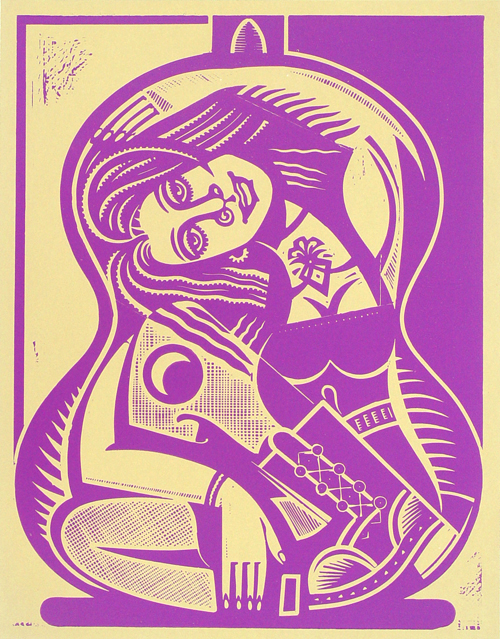
(Image by Stephen Alcorn © 2003 http://www.alcorngallery.com)


“HEEEEEY!” Friends were at the door, back fresh from a vacation that had seemed far too long for me to endure. At the sound of their dulcet voices calling me in unison, I jumped from my chair, rounded the corner, darted down the hallway toward their open arms, and FWOMP! Iwassuddenlyhorizontal.

My friends gasped, “OMIGOD, ARE YOU OKAY?!” Apparently this time I was, from what I could tell of the pain, and I bounced up before they finished asking, throwing my arms around them both at once and laughing, “How’s that for a dramatic hello?”

“You’ve been drinking again, haven’t you?” one of them smiled.

“Yes!” I beamed. “You know exactly what to say! How was your vacation?”

We chatted for about five minutes, made plans for the next day, and said hasty goodbyes because their toddler was itching to get home. As I shut the door, I rubbed my knee, looked at my partner, and shook my head. “I’m gonna have a new bruise on the left to match the right.”

Two weeks before I’d gone flying down the same hallway, but that time it had really knocked the wind out of me and left a cut needing a bandage. I had reacted a little less wryly – diaphragm spasms are never pleasant and they forced me to let out a yell that sent my partner running from the kitchen. But after my initial roar, I switched to hollering, “I’M FINE! I’M FINE! DON’T PANIC! I’M FINE!” Our guests came peeking out of different rooms, everyone asking me how I was.

I was fine, but I was mad. Mad at gravity, mad at the pain, mad at my useless tendons and weak muscles that cause me to stumble on average about every ten days. But I wasn’t that mad. I’ve gotten used to it, after all.

Because my anterior tibilias tendons on both legs were severed some time during my first limb-lengthening procedure, I use different tendons to lift my feet when I walk. They compensate relatively well, but since they cause my feet to point slightly outwards rather than straight ahead, I’m a walking accident waiting to happen. It’s compounded by the fact that my muscles fatigue more quickly than others’ due to my dwarfism. It’s been this way since I was twelve and changes only in that the bigger I get, the harder I fall.

Since I was my surgeon’s only known case of tendons severing during limb-lengthening, most people with dwarfism do not face this problem. Some do, however, when their greater susceptibility to fatigue combines with their having to carry an average-sized trunk around on exceptionally short legs. In other words, had my tendons not severed, I may or may not have had this habit of losing my balance. It’s exasperating and inconvenient, but what can I do about it?

Laugh, for one thing. Over the years, I’ve decided a woman falling down is both hilarious and revolutionary—what with the delicate ballerinas we’re supposed to be—and drinking too much is just one of many lovely excuses to offer for it. Years ago I fell while carrying an armload of water glasses and promptly ended up in the emergency room with stitches and a black eye. From the physician named Dr. Goebbels to the nurses insisting my partner leave the room so that I could be free to explain what had happened, the opportunity for sick jokes was everywhere.

Friends have kept records of my losses in the battle against gravity. Some are critical, sighing, “EMILY, that’s the second time today!” while others are cheerleaders: “It doesn’t count this time because the ground is uneven.” (And can I just point out that the German word for gravity—Schwerkraft—literally translates as “heavy force”? I love German.)

Of course, I’m not always at my best when it happens. Often I fall because I’m particularly tired and this results in my being particularly bad-tempered about it. That I kvetch the most to those I know and love the best is logical, but not entirely fair.

When my peers witness me falling for the first time, many of them don’t know what to do. I’m trying to get better at telling them. If I’m not badly hurt, but still somewhat hurt, I try to shout that I’m okay to curtail their apprehension. Taking a minute to help me up and, depending how close we are, offering me an arm until I’m steady on my feet is almost always appreciated. Breaking into a panic and giving me the sense that it’s my job to calm them down is less helpful.

Most people who have to deal with pain caused by disabilities don’t want any more sympathy or attention beyond what we would give someone with a light headache. (In fact, many of us want a tad less sympathy than what some with mundane headaches go fishing for.) If I’m not hurt, anything you say to keep the mood light as a Screw-you! to my heavy fall will be invaluable. If I am hurt, any offers to help before I have to ask will be worth even more. And if your gentle-yet-practical manner demonstrates particularly good caregiving skills, I’m going to tell you so. Experience has made me a particularly good judge.

And I’m not embarrassed when I fall, so please don’t be embarrassed for me. At best, it’s as disruptive as a mighty sneeze. At worst, it’s a mood-killer.

The one fall that still makes me cringe to this day happened as I was stepping off a stage after delivering a poem to thunderous applause. I spent the summer before my senior year of high school at a young writers’ workshop in the Berkshires, where I found all the beauty, intellect and acceptance I been dreaming of ever since I first put pen to paper. Reciting one of my pieces to giggles and cheers made me feel as great as anyone on any podium has ever felt. The moment had been just perfect. And then, I slipped. The handsome emcee looked sincerely concerned: “Are you okay? Are you okay?” He had to keep asking because I was mumbling my answer, mortified to even acknowledge what had just happened. In my head I was begging everyone in that room, Please remember my poem and not my fall. Please.

Then again, “And Emily came tumbling after” is a poem in itself. It doesn’t work as well in Germany, what with no one having grown up with Mother Goose, so I’ll have to settle for the joke about being drunk. That one’s an international success.


Define “Active”

16 Jun

(Via)


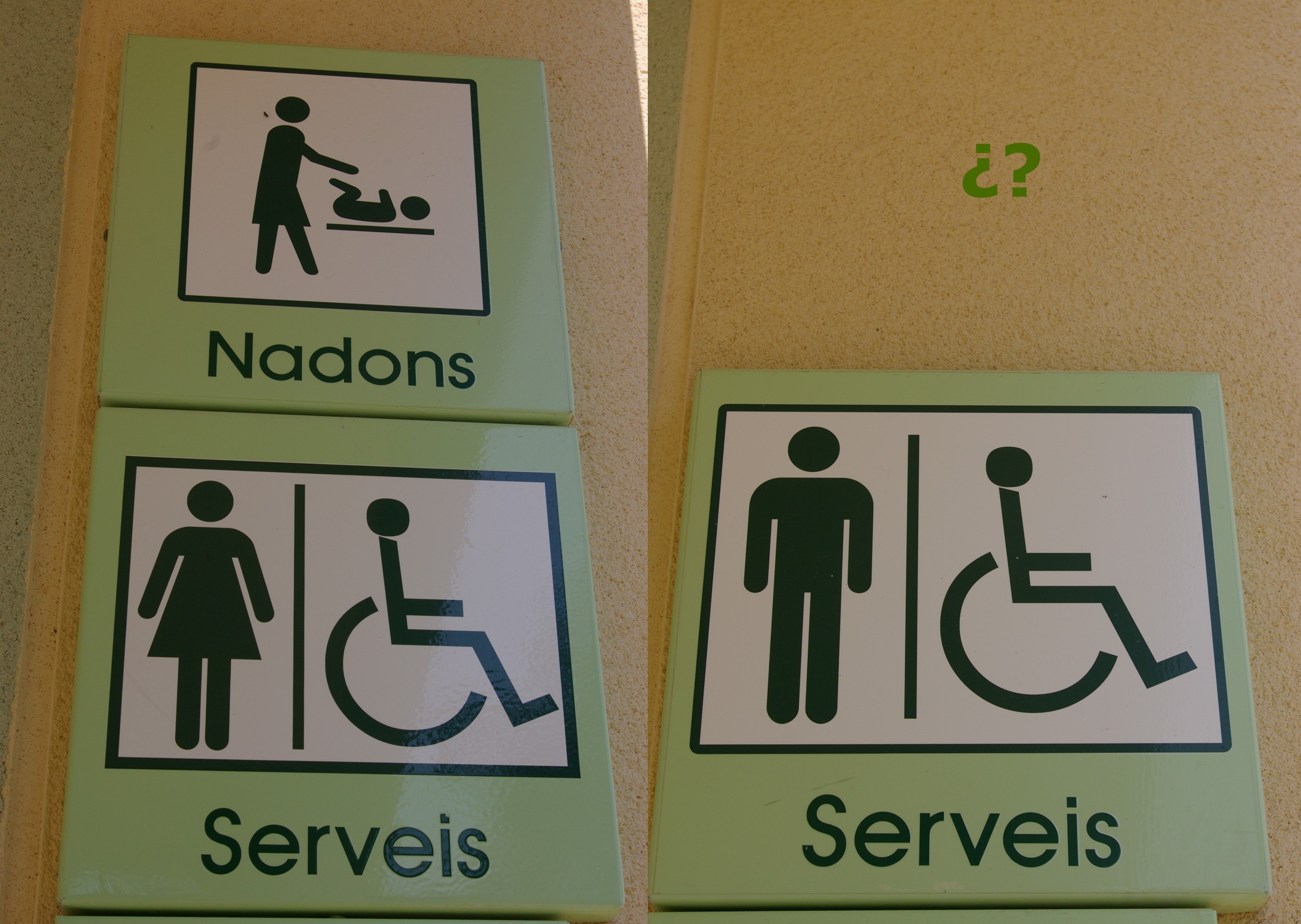
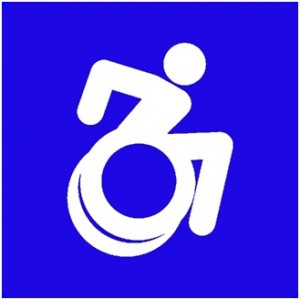
New York City has begun using a new design of the international symbol for disabilities this week. (See above.) Featuring a forward-moving, self-propelling wheelchair user, the new symbol has garnered praise from the mayor’s office and Professor Lisa Wade of Occidental College for portraying disabled people as “active and independent,” instead of “passive and helpless.”

I support the move 99% because it signifies the changing perceptions of what it means to be disabled. Altering our default descriptions of non-ambulatory people from “wheelchair-bound” to “using a wheelchair” sheds much-needed light on the fact that many disabled people are indeed differently abled. Wheelchairs, sign language, and Braille are not just substitute ways of moving and communicating but means of moving and communicating that require skill. If you’ve ever witnessed someone try to use a wheelchair for the first time, you know it’s like watching Bambi on ice.

That said, I am hesitant to embrace any idea that insists that physically “active” is preferable to “passive” at the risk of impugning those who cannot help but be dependent. Just as Little People of America’s motto “Think Big!” inadvertently suggests something undesirable about being small, an over-emphasis on being active—and defining “active” as the ability to physically move yourself forward—inadvertently suggests something humiliating about the thousands of medical conditions that preclude physical independence. All people have agency, and this absolutely bears repeating when we talk about human rights and portrayals of disability. But not all of us are independent.

Disability reminds us, perhaps like nothing else, that we can never hold every member of the human race to the same standard. This does not mean we cannot demand everyone strive for excellence, try their hardest, or be their own toughest critic. But it does mean we should be wary of promulgating rigid definitions of excellence.

As a friend with lupus once said, “What’s wrong with being weak?  What’s wrong with trying to do something and doing it badly?”  

Competitive cultures wince at weakness and I must say that America can be a very competitive place.  Even the most progressive human rights movements have embraced competitive, grandiose language when talking about empowerment.  Two years ago on Love Your Body Day, Chloe Angyal of Feministing wrote an article wherein she wanted to “ take a moment to appreciate the things my body can do.” She went on to list her favorite things:

My body can stitch itself back together when it gets cut. This never ceases to amaze me.

My body has an organ in it that can stretch to accommodate a small human being. I don’t want it to do any stretching or accommodating any time soon, but the capacity is there, and that blows my mind.

More than a decade after it was cool (was it really ever cool?) my body still has the muscle memory to do the Macarena. That one is kind of embarrassing, but still kind of great. Mostly embarrassing.

My body can orgasm. Enough said.

My body can do [a flip], and for that, I love it.

What can your body do?

I had been, and still am, a huge fan of Angyal’s writing. As a feminist, an athlete and someone who has struggled with disordered eating, her contributions to the discourse on body image have been invaluable. But this time around, I wasn’t inspired to join in her Love Your Body Day exercise. I hesitated to say so because I understood the noble intentions behind her article, and what kind of person wants to rain on a Love Your Body Day parade?

Apparently someone like me, because I ultimately couldn’t help but write this response:

I realize the very good intentions of your post: celebrating our bodies as they are. But the emphasis on what you can “do” (= ability) still made me quite uncomfortable as someone with disabilities.

Usually when one writes a piece meant to buck oppressive, judgmental thinking and celebrate the way we are, the author writes about a quality that is ostracized – a skin color, sexuality, a body size, physical features considered to be deformities, etc. It’s the honesty of the author in spite of adversity that inspires. You instead decided to celebrate things about your body that mainstream society does not ostracize at all, but in fact agrees with you are wonderful. So for those of us who cannot dance, have children, heal cuts, or do gymnastics, this post simply reminds us of this and it’s hard not to take it as bragging. (I know that wasn’t your intention.) You did invite us to list our own things we love about our bodies, but I don’t think there’s anything my body can do that yours can’t…

Angyal wrote back to me personally and apologized. From there we started a dialogue that resulted in my writing guest posts for Feministing and our exchanging lots of praise for each other’s work. I had been frustrated by the lack of disability awareness on leftist forums and simultaneoulsy self-conscious of appearing too negative or narcissistic. This made her response to my critique all the more inspiring.  She has both privileges and experiences of marginalization that I do not, just as I have privileges and experiences of marginalization that she does not. The same goes for those who can move their own wheelchairs and those who cannot.

Overlooking our privileges and inadvertently denigrating others happens all too easily, as all 7 billion of us strive for excellence and recognition of our various capacities for excellence. Trying to include everyone in the conversation, all the time, can be exhausting.  But admitting the danger of these missteps is imperative to the idea of truly universal human rights because that idea insists, over and over again, no matter what the circumstances, that everybody matters.  There is no way around it if we want to move forward.


Who Gets Stuck in the Friend Zone

24 Mar

Love for all!(Image by Matthias Ripp used under CC license via)

Well, I finally sat down and saw The Phantom of the Opera a quarter of a century after everyone else.  (If you don’t know the story, this parody sums it up pretty well.)  I won’t say what I thought of all the songs songs songs because I’m bound to alienate half my readers either way, but by the second to last scene, I was hollering at the screen: “Girl, you’d better not go for that swaggering bully in the mask!”  But then she ripped the mask off and he couldn’t stop crying and I was up to my eyelids in Kleenex, wailing: “If only he hadn’t killed so many people!  (And talked to her instead of stalked her… )  Now he’s just another disfigured guy stuck in the Friend Zone!  But his pain is reeeeeeeeal!”

This week, the word “Friend Zone” has been entered into the Oxford English Dictionary.  Many of my favorite feminists are not pleased.  Because the term is generally thought to be something only straight, bitter men complain about (see these Urban Dictionary definitions), many argue that it’s a misogynistic trope.  Lamenting the Friend Zone sends the message, however subliminally, that spending time with a female is pointless unless you gain access to her naughty bits.  Because who would want to be friends with a woman?! 

Such a bleak view of women is certainly a problem among many men.  In the words of John Mix Meyer, “Girls are not machines you put kindness coins into until sex falls out.”  Nice for the sake of nice is respect.  Nice only for the sake of getting laid is not.  As I’ve said before, cross-gender friendship could use a lot more support in books, film, and mainstream society.

But I’ve also used the word “Friend Zone” before because I don’t believe it refers only to this one chauvinistic idea.  Unrequited love isn’t fun for anyone.  Lots of women have been stuck in the Friend Zone, too.  Many people are expected by pop culture to always end up there, because society deems them asexual, and it could be helpful to examine why.  Almost every adult on earth craves love and sex, and we are all trying to figure out what attracts those we deem attractive. 

Men who sigh, “Girls don’t like nice guys,” need to get over their narcissism.  But there are others who wonder in earnest why the Friend Zone seems so jam-packed with quiet guys who genuinely respect women.  In stories of every genre, from classic literature (Madame Bovary) to modern literature (Freedom) to dime-a-dozen bodice-rippers (The Bridges of Madison County), bored heroines look past their straight-laced suitors to the tall dark stranger who’s not exactly famous for his fidelity or his feminism.  Love triangles always make for good drama, but when the heroine more often than not decides that the devoted sweetheart belongs in the Friend Zone and the unpredictable bad boy belongs in bed, many scratch their heads and repeat, “Why do girls always go for jerks?”  Or, as The Mr. T Experience sings, “I have some problems… but even Hitler had a girlfriend, so why can’t I?”

The answer often depends on the situation, but there are two fundamental, heteronormative traditions that prop it up:

The Macho Stereotype – Any guy who isn’t strong and independent to the point of being daring isn’t a “real man.”  Obeying the rules, doting on your wife, and being mediocre is emasculating.  Hence the double standard men are held to in real life: they are always expected to focus more on their success and autonomy than their emotional fulfillment.  Sociologist Stephanie Coontz has pointed out that the inordinate importance of independence to male worth is why homeless men arouse so much more disgust than homeless women.

The Gentler Sex Stereotype – A nice girl can see the diamond in the rough.  A man with a nasty wife is hen-pecked and pathetic, but a woman with a bad boy just might be the only one who understands him.  From a conservative standpoint, it’s virtuous of a woman to be so selfless and forgiving.  From a liberal standpoint, it’s the thrill of conquest and her extraordinarily open mind that keeps her trying.  

A man’s worth is defined by his success, albeit many women accept broad definitions of success.  Western romances across the ages assert that special girls who search for the softer side of the bully or the bad boy will find it: Beauty and the Beast, Wuthering Heights, My Fair Lady, The Sound of Music, The Music Man, Guys and Dolls, Bonnie and Clyde, right up to Fifty Shades of Grey.  Pop culture reiterates ad nauseam how much men love the chase, but this trope shows that scores of women do, too.  For the starry-eyed heroine, it’s a challenge to stray from the disapproving masses—or her parents—and become the One Special Woman who can tame the beast and bring joy to his lonely life.  The higher the risk, the greater the reward.  The reward is knowing that she is deeper, different from those other girls who swoon over bland perfection.  Hence even America’s most famous feminist, Lisa Simpson, has looked past loyal, bespectacled Milhouse for Nelson, the schoolyard bully from a broken home.  

By far the most horrific result of this romantic tradition is the fact that too many women in real life endure abuse, or worse. Pop culture sometimes concedes this and still has the audacity to romanticize it.  My high school did a production of Rodgers & Hammerstein’s Carousel the same year Time magazine declared it the Best Musical of All Time.  After wife-beater Billy Bigelow dies in an armed robbery, his widow tells their daughter, “It is possible, dear, for someone to hit you, hit you hard, and it not hurt at all.”  You see, truly devoted wives know that offering yourself up as his punching bag is a way to show your love and nurture him as he struggles with his demons. Only a selfish bitch would leave him when he needs her most.

Carousel was written in 1956, but the trope is still going strong. The final film of the Twilight series lead NPR’s Linda Holmes to observe:

When a saga popular with pre-adolescent girls peaks romantically on a night that leaves the heroine to wake up covered with bruises in the shape of her husband’s hands — and when that heroine then spends the morning explaining to her husband that she’s incredibly happy even though he injured her, and that it’s not his fault because she understands he couldn’t help it in light of the depth of his passion — that’s profoundly irresponsible.

Yes, we’re all having a good yuk over the unhinged quality of it all.  And yes, it’s a movie with a monster baby… But romanticizing an intimate relationship that leaves bruises and scars is a particularly terrible idea in a film aimed at girls. Talking about this is tiresome, but then so is putting it in the movie.

Indeed.

But attraction to the forbidden is not always dangerous.  Sometimes the bad boy is just misunderstood.  There is a powerful romantic tradition of fine ladies risking wealth and status for true love.  (See Aladdin, Titanic, Robin Hood, Moulin Rouge, Lady and the Tramp, Lady Chatterley’s Lover, The Pirates of Penzance, The Pirates of the Caribbean.)  There are also classic tales of heroines opening the gates to social progress by debunking their families’ horrid prejudices when they fall for men outside their race/nationality/religion/species.  (See Pocahontas, South Pacific, Fiddler on the Roof, The Little Mermaid.)  The heroines of Guess Who’s Coming to Dinner and Angst essen Seelen auf stare down the racial tensions of the era in which the films were released.  Meanwhile, Cyrano DeBergerac and the Phantom of the Opera both find out—albeit too late—that their beloveds would have looked past their disfigurement and loved them back. 

Since then, we’ve seen heroines end up with men with disabling injuries (often from war), while a handful go for guys who are congenitally disabled or disfigured.  As noted recently, Peter Dinklage’s romantic roles are possibly, finally breaking dwarf men out of the Friend Zone.  Great art obsesses over the blurry border between right and wrong, friend and lover, beauty and banality.  These compassionate heroines who try to understand the “bad” boys and the rejects help us deepen our perceptions of attractiveness.

It’s worth noting that the Phantom and Cyrano compensate for the supposed repulsiveness of their disfigurement with the sexiness of their genius.  They are supercrips.  Granted Gothic tales love to examine the complexity of blinding light draped in darkness.  I like a study of conflicting traits as much as the next starving liberal arts grad.  But it’s a ludicrously ableist tradition that only gives disabled superheroes a shot at intimacy, restricting ordinary disabled men like Quasimodo or the Seven Dwarfs to the Friend Zone.  And it’s an absurdly lookist tradition that restricts almost all of our disfigured and disabled women there.

Can you name a famous heroine who’s disfigured or physically disabled?  (Can you name a famous actress who’s visibly disabled, for that matter?  I might be able to, but I’d have to check Wikipedia to be sure.)  In the old days, disabled and disfigured girls might arouse sympathy (see Helen Keller), but the women were hags.  Period.  If women who were merely not conventionally attractive ever dared to step out of the Friend Zone and into the dating game, they were annoyingReally annoying.  And they were swatted away like flies.
Nowadays, love stories try to speak to women’s insecurities about their looks with quirky retellings of the Ugly Duckling or Cinderella.  The heroine perceives herself as unattractive, moaning, “Is it because of my [thighs/eyes/nose]?!”  (Rather than cursing, “That shallow jerk stuck me in the Friend Zone!”)  But we eventually see that she truly is a knock-out and it’s just a matter of finding the right man who will wipe the soot off her face, pay for a makeover, or simply remove her glasses.  Children’s films are getting a little better: Shrek and The Princess and the Frog feature heroines who are green-skinned for part of the courtship, though their Otherness is not quite as realistic as the Phantom’s or Quasimodo’s.  We’ve yet to see a heroine reveal a real-life physical disability and see her hot lover swoon.

And why not?  Francis Bacon said, “There is no exquisite beauty without some strangeness in the proportion.”  I’ve overheard countless guys say, “Chicks dig scars.”  Which is true.  Lots of chicks got scars, too.

The popularity of a story is by no means an empirical examination of our values.  Most people I know are so much deeper than pop culture gives us credit for.  And there is a lot more to many of these stories than the tropes I just reduced them to.  But it would be daft to pretend that they have nothing to do with our collective psyche.  Every one of us treasures those romantic moments we experienced that were “just like in a movie.”  Our most popular books and films simultaneously reflect and influence what we tend to think is hot.  And when it comes to opening our minds, fiction is often the best messenger.  We look to entertainment for escape and to art for enlightenment.  The most powerful stories provide both. 

When I attended a lecture at the Network of Disabled Women in Berlin two weeks ago, there was a debate as to whether reality TV shows and documentaries help or harm perceptions of disabled women.  Good documentaries smash stereotypes by providing facts and figures, but the over-representation of disabled women in such reports combined with their invisibility in love stories, detective stories, and silly sitcoms suggests that they exist solely as objects of study.  They are there to satisfy our curiosity, but we’re rarely asked to root for them the way we root for Rapunzel or Bridget Jones.  We never follow them on a journey dripping with passion.  We should. 

The Oxford English Dictionary’s newborn definition of “Friend Zone” reads: “a situation in which a platonic relationship exists between two people, one of whom has an undeclared romantic or sexual interest in the other.”  It doesn’t say it’s exclusively a problem for men.  And good for them.  To me, the term will always evoke the potentially destructive idea that certain “types” of people don’t ever need or deserve intimacy.  And we’ve got to keep questioning it.  Children, animals, and self-proclaimed asexuals automatically belong in the Friend Zone, along with your clients, patients, and students.  The disabled, the disfigured, the elderly, the ordinary, and the unsuccessful do not automatically belong there.  I’m counting on all of us, the storytellers and the lovers, to recognize the word so that we can recognize the problem.

Wheelchair Problems

24 Feb

Wheelchair  (Image by Joshua Zader used under Creative Commons license via)


Whether you are left-handed and in search of scissors, or dark-skinned and looking for “flesh-colored” bandages in the West, almost every minority experiences problems not just of prejudice but of practicality.  Facing the combined forces of social constructs and innate challenges can be exhausting.  Few discussions on difference encapsulate this better than Wheelchair Problems.  Run by a high school senior named Gina, the site primarily features memes, such as:


hands

curb

pee

stairs


When I discovered the site this past fall, the memories came flooding back.  I used a wheelchair for a total of only two years (ages 11 to 12 and 16 to 17), so while many of these memes perfectly illustrate my experience, others wake me up to situations I’ve never faced or considered.  It’s an excellent catalyst for simultaneously building community and spreading awareness to those outside the community.  Almost every one of the Problems merits volumes of social critique and philosophical debate, but they also demonstrate that you need not sign up for a three-day seminar on diversity to get the message. 

I’ve discussed the inherent problems of micro-blogging before.  But  when the marginalized have the microphone, brevity is often not just the soul of wit but of agency.  In an age when disabled people are still portrayed as either helpless victims, freakish villains, or larger-than-life heroes, we need more sites like Wheelchair Problems.  Kinda now.


The People You Meet When You Talk About Human Suffering

17 Feb

 plastic crowd

(Image by Boinink used under CC license via)


Not all disabled people are innocents.  I would hope this comes as no surprise.  But in the wake of Oscar Pistorius’s alleged murder of his girlfriend, some are going to the other extreme.  In a bizarre article titled “The Disability Pedestal,” Slate writer William Saletan lists various disabled people who have allegedly committed similarly heinous crimes.  He cites anger over their disability as a frequent motive.  Which evokes the stereotype of the evil freak who kills in order to compensate.  That stereotype is at least as old as wicked witches, and as modern as the albino villain of The DaVinci Code.  Do we really need to feed it? 

And if there is truth to the commonly held belief that disability renders people more likely to lash out at others, then shouldn’t we be investing in a solution?  Saletan doesn’t offer any statistics on how many disabled people commit crimes out of self-pity, but if it’s really so endemic, then we should do something about it.

But I don’t think that’s what he meant.  While never going so far as to declare disabled killers a social problem, Saletan does argue that some see their disability as “just another card they can play,” and that both they and we need to realize that it all comes down to individual responsibility:

Equality isn’t about being special.  It’s about being ordinary.  People with disabilities aren’t above sin or crime.  They’re just like the rest of us…  You run your own race.  You make your own decisions.  Most people with prosthetic legs don’t shoot their lovers.  Most guys who survive testicular cancer don’t run doping rings in the Tour de France.  Something about beating cancer or overcoming a birth defect tugs at our hearts. It paralyzes our judgment.  We don’t want to believe that people who have accomplished such things can do evil.  Most don’t.  But some do.

I know plenty of disabled people who are jerks and nothing about the Pistorius case compels me to think of him as anything but one.  The stereotype of the poor, innocent, helpless, asexual, naïve invalid needs to go.  Yet I’m not comfortable with Saletan’s rather Ayn Randian assertion that compassion impairs judgment.  What impairs judgment is an inability to see someone as more than just a disability.  We should all be smart enough, deep enough, big enough to be humbled by the extraordinary difficulties someone has endured and to simultaneously call out their faults—or crimes—for what they are. 

Having a disability does not automatically make you a brave person or a good person or someone who deserves to be liked.  But disabilities almost invariably cause pain, and equality should not aim to rid us of our impulses toward compassion.  Was my judgment “paralyzed” when I met a girl in the hospital whose body was hot-pink with third-degree burns and immediately thought, “Man, I shouldn’t whine so much”?  Lots of my fellow patients at the hospital turned out to be the sort of people I couldn’t stand.  But almost every one of them had had experiences I could only try to imagine.  Refusing to excuse a disabled person should not preclude trying to understand the privileges we enjoy that they do not.    

To be fair to Saletan, I must admit it’s strange to find myself arguing this way because I am often fed up with discussions of disability and psychiatric disorders that devolve into self-pity and melodrama.  (See Twitter, Tumblr, Facebook… )  But firing off judgment can lead to snap judgments, and focusing our political energy on ranting about the whiners can lead to a cynical, soulless view of humanity.    

It just goes to show that we still have a hard time as a society figuring out what exactly to do with human suffering.  In my experience, four personality types exacerbate this problem.  (I’ve assigned gender randomly):

Mr. Comfort Zone – “I’ve Suffered, But You Don’t See Me Complaining!”  That guy who only sees society through his own lens.  He refuses to recognize any privileges he may enjoy, insists that everything balances out in the end and/or that the system is really rigged against people like him thanks to our oppressive PC culture.  He has a point that self-pity is counterproductive, but his refusal to acknowledge that anyone could have it harder than he does is the epitome of selfishness.  His refusal to explore the possibility of institutionalized chauvinism is intellectually lazy.  And his campaign for self-reliance loses all credibility the moment he blames minorities for his hardships. 

Ms. No Time For It – “It’s Sad Others Suffer, But I Don’t Like to Think About It…”  That lady who avoids political or social issues like the plague.  She wants to “stay positive” and “talk about cheerful things,” like the weather and her favorite TV shows and recent purchases.  She has a point that complaining too much about the world’s problems can wear you down, but she often contradicts this by complaining about mundane problems, like those trashy people who live around the corner and that snobby celebrity who had affairs with three different men, all of them friends of her husband, can you imagine how nasty you’d have to be in order to do such a thing?  In refusing to discuss politics, she ignores how much of her world view is determined by politics; i.e., what is considered “beautiful,” what it is considered “normal,” what is “controversial.”  She doesn’t realize that her ability to avoid certain “political” issues is a privilege

Mr. Oppression Olympics – “My People Have Suffered the Most!”  The activist who thinks the only rights worth fighting for are his own.  He may have a point about the unique nature of the discrimination he’s faced, but he ludicrously believes the more you’ve suffered, the more justice you deserve.  He secretly harbors prejudices about other minorities and this might be revealed when he thinks one of them might be taking time, funding, or attention away from “his” group.  He also refuses to acknowledge any privileges he may have.

Ms. Cry Wolf – “Can I Get Attention for My Suffering?”  The whimpering waif who takes the phrase “Talk about your feelings” to the extreme, turning almost every political discussion into a personal therapy session.  She secretly, or perhaps subconsciously, thinks belonging to a minority is enviable because it grants you sympathy and excuses for why you can’t do something.  She has a point that repression can be dangerous, but she goes overboard by crying, “OPPRESSION!” at any call for modesty or good manners.  She lists her problems in order to attain solace and praise, rather than revelation. 

We’re all prone to feel like these people in certain situations.  As a teen, I often slipped into Ms. Cry Wolf around boys I liked, hoping my saying, “I’m having such a hard day I could just cry!” would get them to be exactly as kind to me as I desired.  During my limb-lengthening procedures, when girlfriends would moan about not being thin enough while I was struggling against my painkillers to keep food down, I felt like Mr. Comfort Zone, wanting to tell them to shut up and be grateful.  In college, I felt like Mr. Oppression Olympics when students would raise their fists for feminism and LGBT rights but squirm and change the subject if I brought up disability rights.  And when it comes to certain matters of injustice—like what’s been going on in the Congo for the past five, ten, fifteen years?—I continue to be Ms. No Time For It, clicking past the headlines to the latest news about Stephen Fry or Jack White. 

Most people I know have had these feelings at certain points.  But we should be wary of acting on any of them, especially in the political sphere, because they’re all counter-productive.  There’s no progress in self-pity.  There’s no progress without empathy.  As I blog about disability and disenfranchisement, I agree with Saletan that I should never, ever be comfortable with the idea of myself as a victim.  But I also never want to be so hardened that I can’t be moved by human suffering.  Because that’s not really the point of trying to get along with the rest of the world, is it?


Note: This post was inspired by Crommunist’s The People You Meet When You Write About Race


“Richard III Was Dwarf, Doctor Says”

10 Feb

KING RICHARD III (Image by Leo Reynolds used under CC license via)


From an article appearing 20 years ago in The Seattle Times on August 23, 1991:

King Richard III was a dwarf, according to a medical diagnosis that has outraged defenders of the monarch.

“The combination of slow growth and short stature, preceded by a difficult breech birth… and intimations of physical weakness and sexual impotence… suggest idiopathic pituitary dwarfism,” Dr. Jacob Van der Werff ten Bosch said in an editorial published today in the medical journal Lancet.

Balderdash, say Richard’s partisans.  “Everyone knows Shakespeare’s Richard III, but not everyone knows the historical evidence,” said Jack Leslau, a biographer of the king. “There are various medical theories that all work on the assumption that he was some sort of monster with a physical deformity.”

The Lancet editorial was timed for the anniversary of Richard’s death in battle Aug. 22, 1485, at Bosworth Field – where, as Shakespeare had it, the monarch offered “my kingdom for a horse!”

Van der Werff ten Bosch, a former professor of medicine, says there is no reason to take offense. “As a doctor I would not think it’s ridiculing a king to call him a dwarf. It’s simply a medical diagnosis,” he said.

Since the excavation and analysis of the royal bones announced this past Monday, the BBC now reports, “Richard III was portrayed by Shakespeare as having a hunched back and the skeleton has a striking curvature to its spine. This was caused by scoliosis, a condition which experts say in this case developed in adolescence. Rather than giving him a stoop, it would have made one shoulder higher than the other.” 

So what Dr. Van der Werff ten Bosch said all those years ago was wrong.  At least half of it, anyway.


So Who Should The Cliques Make Fun Of Now?

6 Jan

Christina Red Carpet A new study claiming that Overweight and Class 1 Obese people have a lower mortality rate has been bouncing around the world since Thursday.  National Public Radio’s report seems to be the most comprehensive but hints at the two most extreme, polarized viewpoints:

Cosmetic: This is a victory for the overweight—now we can trash skinny people (again)!

Medical: If people hear about this, everyone will stop exercising and eating their vegetables and then everyone’s going to die!

Both views treat the public like infants who can’t possibly think for themselves.

Doctors are right to worry that a sizeable portion of the population will use this news as an excuse for whatever unhealthy habits they love.  This is why it is important to include the many possible factors skewing the results.  But many people will always cherry-pick whatever statistics suit their lifestyle or claim to be the exception to the rule.  I don’t have any political solutions for engaging with contrarians—whether we’re debating eating habits or global warming—but talking down to them and using scare tactics has a pretty high failure rate.

And from the disability rights perspective, there are exceptions to the rule when it comes to health.  Thousands of them.  As said before, a round belly is not always a sign of fat.  A bony body is not always a sign of an eating disorder.  Many forms of exercise can be more hazardous than beneficial to people with certain conditions.  And many life-threatening conditions are invisible.  Medical tests, not appearance, are always the most reliable indicators of health.  This robs us of the easy answers we crave and which facilitate public debate, but there has never been and never will be a one-size-fits-all health program for the 7 billion humans on the planet.

You and your doctor know better than anyone else if you are healthy or not.  If she says you are overweight but your genes and cholesterol levels put you at no risk for heart disease, she’s probably right.  If she says your weight is ideal but your eating habits put you at risk for malnutrition, she’s probably right.  And if her advice seems sound but her delivery makes you feel too ashamed to discuss it, go find someone with better social skills to treat you.  At the individual level, it’s no one else’s business.  Outside of the doctor’s office, it shouldn’t be any more socially acceptable to discuss someone else’s weight or waist size than it is to discuss their iron levels, sperm count, or cancer genes.

But beauty standards and health trends often go hand-in-hand.  And what really needs to go is the lookist idea that we’re all semi-licensed doctors who can diagnose people just by glancing at them and deciding how they measure up according to the latest medical research.  The reason we have a hard time letting this go is because it’s fun to point out others’ supposed weaknesses.  It’s self-elevating and validating to snicker that ours is the better body type because it calms our insecurities.  Beauty standards are cultural and constantly morphing throughout history, but they have always remained narrow.  (This is especially the case for women, though I sincerely apologize for not providing more research on men.)  Whether fawning over big breasts or flat tummies, public praise for certain body types has almost always been at the expense of others:


After decades of the Kate Moss heroin chic, Christina Hendricks (see above) of Mad Men has garnered lots of attention for her curves and this week’s study is likely to encourage her fans.  “Christina Hendricks is absolutely fabulous…,” says U.K. Equalities Minister Lynne Featherstone.  “We need more of these role models. There is such a sensation when there is a curvy role model.  It shouldn’t be so unusual.”  She is dead right that it shouldn’t be hard for curvy women to find sexy heroines who look like them in film and on television, just as skinny women or disabled women or women of any body type shouldn’t have to give up on ever seeing celebrities with figures like theirs.  But “Real women have curves!” is just as exclusionary as the catty comments about fat that incite eating disorders.  And when Esquire and the BBC celebrate Hendricks as “The Ideal Woman,” they mistake oppression for empowerment.

We can accept the idea that people of all sorts of different hair colors and lengths can be beautiful.  Will mainstream medicine and cosmetics ever be able to handle the idea that all sorts of different bodies can be healthy?  History says no.  But maybe it’s not naïve to hope. 

And what does Christina Hendricks have to say about all of this?  “I was working my butt off on [Mad Men] and then all anyone was talking about was my body.”

Touché.


Universal Disability Rights – Remind Me Again Why We Don’t Care?

9 Dec


Well, I was going to write about how conservatives are sometimes more open to discussing issues faced by disabled people than liberals are.  Then on Tuesday, all but eight Republican senators voted against the Convention on the Rights of Persons with Disabilities, making sure the United States distinguishes itself as one of the few nations on earth that will not commit to protecting disabled rights.  Appeals by the likes of the World Health Organization, the American Psychiatric Association, and senior Republicans (and disabled veterans) John McCain and Bob Dole were to no avail.  So I’m not in the mood to write any sort of tribute to conservative ideals this week.

Supporters of ratification like Dole and John Kerry argued that the United States would be leading the world, since much of the Convention was modeled after the Americans with Disabilities Act of 1990.  Opponents argued that this is exactly why ratification is of little importance.  We already have the ADA and we don’t like the UN, so who cares?  But By refusing to ratify the Convention, the United States is undermining its authority, ultimately saying, “Too bad!” to the disabled citizens of other countries that will also abstain, where ableism is sometimes deadly.  (Do we need to talk about the thousands of medical conditions that are still thought to be works of the devil or punishment by God in far too many cultures?)  But this is not just a matter of the United States choosing whether or not to officially lead the world.  When it comes to human rights at home, complacency can be devastating.

 In many respects, the U.S. is not coming out on top.  According to an OECD 2009 study of 21 developed countries cited by the World Bank and WHO last year, disabled people of working-age are more likely to live below the poverty line than non-disabled people in every country but Norway, Sweden, and Slovakia.  This likelihood is highest in the United States, Australia, Ireland, and Korea, and lowest in the Netherlands, Iceland, and Mexico.  According to WHO, the discrepancy between the employment rates of disabled and non-disabled citizens is twice as high in the United States (35 percentage points) as in Germany (18 percentage points).  And in the U.S., the risk of violence against people with disabilities is four to ten times higher than against people without disabilities. 

I will never officially endorse a candidate or a party on this blog.  Despite obvious political trends at the macrocosmic level, personal experience has shown me that people of all political stripes believe in universal human rights and I never wish to alienate anyone over issues not directly related to equality.  But shame on every single senator who blocked the Convention.  No one has ever protected human rights on an international scale through isolationist policies.  In a world where people with dwarfism still have little hope of employment outside the circus, people with albinism are persecuted, surgeries are performed without consent, and a diagnosis of mental illness is thrust upon LGBT people and denied people with clinical depression, international cooperation is crucial.  Otherwise, human rights disintegrates back into its inconsistent old self and becomes nothing more than a matter of privilege.  


Lessons Learned From A Laminectomy

2 Dec

Sippy Cup Forgotten

(Image by Randy Robertson used under CC license via)


Five weeks ago I had a spinal surgery to relieve compression brought on by my achondroplasia.  I took a break from blogging because, first of all, I’ve only recently been allowed to sit for longer than an hour or two, and secondly, major life interruptions are almost always best discussed from hindsight.  (Even though the personal usually ends up being political, this blog is not and never will be a tell-all of how high my temperature is or how my incision looks today.) 

I will confess that the hardest aspect was the lack of community.  No one at home or in the hospital had the same condition I did.  Since several of my readers have achondroplasia or children with achondroplasia, and I myself was ravenous for any sort of information I could get my hands on, here’s a synopsis of the past five months:

One night in July, I noticed I couldn’t sleep on my stomach without the muscles in my left thigh and hip burning with pain.  I took some Ibuprofen and applied a hot pack but to no avail.  Within a few days, the burning sensation expanded up into my lower back and deep in my backside.  It came whenever I lay on my stomach, lay on my back, or walked more than a few yards.  Strangely, it disappeared when I was sitting up straight.  I had to sleep propped up on pillows to keep the pain at bay and woke up during the night whenever I curled into a new position.  I described it as sciatica – which is, apparently, just a name for a set of symptoms and has various causes.  Maybe sleeping for five nights straight on a friend’s uncomfortable couch had done it?  My doctor gave me a prescription for physical therapy and stronger pain killers, but the medication had no effect and, after three weeks of physical therapy, the symptoms only got worse.    

By the time I met with an orthopedist, the burning began to be replaced with a pins-and-needles sensation that ran all up and down my left leg and worsened with walking.  Once again, it disappeared whenever I flexed my hips.  While the therapists tossed out the usual suspects for usual patients—disc herniation or degeneration, etc.—my family and I had begun to suspect achondroplastic lumbar spinal stenosis.  People with achondroplasia are at high risk for this because our spinal columns are exceptionally narrow and become acutely so with age.  The symptoms described in the medical literature on achondroplasia exactly matched mine.  Between one-quarter and one-third of all people with achondroplasia develop stenosis, usually in their 20s or 30s, and I was a perfect candidate.  Average-sized patients with stenosis are usually encouraged to turn to surgery only as a last resort, but achondroplastic patients almost always require a laminectomy.  And, according to most specialists I’ve spoken with, the sooner the better.  

I hate having surgery.  Talking with the anesthesiologist about all the medications I’m allergic to brought back all sorts of unpleasant memories.  But I eventually got in contact with an excellent team of neurosurgeons who were very informed and reassuringly confident that a laminectomy (without spinal fusion) would be the best defense against permanent paralysis.  And with my 13th operation now behind me, I know several things I didn’t before.

I learned that, unlike orthopedists, neurosurgeons cannot tell you at what time your surgery will take place until the day of, if at all, because emergency cases such as strokes and spinal cord injuries take priority.  Your surgery could be postponed by such cases more than once, as mine was.  It is surreal to find out you just spent a whole day without food or water for nothing, while also finding out the people who knocked you to the back of line are probably fighting for their lives.  

I learned that, contrary to what I had assumed, you wake up after back surgery lying on your back.  I was especially grateful for this after my partner pointed out that I had a black-and-blue mark on my cheek from lying on my face for the two and a half hour procedure.

I learned that the day of surgery is one of the easiest.  Waking up in the recovery room and discovering I could cope with the pain and seeing myself wiggle my feet sent waves of relief everywhere.  Seeing my husband waiting for me in my hospital room was thrilling.  And the drugs took care of the rest.

After that, however, each day threw a new curveball, whether it was the pain of moving, the vomiting that came after moving (typical for spinal patients), or the dilemma of never wanting to go to the bathroom because it destroyed whatever comfort I had finally found.  Unlike the patients whose stenosis had been caused by disc herniation, I could not walk without a walker after surgery and managed no more than baby-steps.  As with limb-lengthening, I learned to take it week by week in order to see that progress was happening, however slowly.  By the third week, the worst pain was gone and I could walk short distances without any assistance.  (After five weeks, I can now manage a few blocks, though it takes me twice as long as it used to and my balance remains fragile, so I like to avoid crowds.)

I learned that after spinal surgery, walking and lying down are good for you.  Sitting and standing are bad for you.  I can’t remember the last time I watched so many films in such a short time.

I learned that sippy cups are perfect for drinking when you have to lie flat on your back.  They make you look ridiculous/adorable.

I learned nurses are among the hardest working, strongest, most fearless people in the world.  No one whose work is free of analyzing other people’s vomit and urine can say otherwise. 

I learned (once again) that there is always someone at the hospital about to go through something a lot worse than what you’ve endured.  Hospitals have a bizarre way of inundating you with more self-pity than you’ve ever felt before and, at the same time, more sympathy for others than you’ve ever known before.

I learned that as an adult I could see how much skill and patience goes in to being a great caregiver.  When you’re a child, you expect—and should be able to expect—your parents and relatives providing unconditional support and tolerance for your needs and your bad moods.  When you’re an adult, you’re more likely surrounded by friends and partners; people who choose to check in on you and listen to you and soothe you for three hours straight and accompany you to the doctor and run errands for you and reach things you can’t out of their own free will.  You begin to understand the sacrifices your family made and those your true friends are making.  Just because you don’t deserve the raw deal you’ve been given doesn’t mean you deserve to take their patience or attention for granted.  No matter how bad you think you have it, always, always say thank you to whoever is being kind to you.  (And take a break from whoever isn’t.)

So now I have a new scar and hopefully I’ve helped flood the web so that googlers can find information about “achondroplasia spinal stenosis” more easily.  In my experience, seeing what you’ve learned, what you’ve been humbled by, is the whole point of having scars.


Playing Disabled

30 Sep

Miracle Worker

(Image by cchauvet used under CC license via)


Snow White and the Huntsman is out on DVD in Europe tomorrow. Unlike in most other Snow White films, the seven dwarfs are portrayed by average-sized actors, their bodies altered by digital manipulation. No one in the dwarf community is pleased about this.  Little People of America issued a statement criticizing the filmmakers’ failure to give priority to performers with dwarfism, while Warwick Davis argued, “It is not acceptable to ‘black up’ as a white actor, so why should it be acceptable to ‘shrink’ an actor to play a dwarf?” 

I don’t believe digitally generated dwarfism is on par with blackface and all that evokes, but it’s not too far off because there is a long tradition in cinema and theater of socially privileged actors portraying socially marginalized characters. And never the other way around. Blackface is a particularly hideous blemish on the history of entertainment because it was almost always used for mockery. Yellowface has a similarly horrid history: Until 1948, anti-miscegenation laws in the U.S. banned actors of different ethnicities from kissing onscreen, so whenever a white actor portrayed an Asian leading man, Anna May Wong knew the role of the heroine was off limits to her, despite her being the most successful Chinese-American actress of the era. Meanwhile, as noted before, the circus freak show tradition that caricatures people with disabilities is still going strong today. 

To be fair, Snow White and the Huntsman does not create the illusion of dwarfism in order to mock it. This is why, to me, the blackface comparison seems overblown.  (A more apt analogy to blackface would be an actor inhaling helium to play a dwarf, as David Hyde Pierce did for laughs on an episode of Frasier years ago.) When a character matter-of-factly has a disability and the performer simulates their body type with artifice, is this not comparable to any sort of makeup or costumes? Danny Woodburn (whom you might know from Seinfeld) discussed it in an excellent interview on The Patt Morrison Show in June:

Directors, producers have every right to cast who they want to cast.  I just think this is something that merits discussion when the disability community—not just the little people community but the disability community—is so underrepresented in the film and television industry…

Others without disability portraying people with disability.  When producers, directors don’t actively seek performers with disability—[and they’d have to] because a lot of those performers don’t have equal access to casting, don’t have equal access to representation—when they don’t actively seek out those performers, then there’s a real slight against our society, I believe…

This is about making a stand so that there’s at least some due diligence… When you have a community of disabled that is about twenty percent of the population and less than one percent of disabled actors appear on TV. And some of the disabled characters, many of them are not portrayed by disabled actors.

Woodburn and Little People of America raised this issue ten years ago when Peter Jackson announced that he would cast only average-sized actors in The Lord of the Rings. As noted before, part of me was glad to see those magical creatures distanced from real-life people with skeletal dysplasias, but if Jackson had chosen to use dwarf performers to portray the Hobbits or the Dwarves, might someone like Woodburn be as famous as Elijah Wood is today? It’s hard to say. Famous actors create box office draw. Almost no famous actors are disabled and almost no disabled actors are famous. And that’s the problem.

If digital manipulation and theater makeup are someday used to expand roles to minority performers, allowing actors of any body type or ability to play the Huntsman or Prince Charming, it will then lose its exclusionary feel. I adored Snow White and the Seven Dwarfs growing up and, even though I was the only kid with dwarfism, I always portrayed the princess in the living room productions put on for my parents and their friends. But cinema has almost never swung that way. There is no history of ethnic minorities portraying famous white characters or disabled performers portraying physiotypical heroes and heroines. Plenty of ambulatory men have sat in wheelchairs to portray FDR, but no disabled man has been cast as JFK. And that stings a bit.

And what stings even more is the way in which privileged actors so often earn automatic praise for portraying minority characters in epic films, as if all minorities are opaque, mystical people only geniuses could begin to understand. John Malkovich as a mentally disabled man in Of Men and Men, Colin Firth as stammering King George VI, and Patty Duke, Melissa Gilbert and more recently Abigail Breslin as Helen Keller have all been lauded for their performances. They are all fine actors who have proven a wide range of talent, and the stories they tell are truly moving. But the public’s nearly kneejerk assumption that a minority role is a feat of greatness for a privileged actor can feel very condescending. 

In the very bizarre, direct-to-DVD film Tiptoes, Gary Oldman was digitally manipulated to take the role of the leading man with dwarfism. Peter Dinklage, who played the comedic supporting role (and, in my opinion, the only good moments in the film), said: “There was some flak. ‘Why would you put Gary Oldman on his knees? That’s almost like blackface.’ And I have my own opinions about political correctness, but I was just like, ‘It’s Gary Oldman. He can do whatever he wants.’ ” 

Fair enough, but when he was sappily introduced in the trailer as playing “the role of a lifetime,” I almost lost my lunch.


In the U.S., Paralympic Athletes Might As Well Be “Untitled”

9 Sep

(Via)


The Paralympics end today after a week of what seemed to be decent coverage, though it depended on where you tried to watch them.  The host country allotted 150 hours of coverage to the Games, Australia clocked in 100 hours, and Germany and France allotted 65 and 77 hours respectively.  Meanwhile, the United States broadcast a whopping five and half hours and no live coverage at all, as per tradition.  Yay.

Considering how little attention was afforded the Games themselves, it is unsurprising that there was little dialogue stateside about disability rights and issues of equality.  What a missed opportunity.  The British media immersed itself in it, with articles like “Is it Ok To Call The Athletes Brave?”  Indeed, disrespectful attitudes toward people with disabilities today are more often implicitly patronizing than openly derisive, and it was pleasing to see the public address this.

The Paralympic Guide to Reporting that was handed out to media outlets brought up several interesting points about language.  It rightfully asserts that disabling conditions or features should not be turned into personal nouns that define the entire person or people in question: i.e., the disabled, the blind, a paraplegic.  Adjectives and verbs—a paraplegic athlete, athletes with disabilities—are less limiting, portraying a medical condition as one of many characteristics a person has.  (This has been repeated to me ad infinitum by a friend who’s uncomfortable whenever I refer to myself as a dwarf.  “You are Emily.  You have dwarfism!” he insists.  “And you have hazel eyes and freckles and long hair…”)  Other terms and phrases to avoid noted by the guide include:

normal

able-bodied

wheelchair bound

confined to a wheelchair

suffers from

afflicted with

victim of

The last three are commonly used today.  They’re problematic because they imply that a disability is always regrettable.  Sometimes it is, and sometimes it isn’t.  Suffering may have been an apt term for my achondroplasia two months ago, when severe lumbar pain made it hard for me to think of anything else during a sightseeing trip in England.  But suffering has nothing to do with all the ways in which my condition has brought me in contact with all sorts of unique people and places and outlooks.  I can’t imagine my life without it.  It’s my version of normal.  Unless the patient specifically says otherwise, any assumption that a disability is a round-the-clock tragedy is wrong.

For the sake of splitting hairs, I sometimes think the words disabled and disability are problematic because they automatically draw attention to what a person cannot do.  In the worst case, they can sound pitiful.  I’m very fond of the word typical in lieu of normal or able-bodied because it highlights that the standard by which we group people is based on a body type chosen by the scientific community.  It implies medical averages, not social values.  Typical is used in everyday speech to mean “usual” at best and “unexciting” at worst, unlike normal, which implies a state of correctness worth striving for, like in the phrase “back to normal.”  Discussions of autism and some other psychiatric conditions now commonly use the term neurotypical to refer to people without the diagnoses.  Maybe physiotypical could someday be the term for non-disabled people.

But as I’ve said a few times before, the search for acceptable terms is not about deciding what automatically classifies a speaker as Tolerant or Bigoted.  Words are only half as important as the intentions behind them, and the desire to understand another’s perspective is what separates an empathic person from a selfish one.  In the recent words of Professor Charles Negy, “Bigots… never question their prejudices.”  

The above list of do’s and don’ts is probably disconcerting to some readers.  I always feel simultaneously inspired and confused when given a list of hot-button words I’m told to avoid from now on.  Hell, I’ve written the word able-bodied before, and I’m someone excluded by it.  I find no problem with the word handicapped—I had handicapped housing rights in college and a handicapped parking sticker during my limb-lengthening procedures—but it’s considered offensively archaic in the U.K., apparently similar to invalid or cripple.  As we’ve seen in the midget vs. dwarf vs. LP debate, rarely is there ever a consensus in a given community over labels.  Labels are almost always problematic.  In my experience, the dialogue always matters more than the conclusion it comes to. 

And the inability of the U.S. media to have such dialogue during the Paralympics was pitiful.


When It Comes To A Boy In A Dress, The Question Is: What’s Wrong With Us?

12 Aug

When I was about 10 years-old, a friend of mine with achondroplasia was being teased at her school for being so short.  After being shunned at lunchtime repeatedly—“No freaks at this table!”—her mother finally called her local chapter of Little People of America, which sent a spokesman into the school to give a presentation.  After he read Thinking Big to the class, explaining thoroughly in an age-appropriate manner why my friend looked the way she did, one of the biggest bullies raised his hand.  “So, you mean, she’s little because she’s a dwarf?” he asked.

The spokesman offered to let my friend answer the question herself and she replied, “Yes.”

The boy who had teased her so much suddenly had tears in his eyes.  It later came out that his new baby brother had just been diagnosed with dwarfism.  He had had no idea until that moment that his brother was going to grow up to look just like the girl he’d targeted. 

To anyone who insists, “He couldn’t have known,” he could have.  We could have let him know.  What is school for, if not the pursuit of knowledge?  With the exception of women, all minorities risk marginalization not only by others’ lack of empathy but by the lack of visibility automatically brought on by their lower numbers.  Any place that prides itself on learning should pride itself on learning about other perspectives, other identities, other behaviors, no matter how rare.

So “What’s Wrong With A Boy Who Wears A Dress?” asks The New York Times magazine on its cover this week.  Despite that the flippant headline sacrifices sensitivity for saleability, at least it’s shedding light on the subject.  I know so many men and boys and trans individuals who wear dresses for so many different reasons, and they do it a lot more than mainstream movies, TV, and advertising suggest:


When asked why he likes regularly wearing his wife’s nightgowns, one man shrugged, “It’s comfy.”

The Times article has its flaws.  When discussing how boys who wear dresses turn out later in life, the article stuffs them into three overly simplistic boxes: a) gay, b) heterosexual, and c) transsexual.  Such labels do not encompass all the ways and reasons people of various gender identities and sexualities wear dresses into adulthood.  As one friend observed, “The path of least resistance for so many is to wear dresses in secret.  By using these limiting categories, the article implies that and also does nothing to change that.”  The use of the categories also implies that these individuals owe us a clear-cut, sex-based explanation for their behavior, which is itself a symptom of narrow mindedness.  No one demands a woman explain why she likes wearing jeans.

And yet the article also keeps its subjects silent.  While documenting the struggles of both conservative and liberal parents, the author would have been wise to include the perspective of adults who wore or wear dresses.  In the absence of their agency, their nervous parents are essentially speaking for them.  (Rule Number One in Battling Intolerance: Never, ever let a minority’s agency be ignored.)

But for all these errors, the article concludes with those who ultimately support their sons as best they can.  One dad heard that his five year-old was being taunted in kindergarten for wearing pink socks, so he bought himself a pair of pink Converse sneakers to wear in solidarity.  The kindergarten teacher jumped in, too, opening up a class discussion about the history of gender rules and shocking the kids with the information that girls were once not allowed to wear pants. 

Whenever reports on “different” children list the anxieties parents have about their kids not being accepted, the message often starts to get muddled.  Sometimes the article is clear that we as members of society need to get over our hysterical hang-ups and start accepting these children as they are so that they and their parents no longer have to worry what we and our own children will say.  Too often, however, the article spends so much time quoting the parents’ fears that the source of the problem starts to sound more and more like the child’s disruptive identity, not others’ clumsy reactions to his identity.  And that’s wrong.

Whenever a child is made fun of for being himself, it’s our problem, not his.  Biologists can say what they want about a fear of difference being an evolutionary adaptation, but our culture values differences two ways, either as “abnormal” (i.e., strange and pitiful) or “super-normal” (strange and admirable).  The Beatles’ mop-tops were abnormal to parents of the time (“They look like girls!”), and super-normal to their teenage children.  In the nature vs. nurture debate, we need to stop saying “nurture” and start saying “culture,” because changing the environment a child grows up in means changing the behaviors of more than just one set of parents.  Mine never once told my younger brother, “Only sissies cry,” but his little league coach told the team just that.

This is our culture and we are the ones shaping it as the creators and consumers.  By making and watching films and TV shows that state what’s “gay,” “wimpy,” “ugly,” “freaky,” or “gross.”  By stating, “Guys just don’t do that,” or letting such remarks go unchallenged.  By repeating traditional views of minorities—e.g. the dwarfs of Snow White and Lord of the Rings—and failing to provide more realistic portrayals with greater frequency.  As adults, we bear so much responsibility for shaping the world the younger generation is trying to navigate.   (As this German Dad proved so well.)

Since the Sixties, many parents and teachers and educational programs have embraced books that promote understanding of ethnic diversity such as People and of disability such as I Have A Sister: My Sister Is Deaf to broaden our children’s perspective and nurture empathy toward people they do not encounter every day.  Yet books like My Princess Boy or The Boy In The Dress have yet to break into the standard curriculum.  There seems to be an unspoken assumption that such books are primarily for the boys they’re about.  (Buy them only after your son starts actively asking for a tiara.)  But everyone should be reading them, for the same reason everyone should be reading Thinking Big.  By waiting to address the idea of free gender expression until a little boy gets bullied, we are cultivating the assumption that the problem never existed until that little boy came along.  The problem was always there.  

Critics have argued The Boy In the Dress is unsuitable for any boy in real life who feels the like the protagonist because any school he attends in real life is far less likely to rally around him so enthusiastically.  But that’s exactly why this book needs to be read and discussed and picked apart by school classes around the world, not just by boys alone in their bedrooms. 

As a teacher, babysitter and relative, I encourage the little boys in my life to play dress-up, house or princess with their female playmates because I’ve yet to hear a convincing argument as to why it’s any different from encouraging the girls to get down and dirty in the mud with their brothers.  Sure it’s radical—just as my mother’s wearing jeans to school 42 years ago was radical—and the last thing I want to do is turn a child into something he’s not.  But as with a girl, I want him to feel that every option is open to him, despite any hang-ups tradition has about it.  And if it becomes evident that he truly has no interest in anything soft or sparkly, I at least want to do my best to ensure that he never, ever makes fun of any boys who feel otherwise.