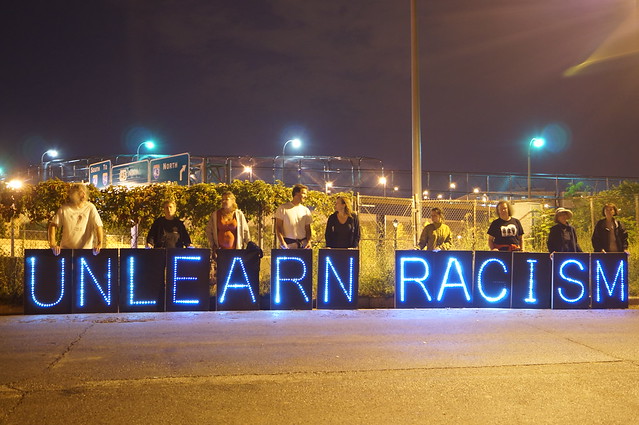
 (Image by Crodriguesc used under CC 2.0 via)
Many of the [deaf, dwarf, autistic, schizophrenic, disabled, transgender & gifted] people I interviewed said that they would never exchange their experiences for any other life – sound thinking, given that exchange is unavailable.
– Andrew Solomon in Far from the Tree
Clichés are ideas, images, and sayings that are overused. They start off as messages that easily convey meaning. Such ease may at first be a sign of their success. But when they are repeated too often, they foster laziness. They hamper inquiry and innovation. We see a happy picture of a mother and child, we recognize it and all the uncomplicated feelings it is intended to convey, and we move on. Clichés hinder change and therein progress.
The opposite of a cliché has the opposite effect. It makes us pause, look again, consider the world and our assumptions about it, and—in the best case scenario—prompts a shift in us and our habits.
The term “inspiring” is cliché in the realm of disability, which is why it is on its way to becoming a taboo, if it hasn’t already. A boy who walks with crutches while flashing a smile is inspiring. The sheer willingness to face each day with lupus is inspiring. A runner with prosthetic legs is inspiring. Inspiration porn refers to such images in posters, human interest pieces, and memes, and their use as a reminder to a non-disabled person of how good they have it. This reminder is ever-so brief in comparison to the life situation that triggered it.
Inspiration porn is unrealistic but it has its roots in truth. Well-being is often achieved through a sense of gratitude and gratitude comes from having perspective. But the overuse of inspiration porn is problematic because it is one-sided. We are shown the simplicity of happiness but never the complexity of bioethics, the politics of disability rights, or the repetitiveness of chronic pain. The predominance of grinning patients is worrisome to disabled people because we could conclude from it that the world is only interested in us insofar as we are willing to repress anything contrary to the sunny narrative. This implies that the world is our ultimate fair-weather friend.
Inspiration porn can enable emotional vampirism. In the name of being “inspired,” we are often invited to watch someone with a disease or disability on reality TV, shed a few tears, congratulate ourselves for our willingness to dabble in sadness, and quickly move on to life as it was, perhaps lecturing others on just how hard others have it, while never considering our indirect role in any hardship. How many people say they have been “inspired” by Little People, Big World but then do nothing to change the U.S. policy on the U.N. Convention on Rights of Persons with Disabilities? I’m gonna say lots. Those addicted to emotional vampirism empathize in all the wrong ways, frequently muddling the truly tragic and the merely different.
But “inspiration” need not be unproductive. Watching and reading about disability, illness, and loss can ground us to humanity. After all, what else can – besides knowing someone personally? Such connections can lead us to genuinely understand the frivolity of our daily worries about job promotions, physical fitness, and that thing a supposed friend muttered to us that may have been a back-handed insult or may have been nothing at all. Having perspective is rarely a bad thing. There’s no harm in feeling gratitude—not pride, but gratitude—for every day that we do not have to endure intense physical pain or face probable death.
We can draw both good and bad conclusions from seeing someone doing something we didn’t know was possible. I am concerned when exceptionally talented disabled athletes are promoted as proof of why no one should ever take a break or not take risks. But I was suddenly overjoyed the first time I was treated by a doctor with a visible disability. (Seriously, I almost hugged him.) Representation feels good. Seeing is believing, to use a cliché.
History has proven that innovation and bravery are often contagious, as are idleness and cowardice. We’re social animals. Progress relies on our recognizing the world’s hurdles that need to be removed regardless of whether or not we have a personal connection to those they hold back.
But “inspiring” is overused. Maybe “humbling” is a better term. In this day and age, humility is so rare we may as well consider it radical. And how about “provoking”? When we see someone face struggles we can only imagine, we could ask ourselves if it provokes anything in us. And go from there.
Tags: Disability, Humility, Inspiration Porn, Supercrips


 Painting On Scars