Archive | May, 2017

Recommended Weekend Reading

28 May

Grand Court(Image via Arild Storaas used under CC 2.0 via)
 

Speaking of politicians belonging to historically marginalized groups, here’s some upbeat news from Ireland. It shows that minds can be opened faster than many believe. Our challenge is to keep them opened now and forever.


Never Call Something “The Last Acceptable Prejudice”

21 May

Primitive Negative Art(Image by Primitive Negative Art used under CC 2.0 via)


When my family moved from one the most diverse school districts on suburban Long Island to rural Upstate, I was taken aback by the prejudices locals had about the New York metropolitan area. Reactions ranged from a creeped-out exclamation of “Ew!” to concerned questions about crime and pollution. “I despise New York City with a passion!” said one little old neighbor while passing the rhubarb pie during a Sunday get-together. Deeply homesick, I was resentful of the local disdain for what to me had been a wonderful, Sesame Street-like checkerboard of cultures. And I became slowly horrified the more I began to understand that “inner city” and “crime-ridden” were all too often euphemisms for “non-white.”

When I went on to college, however, I was reunited with City kids and professors who were equally open about their disinterest in rural life. They weren’t so much passionately hateful as consistently apathetic, convinced that anything that lay beyond a one-hour radius of Manhattan was more imaginary than real. Jokes about “hicks” often sprang up at the mention of hunting or farming. Many of these urbanites also considered the sheer existence of insects to be a personal affront no citizen should ever have to endure.

Now residing in a major city, I have little patience for bigotry about either setting. The jokes are only ever good when told by those who have actually lived there. And neither group gets to claim that they are the targets of “the last acceptable prejudice.”

Comedian and political commentator Trae Crowder argues just that in The Liberal Redneck Manifesto: “You ever notice how rednecks are pretty much the only subgroup of people in this country that it’s almost entirely socially acceptable to mock publicly?” Similar assertions have been made in reviews of J.D. Vance’s best-selling memoir Hillbilly Elegy. Last month Bill Maher repeated his claim that ageism is the last acceptable prejudice. Columnist Marina Hyde pointed out that The Guardian has declared old, white male-bashing to be the last acceptable prejudice, The Economist has decided looking down on regional accents is the last acceptable prejudice, and Religious Studies professor Philip Jenkins pronounced anti-Catholicism to be the last acceptable prejudice. An article last year in The Independent announced, “Laughing at Dwarfism Is the Last Acceptable Prejudice.”

I understand the frustration behind the sentiment. Dwarfism does not get much attention as a human rights issue. Much of this is due to our rarity in the general population, but also due to the pervasive and enduring belief that our existence is too funny to take seriously. As researcher Andrew Solomon writes in Far from the Tree, “At the mention of dwarfs, [some of my] friends burst into laughter.” As I’ve written before, students in a course studying the power of language told me they would never find the word “midget” as horrifying or upsetting as the N-word or the C-word because their gut reaction was to think of dwarfs as too cute and amusing to be controversial. So yeah. It’s an uphill battle.

But that hardly means that all of this constitutes the last acceptable prejudice. What about the ubiquity of condescension toward the rural poor or the elderly or those who speak in dialect? What about the G-word for Sinti and Roma? What about crude assumptions about adopted children? What about tired tropes about identical twins? What about gingerism? How many self-identified transvestites are out, besides Eddie Izzard? How many of the 1 in 2,000 people born intersex feel safe to be out and proud about their bodies? How many overweight people have never been shamed? And for the all the complaining about PC gone mad, how many racist and sexist jokes and arguments can you find just by sifting through TV shows, Facebook comments, or political party platforms?

The phrase “the last acceptable prejudice” is often used to impart the urgency of a human rights crisis, but it can also connote competition. And it veers dangerously close toward Oppression Olympics. During the 2008 election campaign, Hillary Clinton argued, “Oppression of women and discrimination against women is universal. You can go to places in the world where there are no racial distinctions except everyone is joined together in their oppression of women. The treatment of women is the single biggest problem we have politically and socially in the world.”

Such assertions almost always betray ignorance of the oppression of people other than those you identify with. To argue that there are places with no oppression of racial or ethnic minorities is a sweeping generalization, and to conclusively prove this would be a very tall order indeed. And to argue that the treatment of women is “the single biggest problem in the world” implicitly downplays the problems of xenophobia in places like Denmark, where the current political status quo is committed to gender equality initiatives but also committed to harsh restrictions on immigrants, refugees and religious minorities. 

The only time it is useful to compare oppressions is when you want to highlight another group’s success to prove it a plausible goal for your own. When African-American men and women were freed from slavery in the U.S., suffragists pounced on the opportunity to demand why only African-American men and not women would be granted the right to vote. Both the first and second women’s movements in the U.S. stemmed from the abolitionist and civil rights movements, and the gay rights movement stemmed from both. Transgender, queer, and intersex rights movements have advanced from that, as have others addressing widespread prejudice about birth, blood and the human body. 

Yet divisive bigotries and competitive thinking survive within these movements and thrive when Oppression Olympics is accepted as fair play. Solidarity is threatened by that, which is why we would do well to agree that inaccurate, superlative phrases like “last acceptable prejudice” harm more than they help.


A Mother’s Day Tribute to a Sullivan Woman

14 May

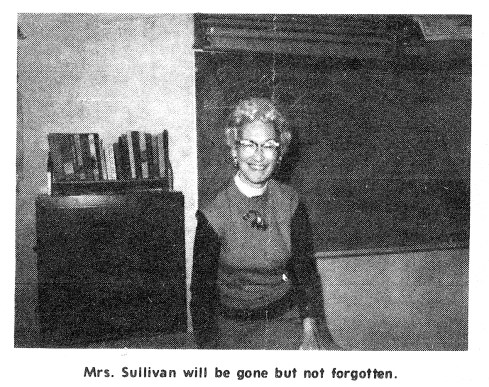
Barbara Sullivan 1975


I don’t remember when I came to the conclusion that being a dwarf meant I absolutely had to care about all forms of discrimination and social injustice. It seemed to always be there. I remember at age 19 stumbling upon some closed-minded corners of the Internet and promptly firing off mass e-mails reverberating with shock and outrage about the prevalence of homophobia in the dwarf community – a community that I believed, if any, should be particularly sympathetic to the concerns of those persecuted for how they were born. Solidarity among those ostracized for inherent traits they have no choice about should be automatic and unwavering.

But plenty of people who can be categorized as minorities disagree. There is a ream of reports about homophobia among many minority advocates, racism and misogyny in gay communities, transphobia in lesbian communities, and plenty of social justice groups fall short of embracing disability rights and the openness to bodily diversity it requires. It seems we can’t go a few days without some social justice activist revealing ignorance of and/or apathy toward the work other minority groups have been doing for years. In other words, not everyone “born different” feels the same automatic solidarity I do. It’s why the divide-and-conquer strategy so often works.

And perhaps there are other reasons for why friends frequently tease me for being an “issues person.” On Mother’s Day, it would be negligent of me to ignore another influence on my worldview that has been as powerful as my dwarfism. My mother, Susan Sullivan, is a social worker after all – and she decided to become one a good 10 years before my birth brought her and my father into the dwarf community. Her mother, Barbara Sullivan, was a social studies teacher. She would be 100 years old were she still alive today. Her worldview and its legacy deserve more than a cursory mention.

The 1975 article announcing my grandmother’s retirement in the Peru Central School newspaper reads:

Mrs. Sullivan, who teaches Problems of Democracy and Consumer Education, is presently teaching her last semester…

She has taught us many things. Maybe the most important of which is the ability to empathize or put yourself in someone else’s shoes. This is the foundation from which we can solve local, national and personal problems. Then she has gone one step further.

Mrs. Sullivan has opened many eyes to racism, sexism, poverty and the injustices present in our court and prison systems. Not only has she opened the eyes of her students, she has also helped her fellow teachers.

A lot of work is done in her classes but also a lot of discussions. The kind of discussions that help end individual prejudices…

You can bet she will be involved in the community projects that time has not allowed for in the past. Because that is the kind of person Mrs. Sullivan is – caring, understanding person who will always be remembered by any student who has ever taken any of her courses.

A little article cannot give appropriate thanks for all she has taught us. The best way we can show our thanks to her is to go out into the world and work toward ending the injustices that trouble her heart so much. Until we can do this, all we can say is… Thanks.

Grandma Barbara also taught the school’s first sex education class – a feat my teenage mother at the time found as impressive as it was embarrassing. But Grandma Barbara preferred interacting with teenagers over younger children, asking me with deep interest about drug use and the AIDS crisis when I entered middle school. When I was younger, the discussions were simpler but nevertheless motivated by sociological pursuit. She examined integration at my school by asking whom I interacted with, and I received my first black doll from her. She had been an ardent supporter of the Civil Rights Movement, and was deeply concerned about racial injustice long after it was fashionable. The night Barack Obama was elected president, I quietly shed a few tears over the fact that she had not lived to see it. But in my head I could hear her shrieking, “Hallelujah!” with all the abandon for which she was famous among her friends.

How much her own background brought her to such conclusions about the world I cannot say. She grew up in a small town in Western New York where pets were named unprintable racial slurs. An avid reader, perhaps her relentless pursuit of knowledge helped. But her intolerance of injustice was as intellectual as it was visceral. I remember her smacking the side of her head and clenching her fist in fury during a scene in the 1994 film The Jungle Book when Mowgli is shoved about and laughed at by British officers at a gentleman’s club. Through example, she inculcated in us an inability to stand idly by while others are ostracized.

One of the first Mother’s Days in the United States was proclaimed by suffragist and abolitionist Julia Ward Howe, who envisioned something far different from the celebrations embodied by flowers and greeting cards we have come to know today. She called for a day when the mothers of the world would commit to peace. She firmly believed that war would end across the globe once women were given the right to vote because no mother would vote to send her son into battle. Her belief was noble, however naïve or inaccurate.

And Grandma Barbara would have appreciated the sentiment. She was in so many ways a simply loving grandmother, who spoiled my brother and me with sweets and treats, and chased us around her backyard chanting, “Tick tock! Tick tock!” in pretending to be the crocodile from Peter Pan. But her boisterous love of the world was matched by her passionate desire to repair the world. My mother and I cannot deny she passed it on to us. It is a gift for which I will be forever grateful.