Archive | February, 2017

High Heels Are A Civil Rights Issue

26 Feb

king_charles_i_after_original_by_van_dyck

(Public domain image via)


Last week there was much discussion on the blog about the social ramifications of height, but what about high heels? The Women and Equalities Committee of the U.K.’s House of Commons recently found that employee dress codes that require heeled-shoes for women are violating laws banning gender discrimination. The Committee reviewed the matter after receiving a petition signed by 138,500 people and started by Nicola Thorp, a London receptionist who in December 2015 had been suspended by her employer without pay for violating the company’s dress code for women by showing up for work in flats.

I personally find high heels frequently quite becoming. I also personally find them physically hazardous. Pretty much anyone with any sort of orthopedic disability has been advised by their specialists again and again to limit the time they spend in heels to a minimum. While reporting on the U.K. ruling, NBC News let women in on “an essential secret — carrying a pair of trainers in your handbag.” This is cold comfort to those of us who know that back pain is also caused by carrying more than 5% of your body weight in your handbag. One twentysomething friend with an invisible disability was told by her spinal surgeon that she should wear heels pretty much never. Thorp was right to sue on the basis of gender discrimination because only women are required by some employers to toddle about on their toes, but a case could be made on the basis of disability discrimination as well.

That disabled women could be fired—or simply looked upon unfavorably in the workplace for “not making an effort”—is indeed a social justice issue. We in the West have come to regard heels as a sign of female beauty and professionalism not so much because they are inherently smart looking, but because they were invented to signify wealth.

Heeled shoes were designed to be painful and inefficient if you walked around much because the upper classes around the world have traditionally used their fashion statements—from foot-binding to corsets to flowing robes and fingernails—to prove that they were wealthy and didn’t need to labor to survive like the lowly workers. Prof. Lisa Wade offers a wonderful break-down of the history of the high heel at Sociological Images, pointing out that they were first considered manly because men were the first to don them to display social status. Women began wearing them to imitate this status, which led to men abandoning them. Wade explains:

This is a beautiful illustration of Pierre Bourdieu’s theory of class distinction. Bourdieu argued that aesthetic choices function as markers of class difference. Accordingly, the elite will take action to present themselves differently than non-elites, choosing different clothing, food, decor, etc. Expensive prices help keep certain things the province of elites, allowing them to signify their power; but imitation is inevitable. Once something no longer effectively differentiates the rich from the rest, the rich will drop it. This, I argue elsewhere, is why some people care about counterfeit purses (because it’s not about the quality, it’s about the distinction).

Eventually men quit wearing heels because their association with women tainted their power as a status symbol for men. (This, by the way, is exactly what happened with cheerleading, originally exclusively for men). With the Enlightenment, which emphasized rationality (i.e., practical footwear), everyone quit wearing high heels.

What brought heels back for women? Pornography. Mid-nineteenth century pornographers began posing female nudes in high heels, and the rest is history.

In many moments in the history of many cultures, extra pounds of body fat have also signified high social status because wealth was needed to keep someone well-fed. The price of sugar and of meat plummeted in the 20th century in the West and were soon no longer considered delicacies only the wealthy could afford. This coinciding with the eugenics craze in the early 20th century brought about the birth of our modern preoccupation with not just longevity and bodily cleanliness but physical “fitness.” These shifts are why modern fashion dictates that those who wish to project high social status should dress inefficiently, like a traditional aristocrat, while remaining physically strong, slim and active, like a traditional laborer.

High-status men are now encouraged to wear expensive attire in addition to building and maintaining a muscular physique that can get down in the dirt – something the manly dukes and earls of yore would have considered horrifically common. High status women are now encouraged to diet and exercise to be “healthy” in addition to wearing heels to hint at sexiness in their physique via the historical association with both princesses and porn stars – at the risk of breaking down their bodies as they rush off to work and back like the peasant women of yore.

Indeed, our modern fashion rules for professional women are ever so young because upper class women who worked were an anomaly in the Modern Era until the 20th century. The First and Second Wave feminists successfully fought for our right to vote and become actors, bankers, flight attendants, and politicians, but we have yet to expunge the idea that a woman who suffers for beauty is admirable, rather than irresponsible. Nicola Thorp’s petition, however, has dealt it a blow.

Women should feel free to wear heels almost whenever they wish, but disabled women should not have to suffer social consequences for choosing to protect their bodies. True equality may also come when men can wear heels like Mozart and Louis XIV without fear of gay bashing, as long as such a fashion shift does not harden into a fashion decree. If it does, then disabled men will have to use their right to petition against discrimination.

No matter how you personally feel about them, just remember that modern ideas about fashion, gender/sex, class, and disability all meet whenever we consider a pair of high heels. That’s why we call it intersectionality.


How Much Does Height Matter To You?

19 Feb

Mann und Frau
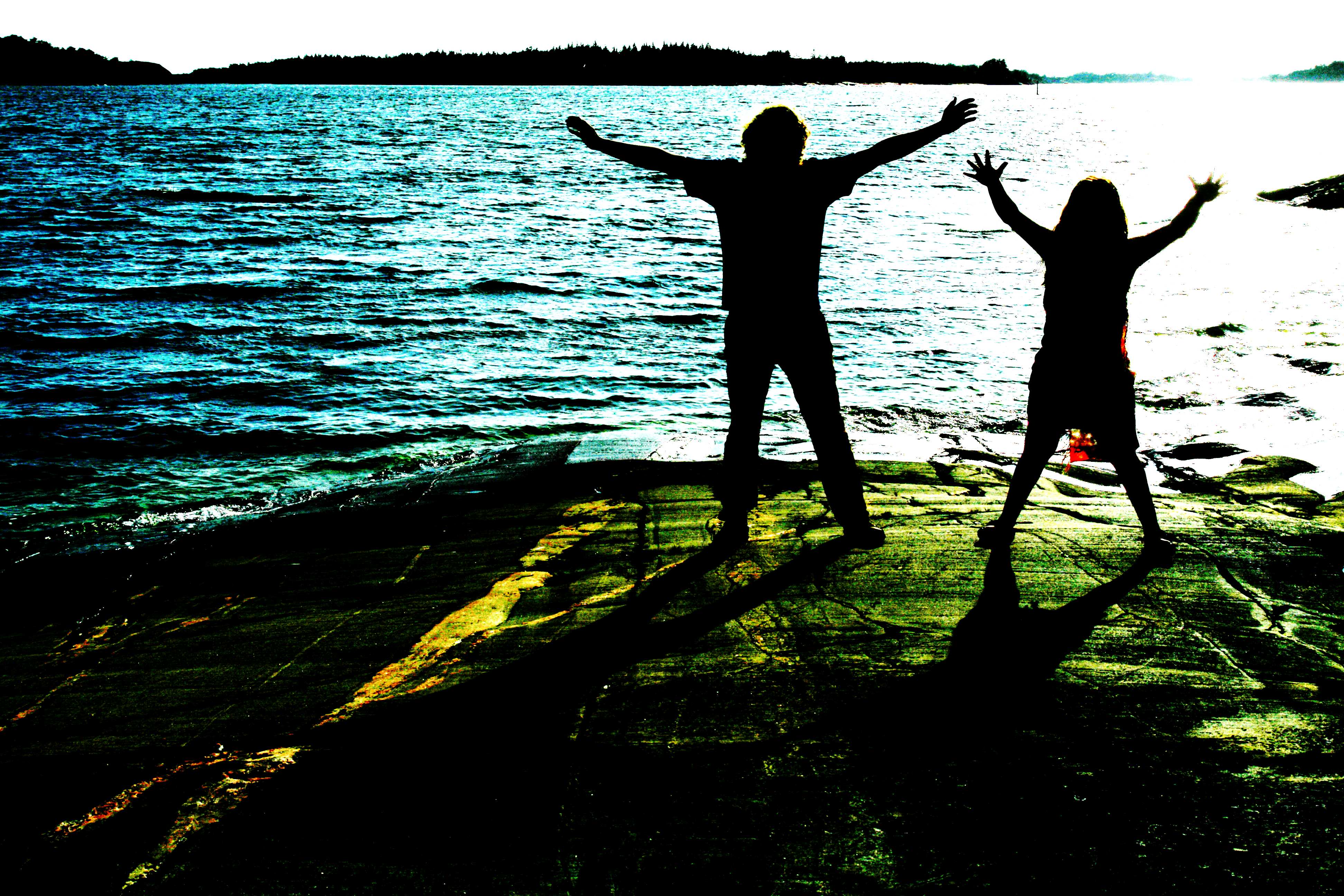
As I wrote on Facebook after I saw friends posting them, I really don’t like those #TinyTrump memes. I’m not outraged. I’m just really, really uncomfortable whenever human size is used as an insult or a sight gag. (And yes, I have had friends and admire several human rights activists who are almost as short as Trump appears in those memes.) Being physically small isn’t hilarious or humiliating. It just is.

200 years after Napoleon, political discourse is still rife with the insidious concept of small man syndrome. Male acquaintances still report conversations coming to a screeching halt on Tinder after they answer an interested woman’s inquiry after their height. So here is an old, popular post on the subject that is just as apt as it was when I first published it:

I’ve said it once and I’ll say it again. I did not undergo limb-lengthening to “look normal.” I did it to function better in everyday life with less difficulty and less pain. Height has mattered tremendously to me as an issue of accessibility. But as an issue of social interaction, I tend to find it only slightly more significant than eye color.

Throughout high school, I had a Yoko Ono quote taped to my bedroom wall: “You call me ‘little,’ but I have a universe in my head.” Every teen needs role models. I got excited when I lived for six months in southern France, where I encountered several women my size. There is something inexplicably pleasing about being at eye-level with someone. Which is what made the moments when guys have gotten on their knees to dance with me utterly touching.

But my husband stands at 6’5” (1.96 m), more than a foot taller than I am. Being at eye-level with someone can feel important, but it’s not that important.

And we’ve gotten compliments for being such a striking couple due our height difference. (Should we thank John and Yoko for blazing the trail?) But as said before, when we tell our loved ones what exquisite hair or adorable hands or gorgeous eyes they have, it’s more a display of affection than a statement of what we require to be intrigued. When we tell someone, “You are so beautiful,” and we mean it, it’s a testament to the sum of their parts.  To the entrancing union of their perfections and imperfections. Height is what you make of it.

I generally find a preoccupation with height amusing. When my father-in-law, who is from the Black Forest, married my mother-in-law, who was from Stockholm, they had their wedding photos shot only in close-up, so that you can’t tell that he was standing on a box.

When I was undergoing my first limb-lengthening procedure at age 11, I explained to one of my teachers, “I’ll never be super-model tall. The muscles tighten up when you stretch them and that’s why there is a limit to how far you can lengthen your legs.”

“Well, that’s actually good for you as a girl,” she said.

“Why?” I asked.

“Well, you wouldn’t ever want to be too tall and end up walking alongside a man who’s shorter than you!”

I looked at her quizzically and then smirked to myself. Sure. That was my first concern about undergoing limb-lengthening.

Eighteen years later, as I prepared my wedding, I came across a discussion on a forum for brides-to-be about the ubiquity of complaints about heels that were too high.

“Why am I hearing so many comments about not wanting to be taller than your husbands?” the main commenter wrote. “I mean, seriously? This is the 21st century. We’re all liberated about LGBT rights and feminism and healthy body image and equality, but we’re still convinced it’s unfeminine for a woman to be taller than her husband?”

Nine out of ten of the replies all said, “Well, I don’t want to look like some freak.”

This week, HuffPost Live features an interview in which dwarf reality TV star Ben Klein reveals his past struggles with depression and suicidal thoughts due to social isolation and bullying. Earlier today on Germany’s ZDF Sundays morning news show, opera singer Doris Michel revealed that no man has ever been able to get over her dwarfism and see her as a romantic partner.

It’s easy to shake our heads and feel sorry for these individuals, and then to be inspired by the courage they have demonstrated in overcoming such hardship. We praise them for raising their children to be self-confident enough to face adversity. But when the adversity is inflicted by our society’s lingering attachment to something as silly as height, it is crucial that we own up to our collective responsibility for it.

We have to ask ourselves, do I ever trash women’s bodies? Do my friends laugh at dwarf-tossing? Would they harass someone with dwarfism in public? Am I brave enough to stop it? If not, why not? How important do I think size is?

Surely if Klein and Michel can overcome bullying and denigration, we can overcome any hang-ups we have about size.

Which Books Have Opened Up Your Mind?

12 Feb

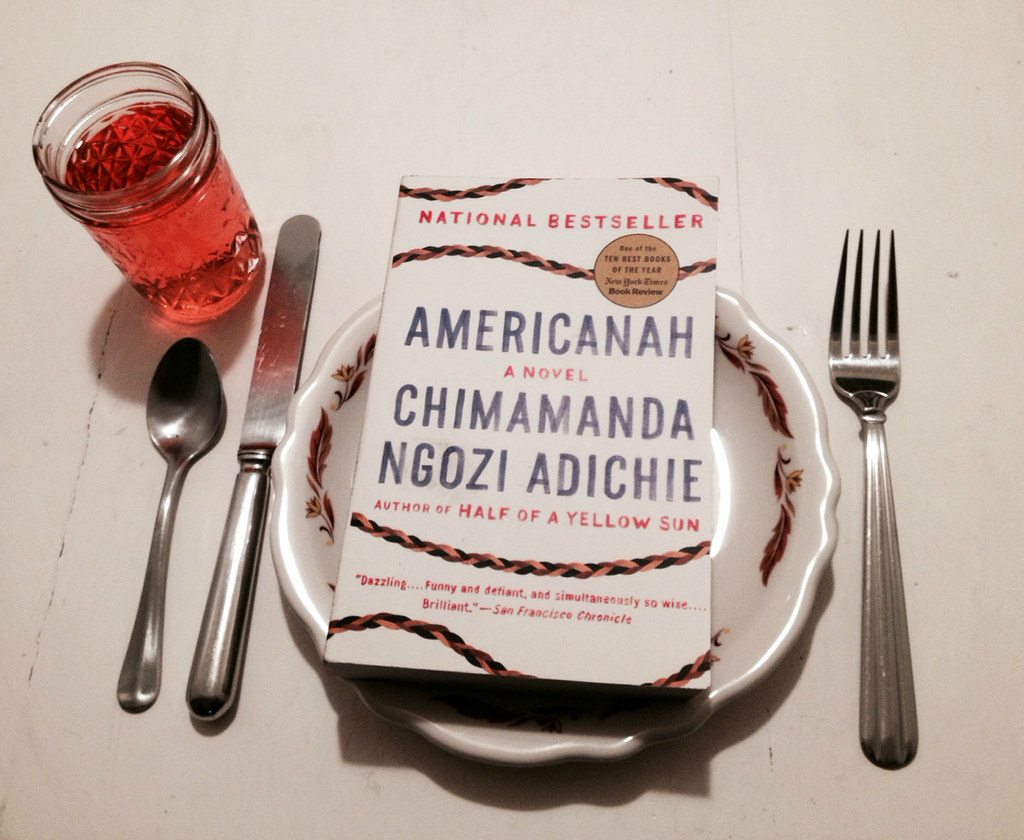
Americanah(Image Sarah Mirk used under CC 2.0 via)


As the lists of hate crimes compiled by the Southern Poverty Law Center, Slate and The New York Times prove every week, bigotry in the United States persists. (As noted before, statistics on hate crimes here in Germany are hardly more heartening.) As debates over the best way to stem such crimes abound, a judge in Virginia has ordered a group of minors found guilty of defacing a historic black schoolhouse to spend the next year reading one book each month about various human rights struggles and to write a report on each, analyzing it in both historical and modern contexts.

She was given the idea by prosecutor Alejandra Rueda, who told the Times: “It occurred to me that the way these kids are going to learn about this stuff is if they read about it, more than anything. Yes, they could walk into court and plead guilty and get put on probation and do some community service, but it wasn’t really going to bring the message home.” The books from which they can choose are:

1) The Color Purple by Alice Walker
2) Native Son by Richard Wright
3) Exodus by Leon Uris
4) Mila 18 by Leon Uris
5) Trinity by Leon Uris
6) My Name Is Asher Lev by Chaim Potok
7) The Chosen by Chaim Potok
8) The Sun Also Rises by Ernest Hemingway
9) Night by Elie Wiesel
10) The Crucible by Arthur Miller
11) The Kite Runner by Khaled Hosseini
12) A Thousand Splendid Suns by Khaled Hosseini
13) Things Fall Apart by Chinua Achebe
14) The Handmaid’s Tale by Margaret Atwood
15) To Kill a Mockingbird by Harper Lee
16) I Know Why the Caged Bird Sings by Maya Angelou
17) The Immortal Life of Henrietta Lacks by Rebecca Skloot
18) Caleb’s Crossing by Geraldine Brooks
19) Tortilla Curtain by T.C. Boyle
20) The Bluest Eye by Toni Morrison
21) A Hope in the Unseen by Ron Suskind
22) Down These Mean Streets by Piri Thomas
23) Black Boy by Richard Wright
24) The Beautiful Struggle by Ta-Nehisi Coates
25) The Banality of Evil by Hannah Arendt
26) The Underground Railroad by Colson Whitehead
27) Reading Lolita in Tehran by Azar Nafisi
28) The Rape of Nanking by Iris Chang
29) Infidel by Ayaan Hirsi Ali
30) The Orphan Master’s Son by Adam Johnson
31) The Help by Kathryn Stockett
32) Cry the Beloved Country by Alan Paton
33) Too Late the Phalarope by Alan Paton
34) A Dry White Season by André Brink
35) Ghost Soldiers by Hampton Sides

My own personal recommendations would include Jubilee by Margaret Walker, Trash by Dorothy Allison and Americanah by Chimamanda Ngozie Adichie, since they contributed profoundly to opening my world view to perspectives and experiences I had never before considered. Stones from the River by Ursula Hegi and Good Kings Bad Kings by Susan Nussbaum were among the first nationally acclaimed novels I read that credibly portrayed experiences of physical disability. Please share any titles missing from the list that have had a similar effect on you in the comments.