Archive | June, 2013

Liberty and Justice For All

30 Jun

(Via)


The Defense of Marriage Act and Proposition 8 are dead. Less than nine years ago on Election Night 2004, when eleven states banned gay marriage in one fell swoop, I would never, ever have dared to think that change could come so rapidly. Of course, marriage equality does not yet exist in thirty-seven of the fifty United States, but with young people around the world overwhelmingly and increasingly showing their support, it is coming. Thank goodness, in the best sense of the word.

There are those—gay, straight, bi and queer—who are saying, “I can’t be happy about this after what happened to the Voting Rights Act this week.”

And, “I can’t be happy about this until full equality is granted to trans citizens.”

And, “I can’t be happy about this until the AIDS crisis gets more attention.”

And, “I can’t be happy about this until we realize that single people deserve federal benefits, too.”

And every one of these people has a valid point. It’s a common political strategy in such triumphant moments to grab the opportunity to shed light on other civil rights abuses while you have everyone’s attention. Drawing attention to other injustices—especially the attention of those whose privileges put them at risk for remaining oblivious to such issues—is crucial because no one is free when others are oppressed. This is why I am always willing to discuss the latter half of any of the above statements.

But I do take issue with the first half: the too-cynical-to-celebrate attitude that is begging to be called out for its hipster glass house. Because marriage equality is a victory for everyone.

Anyone familiar with the history of minority rights in the U.S. knows that granting civil rights for one group has had an undeniable domino effect on other groups. Not long after debates about slavery, segregation, and voting rights culminated with the nation’s belief that all men are indeed created equal, women asked, “Why just men?” And not long after so many women proved that straight relationships can be egalitarian, gay and lesbian citizens asked, “Why just straight ones?” And somewhere amid gays and lesbians proving that the way they were born hurts no one, trans people asked, “What about how we were born?”  And somewhere in between all the discussions about genitals and bodies and skin color and size, disabled people asked, “What about our bodies and brains?” Because no one is free when others are oppressed.

Likewise, when one kind of inhumane prejudice gets knocked down, all the others are under threat.

This is not to take attention away from the people most directly affected by this week’s momentous legal decision. Friends of mine in Massachusetts can suddenly enjoy concrete federal benefits now while my husband and I have always enjoyed these benefits simply because we’re in a straight relationship. I am so happy for them, and so sad one of my dearest friends never lived to see this day.

But the victory is truly for everyone – even those marriage equality opponents who fail to see how they will benefit from a society that is a little bit freer, a little less fearful, and lot less lop-sided. Because this is a victory for anyone who has been bullied for traits they never had any choice about. This is a victory for anyone with something that has made them stand out in their family. This is a victory for all the couples who have choked back tears when someone said that marriage is all about a man and a woman being able to procreate. This is a victory for all the parents who have tried to teach their children to never grow up thinking they are more important than anyone else.

Congratulations to all of you out there.


What To Do When I Go FWOMP!

23 Jun

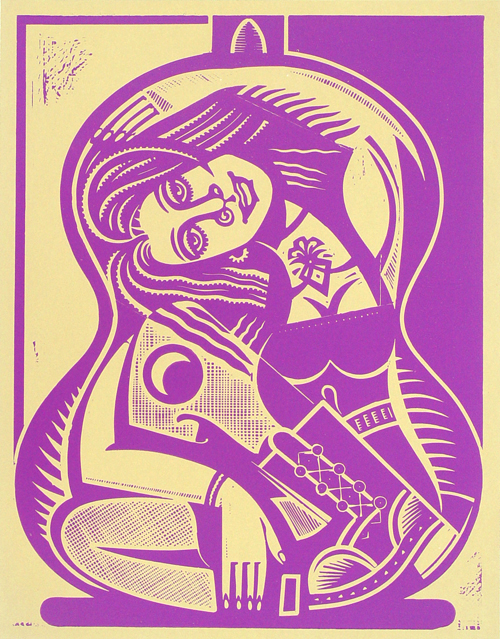
(Image by Stephen Alcorn © 2003 http://www.alcorngallery.com)


“HEEEEEY!” Friends were at the door, back fresh from a vacation that had seemed far too long for me to endure. At the sound of their dulcet voices calling me in unison, I jumped from my chair, rounded the corner, darted down the hallway toward their open arms, and FWOMP! Iwassuddenlyhorizontal.

My friends gasped, “OMIGOD, ARE YOU OKAY?!” Apparently this time I was, from what I could tell of the pain, and I bounced up before they finished asking, throwing my arms around them both at once and laughing, “How’s that for a dramatic hello?”

“You’ve been drinking again, haven’t you?” one of them smiled.

“Yes!” I beamed. “You know exactly what to say! How was your vacation?”

We chatted for about five minutes, made plans for the next day, and said hasty goodbyes because their toddler was itching to get home. As I shut the door, I rubbed my knee, looked at my partner, and shook my head. “I’m gonna have a new bruise on the left to match the right.”

Two weeks before I’d gone flying down the same hallway, but that time it had really knocked the wind out of me and left a cut needing a bandage. I had reacted a little less wryly – diaphragm spasms are never pleasant and they forced me to let out a yell that sent my partner running from the kitchen. But after my initial roar, I switched to hollering, “I’M FINE! I’M FINE! DON’T PANIC! I’M FINE!” Our guests came peeking out of different rooms, everyone asking me how I was.

I was fine, but I was mad. Mad at gravity, mad at the pain, mad at my useless tendons and weak muscles that cause me to stumble on average about every ten days. But I wasn’t that mad. I’ve gotten used to it, after all.

Because my anterior tibilias tendons on both legs were severed some time during my first limb-lengthening procedure, I use different tendons to lift my feet when I walk. They compensate relatively well, but since they cause my feet to point slightly outwards rather than straight ahead, I’m a walking accident waiting to happen. It’s compounded by the fact that my muscles fatigue more quickly than others’ due to my dwarfism. It’s been this way since I was twelve and changes only in that the bigger I get, the harder I fall.

Since I was my surgeon’s only known case of tendons severing during limb-lengthening, most people with dwarfism do not face this problem. Some do, however, when their greater susceptibility to fatigue combines with their having to carry an average-sized trunk around on exceptionally short legs. In other words, had my tendons not severed, I may or may not have had this habit of losing my balance. It’s exasperating and inconvenient, but what can I do about it?

Laugh, for one thing. Over the years, I’ve decided a woman falling down is both hilarious and revolutionary—what with the delicate ballerinas we’re supposed to be—and drinking too much is just one of many lovely excuses to offer for it. Years ago I fell while carrying an armload of water glasses and promptly ended up in the emergency room with stitches and a black eye. From the physician named Dr. Goebbels to the nurses insisting my partner leave the room so that I could be free to explain what had happened, the opportunity for sick jokes was everywhere.

Friends have kept records of my losses in the battle against gravity. Some are critical, sighing, “EMILY, that’s the second time today!” while others are cheerleaders: “It doesn’t count this time because the ground is uneven.” (And can I just point out that the German word for gravity—Schwerkraft—literally translates as “heavy force”? I love German.)

Of course, I’m not always at my best when it happens. Often I fall because I’m particularly tired and this results in my being particularly bad-tempered about it. That I kvetch the most to those I know and love the best is logical, but not entirely fair.

When my peers witness me falling for the first time, many of them don’t know what to do. I’m trying to get better at telling them. If I’m not badly hurt, but still somewhat hurt, I try to shout that I’m okay to curtail their apprehension. Taking a minute to help me up and, depending how close we are, offering me an arm until I’m steady on my feet is almost always appreciated. Breaking into a panic and giving me the sense that it’s my job to calm them down is less helpful.

Most people who have to deal with pain caused by disabilities don’t want any more sympathy or attention beyond what we would give someone with a light headache. (In fact, many of us want a tad less sympathy than what some with mundane headaches go fishing for.) If I’m not hurt, anything you say to keep the mood light as a Screw-you! to my heavy fall will be invaluable. If I am hurt, any offers to help before I have to ask will be worth even more. And if your gentle-yet-practical manner demonstrates particularly good caregiving skills, I’m going to tell you so. Experience has made me a particularly good judge.

And I’m not embarrassed when I fall, so please don’t be embarrassed for me. At best, it’s as disruptive as a mighty sneeze. At worst, it’s a mood-killer.

The one fall that still makes me cringe to this day happened as I was stepping off a stage after delivering a poem to thunderous applause. I spent the summer before my senior year of high school at a young writers’ workshop in the Berkshires, where I found all the beauty, intellect and acceptance I been dreaming of ever since I first put pen to paper. Reciting one of my pieces to giggles and cheers made me feel as great as anyone on any podium has ever felt. The moment had been just perfect. And then, I slipped. The handsome emcee looked sincerely concerned: “Are you okay? Are you okay?” He had to keep asking because I was mumbling my answer, mortified to even acknowledge what had just happened. In my head I was begging everyone in that room, Please remember my poem and not my fall. Please.

Then again, “And Emily came tumbling after” is a poem in itself. It doesn’t work as well in Germany, what with no one having grown up with Mother Goose, so I’ll have to settle for the joke about being drunk. That one’s an international success.


Define “Active”

16 Jun

(Via)


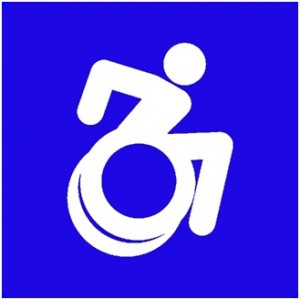
New York City has begun using a new design of the international symbol for disabilities this week. (See above.) Featuring a forward-moving, self-propelling wheelchair user, the new symbol has garnered praise from the mayor’s office and Professor Lisa Wade of Occidental College for portraying disabled people as “active and independent,” instead of “passive and helpless.”

I support the move 99% because it signifies the changing perceptions of what it means to be disabled. Altering our default descriptions of non-ambulatory people from “wheelchair-bound” to “using a wheelchair” sheds much-needed light on the fact that many disabled people are indeed differently abled. Wheelchairs, sign language, and Braille are not just substitute ways of moving and communicating but means of moving and communicating that require skill. If you’ve ever witnessed someone try to use a wheelchair for the first time, you know it’s like watching Bambi on ice.

That said, I am hesitant to embrace any idea that insists that physically “active” is preferable to “passive” at the risk of impugning those who cannot help but be dependent. Just as Little People of America’s motto “Think Big!” inadvertently suggests something undesirable about being small, an over-emphasis on being active—and defining “active” as the ability to physically move yourself forward—inadvertently suggests something humiliating about the thousands of medical conditions that preclude physical independence. All people have agency, and this absolutely bears repeating when we talk about human rights and portrayals of disability. But not all of us are independent.

Disability reminds us, perhaps like nothing else, that we can never hold every member of the human race to the same standard. This does not mean we cannot demand everyone strive for excellence, try their hardest, or be their own toughest critic. But it does mean we should be wary of promulgating rigid definitions of excellence.

As a friend with lupus once said, “What’s wrong with being weak?  What’s wrong with trying to do something and doing it badly?”  

Competitive cultures wince at weakness and I must say that America can be a very competitive place.  Even the most progressive human rights movements have embraced competitive, grandiose language when talking about empowerment.  Two years ago on Love Your Body Day, Chloe Angyal of Feministing wrote an article wherein she wanted to “ take a moment to appreciate the things my body can do.” She went on to list her favorite things:

My body can stitch itself back together when it gets cut. This never ceases to amaze me.

My body has an organ in it that can stretch to accommodate a small human being. I don’t want it to do any stretching or accommodating any time soon, but the capacity is there, and that blows my mind.

More than a decade after it was cool (was it really ever cool?) my body still has the muscle memory to do the Macarena. That one is kind of embarrassing, but still kind of great. Mostly embarrassing.

My body can orgasm. Enough said.

My body can do [a flip], and for that, I love it.

What can your body do?

I had been, and still am, a huge fan of Angyal’s writing. As a feminist, an athlete and someone who has struggled with disordered eating, her contributions to the discourse on body image have been invaluable. But this time around, I wasn’t inspired to join in her Love Your Body Day exercise. I hesitated to say so because I understood the noble intentions behind her article, and what kind of person wants to rain on a Love Your Body Day parade?

Apparently someone like me, because I ultimately couldn’t help but write this response:

I realize the very good intentions of your post: celebrating our bodies as they are. But the emphasis on what you can “do” (= ability) still made me quite uncomfortable as someone with disabilities.

Usually when one writes a piece meant to buck oppressive, judgmental thinking and celebrate the way we are, the author writes about a quality that is ostracized – a skin color, sexuality, a body size, physical features considered to be deformities, etc. It’s the honesty of the author in spite of adversity that inspires. You instead decided to celebrate things about your body that mainstream society does not ostracize at all, but in fact agrees with you are wonderful. So for those of us who cannot dance, have children, heal cuts, or do gymnastics, this post simply reminds us of this and it’s hard not to take it as bragging. (I know that wasn’t your intention.) You did invite us to list our own things we love about our bodies, but I don’t think there’s anything my body can do that yours can’t…

Angyal wrote back to me personally and apologized. From there we started a dialogue that resulted in my writing guest posts for Feministing and our exchanging lots of praise for each other’s work. I had been frustrated by the lack of disability awareness on leftist forums and simultaneoulsy self-conscious of appearing too negative or narcissistic. This made her response to my critique all the more inspiring.  She has both privileges and experiences of marginalization that I do not, just as I have privileges and experiences of marginalization that she does not. The same goes for those who can move their own wheelchairs and those who cannot.

Overlooking our privileges and inadvertently denigrating others happens all too easily, as all 7 billion of us strive for excellence and recognition of our various capacities for excellence. Trying to include everyone in the conversation, all the time, can be exhausting.  But admitting the danger of these missteps is imperative to the idea of truly universal human rights because that idea insists, over and over again, no matter what the circumstances, that everybody matters.  There is no way around it if we want to move forward.


Does GoldieBlox Break the Box?

9 Jun


After its Kickstarter fundraising campaign (see above) proved to be a success, GoldieBlox is here and available for retail.  Designed by an engineer appalled at the 1 to 10 ratio of female to male professionals in her field, the toy is the latest in a series of efforts across the West to combat the gender gap and get girls excited about scientific concepts from the earliest possible age.  Questioning the stereotype of women as “naturally” less competent in math, science and visual-spatial thinking is always admirable.  But does GoldieBlox really amount to anything more than simply painting science pink?    

Parents who want to conscientiously ensure their daughters feel every option is available to them will probably already have bought them Legos and Erector Sets.  But parents and relatives and neighbors who rely more on tradition when picking out presents may be swayed by the color-coding GoldieBlox employs.  As in: “I need a present for a cute girl.  Look, this is pink and cute.  I’ll take it.”  Having worked in early childhood education as well as social justice, I wish every adult responsible for stocking a child’s toy box would be conscientious enough to consider the value and purpose of their every purchase—or at least read the picture book all the way through—before heading to the cash register.  But plenty of adults who want to make kids happy don’t share my interest in kids’ things.  They truly appreciate age recommendations on the boxes, and the pink and blue color-coding.  It is these adults and their beloved little girls who will benefit tremendously from the GoldieBlox expansion of the world of pink into the realm of engineering. 

But why do we need to color code anything to let people know which gender it’s for?  Do we need to rename it GoldieNASA to get more women to work there?  Last year, when Bic introduced pens for women (“Easy glide – feel the smoothness!”), its Amazon page almost crashed under the weight of sarcastic reviews:


No Good For Man Hands


And then there were the appropriate reactions in November to the Honda She’s, a car marketed to women in Japan with special light and air-conditioning features to prevent wrinkles.  Feminists asked:


26


Indeed, the most offensive aspect of the pink-is-for-girls mentality is the antiquated belief that women need a softer, daintier, less intimidating variation of the standard, which was built for men by men.  Any woman who stops posing for a portrait and approaches that standard is an accident waiting to happen!  Right?

Pink cars and laptops and cell phones and building blocks trigger my gag reflex because they seem to be so obviously marketed as the deviation from the more serious male standard.  But is it fair of me to assume this?  Would GoldieNASA really be so bad?  A friend who works as a software engineer and buys so many Hello Kitty products I suspect he accounts for half of Sanrio’s market share would say no.  He agrees with me that Barbie and the Disney Princesses inappropriately introduce pre-schoolers to sexual self-objectification and viciously narrow beauty standards.  He is both irritated and concerned about those of any gender identity who think they should use their vulnerability to get what they want.  But his kitchen cupboards are brimming with cups emblazoned with pink hearts and daisies and butterflies.  He would love to work at GoldieNASA.

There is nothing inherently wrong with the color pink or with girls and boys, and men and women, being cute.  In fact, trashing the color pink and all things marketed at girlie-girls is often motivated by a powerful misogynistic tradition: the belief that things for girls are dumb and frivolous because girls are dumb and frivolous.  This is usually why boys and girls watch films and read books marketed to boys—like Harry Potter or Star Wars or every Pixar film but Brave—while only girls watch films and read books marketed to girls.  Some misogynists and feminists uphold this disparity by uniting in their belief that twirling around in ball-gowns is silly because it’s not a skill needed by the average adult in modern life.  Indeed, it is not.  But then neither is sword-fighting.    

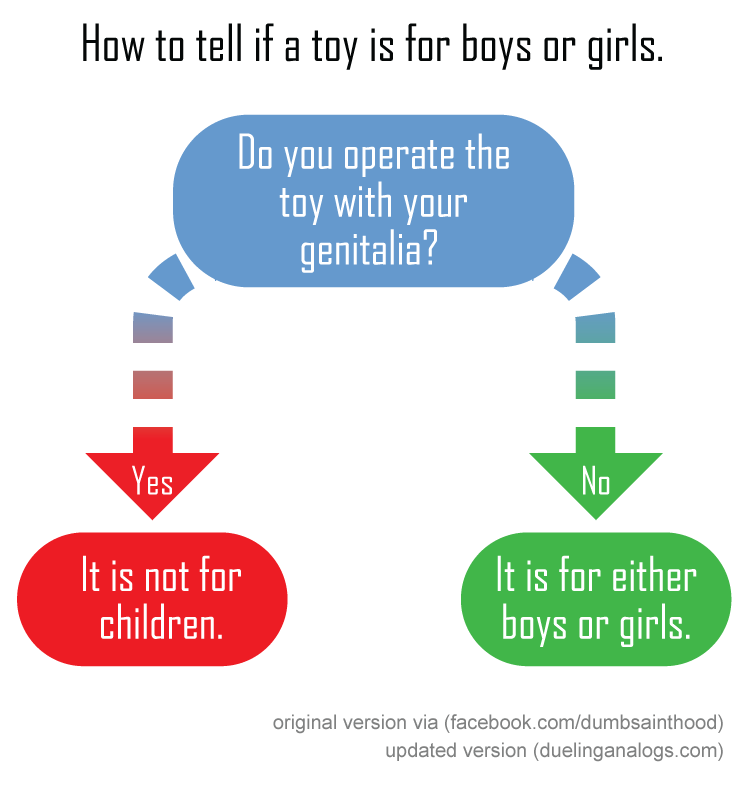
For this reason, it is imperative to teach kids that the value of a toy or story derives from its content, not its color.  Within this lesson lies the truth that there is more to being a girl than dressing up and being cute, just as there is more to being a boy than being stoic and winning every competition.  Every child should feel every option is available to them because the most innovative minds approach the world with the least reliance on tradition.

GoldieBlox will have succeeded when it is ubiquitous in any child’s room because it will signify that adults are picking their purchases based not on color but on this simple rubric: